59,782  PAGES BROWSED TODAY PAGES TODAY • 197 ANTIQUES UPLOADED TODAYNEW ARRIVALS
GIFTS
197 ITEMS ADDED TODAY
Sort Order
Items Per Page
Antiques dealer?
Join as a Seller
Browse Categories
Sort order
Relevant Links
Items per page
for sale
€1,872     $2,032
£1,600
Selling price
Radnorshire Fine Arts Ltd

Radnorshire Fine Arts Ltd

Sellingantiques Verified Since Sep 2026
Browse dealers 54 items
  • About Us
    We buy and sell paintings, watercolours, prints and drawings from the 17th to the 20th century
The2027Guide to Antiques The 2027 Sellingantiques Guide to AntiquesWhat an antique costs, and what its age, its wood and its maker add. Read the guide →
Id #SA1248579
PDF SHARE
SAVE

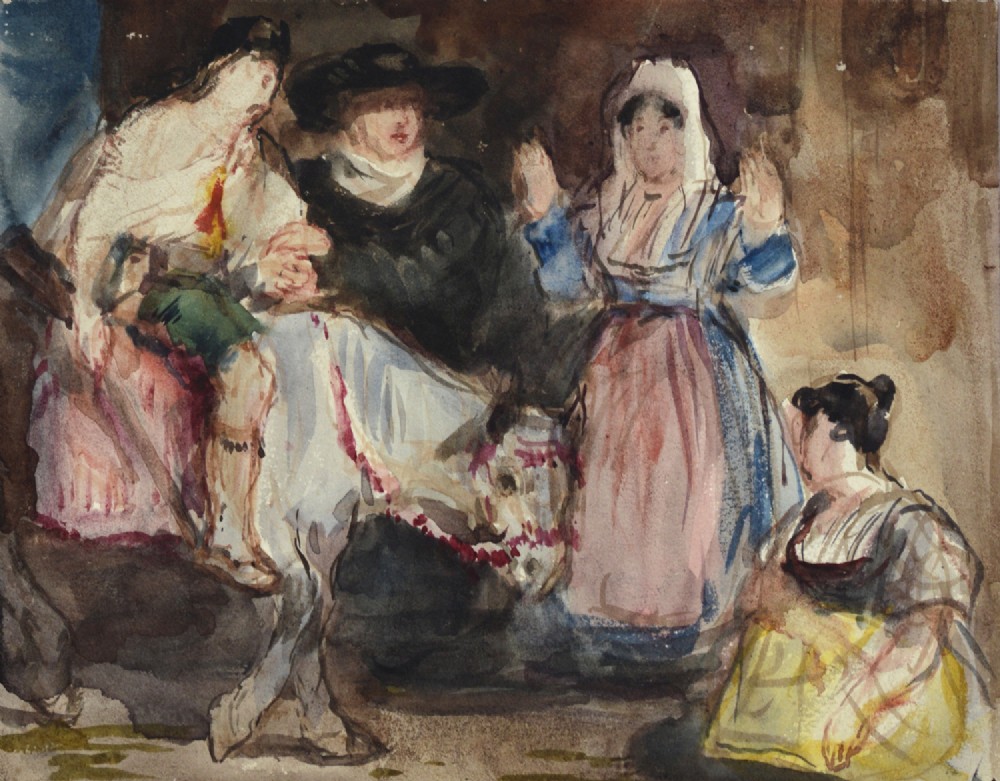
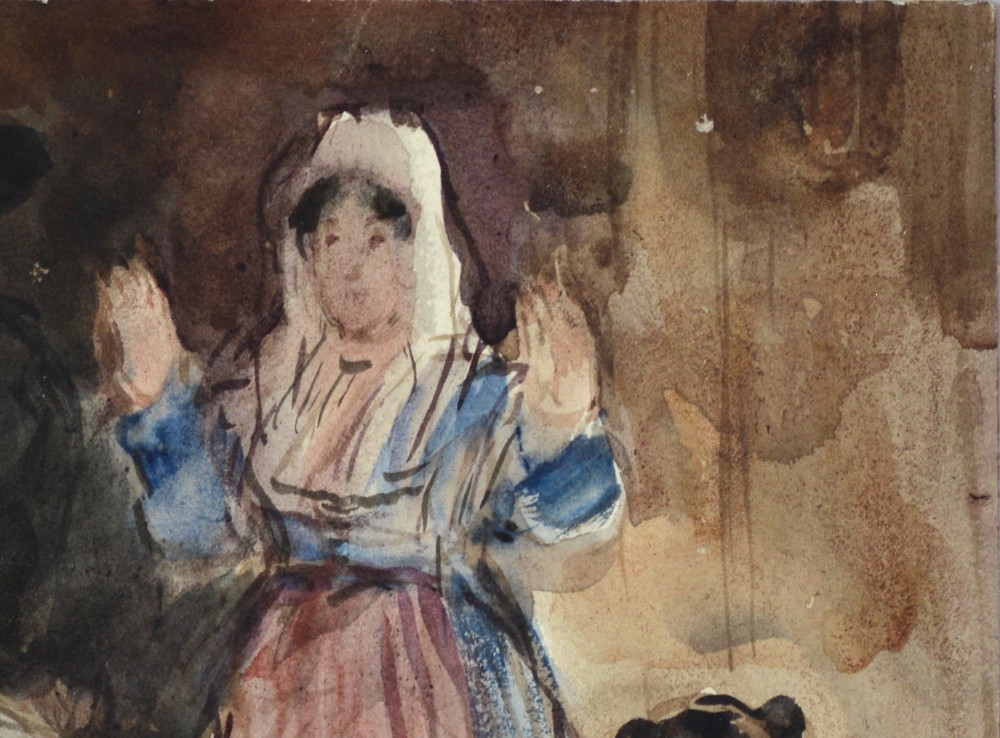
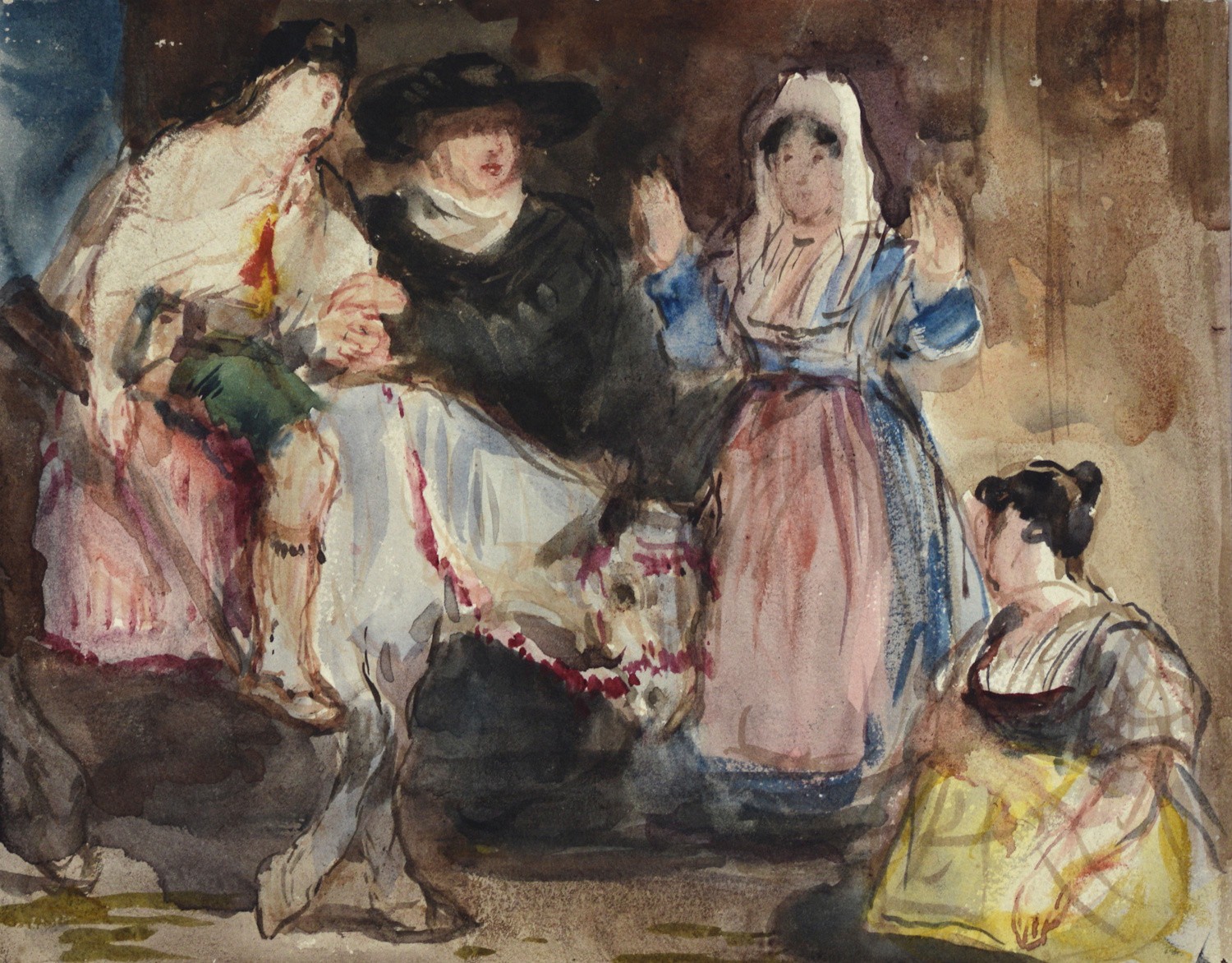
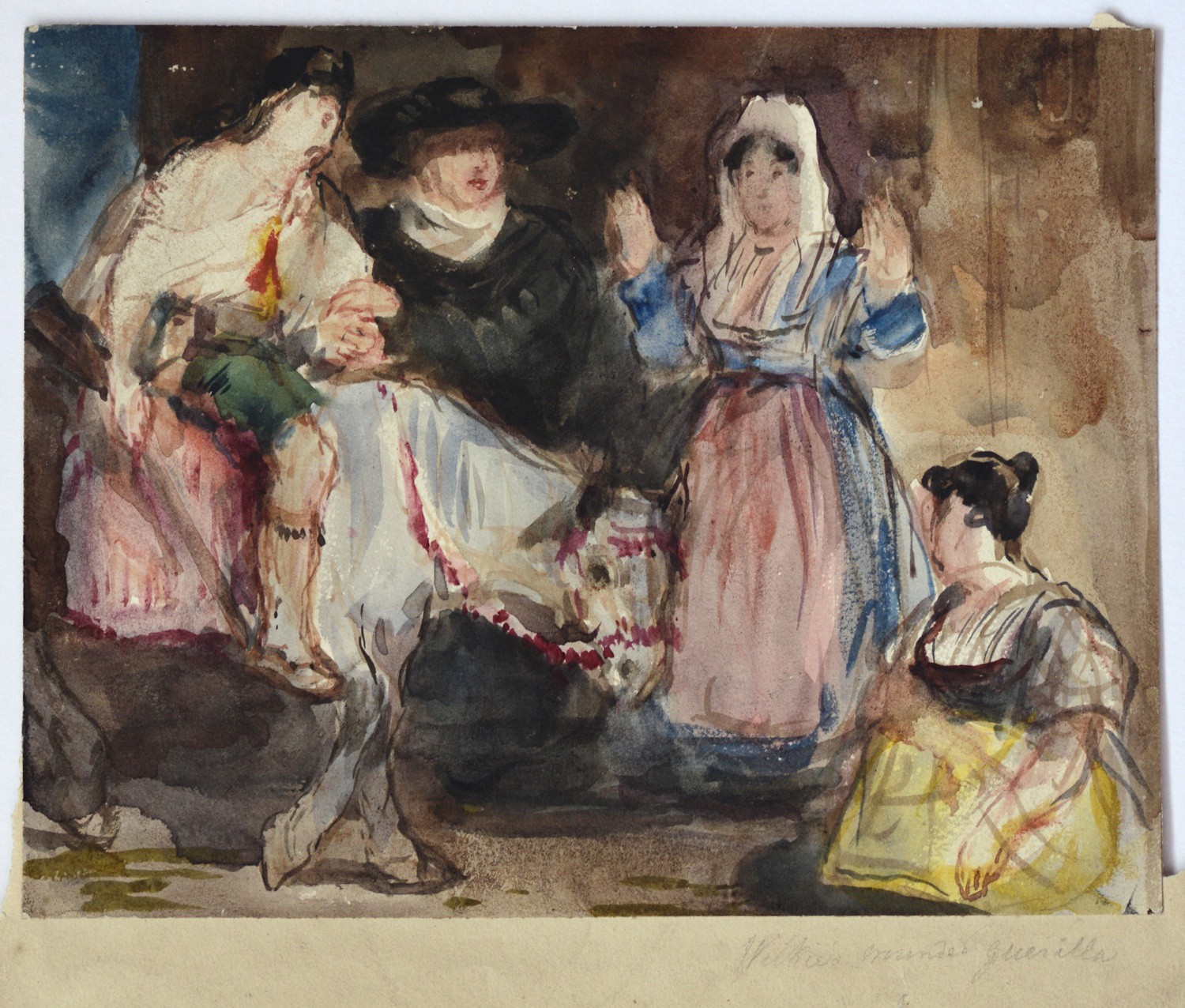
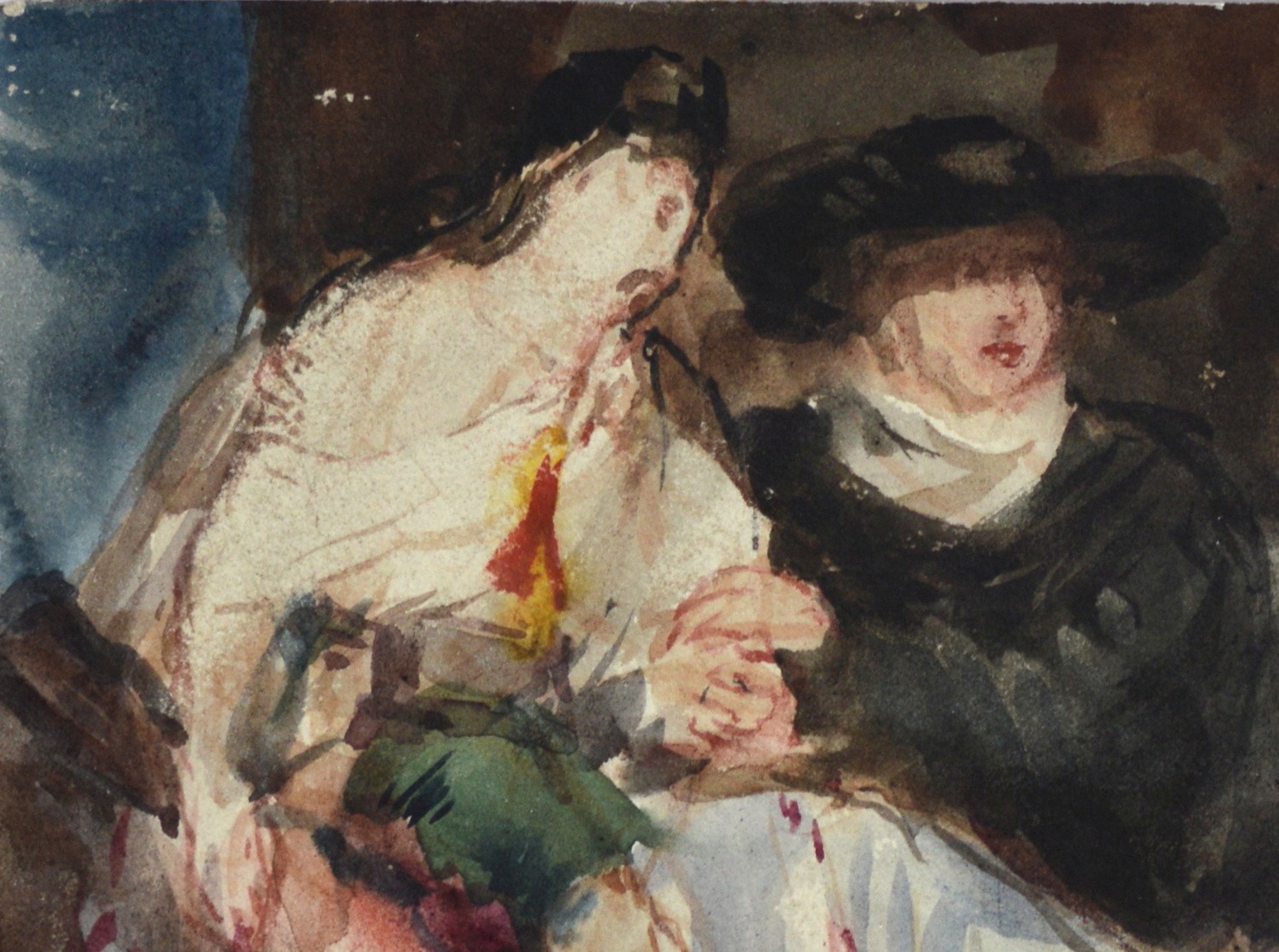
Watercolour Attributed to Sir David Wilkie, Study for the Wounded Guerilla / the Guerilla’s Return C.1830

19th century
Description

Watercolour with pen and ink on white wove paper. To be sold in its present condition without a mount or frame. The watercolour will be delivered in a conservation standard clear polyester sleeve.

Image: 6 3/16 x 7 7/8 in.(15.7 x 20 cm.)

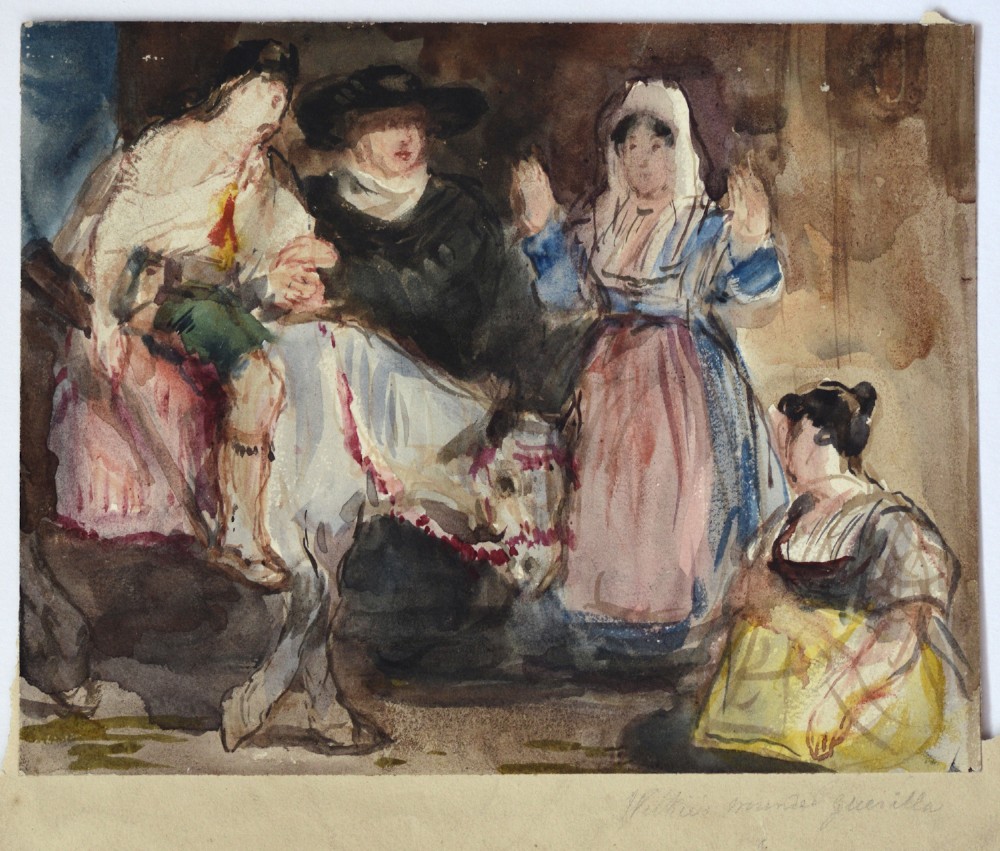
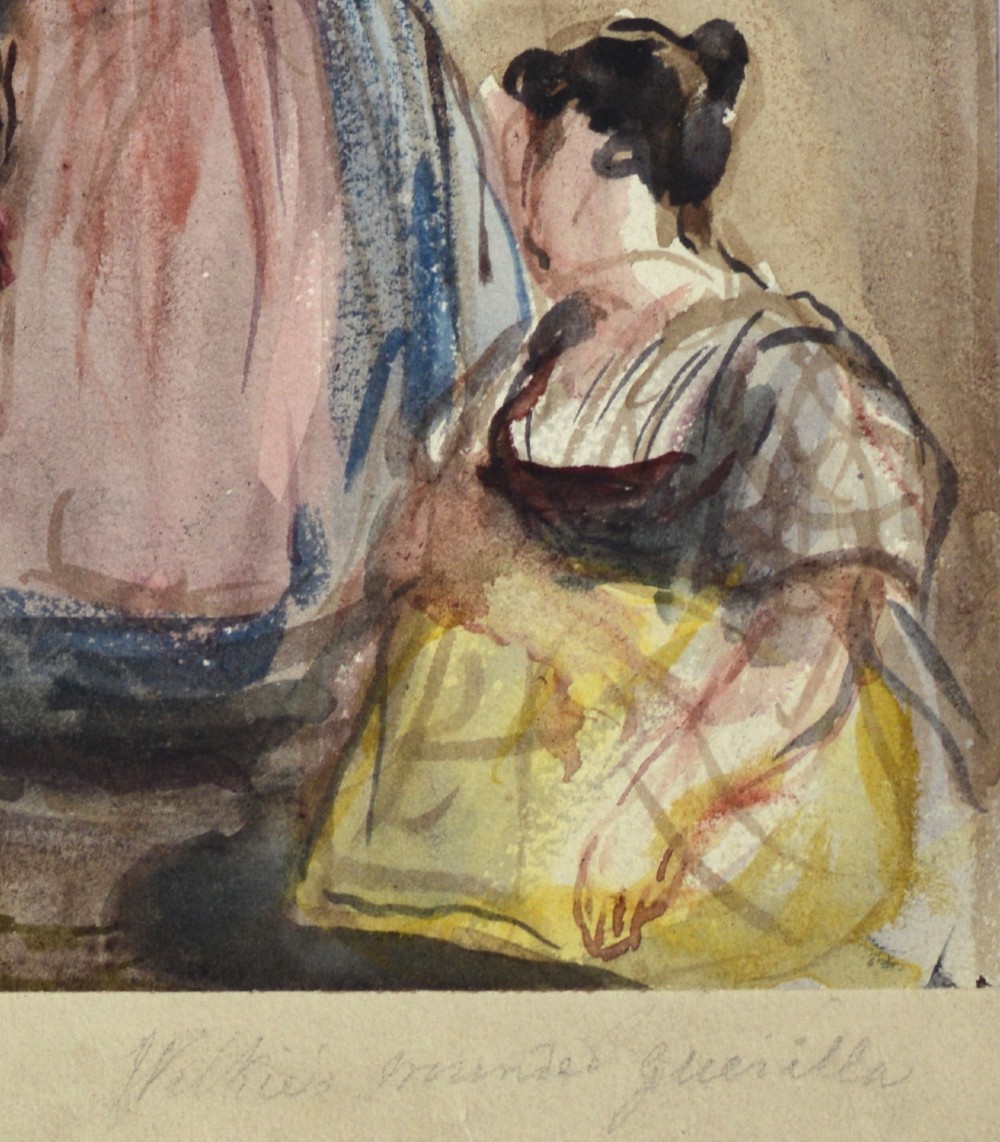
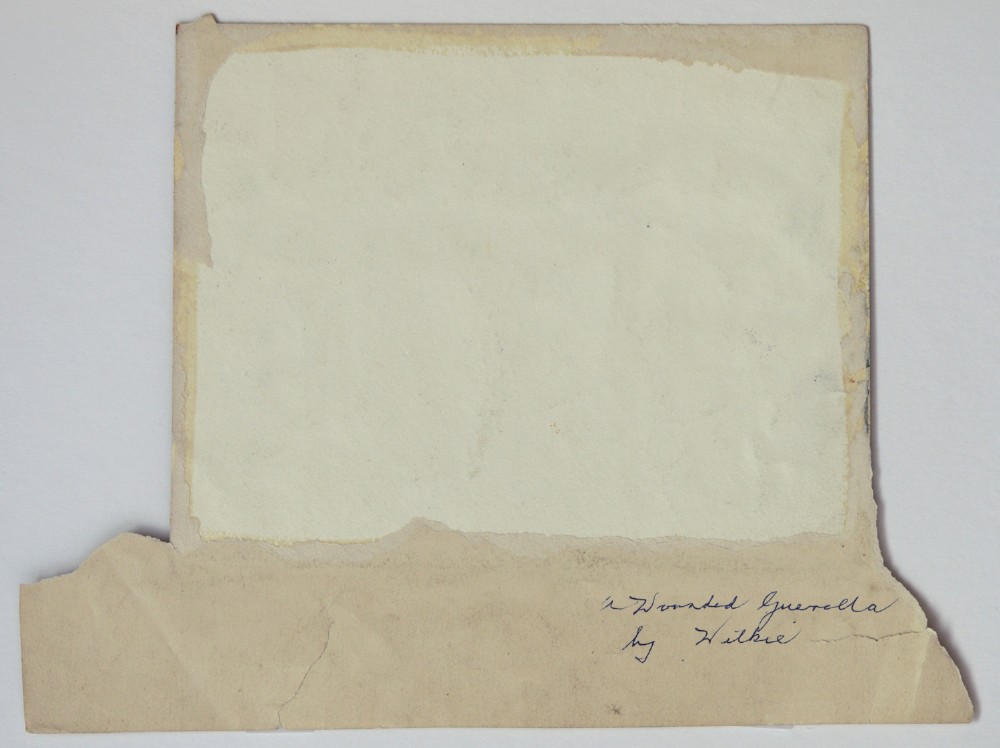
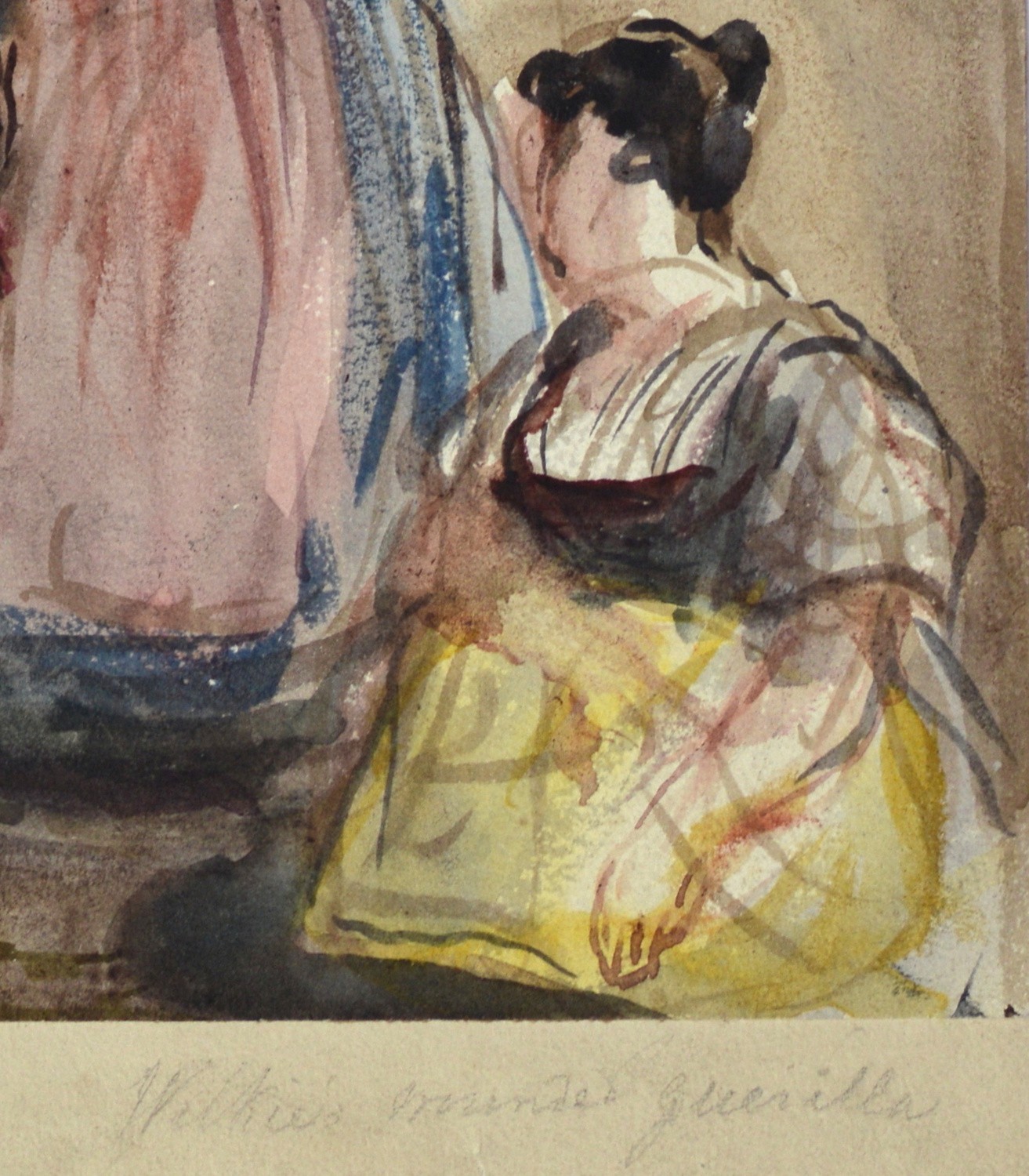
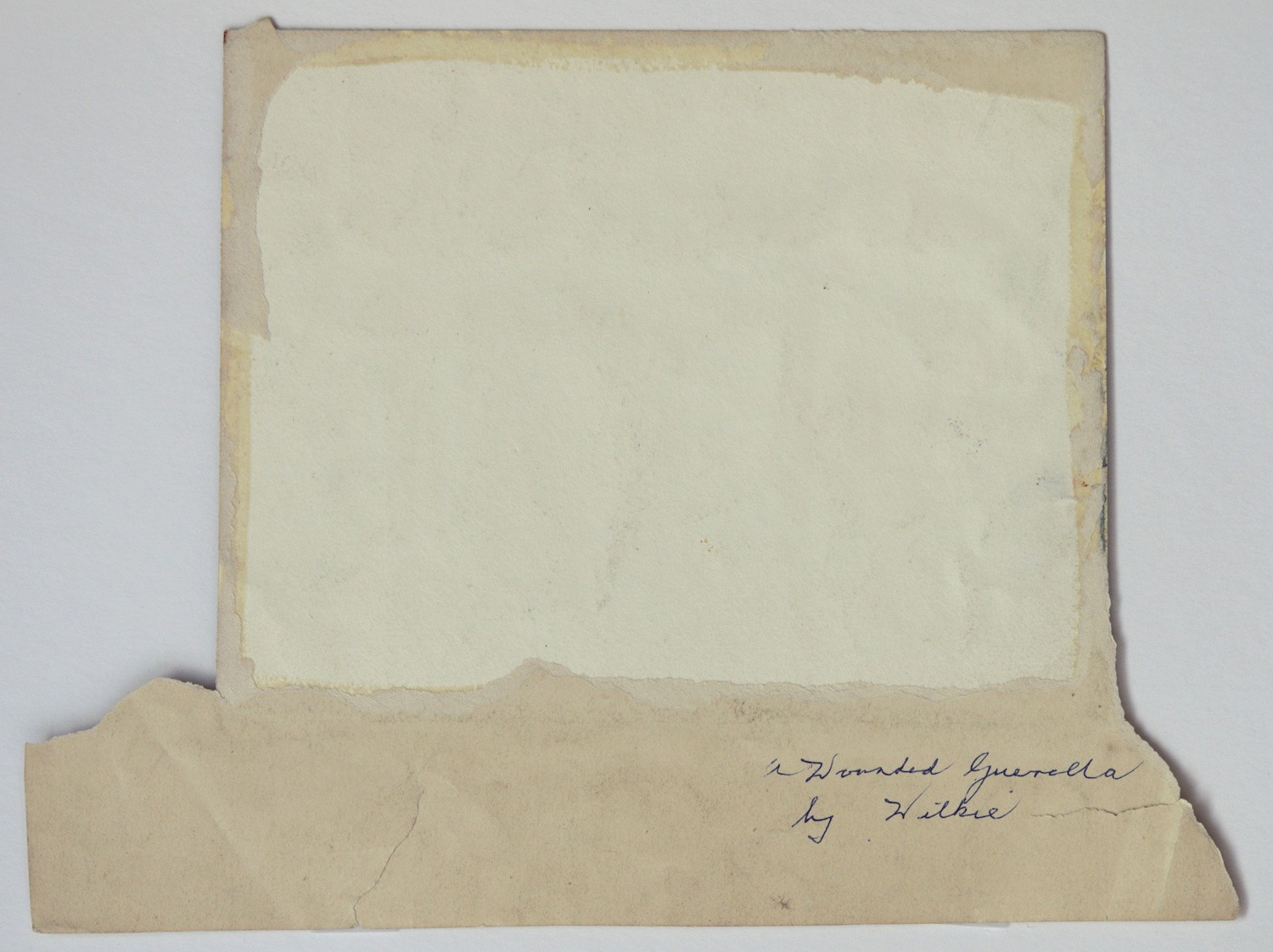
Condition: The watercolour retains good fresh colouring with only two very small surface abrasions on the upper part of the sheet. Remains of backing paper suggests the drawing has been removed from an album. The lower part on the front of the backing paper is inscribed Wilkie’s Wounded Guerilla in pencil, the back is inscribed A Wounded Guerilla by Wilkie in blue ink.

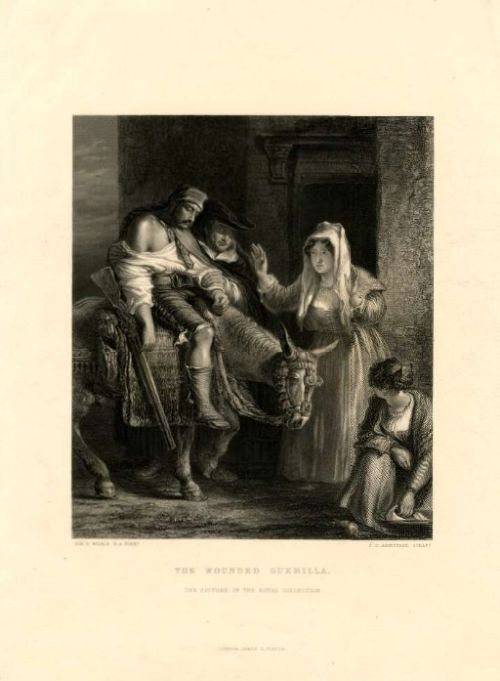
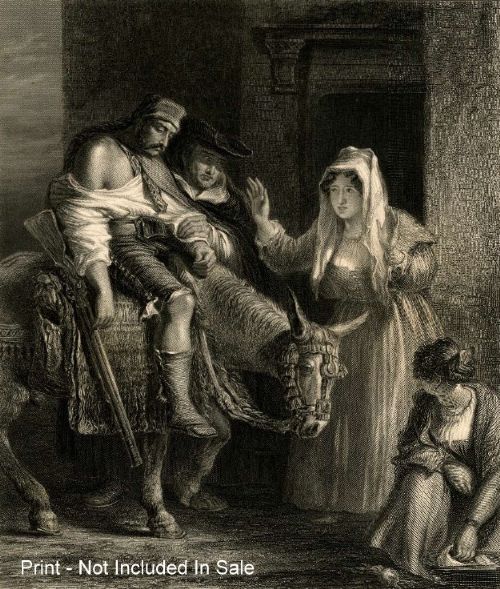
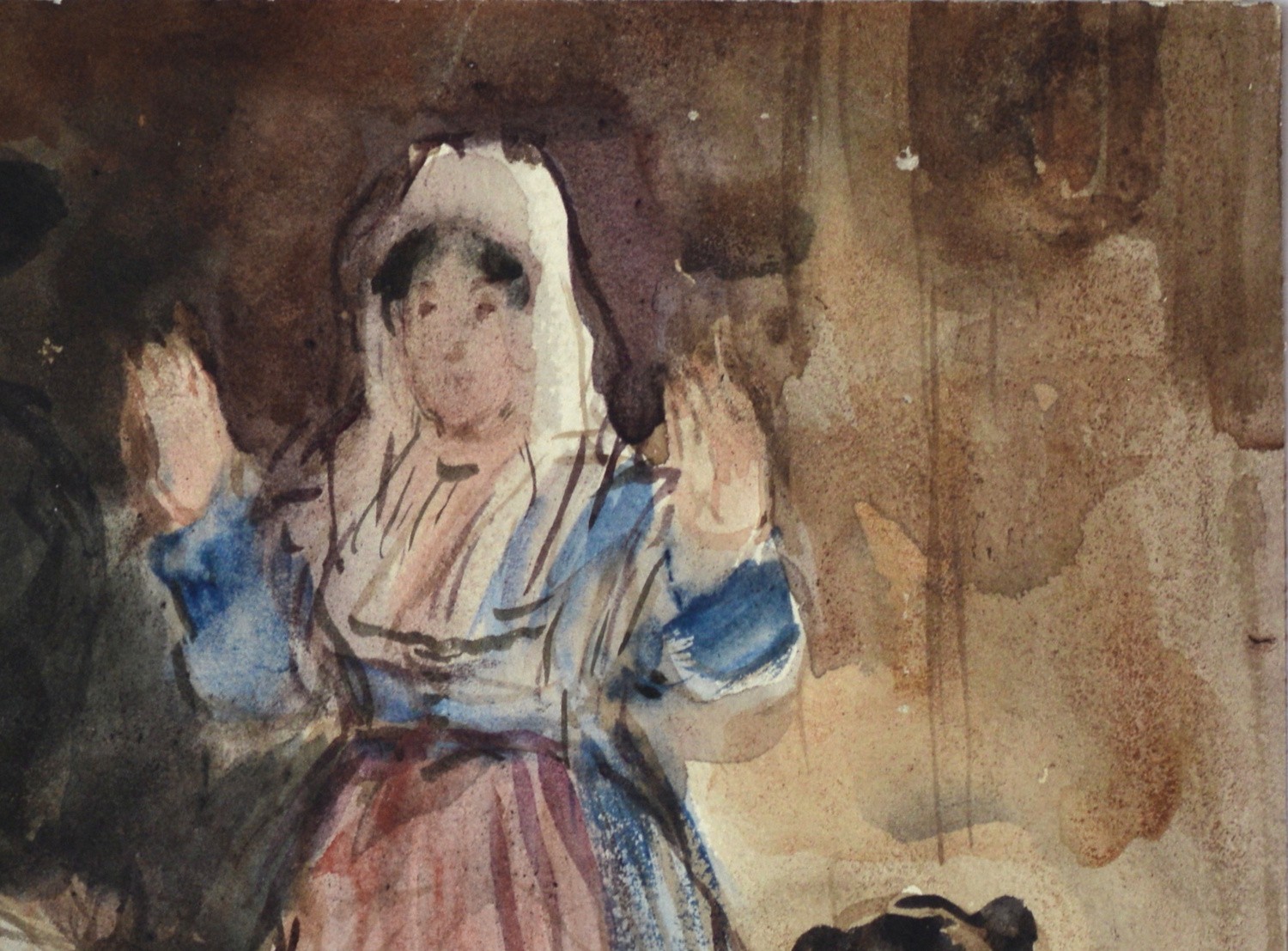
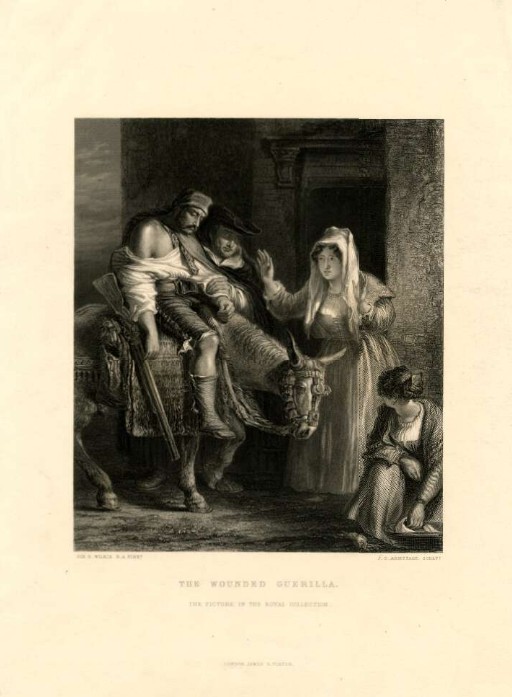
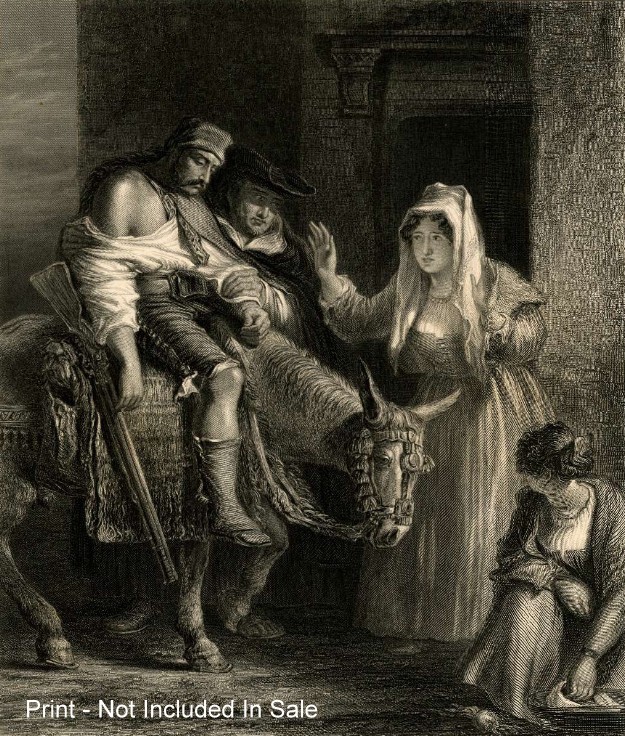
The original oil painting is housed in the Royal Collection. George IV purchased the oil painting as one of a pair depicting the Guerilla’s Departure and the Guerilla’s return. Having been sent off on his mission with his confessor’s blessing in scene one, the Guerilla is seen here returning, wounded, on his mule, with his left arm in a sling. He is greeted by his horrified wife, while a kneeling woman with a bowl of water is preparing to bathe his wounds. The confessor is helping him to dismount in order that he can be hidden in the cottage (or church?) before it gets light. As with so many of these scenes there are curious religious overtones: in this case an ironic echo of Christ’s Entry into Jerusalem. The oil painting is signed and dated: ‘David Wilkie London 1830.

The painting was engraved and etched; ‘The Wounded Guerilla’ illustrated ‘The Art Journal’ of 1861 (see photo). Please note: the illustrated black and white print is not included in the sale of the watercolour.

Wilkie’s style evolved primarily due to study trips abroad. In 1814 and 1821 he visited Paris, Belgium, and The Netherlands, where he studied art by Rembrandt Harmensz. van Rijn, Titian, and Peter Paul Rubens. As a result, he expressed emotions more sharply, deepened his shadows, and made his colour stronger and his paint smoother. To recuperate from a nervous breakdown after overwork and the deaths of his mother and two brothers, Wilkie spent the mid-1820s in Italy, Austria, Germany, and Spain, he was also in Paris again briefly, in 1828. He then adopted a broader style and began working on history paintings, diminishing his popularity among both public and critics. After visiting the Holy Land to research religious paintings, he died and was buried at sea.

Date of Manufacture

Radnorshire Fine Arts Ltd has dated this 19th Century Watercolour Study to the 19th Century.

Reference Numbers
Sellingantiques Reference
SA1248579
Dealers Notes

All our prices include FREE packing and delivery within the UK.

Our website accepts payments from the UK. Buyers outside the UK are required to "CONTACT US" for delivery options and prices. Please include the detail of the item you wish to purchase and your shipping address.

'Stripe' has recently been introduced to our website, offering more choices for secure payments, including 'Apple Pay' and 'Google Pay'. You can also pay 3 monthly 'interest free' instalments with 'Klarna' at 'Checkout'.

Other information including terms and conditions can be found on our website @ Radnorshire Fine Arts Ltd.

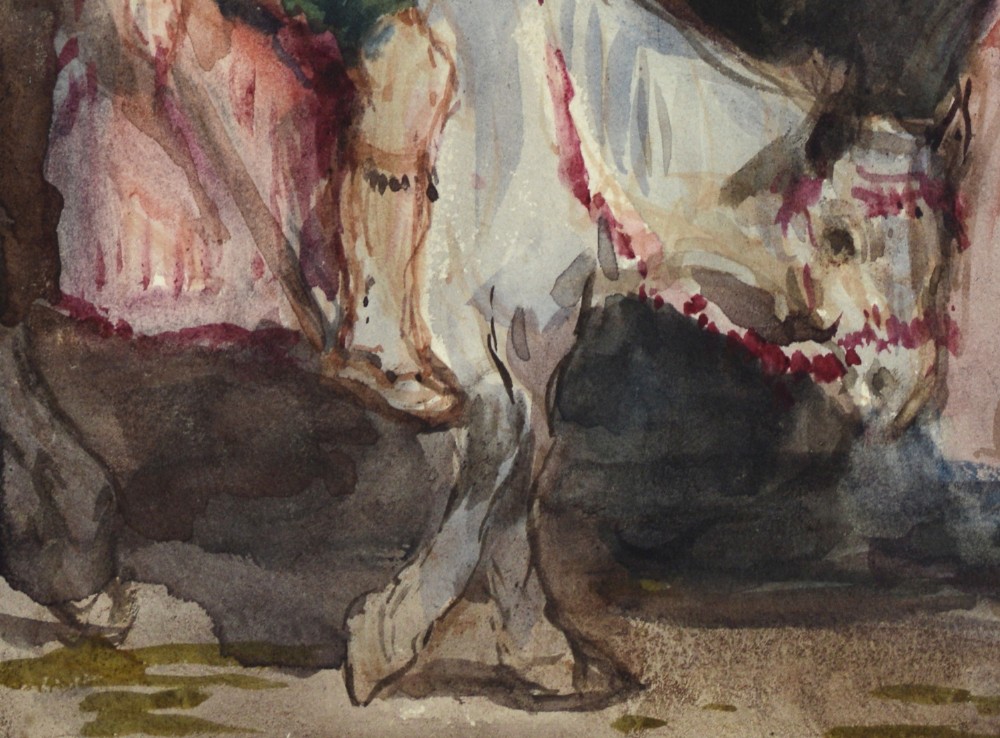
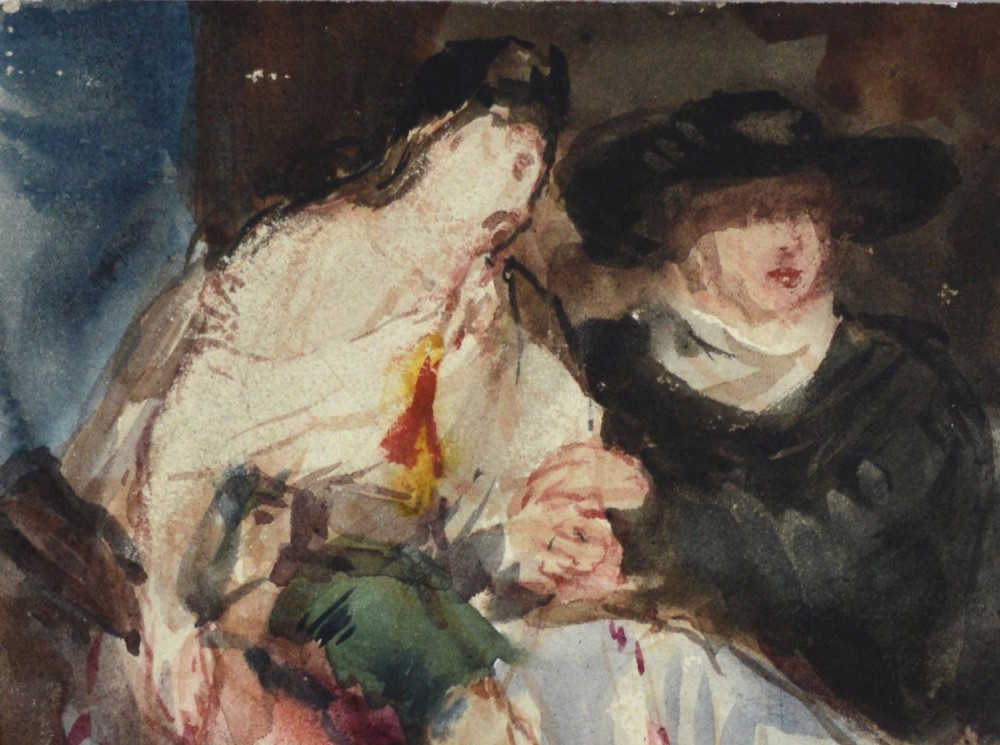
A 19th-century watercolour and ink sketch depicting figures in traditional costume around a horse, rendered in earthy brown, blue, and yellow tones.Detail view 1Detail view 2Detail view 3Detail view 4Detail view 5Detail view 6Detail view 8Detail view 9
1 / 9
19th Century · SA1248579
Watercolour Attributed to Sir David Wilkie, Study for the Wounded Guerilla / the Guerilla’s Return C.1830
£1,600€1,872    $2,032

Delivery and payment for this piece are arranged with the dealer.

Ask the dealer a question
Description
Watercolour with pen and ink on white wove paper. To be sold in its present condition without a mount or frame. The watercolour will be delivered in a conservation standard clear polyester sleeve.

Image: 6 3/16 x 7 7/8 in.(15.7 x 20 cm.)

Condition: The watercolour retains good fresh colouring with only two very small surface abrasions on the upper part of the sheet. Remains of backing paper suggests the drawing has been removed from an album. The lower part on the front of the backing paper is inscribed Wilkie’s Wounded Guerilla in pencil, the back is inscribed A Wounded Guerilla by Wilkie in blue ink.

The original oil painting is housed in the Royal Collection. George IV purchased the oil painting as one of a pair depicting the Guerilla’s Departure and the Guerilla’s return. Having been sent off on his mission with his confessor’s blessing in scene one, the Guerilla is seen here returning, wounded, on his mule, with his left arm in a sling. He is greeted by his horrified wife, while a kneeling woman with a bowl of water is preparing to bathe his wounds. The confessor is helping him to dismount in order that he can be hidden in the cottage (or church?) before it gets light. As with so many of these scenes there are curious religious overtones: in this case an ironic echo of Christ’s Entry into Jerusalem. The oil painting is signed and dated: ‘David Wilkie London 1830.

The painting was engraved and etched; ‘The Wounded Guerilla’ illustrated ‘The Art Journal’ of 1861 (see photo). Please note: the illustrated black and white print is not included in the sale of the watercolour.

Wilkie’s style evolved primarily due to study trips abroad. In 1814 and 1821 he visited Paris, Belgium, and The Netherlands, where he studied art by Rembrandt Harmensz. van Rijn, Titian, and Peter Paul Rubens. As a result, he expressed emotions more sharply, deepened his shadows, and made his colour stronger and his paint smoother. To recuperate from a nervous breakdown after overwork and the deaths of his mother and two brothers, Wilkie spent the mid-1820s in Italy, Austria, Germany, and Spain, he was also in Paris again briefly, in 1828. He then adopted a broader style and began working on history paintings, diminishing his popularity among both public and critics. After visiting the Holy Land to research religious paintings, he died and was buried at sea.
Date19th Century
ReferenceSA1248579
Radnorshire Fine Arts Ltd
Radnorshire Fine Arts LtdSellingantiques verified since Sep 2026

We buy and sell paintings, watercolours, prints and drawings from the 17th to the 20th century

PDF SHARE
SAVE
£1,600
Ask the dealer
Archive I A 19th-century watercolour and ink sketch depicting figures in traditional costume around a horse, rendered in earthy brown, blue, and yellow tones.

Watercolour Attributed to Sir David Wilkie, Study for the Wounded Guerilla / the Guerilla’s Return C.1830

Archive II A 19th-century watercolour and ink sketch depicting figures in traditional costume around a horse, rendered in earthy brown, blue, and yellow tones. View II
Archive III A 19th-century watercolour and ink sketch depicting figures in traditional costume around a horse, rendered in earthy brown, blue, and yellow tones. View III
Archive IV A 19th-century watercolour and ink sketch depicting figures in traditional costume around a horse, rendered in earthy brown, blue, and yellow tones. View IV
Archive V A 19th-century watercolour and ink sketch depicting figures in traditional costume around a horse, rendered in earthy brown, blue, and yellow tones. View V
Archive VI A 19th-century watercolour and ink sketch depicting figures in traditional costume around a horse, rendered in earthy brown, blue, and yellow tones. View VI
Archive VII A 19th-century watercolour and ink sketch depicting figures in traditional costume around a horse, rendered in earthy brown, blue, and yellow tones. View VII
Archive VIII A 19th-century watercolour and ink sketch depicting figures in traditional costume around a horse, rendered in earthy brown, blue, and yellow tones. View VIII
Archive IX A 19th-century watercolour and ink sketch depicting figures in traditional costume around a horse, rendered in earthy brown, blue, and yellow tones. View IX
Enlarged Archival View
Telephone 07790 208712
Location
Powys
Wales
United Kingdom

By appointment.
Dealer Profile Page sellingantiques.co.uk/rfa
Verified Since Sep 2026
Items For Sale 54
Items Sold 6
Radnorshire Fine Arts Ltd
Verified Since Sep 2026
View Dealer Info
Location: Powys, Wales, United Kingdom, , By appointment.
Verified
Sep 2026
For Sale
54
Sold
6
A 19th-century watercolour and ink sketch depicting figures in traditional costume around a horse, rendered in earthy brown, blue, and yellow tones.
Watercolour Attributed to Sir David Wilkie, Study for The Wounded Guerilla / The Guerilla’s Return c.1830
Ref: SA1248579
A 19th-century watercolour and ink sketch depicting figures in traditional costume around a horse, rendered in earthy brown, blue, and yellow tones.
Detail View 1
Detail View 2
Detail View 3
Detail View 4
Detail View 5
Detail View 6
Detail View 8
Detail View 9
Archival Detail
Every single antique dealer on our platform is individually approved by our internal team. We verify their professional trade history, ethical standards, and photographic quality to ensure a secure, high-standard buying environment. Upon joining, every dealer agrees to a strict 9-point code of conduct. While issues can occasionally arise, our dealers typically resolve them swiftly and directly with the buyer. In fact, since our founding in 2002, Sellingantiques has only had to step in to help resolve an issue on roughly five occasions—a true testament to the quality of our dealers and their dedication to your happiness.
Our dealers are highly experienced in packing and shipping fragile, high-value antiques. Because you are in direct contact with the dealer, you will be able to easily go through all available shipping and insurance options together to ensure your item arrives safely.
Antiques are the ultimate green purchase. By choosing historical pieces over newly manufactured goods, you completely eliminate the carbon footprint of modern mass production while preserving exceptional, timeless craftsmanship.
Written by Sellingantiques from the dealer’s photographs and listing
  • ObjectFine Art Painting
  • Period19th century
  • StyleRomanticism
  • MaterialPaper, Watercolour, Ink
  • ColourWarm Brown
  • MotifsFigurative composition, Fluid ink wash, Earthy palette, Preparatory sketch work

This nineteenth-century fine art painting is a watercolour and ink preparatory sketch attributed to Sir David Wilkie, created in the Romanticism style on white wove paper. The figurative composition shows figures in traditional costume around a mule, rendered in an earthy palette with fluid ink wash, warm brown, blue, and yellow tones, with two very small surface abrasions on the upper part of the sheet and remains of backing paper. The drawing measures 15.7 x 20 cm. This piece is suitable for display in a gentleman's library, positioned above a sideboard. It is sold in its present condition without a mount or frame, delivered in a conservation standard clear polyester sleeve.

Early 19th-century British watercolour studies are defined by fluid brushwork, expressive ink washes, and narrative compositions. Artists of the Romantic era used these studies to capture atmospheric light and quick figure poses before executing finished oil canvases.

Artists during the 1830s typically worked on handmade rag paper using water-based pigment cakes, natural sable brushes, and iron gall ink for loose architectural or figurative outlines.

Authentic period studies display natural paper age toning, foxing consistent with organic rag paper, freehand graphite or ink underdrawings, and pigments typical of the 19th century such as Prussian blue and ochres.

An antique watercolour study can be mounted in a simple hardwood frame with a museum-grade archival mount, making it ideal for hanging in a gallery wall or leaning against a dark wood sideboard.

To preserve a watercolour on paper, frame it behind UV-filtering glass, avoid direct sunlight, and display it in a climate-controlled room away from humidity to prevent pigment fading and paper degradation.
items
Add keywords to the filter
Price
£100
£250000
Era
Period
Style
Material
Origin
Stock Location
Recently Added
Online Payments
Categories