




Original Ink Wash Drawing
An original ink wash drawing brings immediate graphic depth to a wall, combining fluent line work with subtle tonal shadow.
Original Ink Wash Drawing
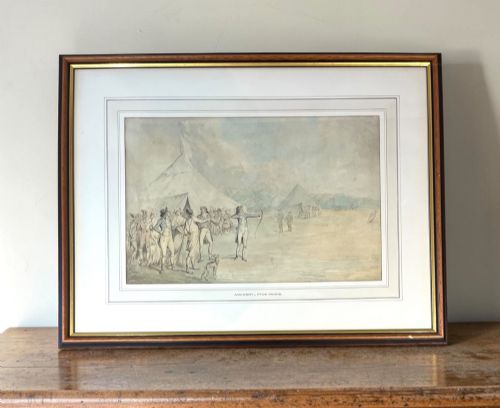
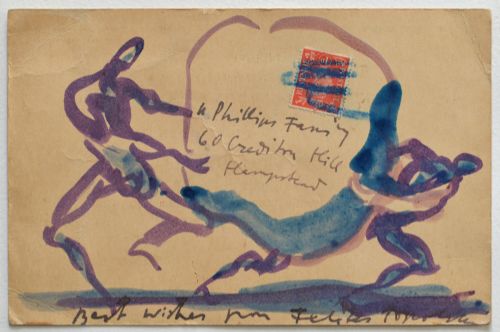
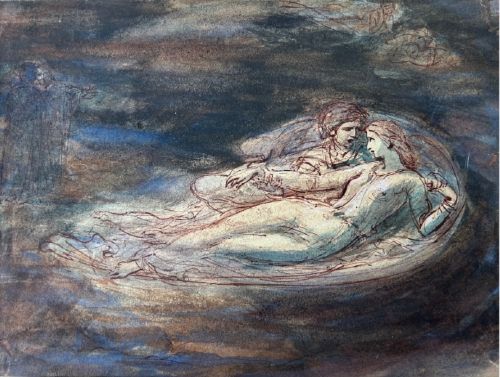
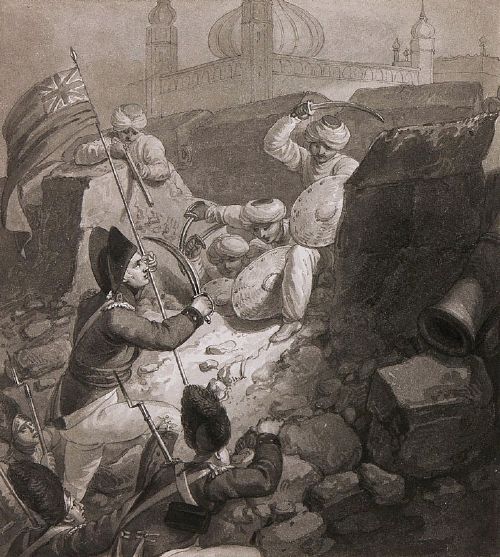
When you search for an original ink wash drawing, you encounter works on paper executed across the eighteenth, nineteenth, and twentieth centuries. These pieces range from detailed satirical illustration and landscape views to portraits and historical battle scenes.
You are most likely to meet nineteenth century examples and early twentieth century British works on this page. Common forms include framed original artwork, watercolour paintings, and pen and ink sketches.
The origins span English, Irish, French, Dutch, and Swiss hands, capturing subjects from domestic rural life to continental townscapes and classical literary subjects.
Materials and techniques
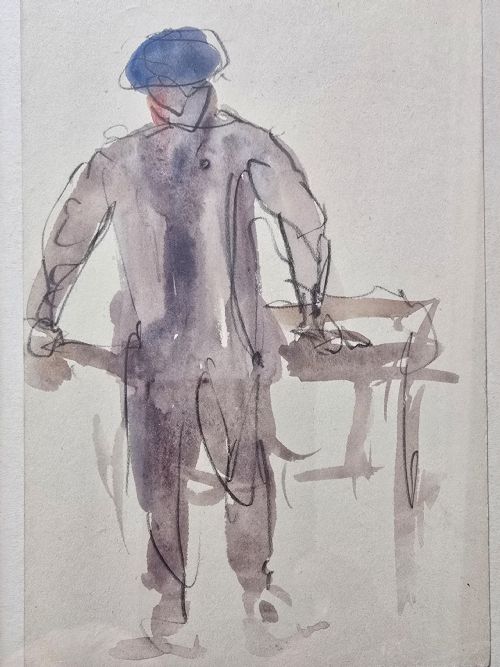
Artists executed these works primarily upon paper support, utilising iron gall or carbon inks applied with pen or brush. They introduced watercolours, sepia ink, gouache, and plain wash to build monochromatic depth and chromatic highlights.
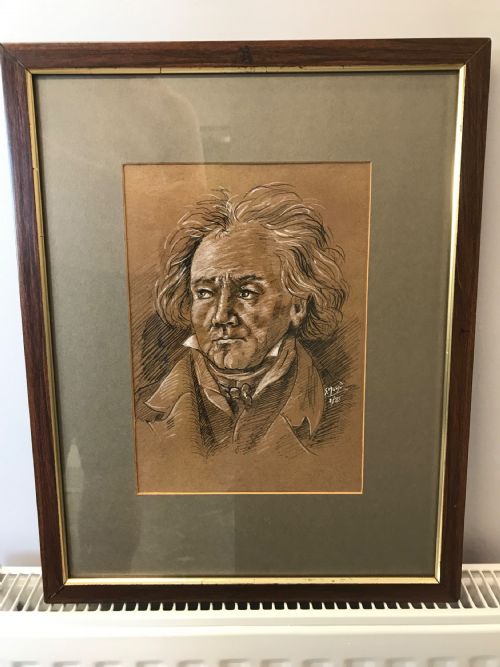
Makers framed their compositions within wood and glass settings to protect the fragile paper ground. Pigments and ink washes were diluted to varying opacity, creating layered shadows alongside sharp linear contours.
Original Ink Wash Drawing Retail Price Guide 2026
Typical asking prices for original ink wash drawing among the pieces listed under this phrase on Sellingantiques today, from the lower quarter to the upper quarter. They describe what is for sale here now, not the wider market.
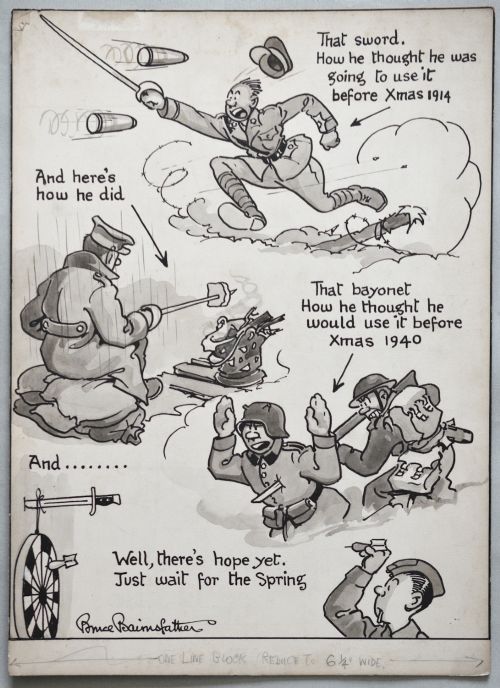
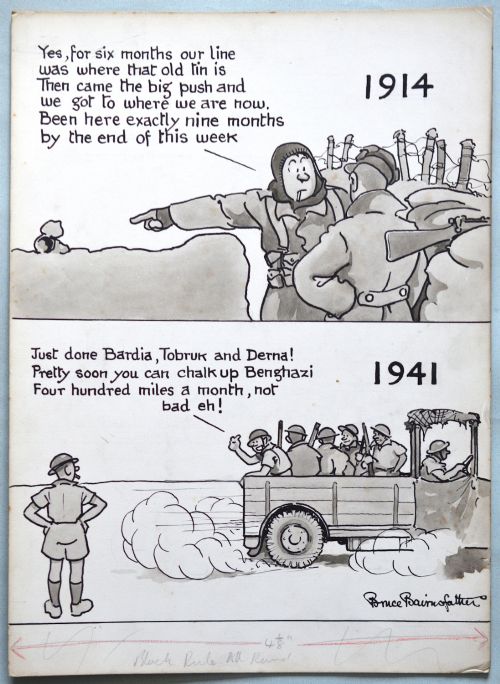
A seventeenth century biblical illustration depicting peasant figures sits alongside twentieth century satirical cartoons about muddy trenches.
What separates the best examples
Quality rests in the surety of the initial pen line and the controlled transparency of the wash layers. A superior piece demonstrates economy of stroke and confident tonal graduation rather than overworked shading.
Condition of the paper support and stability of the ink significantly influence value. Stronger sheets retain their original contrast without excessive foxing or acidic discolouration from old mounts.
Bruce Bairnsfather·William Marshall Craig·Michael Healy·Stanley Orchart·Edward Dayes·Thomas Rowlandson·Johan Noah Bemmel·Fred Lawson·Jacques Callot·John Stanton Ward
The Original Ink Wash Drawing Glossary
- Wash
- A technique where ink or watercolour is diluted with water to create a semi-transparent layer of tone on paper. This method establishes shadow and atmospheric depth behind the primary lines.
- Gouache
- An opaque watercolour medium containing a binding agent such as gum, mixed with chalk or white pigment. Artists utilised it to add solid highlights and opaque details over ink lines.
- Sepia ink
- A brown pigment traditionally derived from the ink sac of the cuttlefish. It produces distinctive warm, reddish-brown tones favoured in eighteenth and nineteenth century sketches.
- Pre-Raphaelite
- A nineteenth century style characterised by detailed observation, bright colour, and complex literary or religious subjects. Works in this manner often display meticulous linear precision.
Original Ink Wash Drawing: Frequently Asked Questions
How do I date an ink wash drawing?
Examine the paper watermark, the style of the script if titled, and the costume or architectural details depicted within the scene. Stylistic conventions of the eighteenth and nineteenth centuries provide reliable chronological markers.
Paper stock and mounting techniques also change over time. Older pieces frequently utilise handmade wove or laid paper which differs visibly from later machine-made sheets.
What is the difference between ink wash and watercolour?
Ink wash relies primarily on monochrome or sepia tones applied to build shadow and form through dilution. Watercolour employs a wider spectrum of transparent pigments to render full colour.
Many works combine both techniques, using a strict pen and ink outline reinforced by monochrome wash, with occasional passages of colour.
How should I frame and display works on paper?
Protect the drawing behind glass using acid-free mount board to keep the paper surface from touching the glazing. This prevents condensation damage and preserves the fragile media.
Position the framed artwork away from direct sunlight to avoid fading the ink and yellowing the paper support over time.
Are these works always unique?
Original drawings and sketches are inherently unique pieces executed directly by the artist's hand. Unlike prints or published illustrations, they carry the distinct initial pen strokes and wash variations of a single creation.
Preparatory drawings may relate to larger painted compositions or published books, but the sheet itself remains a distinct primary work.