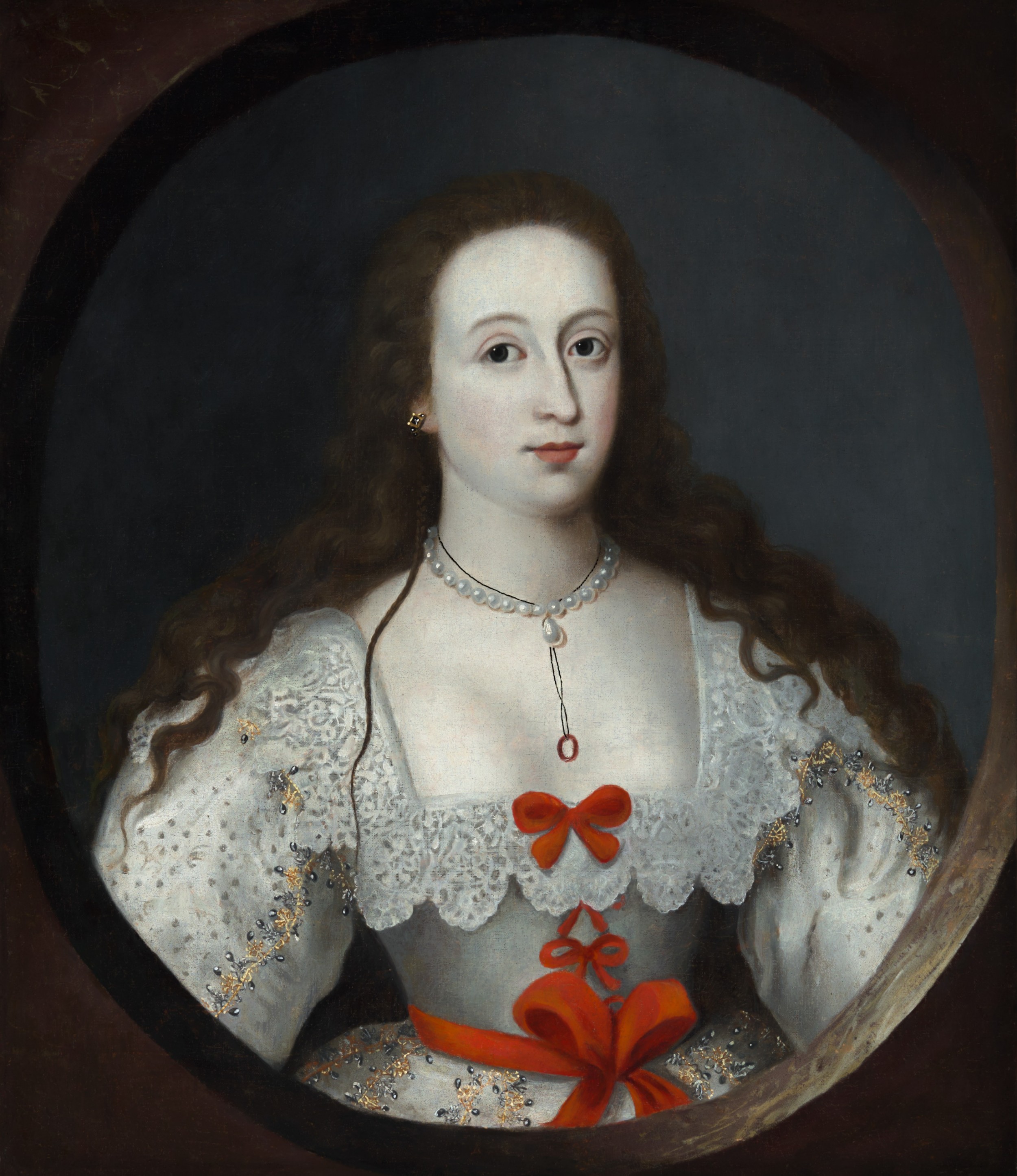
Titan Fine Art has dated this Jacobean Oil Portrait Painting to the 17th Century.
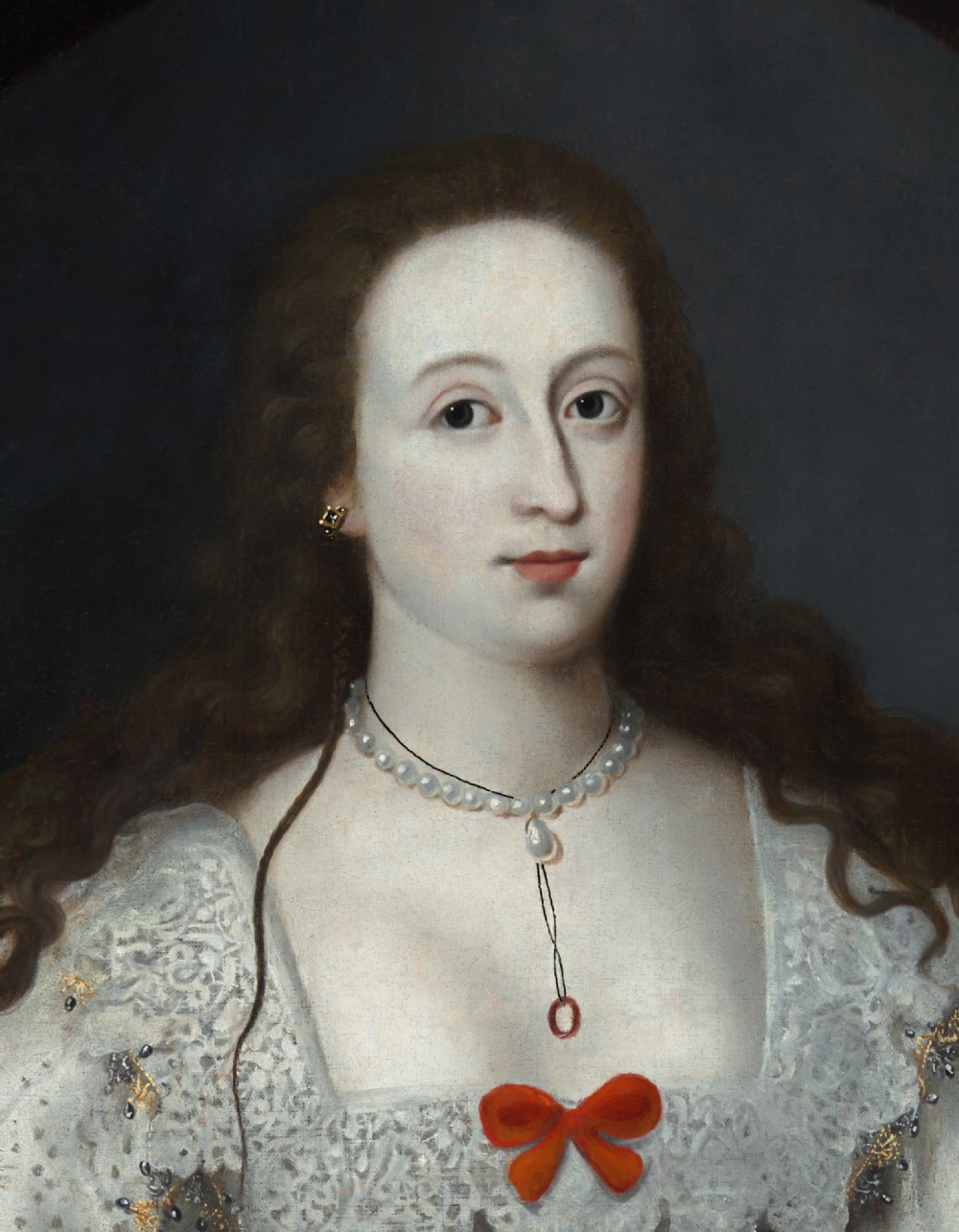
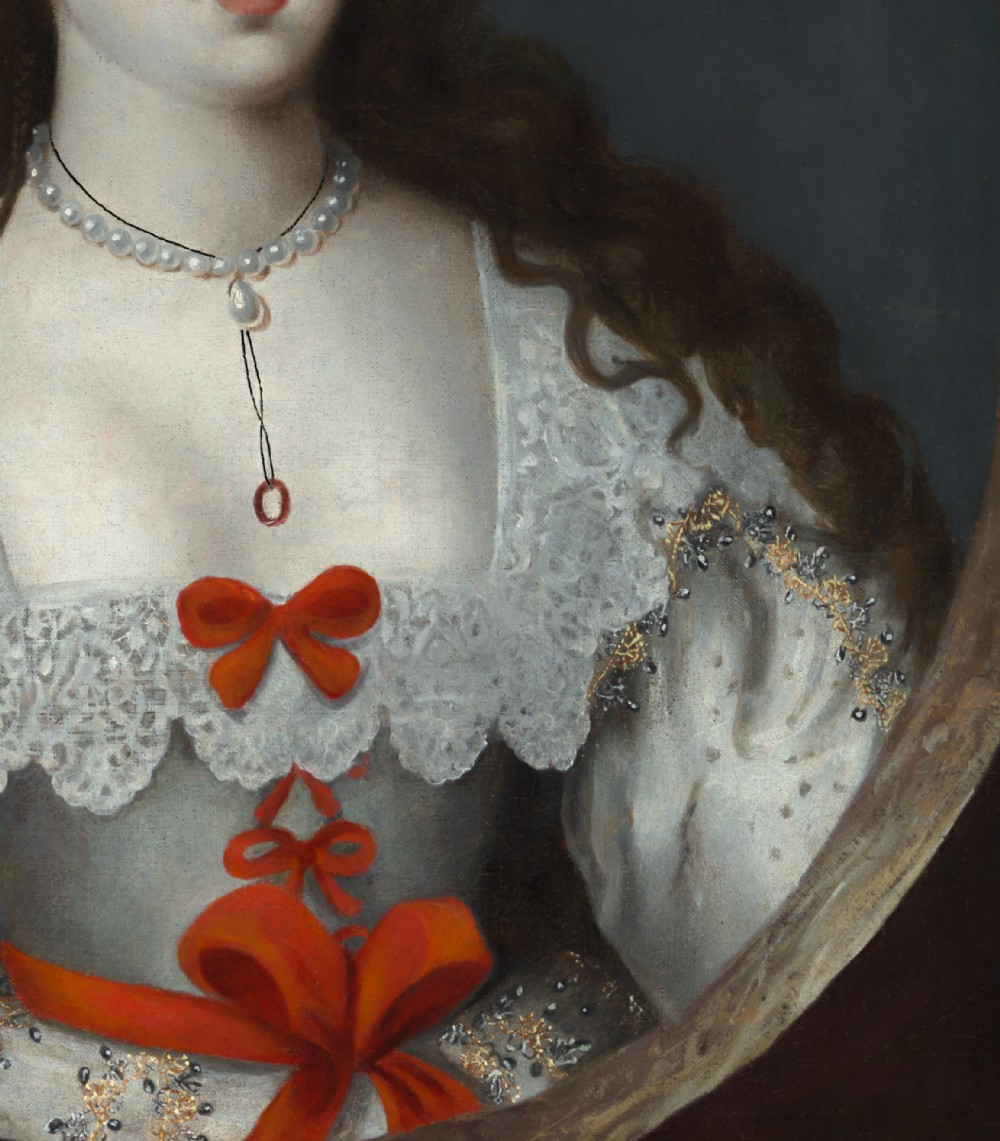
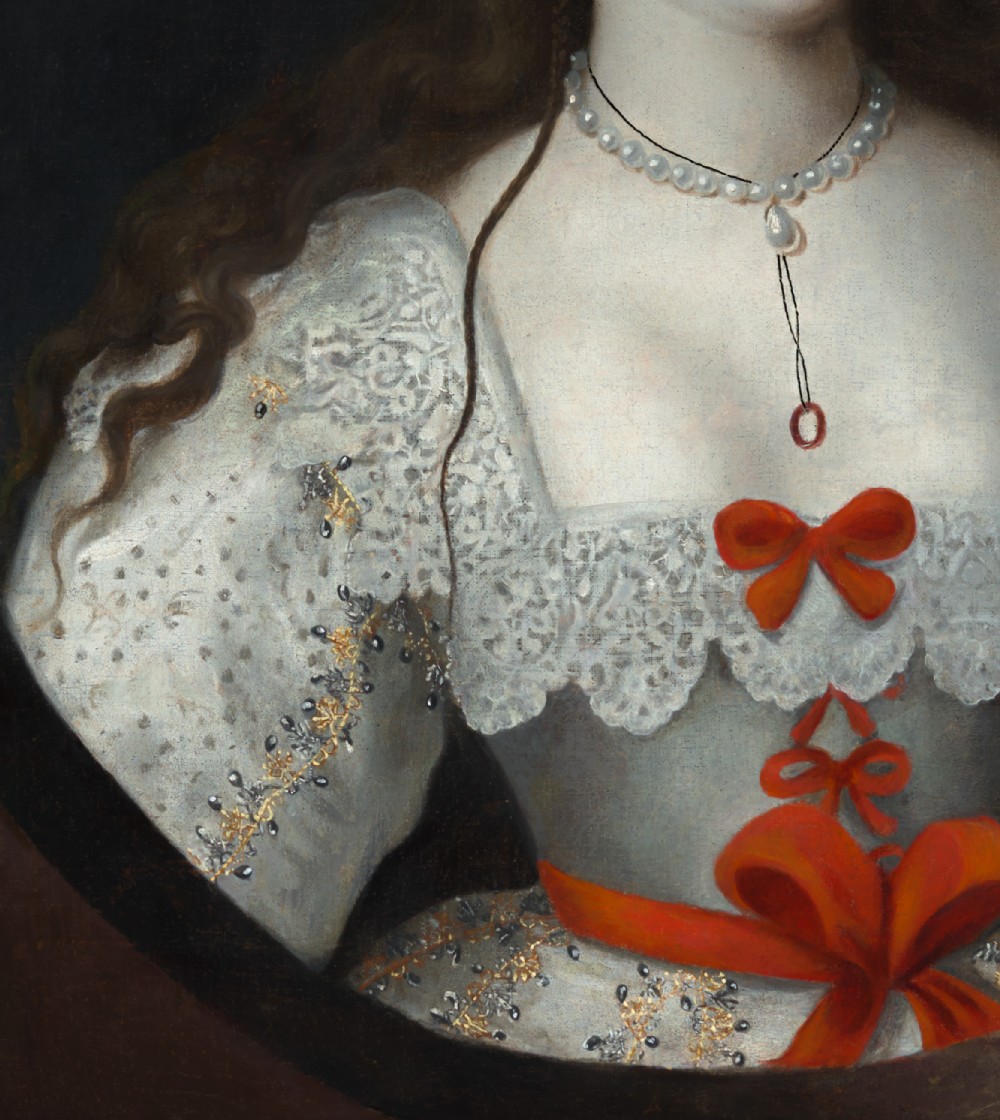
Pearls encircle her neck, with a fine black thread worn just above them. Her abundant brown hair falls freely around her shoulders, while a narrow plait descends over her right shoulder. Framed by a painted oval, she meets the viewer with a directness that gives this four-hundred-year-old likeness a striking sense of personality.
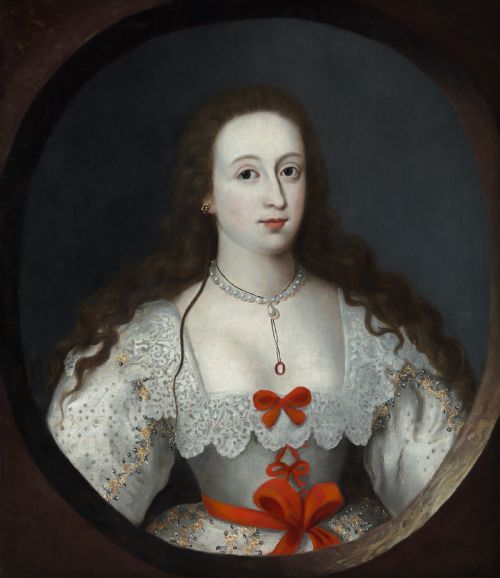
Her identity is not yet known, but the refinement of her costume and jewellery suggests a prosperous early Stuart household, perhaps within the English gentry or affluent professional and mercantile circles. A portrait such as this might have been commissioned to commemorate a daughter's coming of age, an impending marriage or an important family connection. Her loose hair could suggest youth or maidenhood, although it is not proof that she was unmarried. The painting offers an evocative glimpse of a woman's life at a time when portraits helped preserve family memory across generations.
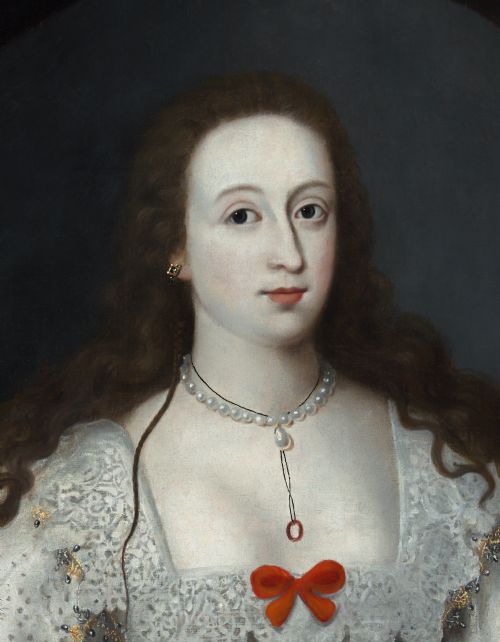
The costume provides important clues to the date. The soft lace-edged neckline and relatively restrained silhouette belong to the transition from the high ruffs and structured fashions of the early Jacobean period towards the more relaxed styles of the 1620s. Black silk threads were worn as fashionable necklaces from around 1610 and remained in use into the 1630s, sometimes combined with pearls or suspended jewels. Together with the red bows, richly worked dress and distinctive hairstyle, these details support a date around 1620–1630.
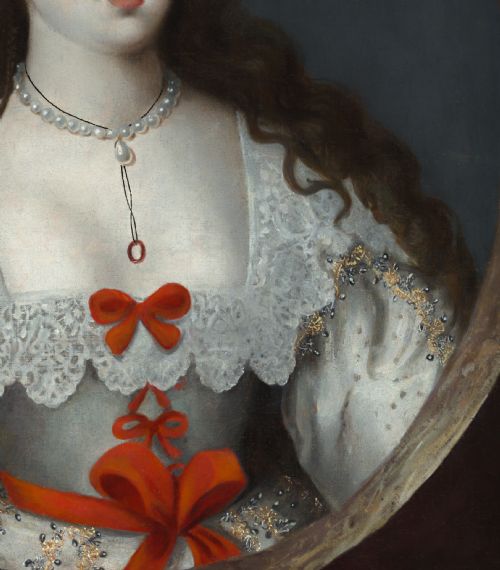
The attribution reflects the painting's close relationship to the work of Cornelius Johnson (1593–1661), a London-born portraitist of continental Protestant ancestry who established a distinguished practice among the English gentry and aristocracy and became a painter to Charles I in 1632. Particularly revealing comparisons are his signed and dated portraits tentatively identified as Lady Judith Corbet (1619), a lady of the Chetwynd family (1623), and An Unknown Noblewoman (1624). Their painted ovals, elaborate lace, jewellery and decorative costume help place the present work within Johnson's artistic world.
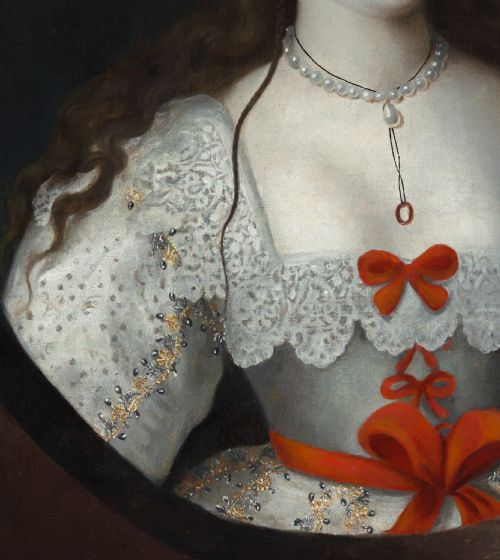
Painted in the years surrounding the transition from James I to Charles I, the portrait belongs to an age of changing court fashions, European dynastic politics and growing demand for family portraiture. No particular country house or sitter identity can yet be established. Its appeal lies in the individuality of the young woman's gaze and in the exceptionally engaging details of her pearls, black silk thread, red bows and long plaited hair.
Framed: 96 × 85 cm (37¾ × 33½ in.)
Complete description at: www.titanfineart.com
Titan Fine Art has dated this Jacobean Oil Portrait Painting to the 17th Century.
Specialist in 17th & 18thc portraits. Highly curated selection, museum-level research & pro conservation. Exceptional art, expertly vetted.
You can view the stock and full dealer information on the Titan Fine Art Profile Page
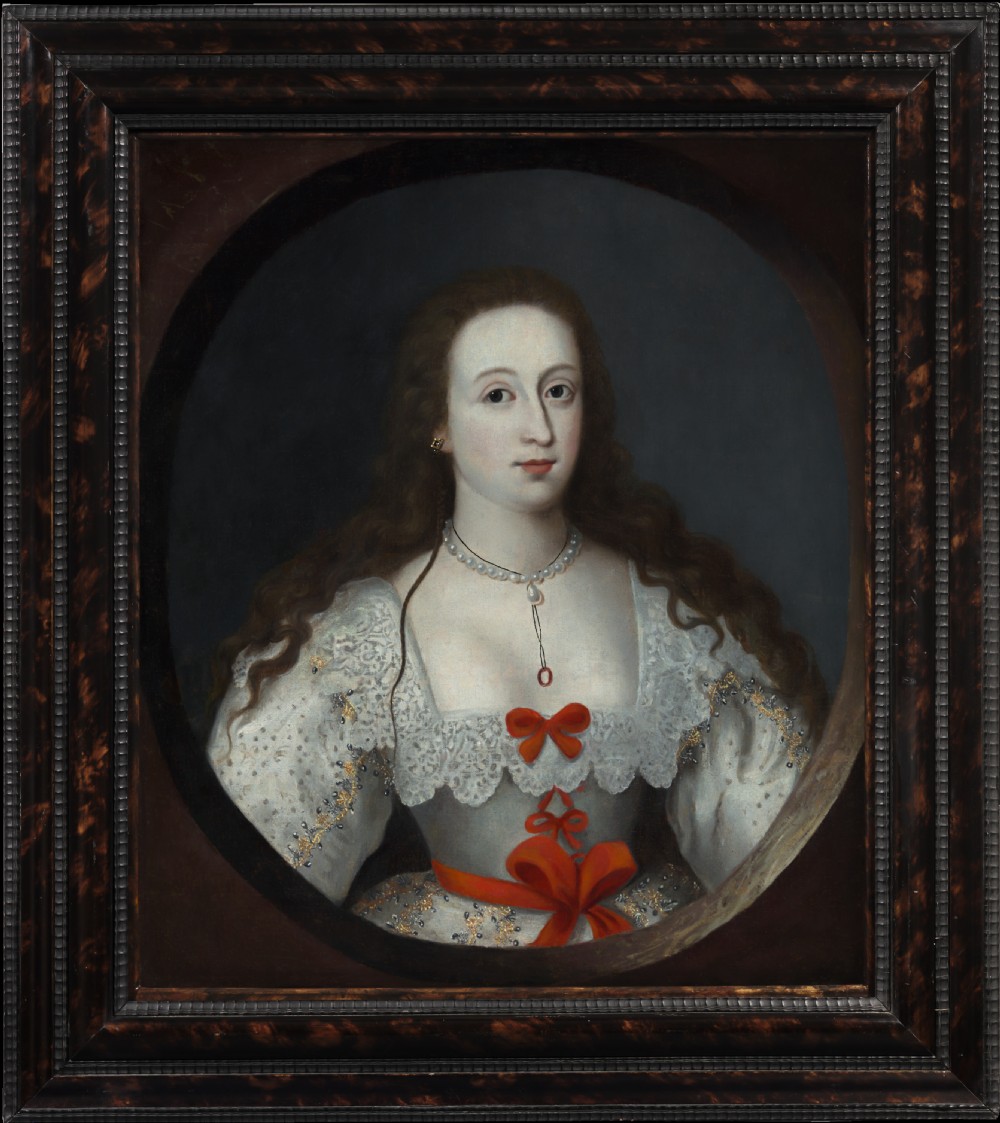
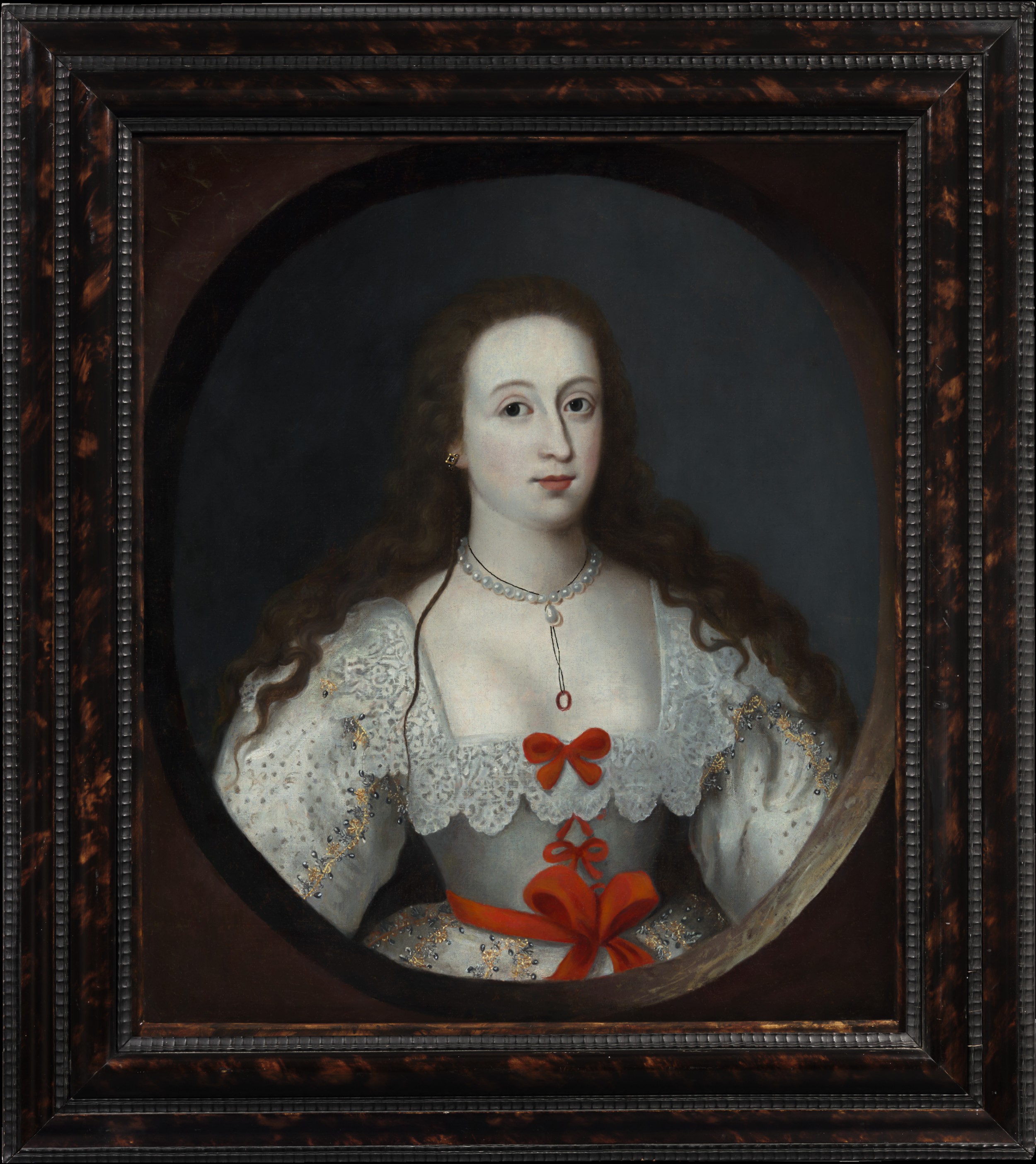
Jacobean Portrait of a Young Lady with Long Hair, in White Dress with Red Bows, C.1620-1630; Circle of Cornelius Johnson (1593–1661), Oil on Canvas Painting