19,565  PAGES BROWSED TODAY PAGES TODAY 73 ANTIQUES UPLOADED TODAYNEW ARRIVALS
73 ITEMS ADDED TODAY
Sort Order
Items Per Page
Browse Categories
Sort order
Relevant Links
Items per page
ID #SA1233386
FOR SALE
£450
Email Buy
Save
18th Century Portrait Engraving of the Duchess of Richmond
Miles Barton Art and Interiors
for sale €527     $572
£450

Miles Barton Art and Interiors

Sellingantiques Verified Since Aug 2026
View Dealers Stock Page
  • About Us
    British and european pictures and works of art from the 17th to 20th century
Id #SA1233386
PDF SHARE
SAVE

18th Century Portrait Engraving of the Duchess of Richmond

18th century
Description

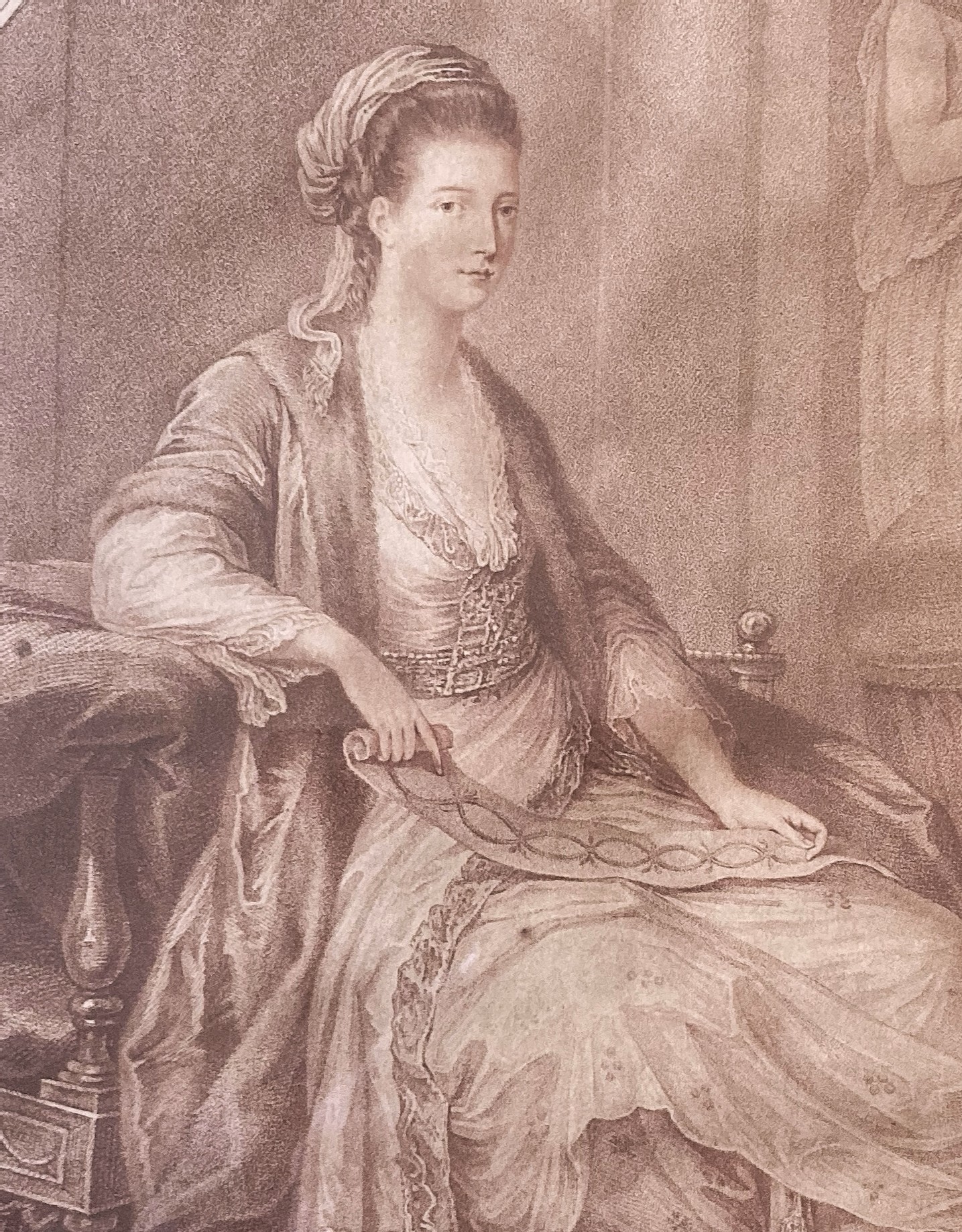
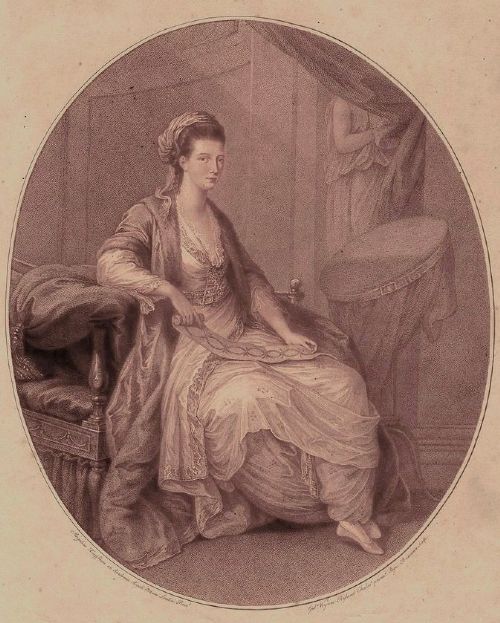
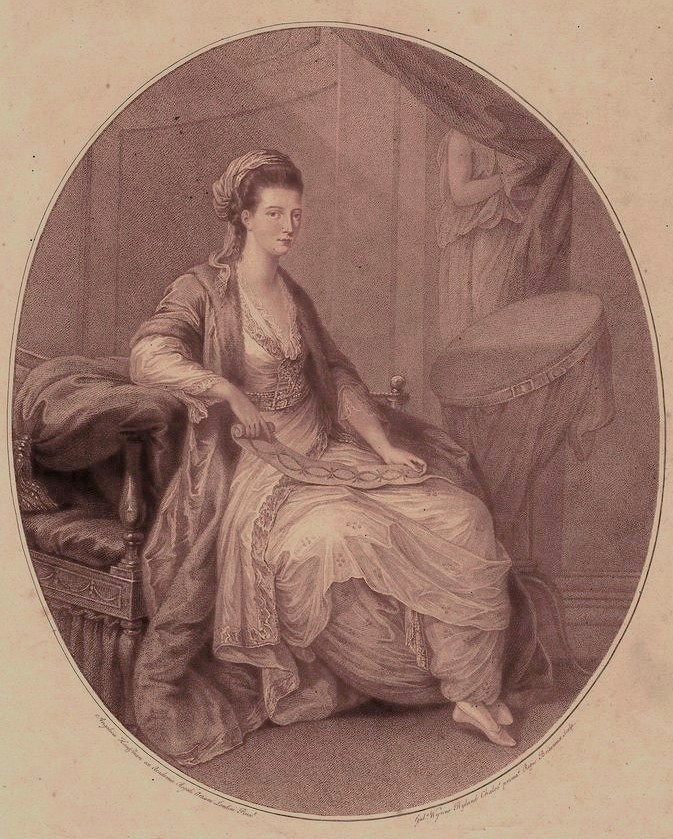
By William Wynne Ryland after Angelika Kauffman.

Stipple and etching printed in sanguine on laid paper, published November 21st 1775 by the engraver, No.159 near Somerset House in the Strand. Fine impression, narrow margins on all sides, held in period carved wood ‘Hogarth’ frame
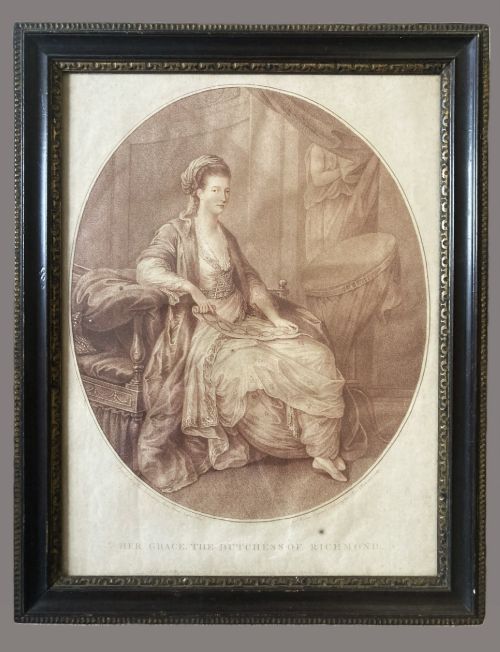
Framed: 42 x 33 cm (16 ½ x 13 in)

Paper: 37 x 28 cm (14 ½ x 11 in)

Provenance: A Country House, Sussex, England

Mary Lennox, Duchess of Richmond, moved amongst the highest echelons of eighteenth-century British society. Born Lady Mary Bruce in 1740, she stepped into the spotlight of the aristocracy at just 16 years old when she married Charles Lennox, the 3rd Duke of Richmond. As the mistress of the magnificent Goodwood House in Sussex, she became celebrated for her striking beauty and refined elegance, anchoring a vibrant social circle while her husband pursued a turbulent career in politics and the military.
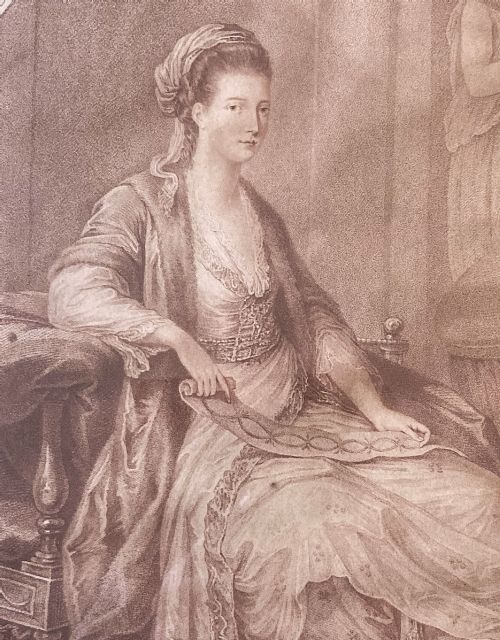
Sanguine stipple engravings after the Swiss Neoclassical painter Angelica Kauffman represent a massive commercial and artistic phenomenon of the late 18th century. Stipple engraving - a technique using thousands of tiny dots to create tonal gradations rather than hard lines - was perfectly suited to capture the soft, delicate skin tones, flowing drapery, and romantic textures of Kauffman's allegorical and mythological paintings. When printed in sanguine (a warm, reddish-brown ink resembling red chalk), these prints mimicked classical drawing styles and became highly fashionable luxury items for home decor.

Angelica Kauffman (1741–1807) was a Swiss Neoclassical painter and child prodigy who became one of Europe's most celebrated artists.

William Wynne Ryland (1732-1783) was a pioneer of the stipple method in England who worked extensively with Kauffman

Physical Dimensions
Height
42cm (16.54")
Width
33cm (12.99")
Depth
3cm (1.18")
Declaration

Miles Barton Art and Interiors has dated this 18th Century Portrait Engraving to the 18th Century.

Reference Numbers
Sellingantiques Reference
SA1233386
Description
By William Wynne Ryland after Angelika Kauffman.
Stipple and etching printed in sanguine on laid paper, published November 21st 1775 by the engraver, No.
Miles Barton Art and Interiors

159 near Somerset House in the Strand. Fine impression, narrow margins on all sides, held in period carved wood ‘Hogarth’ frame

fig 1. An 18th-century oval sepia engraving depicting a seated noblewoman in classical drapery holding a ribbon.
fig 1. 18th Century Portrait Engraving of the Duchess of Richmond

Framed: 42 x 33 cm (16 ½ x 13 in)

Paper: 37 x 28 cm (14 ½ x 11 in)

Provenance: A Country House, Sussex, England

Mary Lennox, Duchess of Richmond, moved amongst the highest echelons of eighteenth-century British society. Born Lady Mary Bruce in 1740, she stepped into the spotlight of the aristocracy at just 16 years old when she married Charles Lennox, the 3rd Duke of Richmond. As the mistress of the magnificent Goodwood House in Sussex, she became celebrated for her striking beauty and refined elegance, anchoring a vibrant social circle while her husband pursued a turbulent career in politics and the military.

fig 2. An 18th-century oval sepia engraving depicting a seated noblewoman in classical drapery holding a ribbon.
fig 2. 18th Century Portrait Engraving of the Duchess of Richmond

Sanguine stipple engravings after the Swiss Neoclassical painter Angelica Kauffman represent a massive commercial and artistic phenomenon of the late 18th century. Stipple engraving - a technique using thousands of tiny dots to create tonal gradations rather than hard lines - was perfectly suited to capture the soft, delicate skin tones, flowing drapery, and romantic textures of Kauffman's allegorical and mythological paintings. When printed in sanguine (a warm, reddish-brown ink resembling red chalk), these prints mimicked classical drawing styles and became highly fashionable luxury items for home decor.

Angelica Kauffman (1741–1807) was a Swiss Neoclassical painter and child prodigy who became one of Europe's most celebrated artists.

William Wynne Ryland (1732-1783) was a pioneer of the stipple method in England who worked extensively with Kauffman

Height
42cm (16.54")
Width
33cm (12.99")
Depth
3cm (1.18")
Date of Manufacture

Miles Barton Art and Interiors has dated this 18th Century Portrait Engraving to the 18th Century.

Reference Numbers
Sellingantiques Ref
SA1233386
Miles Barton Art and Interiors
Sellingantiques verified Since Aug 2026

British and european pictures and works of art from the 17th to 20th century

Dealer Profile

You can view the stock and full dealer information on the Miles Barton Art and Interiors Profile Page
PDF SHARE
SAVE
An 18th-century oval sepia engraving depicting a seated noblewoman in classical drapery holding a ribbon.
1 / 3
Archive I An 18th-century oval sepia engraving depicting a seated noblewoman in classical drapery holding a ribbon.

18th Century Portrait Engraving of the Duchess of Richmond
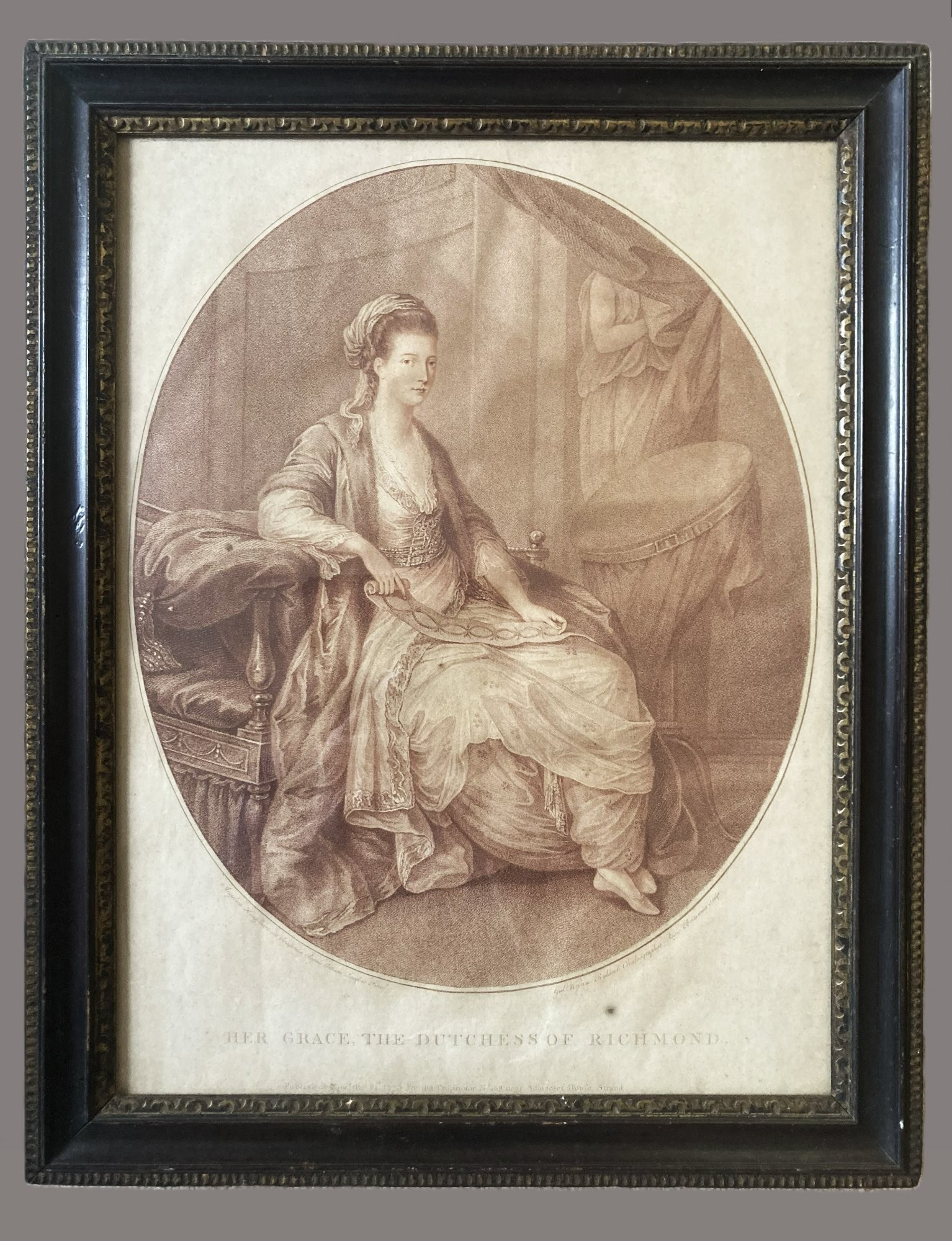
Archive II An 18th-century oval sepia engraving depicting a seated noblewoman in classical drapery holding a ribbon. View II
Archive III An 18th-century oval sepia engraving depicting a seated noblewoman in classical drapery holding a ribbon. View III
Enlarged Archival View
Telephone 07941 233015
Location
London and Somerset
United Kingdom
Verified Since Aug 2026
Items For Sale 16
Miles Barton Art and Interiors
Verified Since Aug 2026
View Dealer Info
Location: London and Somerset, United Kingdom
Verified
Aug 2026
For Sale
16
An 18th-century oval sepia engraving depicting a seated noblewoman in classical drapery holding a ribbon.
18th century Portrait Engraving of The Duchess of Richmond
Ref: SA1233386
An 18th-century oval sepia engraving depicting a seated noblewoman in classical drapery holding a ribbon.
Detail View 1
Detail View 2
Archival Detail
Every single antique dealer on our platform is individually approved by our internal team. We verify their professional trade history, ethical standards, and photographic quality to ensure a secure, high-standard buying environment. Upon joining, every dealer agrees to a strict 9-point code of conduct. While issues can occasionally arise, our dealers typically resolve them swiftly and directly with the buyer. In fact, since our founding in 2002, Sellingantiques has only had to step in to help resolve an issue on roughly five occasions—a true testament to the quality of our dealers and their dedication to your happiness.
Our dealers are highly experienced in packing and shipping fragile, high-value antiques. Because you are in direct contact with the dealer, you will be able to easily go through all available shipping and insurance options together to ensure your item arrives safely.
Antiques are the ultimate green purchase. By choosing historical pieces over newly manufactured goods, you completely eliminate the carbon footprint of modern mass production while preserving exceptional, timeless craftsmanship.

During the 18th century, portrait engravings and stipple prints were the primary medium for reproducing painted portraits of nobility, making fine art accessible to a broader audience across Georgian Britain.

These prints were typically executed on heavy handmade rag paper using copperplate engraving or stipple etching techniques, utilising sepia or monochrome carbon-based inks.

Authentic period prints feature a visible plate mark indented into the paper surface, natural age-related toning, fine hand-engraved lines, and original publisher inscriptions along the lower margin.

Hang the print in a simple wood or gilt frame as part of a gallery wall, or display it above a console table or desk to introduce historical depth to contemporary spaces.

Keep the artwork framed behind UV-filtering glass with acid-free mounting materials, positioned away from direct sunlight, high humidity, and extreme temperature fluctuations to prevent paper degradation.
items
Add keywords to the filter
Price
£100
£250000
Era
Movements
Material
Origin
Stock Location
Freshness
Online Payments
Categories