21,165  PAGES BROWSED TODAY PAGES TODAY • 49 ANTIQUES UPLOADED TODAYNEW ARRIVALS
GIFTS
49 ITEMS ADDED TODAY
Sort Order
Items Per Page
Antiques dealer?
Join as a Seller
Browse Categories
Sort order
Relevant Links
Items per page
sold SA1218479
Sorry, but this item has been sold.
Regent Antiques

Regent Antiques

Sellingantiques Verified Since Sep 2016
Browse dealers 639 items
  • About Us
    We specialise in english and continental furniture, silver, porcelain and decorative items.
  • Trade Associations
    Regent Antiques is a registered member of LAPADA  CINOA
Id #SA1218479
SHARE
SAVE

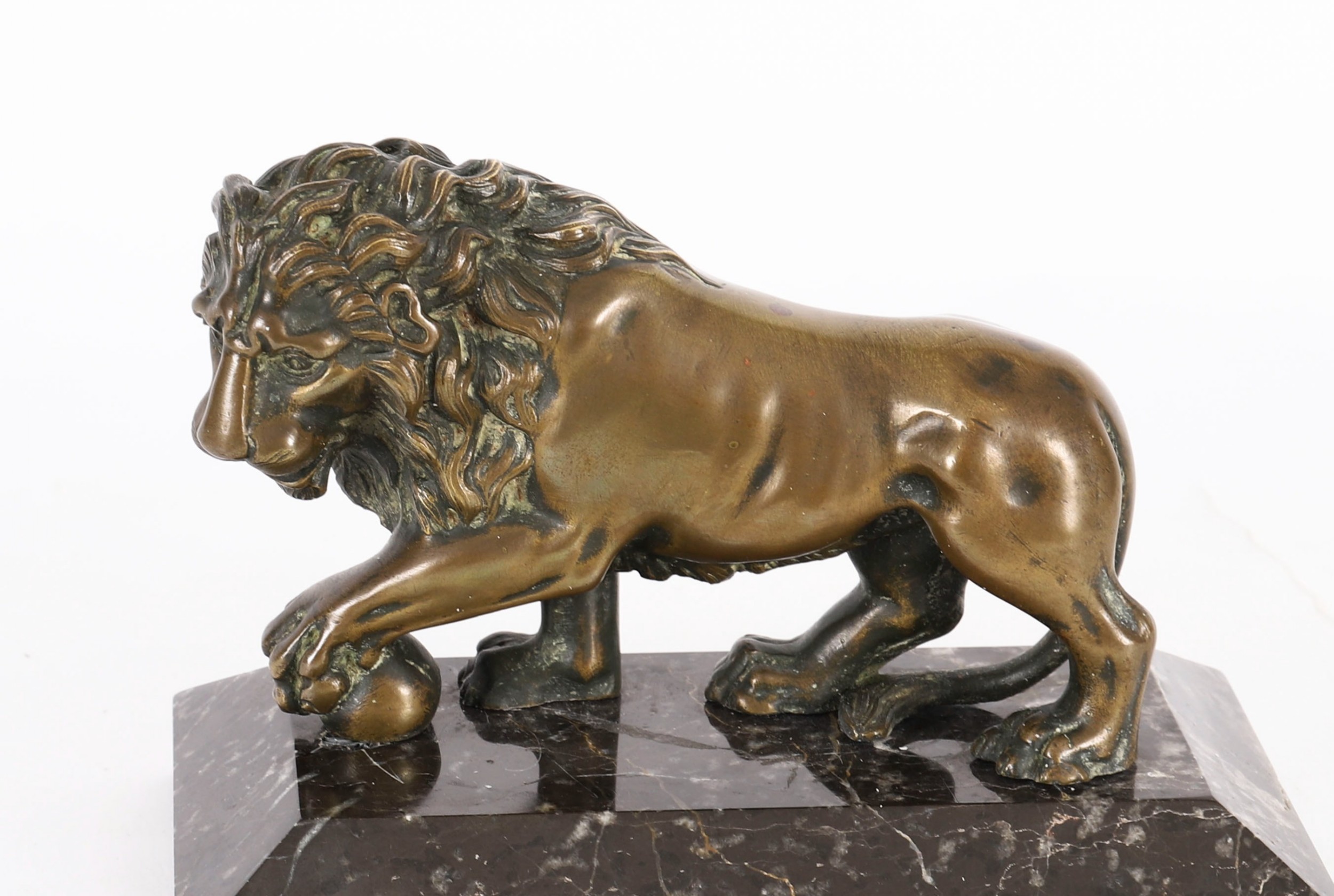
Antique French Grand Tour Bronze Sculpture of the Medici Lion 19th C

19th century
Sold 15 June 2026 · Regent Antiques
This “Antique French Grand Tour Bronze Sculpture of the Medici Lion 19th C” found a buyer.

It was listed by Regent Antiques. Sold pieces stay on Sellingantiques as a record of what has passed through, and the next one is rarely far away.

Description

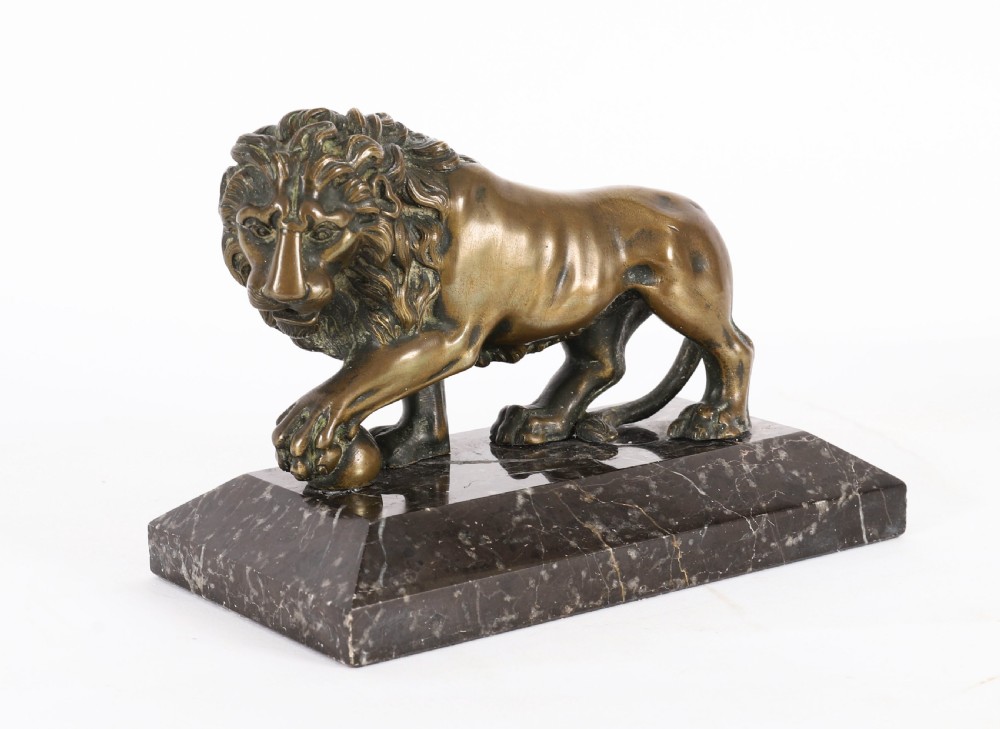
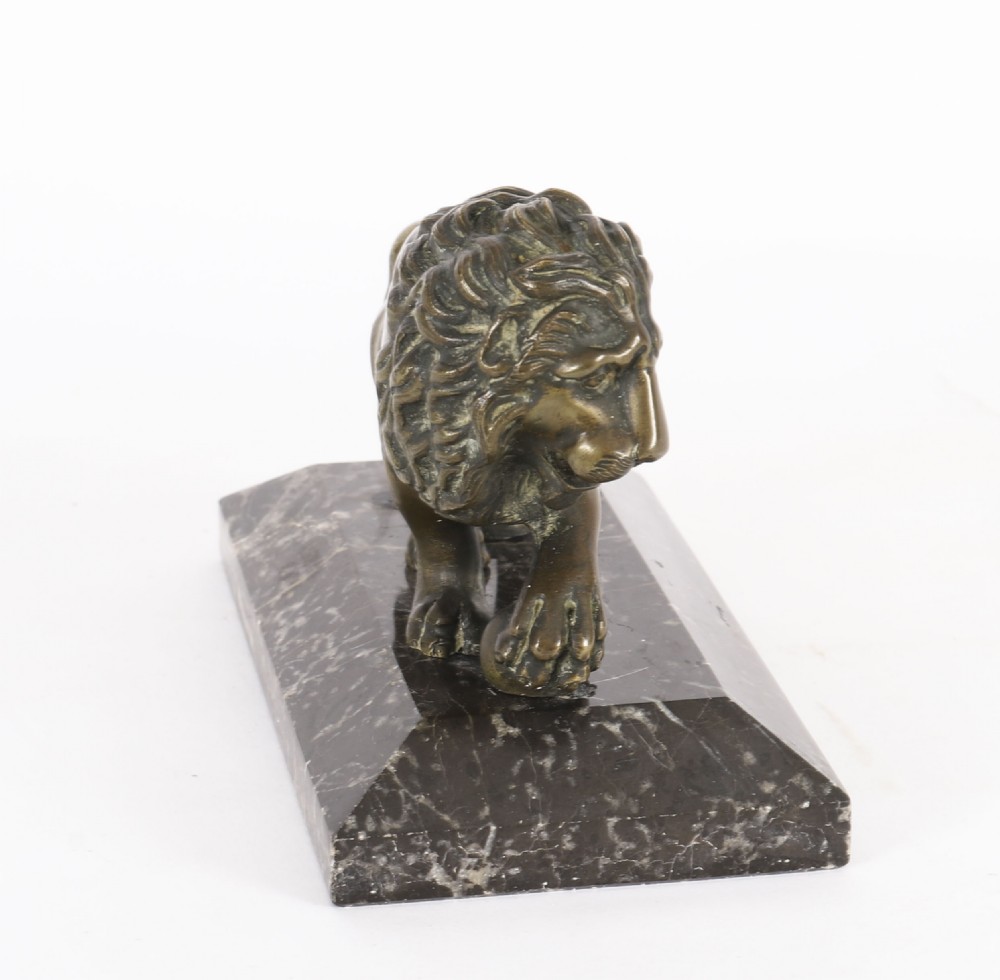
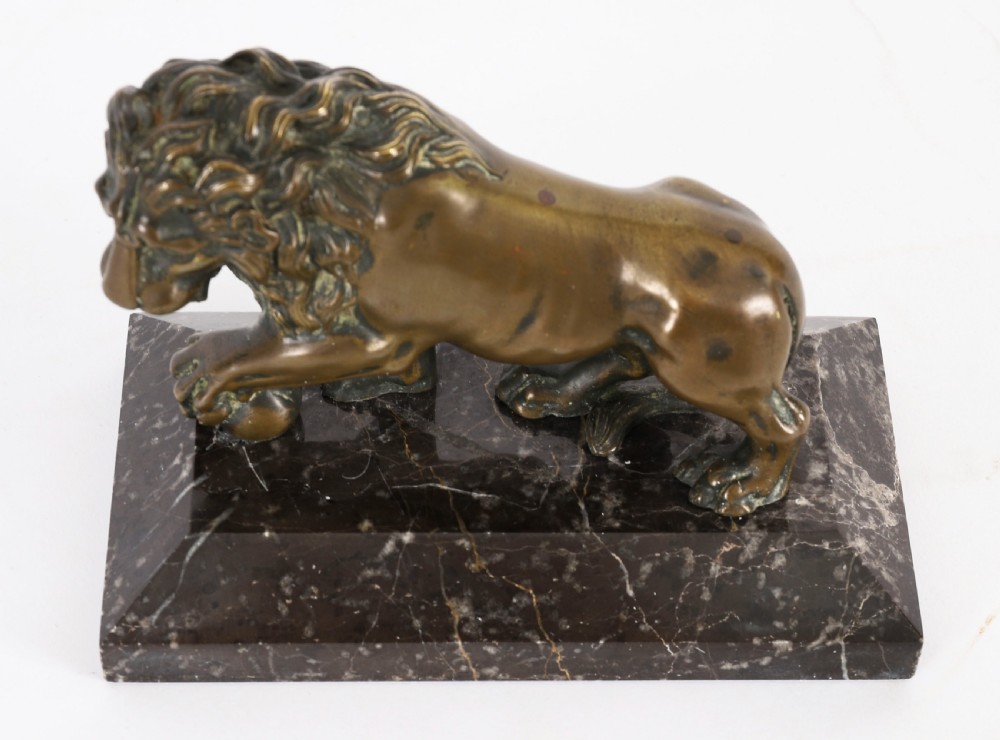
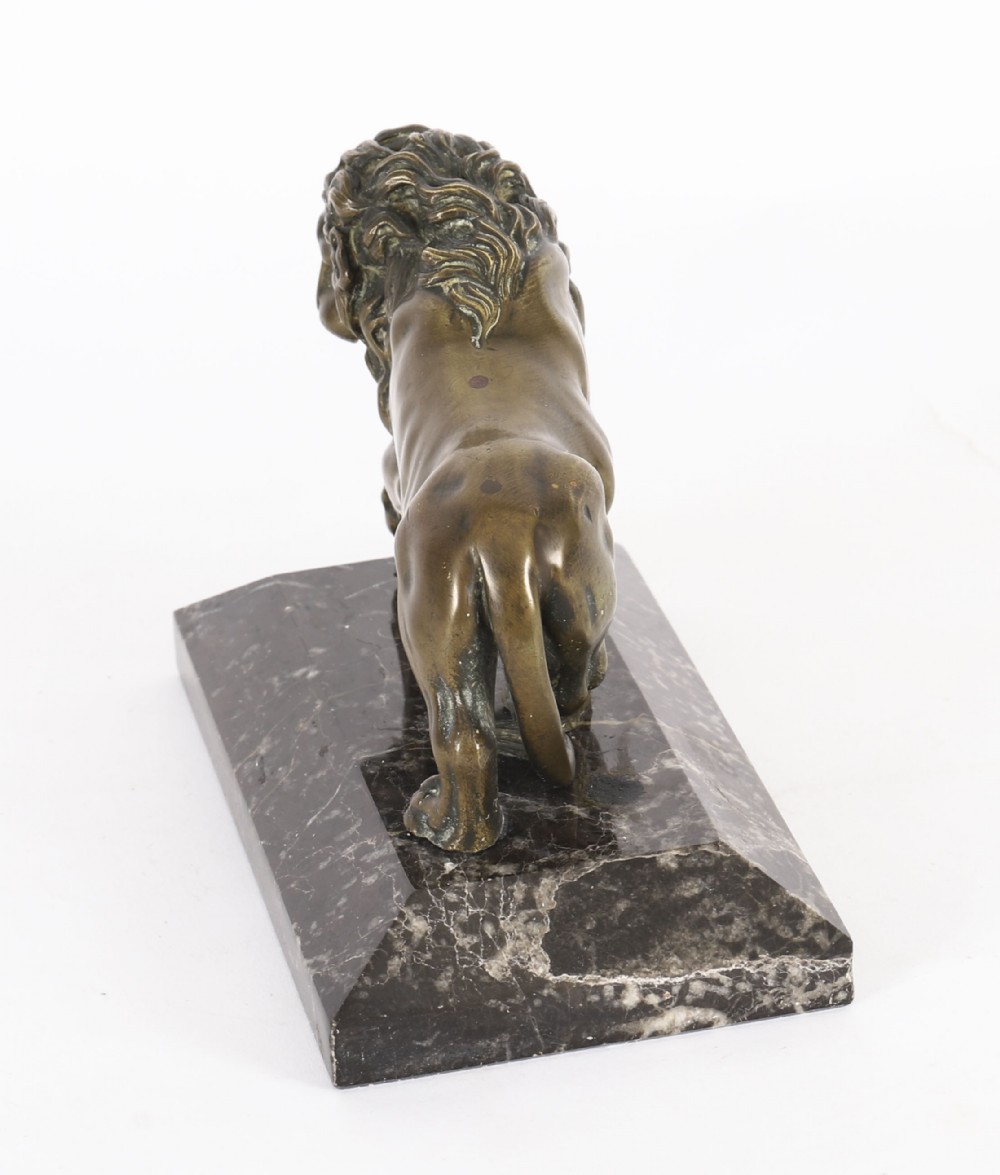
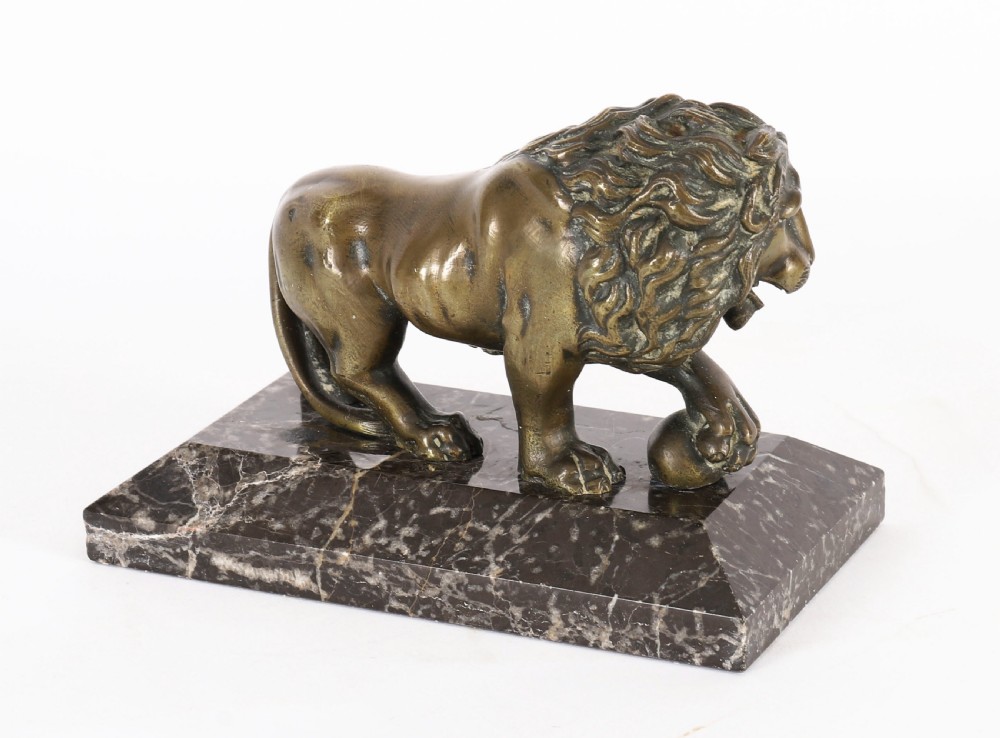
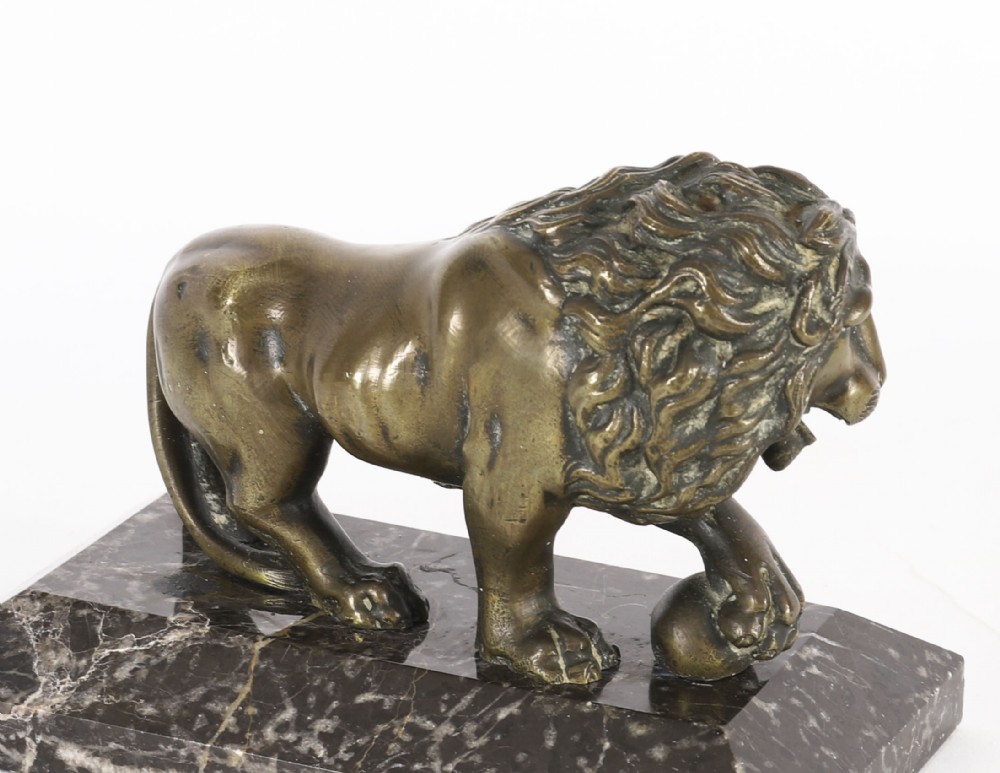
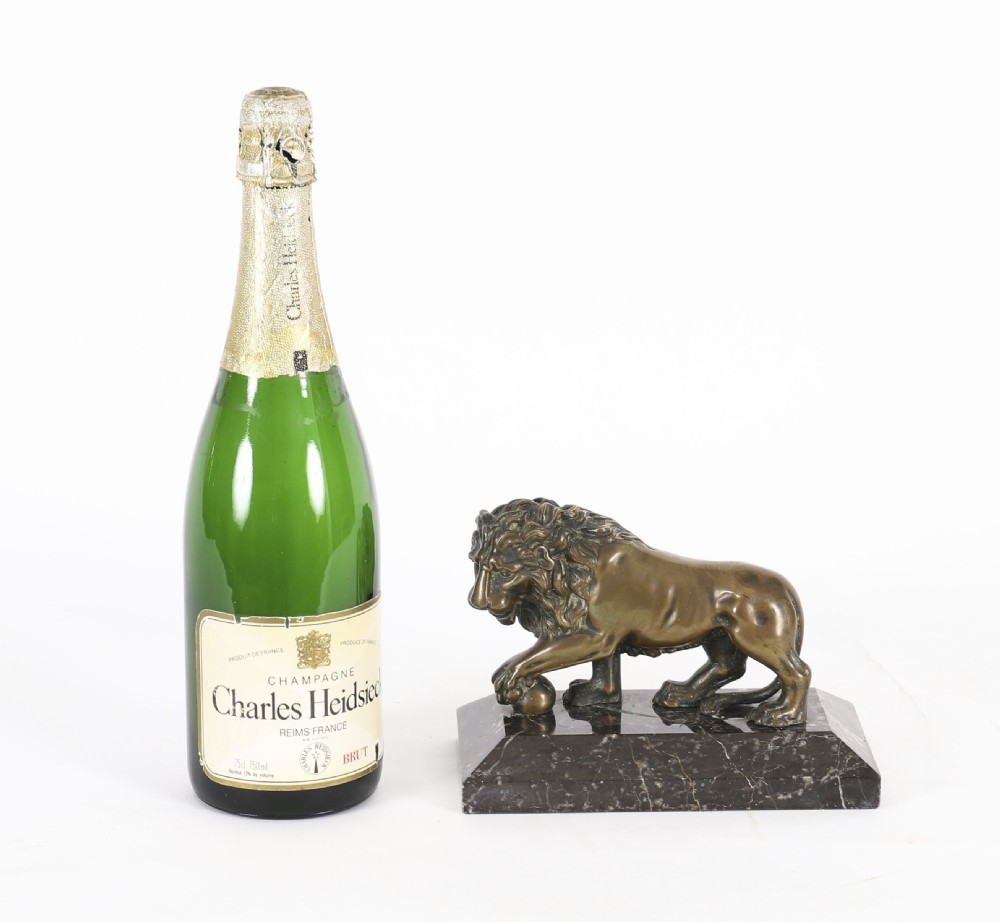
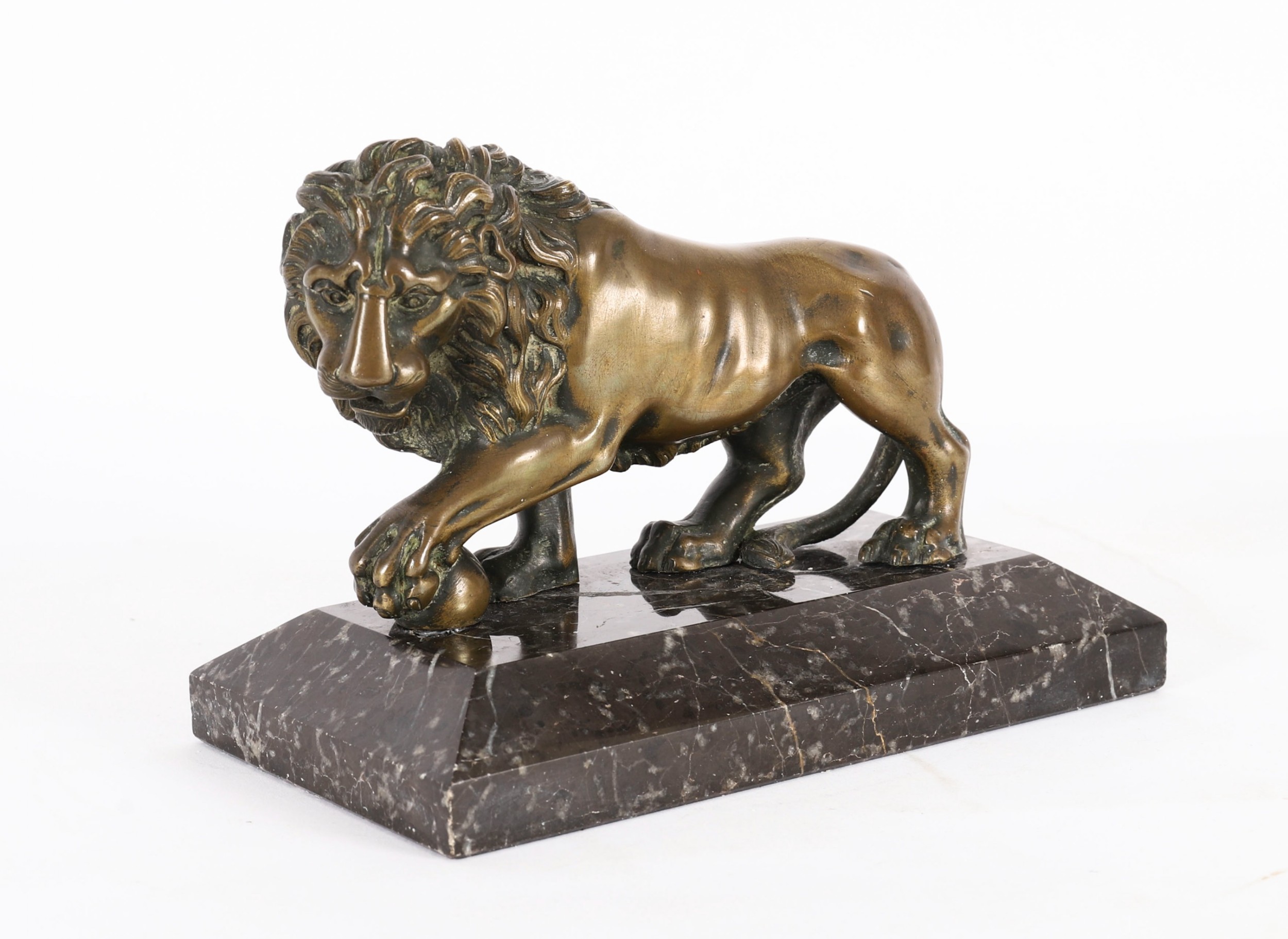
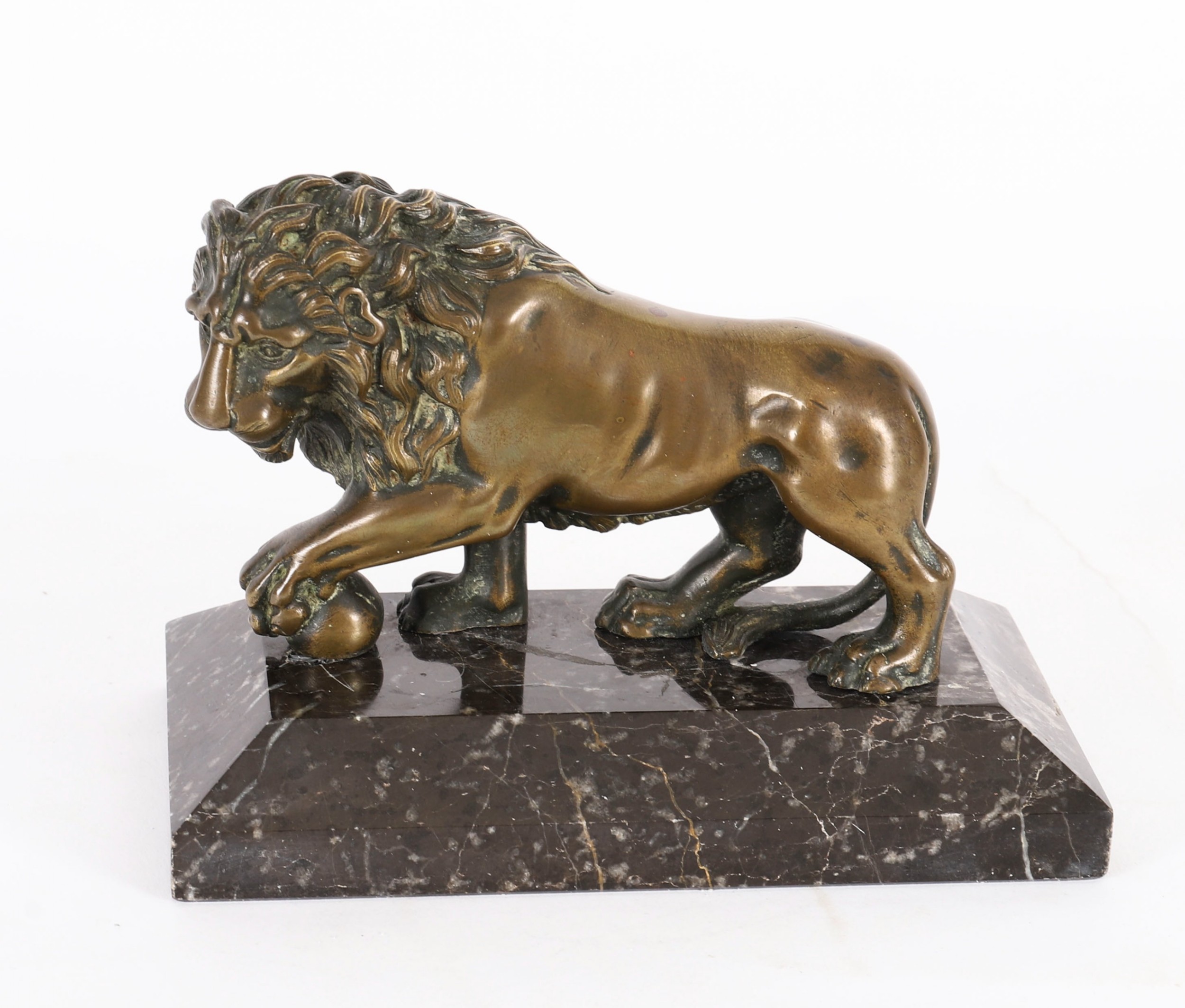
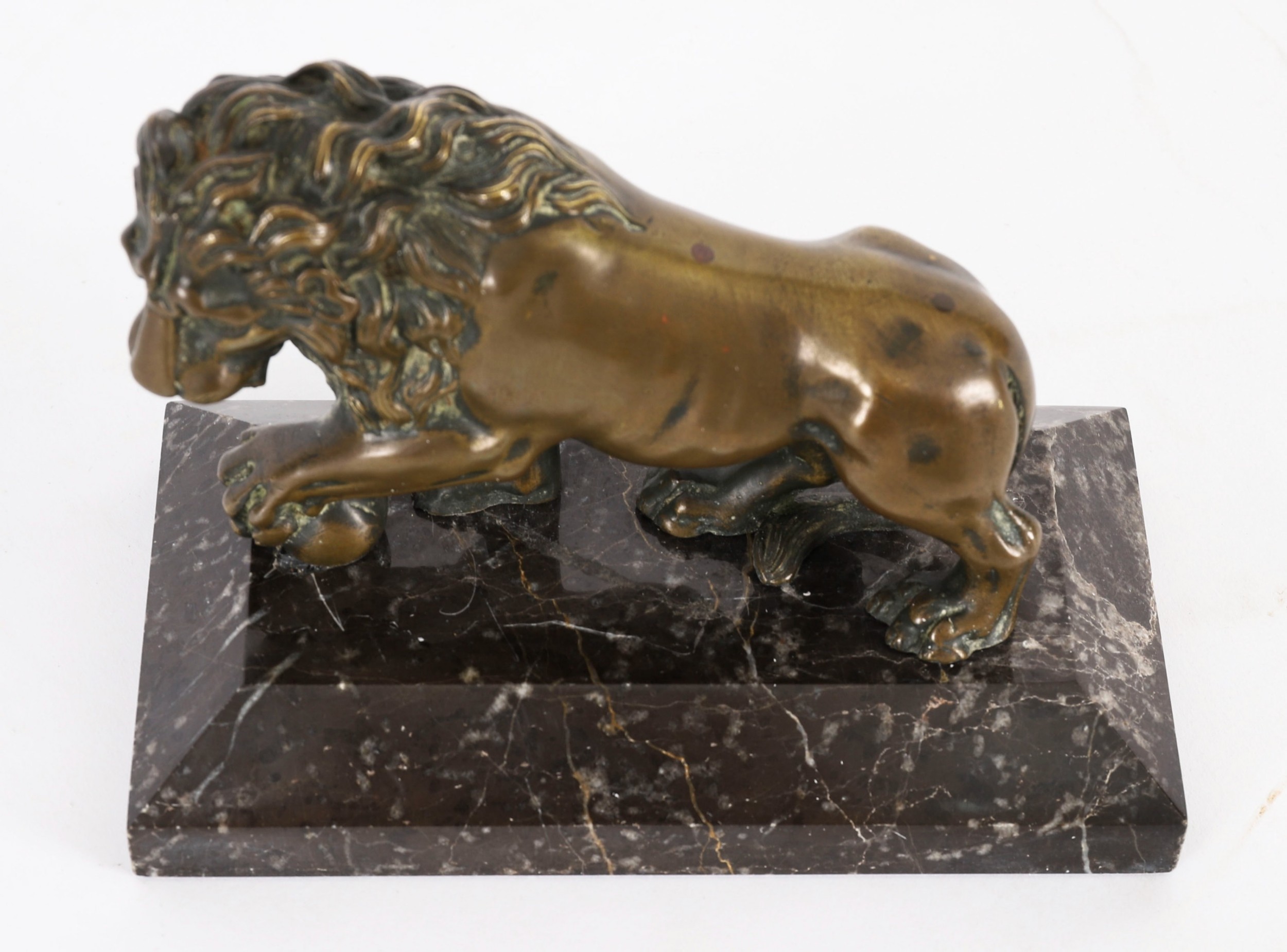
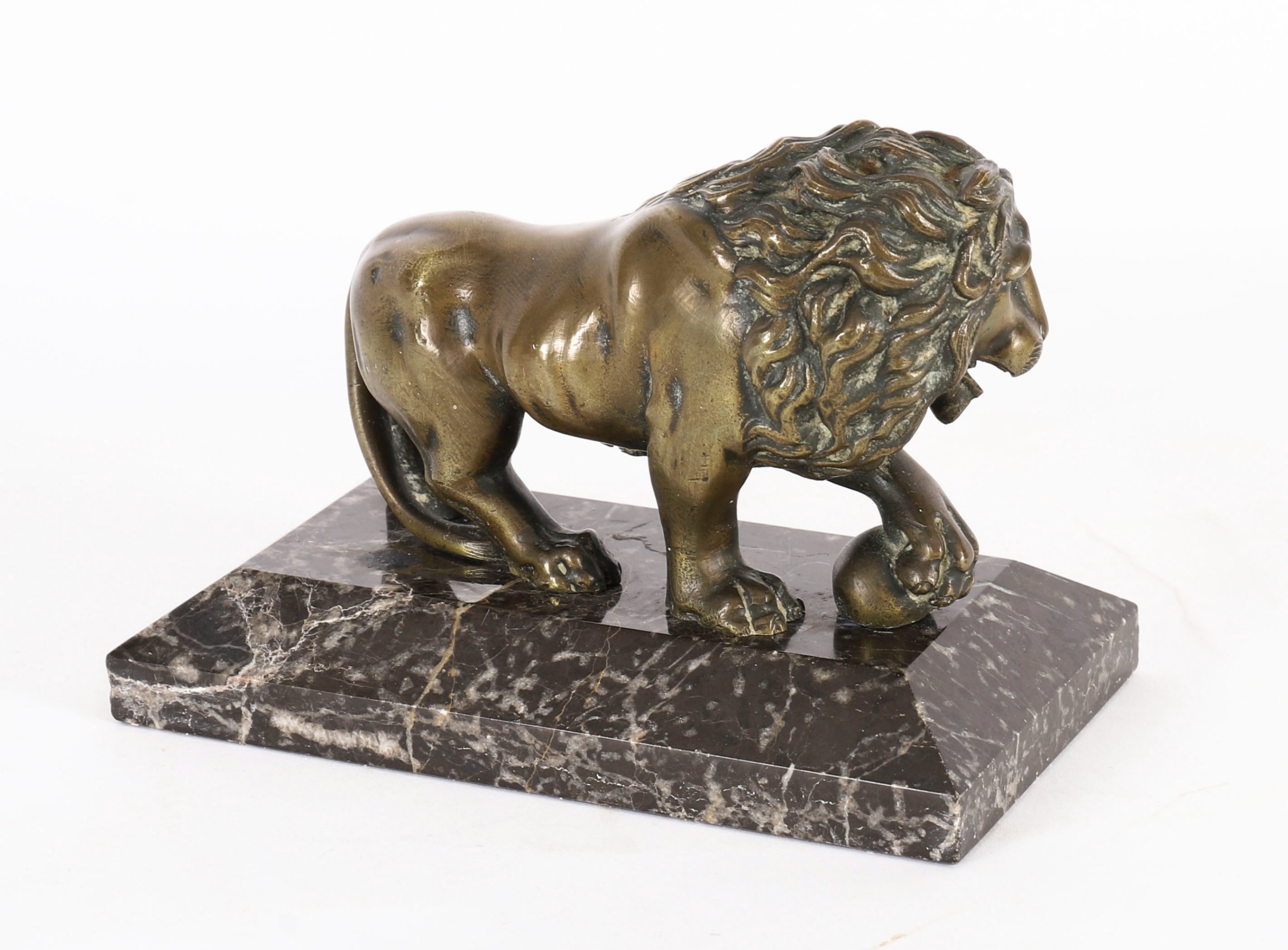
This is a beautiful antique French Grand Tour bronze sculpture of The Medici Lion,  circa 1870 in date.

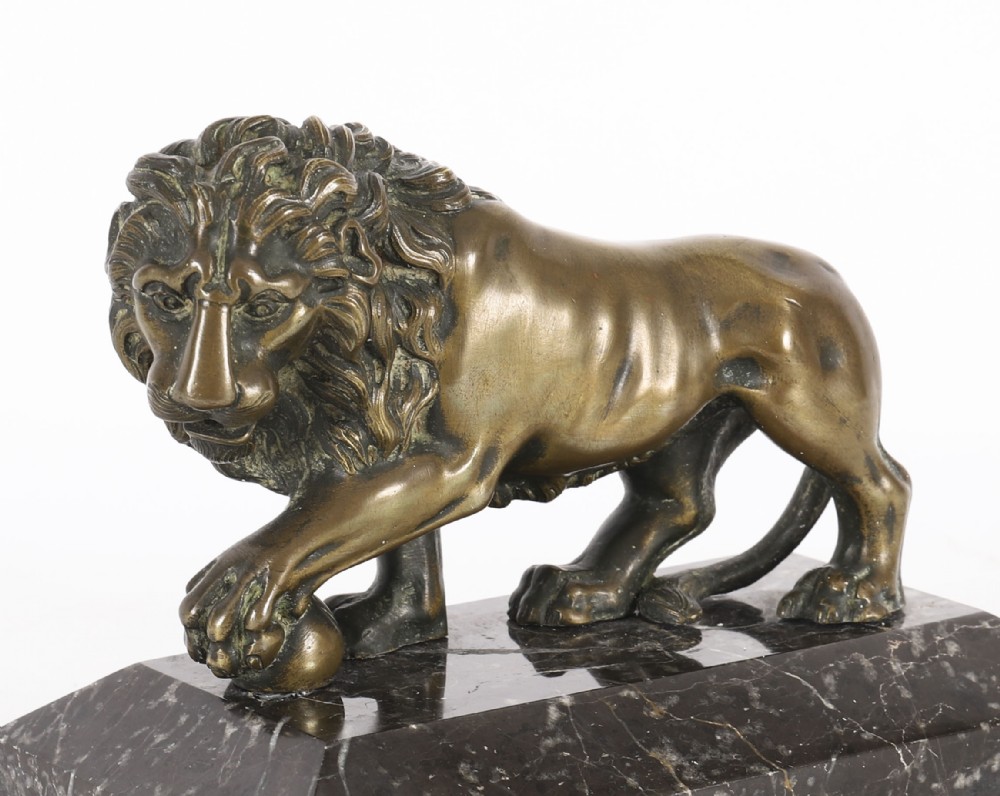
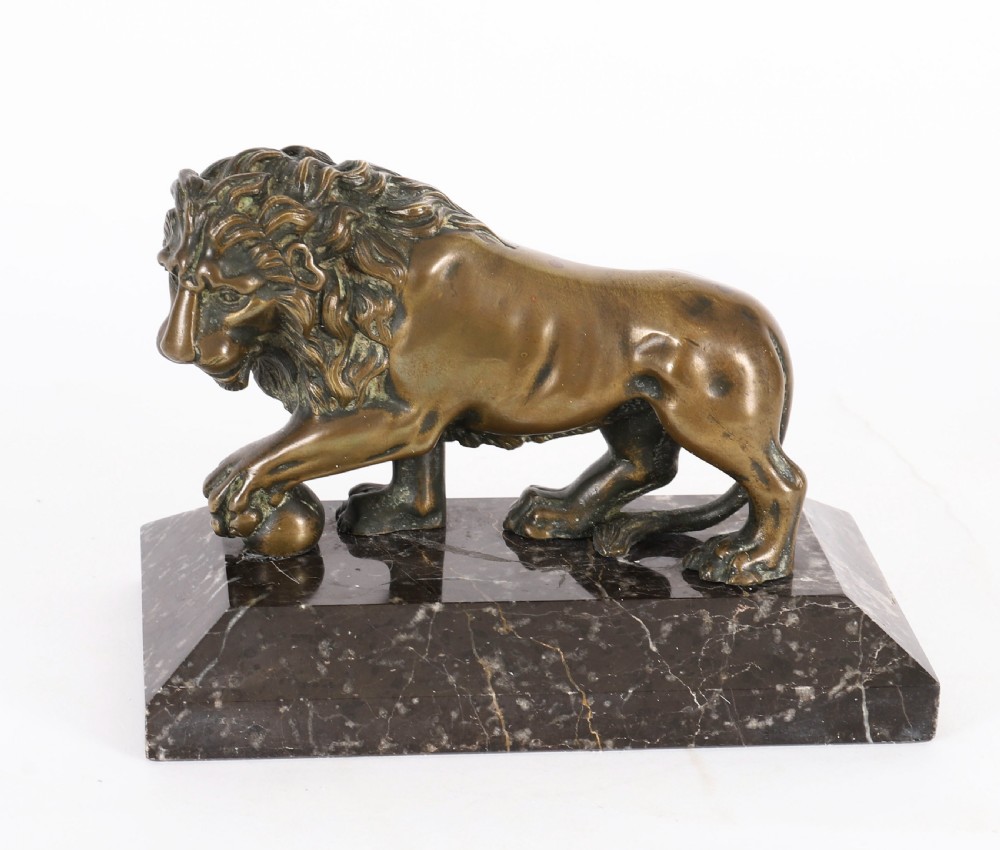
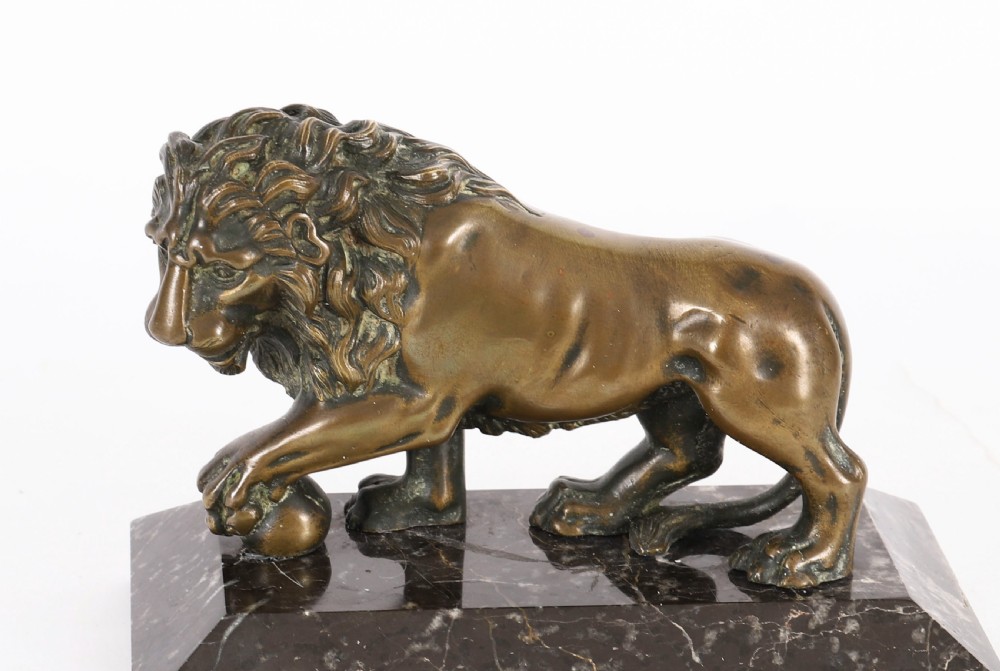
The sculptures depict a standing male lion looking to one side with a sphere or ball under one paw, raised on a stepped rectangular trapezoidal marble base.


This high-quality hot cast solid bronze was produced using the traditional "lost wax" process, otherwise known as the "cire perdue" method.


This is a splendid antique bronze sculpture which is sure to receive the maximum amount of attention wherever it is placed.

Condition:

In excellent condition, please see photos for confirmation.

Dimensions in cm:

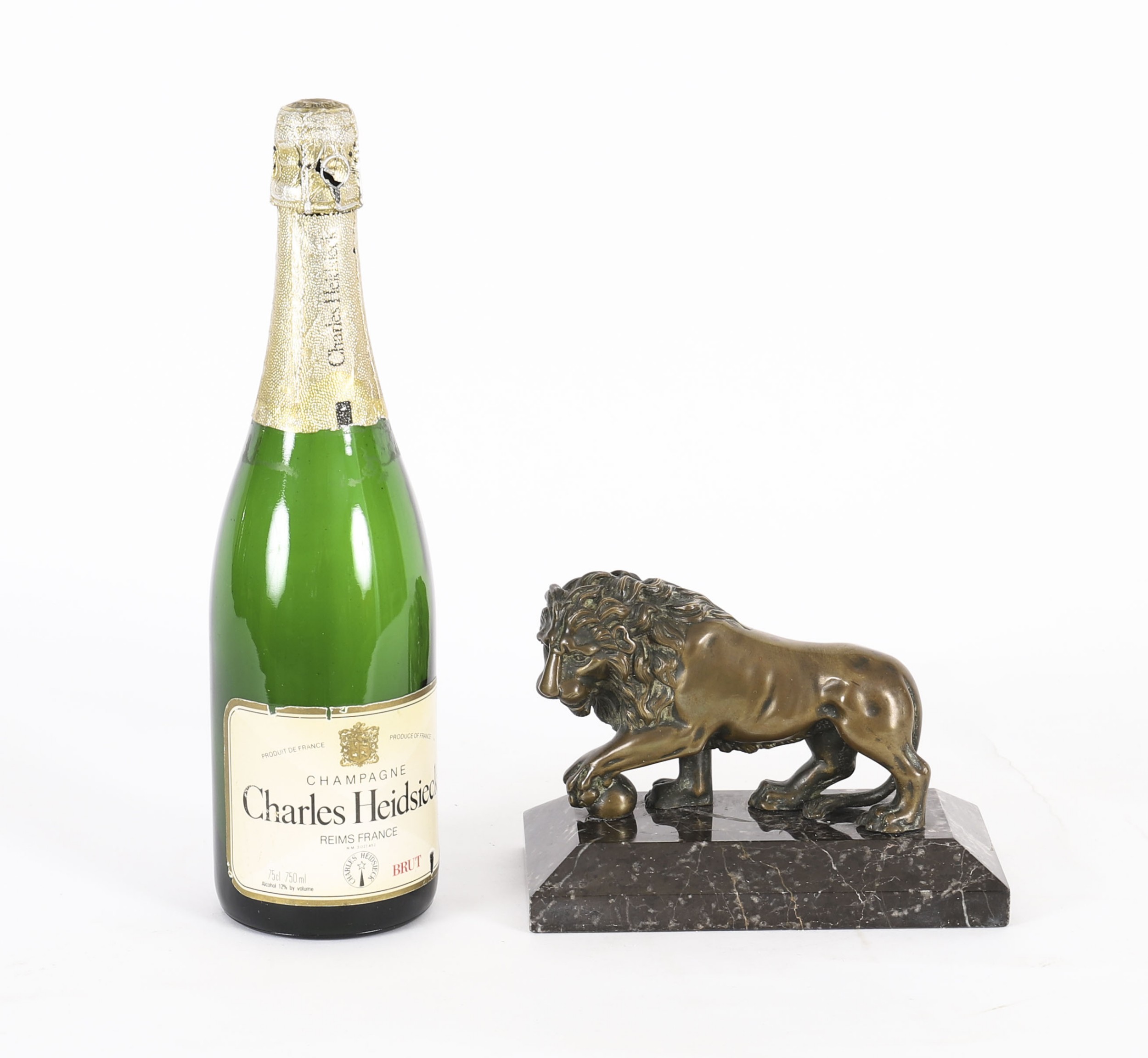
Height 12.5 cm x Width 18.5 cm x Depth 10.5 cm

Dimensions in inches:

Height 5 inches x Width 7 inches x Depth 4 inches

The Medici lions

are a pair of marble sculptures of lions: one of which is Roman, dating to the 2nd century AD, and the other a 16th-century pendant. Both were by 1598 placed at the Villa Medici, Rome. Since 1789, they have been displayed at the Loggia dei Lanzi in Florence. The sculptures depict standing male lions with a sphere or ball under one paw, looking to the side.


Copies of the Medici lions have been made and publicly installed in over 30 other locations, and smaller versions have been made in a variety of media; the Medici lion has become the term for the type.

A similar Roman lion sculpture, of the 1st century AD, is known as the Albani lion, and is now in the Louvre. Here, the stone used for the ball is different from the basalt body. Both may derive from a Hellenistic original.

The Grand Tour was the traditional trip of Europe undertaken by mainly upper-class European young men of means. The custom flourished from about 1660 until the advent of large-scale rail transit in the 1840s, and was associated with a standard itinerary.

It served as an educational rite of passage. Though primarily associated with the British nobility and wealthy landed gentry, similar trips were made by wealthy young men of Protestant Northern European nations on the Continent, and from the second half of the 18th century, some South American, U.S., and other overseas youth joined in. The tradition was extended to include more of the middle class after rail and steamship travel made the journey less of a burden.

The primary value of the Grand Tour, it was believed, lay in the exposure both to the cultural legacy of classical antiquity and the Renaissance, and to the aristocratic and fashionably polite society of the European continent. In addition, it provided the only opportunity to view specific works of art, and possibly the only chance to hear certain music. A grand tour could last from several months to several years. It was commonly undertaken in the company of a knowledgeable guide or tutor. 

The Grand Tour not only provided a liberal education but also allowed those who could afford it the opportunity to buy things otherwise unavailable at home, and it thus increased participants' prestige and standing. Grand Tourists would return with crates of art, books, pictures, sculpture, and items of culture, which would be displayed in libraries, cabinets, gardens, and drawing rooms, as well as the galleries built purposely for their display. The Grand Tour became a symbol of wealth and freedom.

Our reference: A5275

Date of Manufacture

Regent Antiques has dated this Bronze Medici Lion Sculpture to the 1870s.

Physical Dimensions
Height
12.5cm (4.92")
Width
18.5cm (7.28")
Depth
10.5cm (4.13")
Reference Numbers
Sellingantiques Reference
SA1218479
Dealers Internal Reference
A5275
A dark patinated bronze sculpture of the Medici Lion, poised with one paw resting on a ball, mounted on a rectangular marble base.Detail view 1Detail view 2Detail view 3Detail view 4Detail view 5Detail view 6Detail view 7Detail view 8Detail view 9
SOLD15 JUN 26
1 / 10
1870s · SA1218479
Antique French Grand Tour Bronze Sculpture of the Medici Lion 19th C
Sorry, but this item has been sold.
Description
This is a beautiful antique French Grand Tour bronze sculpture of The Medici Lion,  circa 1870 in date.

The sculptures depict a standing male lion looking to one side with a sphere or ball under one paw, raised on a stepped rectangular trapezoidal marble base.


This high-quality hot cast solid bronze was produced using the traditional "lost wax" process, otherwise known as the "cire perdue" method.


This is a splendid antique bronze sculpture which is sure to receive the maximum amount of attention wherever it is placed.

Condition:

In excellent condition, please see photos for confirmation.

Dimensions in cm:

Height 12.5 cm x Width 18.5 cm x Depth 10.5 cm

Dimensions in inches:

Height 5 inches x Width 7 inches x Depth 4 inches

The Medici lions

are a pair of marble sculptures of lions: one of which is Roman, dating to the 2nd century AD, and the other a 16th-century pendant. Both were by 1598 placed at the Villa Medici, Rome. Since 1789, they have been displayed at the Loggia dei Lanzi in Florence. The sculptures depict standing male lions with a sphere or ball under one paw, looking to the side.


Copies of the Medici lions have been made and publicly installed in over 30 other locations, and smaller versions have been made in a variety of media; the Medici lion has become the term for the type.

A similar Roman lion sculpture, of the 1st century AD, is known as the Albani lion, and is now in the Louvre. Here, the stone used for the ball is different from the basalt body. Both may derive from a Hellenistic original.

The Grand Tour was the traditional trip of Europe undertaken by mainly upper-class European young men of means. The custom flourished from about 1660 until the advent of large-scale rail transit in the 1840s, and was associated with a standard itinerary.

It served as an educational rite of passage. Though primarily associated with the British nobility and wealthy landed gentry, similar trips were made by wealthy young men of Protestant Northern European nations on the Continent, and from the second half of the 18th century, some South American, U.S., and other overseas youth joined in. The tradition was extended to include more of the middle class after rail and steamship travel made the journey less of a burden.

The primary value of the Grand Tour, it was believed, lay in the exposure both to the cultural legacy of classical antiquity and the Renaissance, and to the aristocratic and fashionably polite society of the European continent. In addition, it provided the only opportunity to view specific works of art, and possibly the only chance to hear certain music. A grand tour could last from several months to several years. It was commonly undertaken in the company of a knowledgeable guide or tutor. 

The Grand Tour not only provided a liberal education but also allowed those who could afford it the opportunity to buy things otherwise unavailable at home, and it thus increased participants' prestige and standing. Grand Tourists would return with crates of art, books, pictures, sculpture, and items of culture, which would be displayed in libraries, cabinets, gardens, and drawing rooms, as well as the galleries built purposely for their display. The Grand Tour became a symbol of wealth and freedom.

Our reference: A5275
Date1870s
Height12.5cm (4.92")
Width18.5cm (7.28")
Depth10.5cm (4.13")
ReferenceSA1218479
Dealer's referenceA5275
Regent Antiques
Regent AntiquesSellingantiques verified since Sep 2016

We specialise in english and continental furniture, silver, porcelain and decorative items.

Member of LAPADA CINOA

SHARE
SAVE
Archive I A dark patinated bronze sculpture of the Medici Lion, poised with one paw resting on a ball, mounted on a rectangular marble base. SOLD15 JUN 26

Antique French Grand Tour Bronze Sculpture of the Medici Lion 19th C

Archive II A dark patinated bronze sculpture of the Medici Lion, poised with one paw resting on a ball, mounted on a rectangular marble base. View II
Archive III A dark patinated bronze sculpture of the Medici Lion, poised with one paw resting on a ball, mounted on a rectangular marble base. View III
Archive IV A dark patinated bronze sculpture of the Medici Lion, poised with one paw resting on a ball, mounted on a rectangular marble base. View IV
Archive V A dark patinated bronze sculpture of the Medici Lion, poised with one paw resting on a ball, mounted on a rectangular marble base. View V
Archive VI A dark patinated bronze sculpture of the Medici Lion, poised with one paw resting on a ball, mounted on a rectangular marble base. View VI
Archive VII A dark patinated bronze sculpture of the Medici Lion, poised with one paw resting on a ball, mounted on a rectangular marble base. View VII
Archive VIII A dark patinated bronze sculpture of the Medici Lion, poised with one paw resting on a ball, mounted on a rectangular marble base. View VIII
Archive IX A dark patinated bronze sculpture of the Medici Lion, poised with one paw resting on a ball, mounted on a rectangular marble base. View IX
Archive X A dark patinated bronze sculpture of the Medici Lion, poised with one paw resting on a ball, mounted on a rectangular marble base. View X
Enlarged Archival View
Location
Manor Warehouse
318 Green Lanes
London
N4 1BX
United Kingdom
Verified Since Sep 2016
Items For Sale 639
Items Sold 2,756
Regent Antiques
Regent Antiques
Verified Since Sep 2016
View Dealer Info
Location: Manor Warehouse, 318 Green Lanes, London, N4 1BX, United Kingdom
Verified
Sep 2016
For Sale
639
Sold
2,756
A dark patinated bronze sculpture of the Medici Lion, poised with one paw resting on a ball, mounted on a rectangular marble base.
Antique French Grand Tour Bronze Sculpture of The Medici Lion 19th C
Ref: SA1218479
A dark patinated bronze sculpture of the Medici Lion, poised with one paw resting on a ball, mounted on a rectangular marble base.
Detail View 1
Detail View 2
Detail View 3
Detail View 4
Detail View 5
Detail View 6
Detail View 7
Detail View 8
Detail View 9
Archival Detail
Every single antique dealer on our platform is individually approved by our internal team. We verify their professional trade history, ethical standards, and photographic quality to ensure a secure, high-standard buying environment. Upon joining, every dealer agrees to a strict 9-point code of conduct. While issues can occasionally arise, our dealers typically resolve them swiftly and directly with the buyer. In fact, since our founding in 2002, Sellingantiques has only had to step in to help resolve an issue on roughly five occasions—a true testament to the quality of our dealers and their dedication to your happiness.
Our dealers are highly experienced in packing and shipping fragile, high-value antiques. Because you are in direct contact with the dealer, you will be able to easily go through all available shipping and insurance options together to ensure your item arrives safely.
Antiques are the ultimate green purchase. By choosing historical pieces over newly manufactured goods, you completely eliminate the carbon footprint of modern mass production while preserving exceptional, timeless craftsmanship.
Written by Sellingantiques from the dealer’s photographs and listing
  • ObjectSculpture
  • Period19th century
  • StyleNeoclassical
  • MaterialBronze, Marble
  • ColourDark Bronze
  • MotifsNaturalistic mane, Paw on sphere, Muscular anatomy, Rectangular plinth base
  • SizeH 12.5 cm (5 in) x W 18.5 cm (7 in) x D 10.5 cm (4 in)

Grand Tour bronzes are miniature or reduced-scale replicas of classical antiquities and famous monuments, collected by wealthy young Europeans during the 18th and 19th centuries as cultural mementos of their travels through Italy and France.

These sculptures were typically produced using the lost-wax method of casting, executed in bronze or brass with varying patinations, and frequently mounted onto fitted marble bases to enhance their display.

Authentication involves examining the depth and quality of the patination, checking for foundry marks or chisel work indicative of hand-finishing, and inspecting the construction of the base and fixings for period-appropriate materials and wear.

A classical bronze adds gravitas and historical contrast when placed on a study desk, bookshelf, or mantelpiece, anchoring contemporary minimalist schemes with organic weight and traditional craftsmanship.

Bronze should be dusted gently with a soft, dry brush and occasionally treated with a microcrystalline wax to protect the patina from moisture and handling oils; chemical cleaners and abrasive cloths must be avoided.
items
Add keywords to the filter
Price
£100
£250000
Era
Period
Style
Material
Origin
Stock Location
Recently Added
Online Payments
Categories