Brave Fine Art has dated this piece to the 1850s.
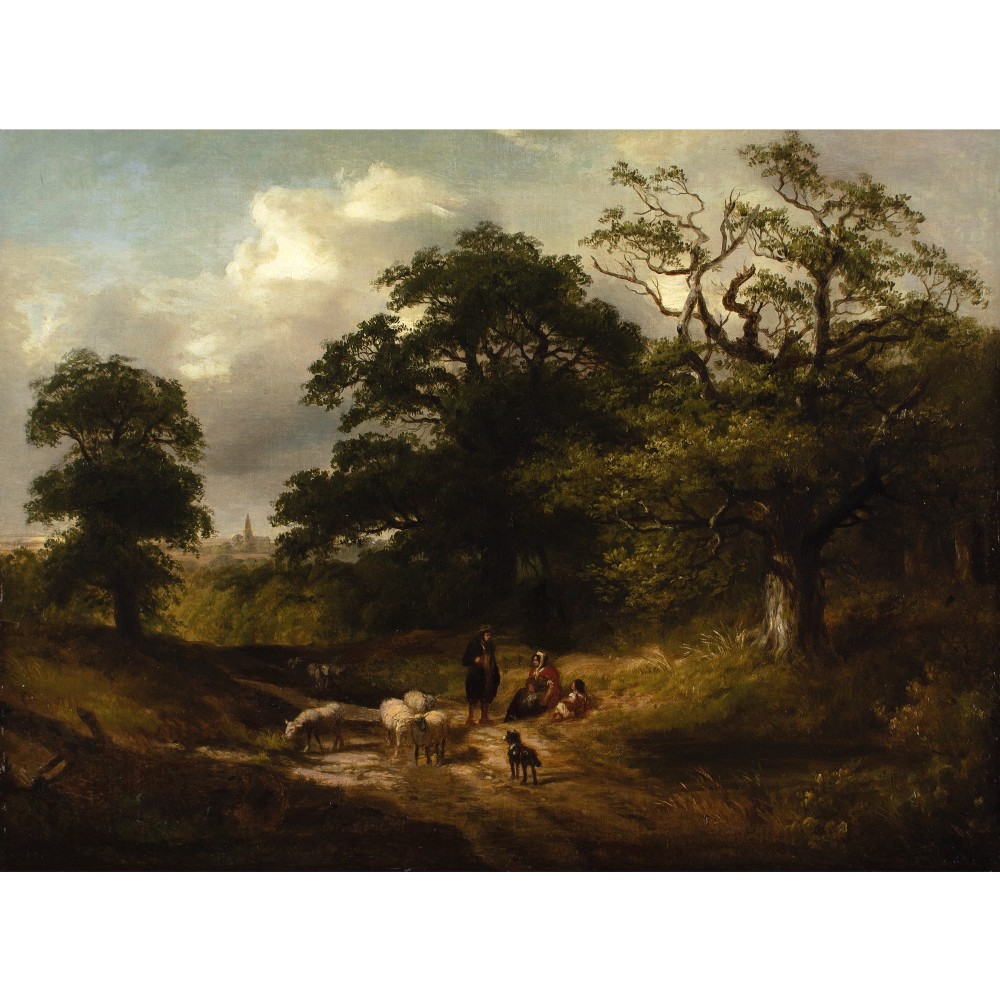
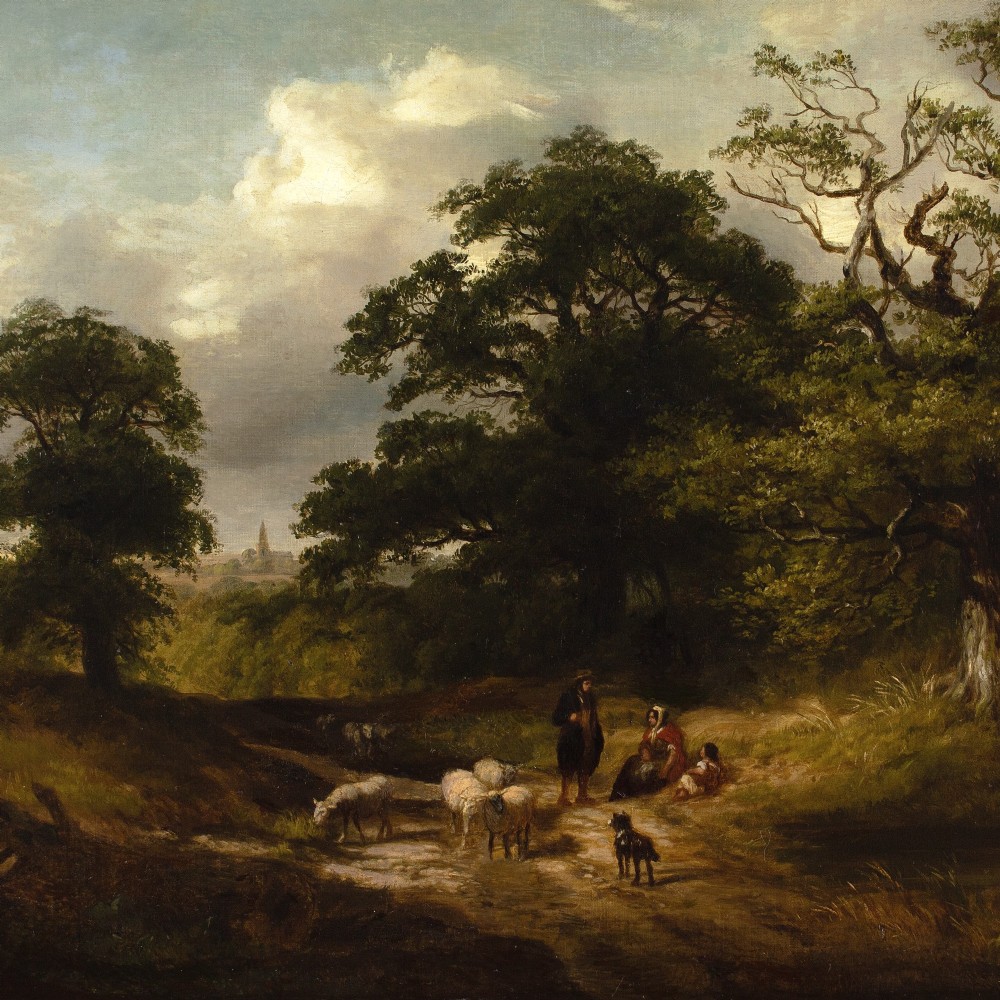
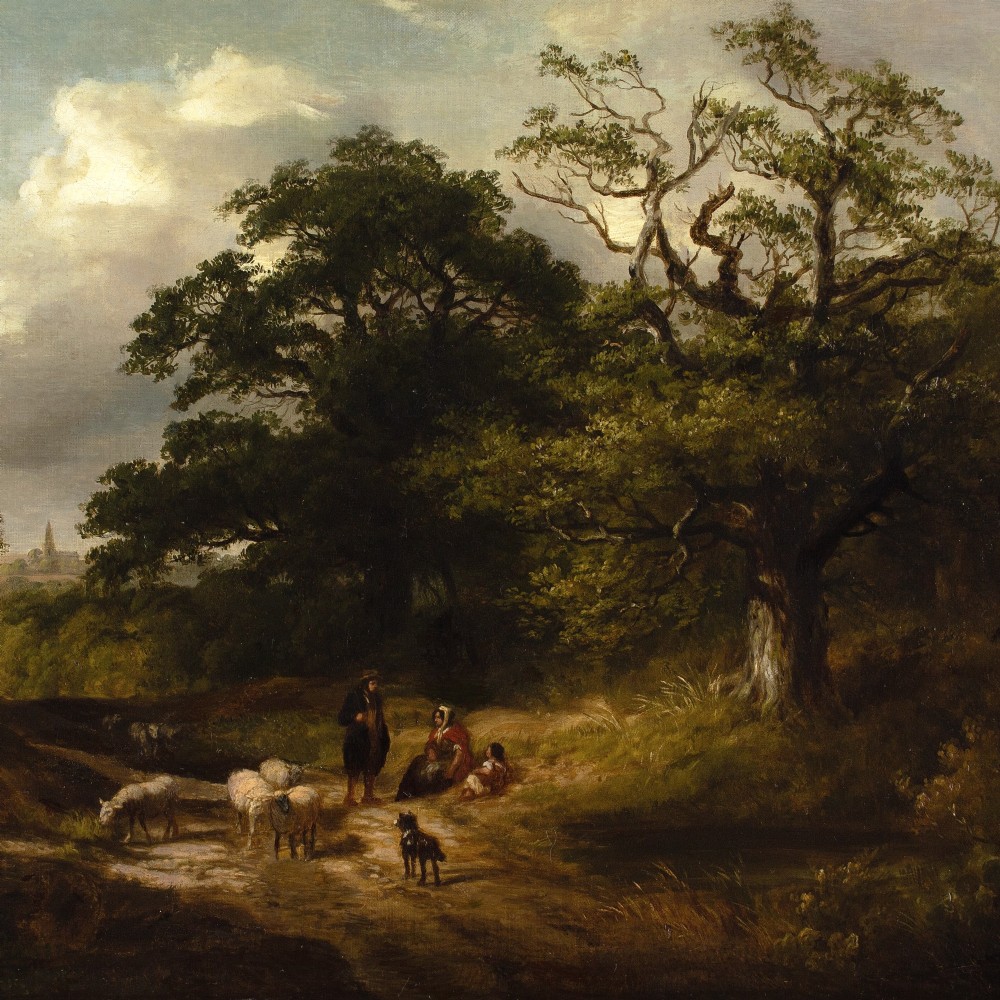
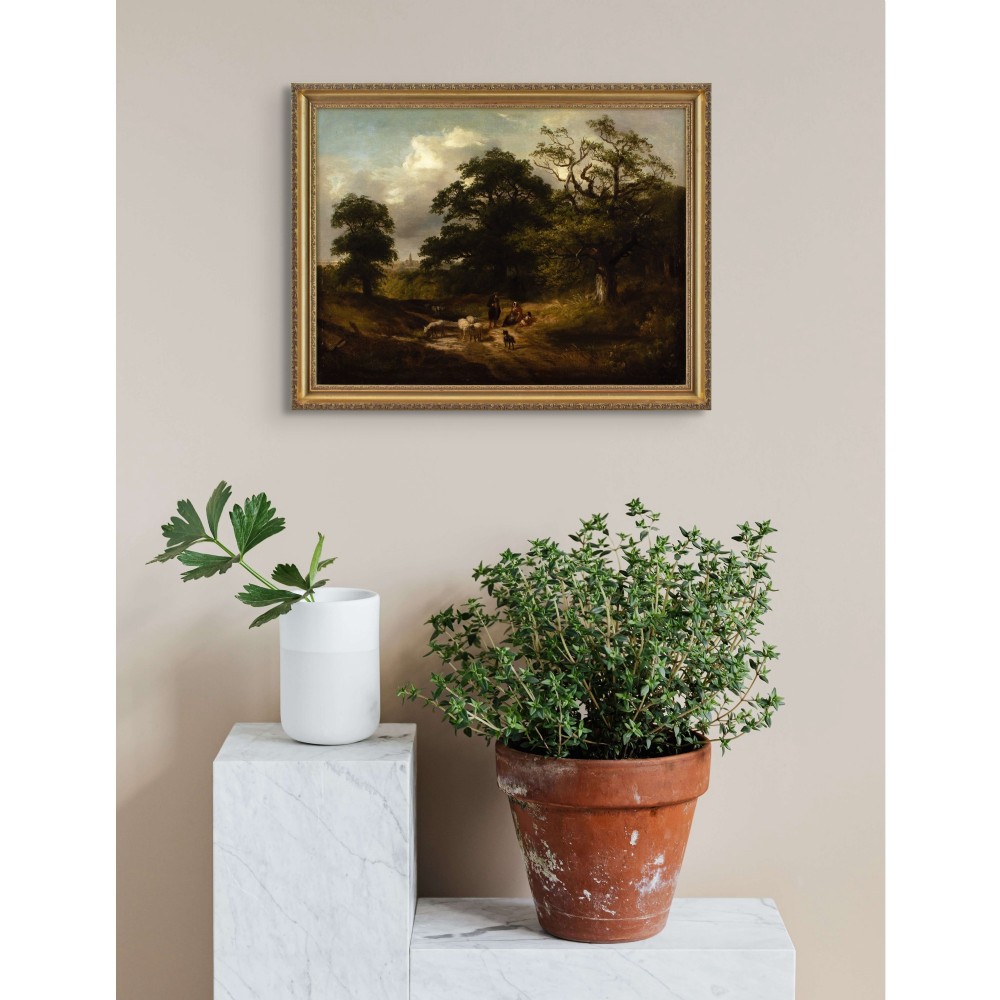
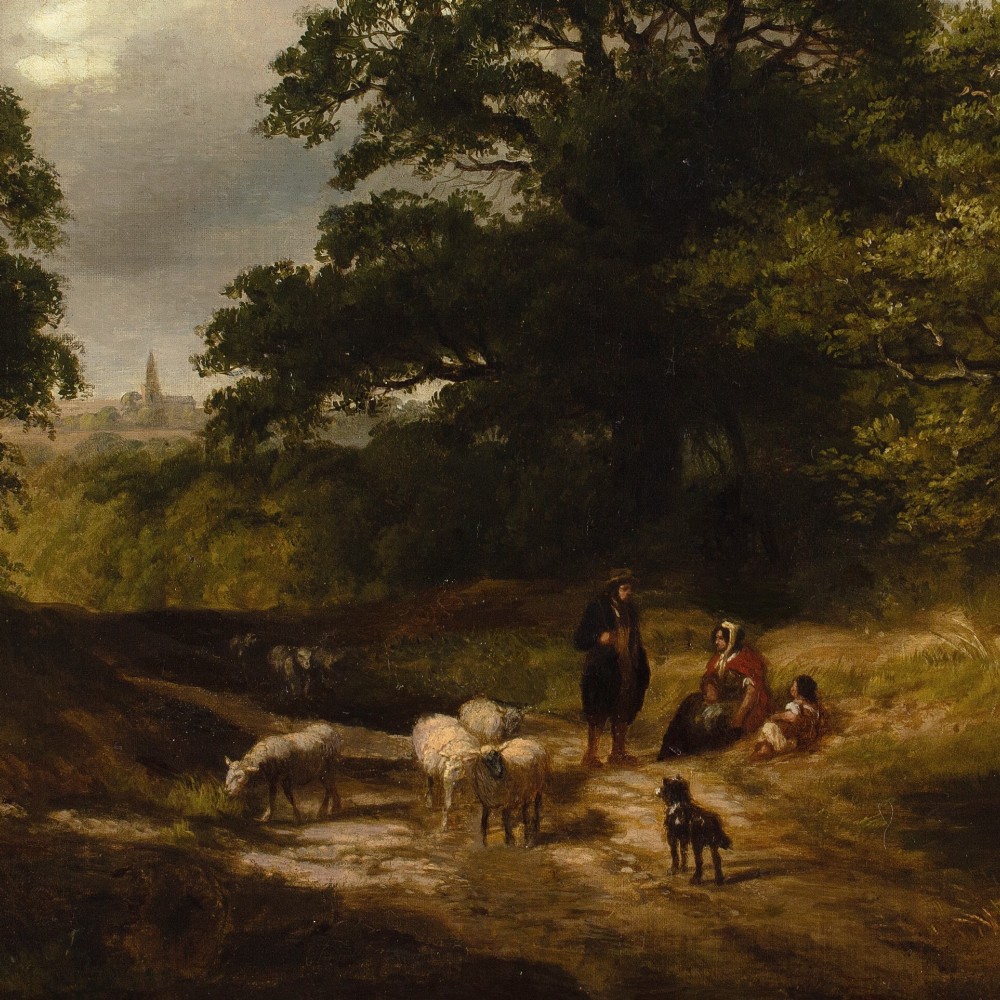
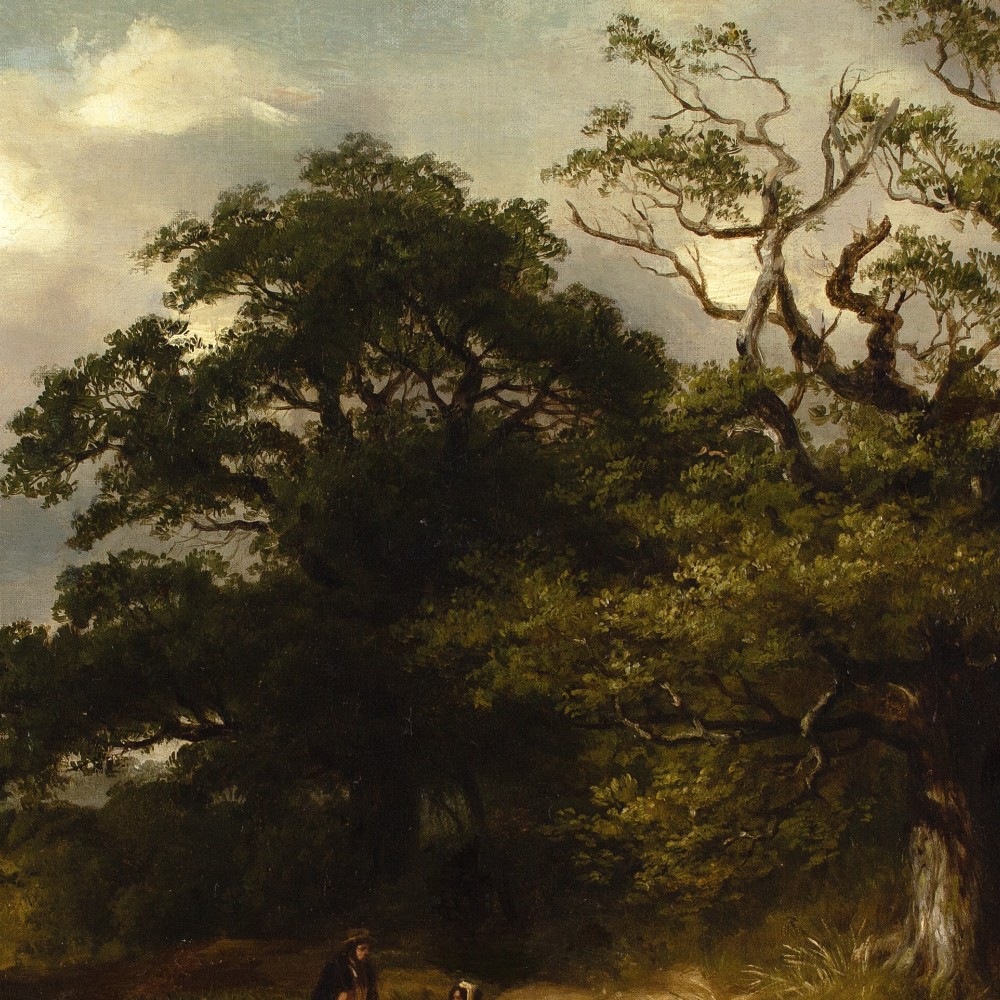
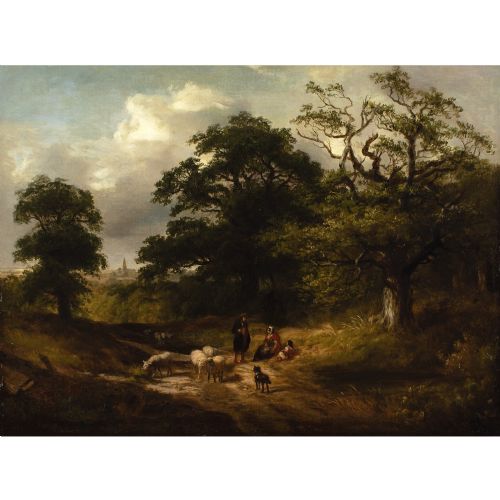
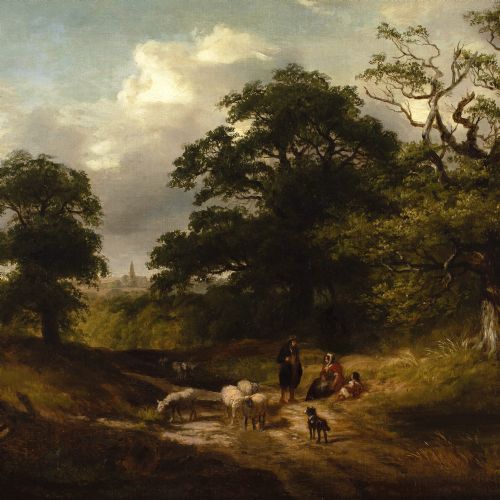
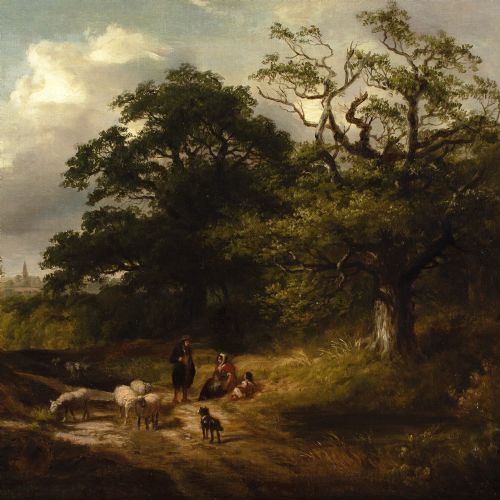
Under a cloudy sky, amid the mild heat of early evening, a family rests by a gnarled oak. A shepherd stands alongside - his modest flock deterred by an alert border collie. In the distance, a conspicuous spire suggests a village.
1660-1665) is particularly similar. The Dutch masters, with their rugged sense of imagined naturalism, provided the model for hordes of European artists over the following centuries. And in Britain, this was particularly the case for the ‘Norwich School’.
During the early 19th century, a number of pioneering, Norfolk-based, self-taught, artists came together to share ideas and enhance their knowledge. Dubbed the Norwich School of Painters, this predominantly working class collective created the first provincial art association in Britain. Its aims were to enquire “into the rise, progress and present state of painting, architecture, and sculpture” with a view to developing better study methods. In essence, it was a discussion group in lieu of a formal Academy.
Its founders, ‘Old’ John Crome and Robert Ladbrooke, were keen admirers of the 17th-century Dutch landscape painters, and like John Constable before them, sought to convey a view naturally without artificial embellishments. The Dutch have a long-standing connection with Norfolk, having arrived en masse during the 16th century following Queen Elizabeth’s decision to reignite the wool trade by inviting Dutch weavers to settle. Over 4,000 immigrants were integrated into the local population, bringing with them various skills and cultural nuances.
James Stark (1794-1859) was a prominent contributor to the Norwich School and was apprenticed to John Crome. Our piece bears some of his stylistic nuances, including the distant view of a plain with architecture, rendering of the foliage, and foreground peppered with livestock. He trained several younger artists including Henry Jutsum (1816-1869).
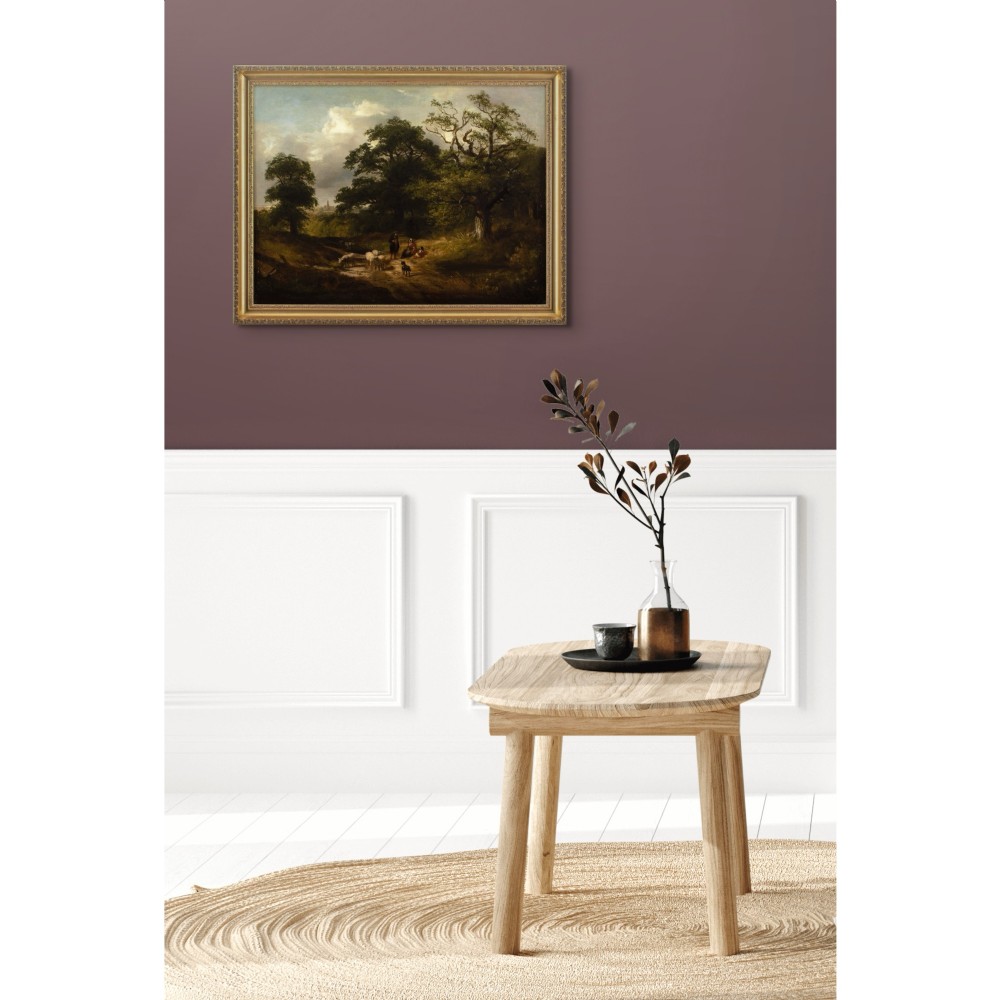
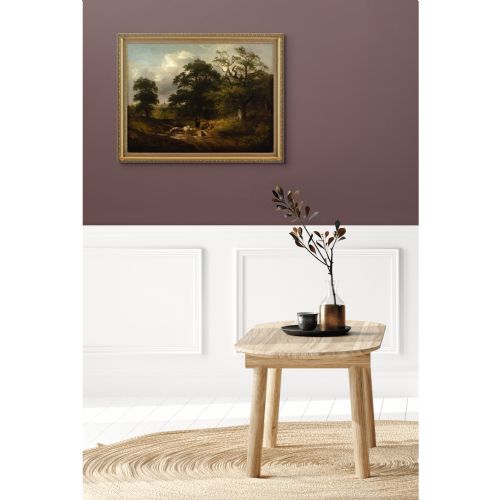
Held in a later frame.
Medium: Oil on canvas
Overall size: 27” x 21” / 68cm x 53cm
Year of creation: c. 1850
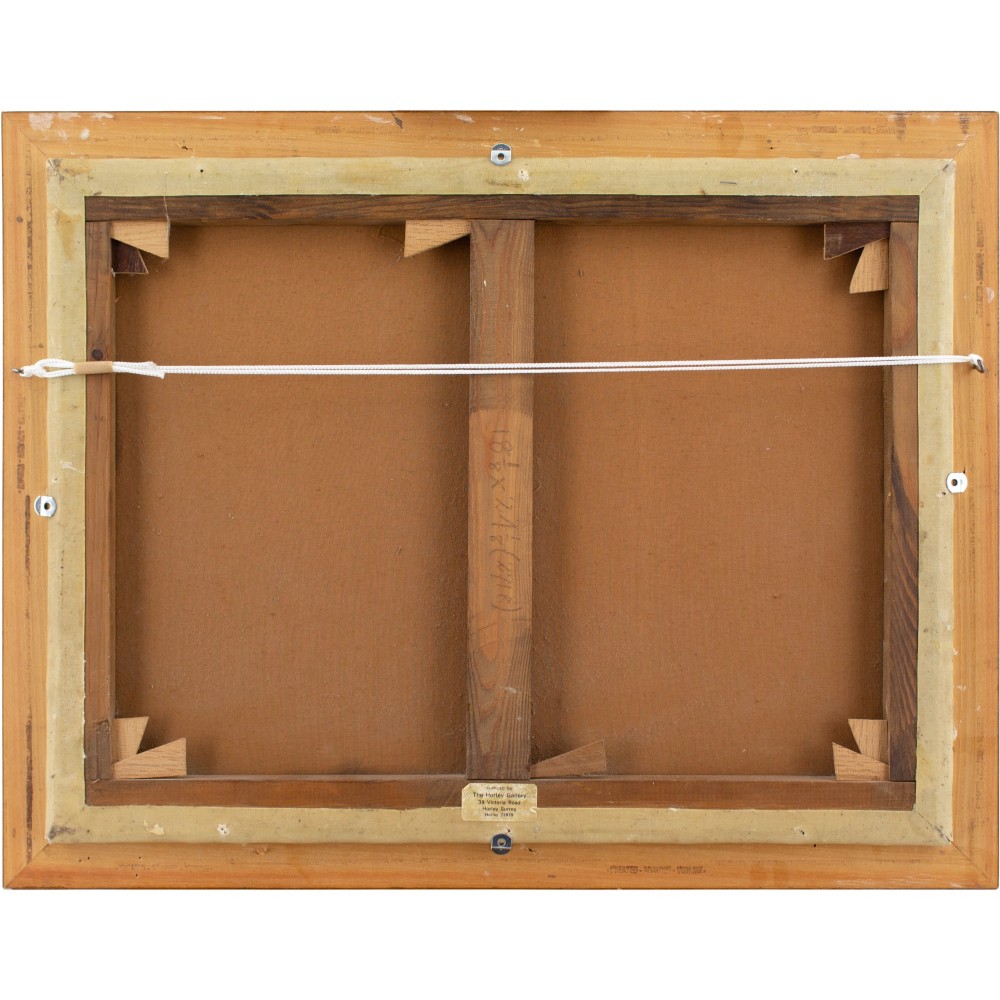
Labels & Inscriptions: Gallery label on reverse.
Provenance: Private collection, UK.
Condition: Cleaned. Revarnished. Canvas relined. Areas of fine and settled craquelure, as you would expect. Later stretcher. The paint layer is stable. Frame in excellent condition.
Our reference: BRV2087
Brave Fine Art has dated this piece to the 1850s.
Exquisite antique paintings that capture the imagination.
You can view the stock and full dealer information on the Brave Fine Art Profile Page
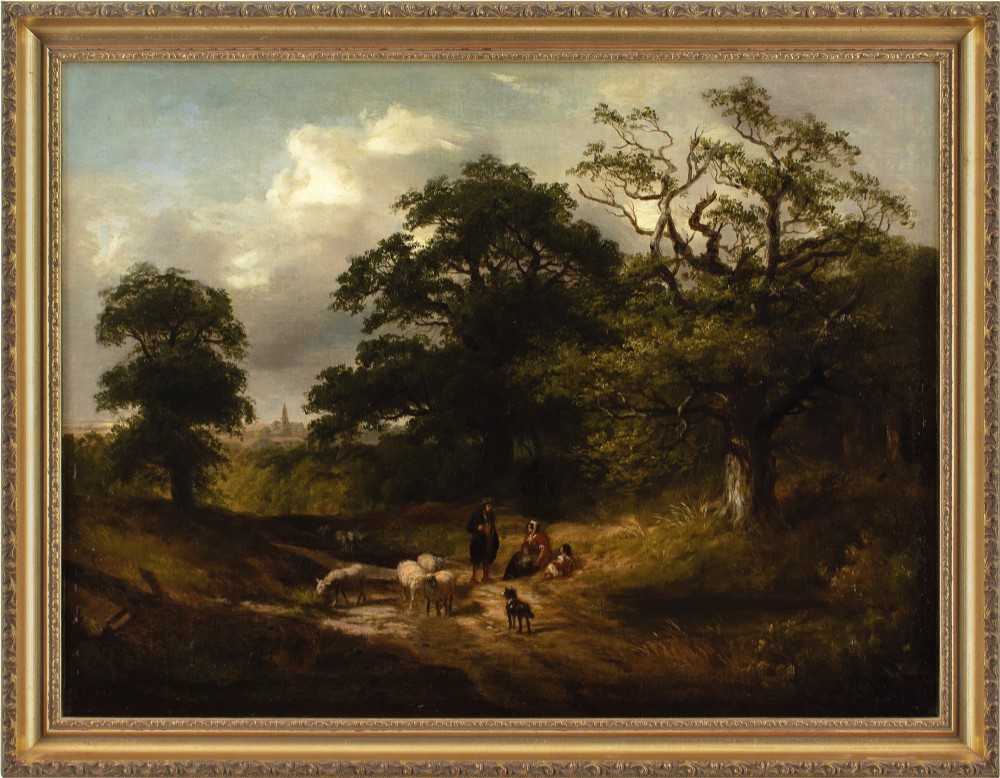
James Stark (Circle), Wooded Landscape with Country Track, Shepherd & Sheep - Antique Oil Painting