33,059  PAGES BROWSED TODAY PAGES TODAY 88 ANTIQUES UPLOADED TODAYNEW ARRIVALS
88 ITEMS ADDED TODAY
Sort Order
Items Per Page
Browse Categories
Sort order
Items per page
ID #SA1091969
SOLD
Email
Save
William Shayer, Waiting for the Ferry - Antique Oil Painting
Brave Fine Art
sold SA1091969
Sorry, but this item has been sold.
Brave Fine Art

Brave Fine Art

Sellingantiques Verified Since Nov 2018
View Dealers Stock Page
  • About Us
    Exquisite antique paintings that capture the imagination.
Id #SA1091969
PDF SHARE
SAVE

William Shayer, Waiting for the Ferry - Antique Oil Painting

19th century
Description

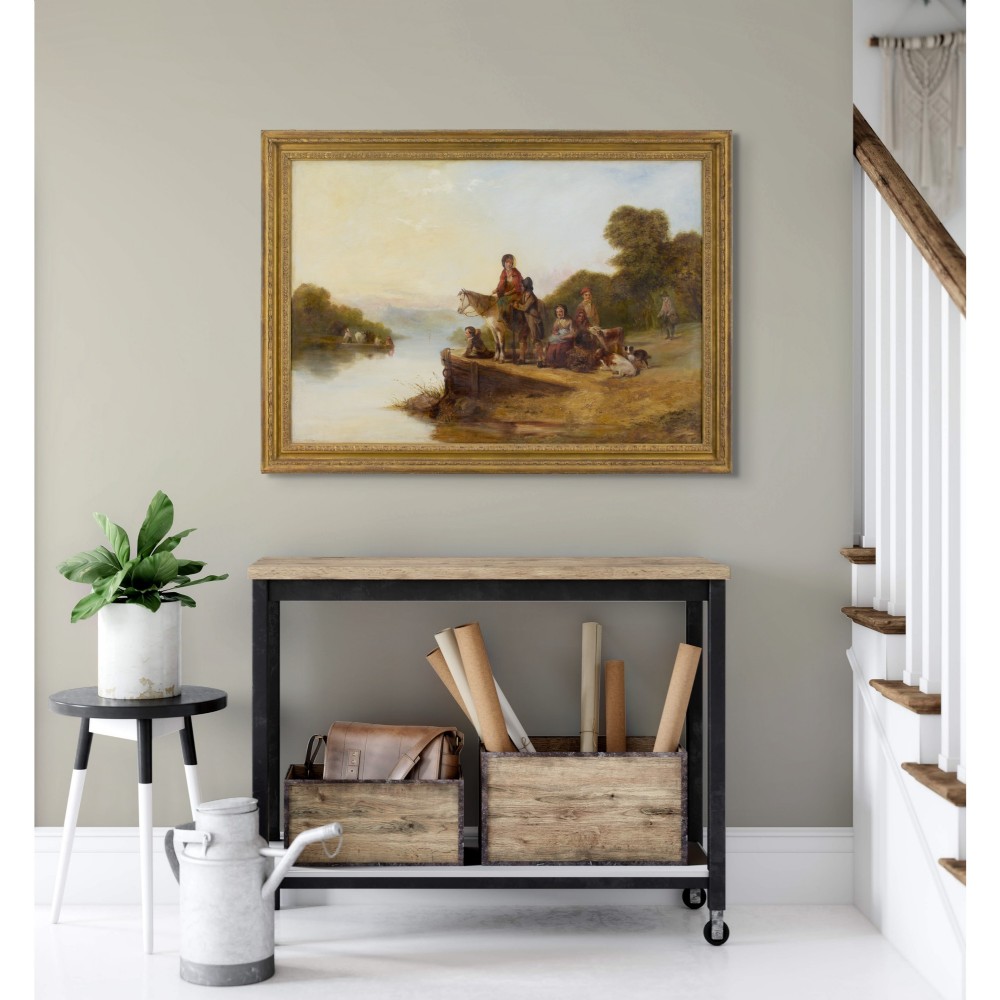
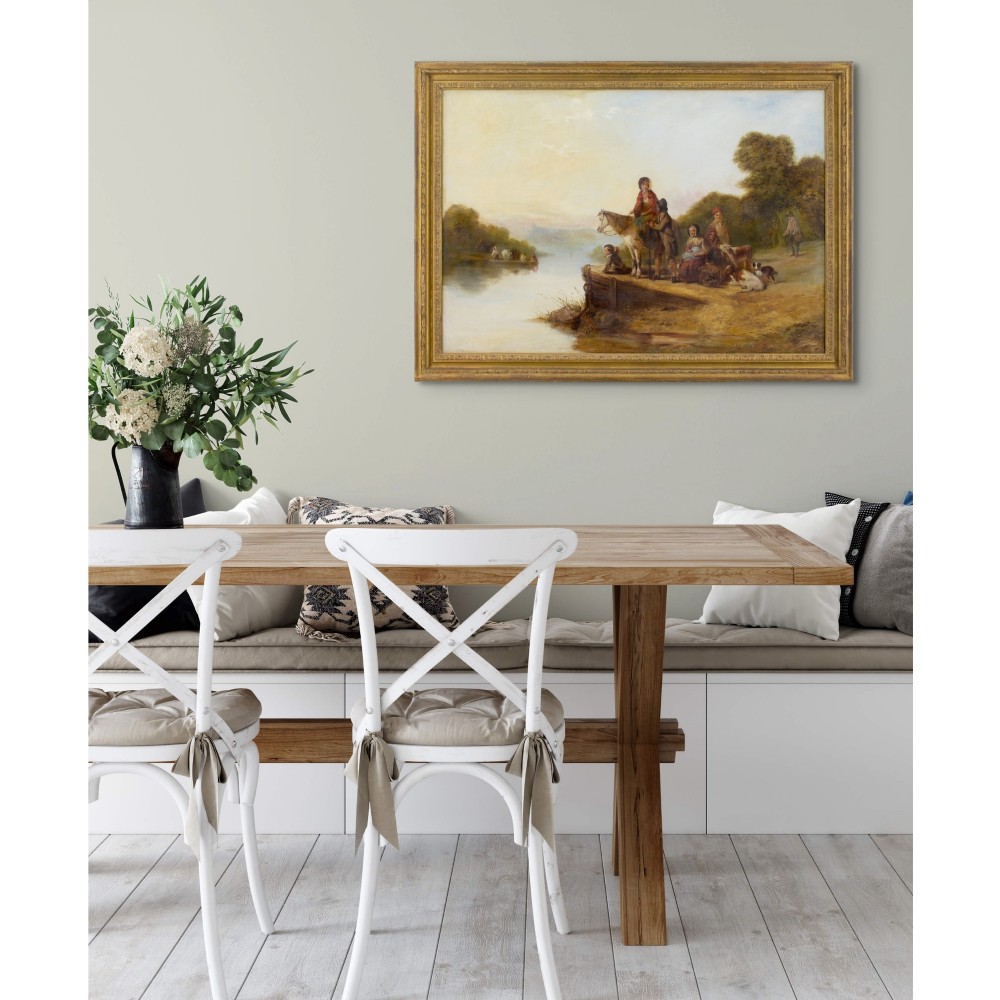
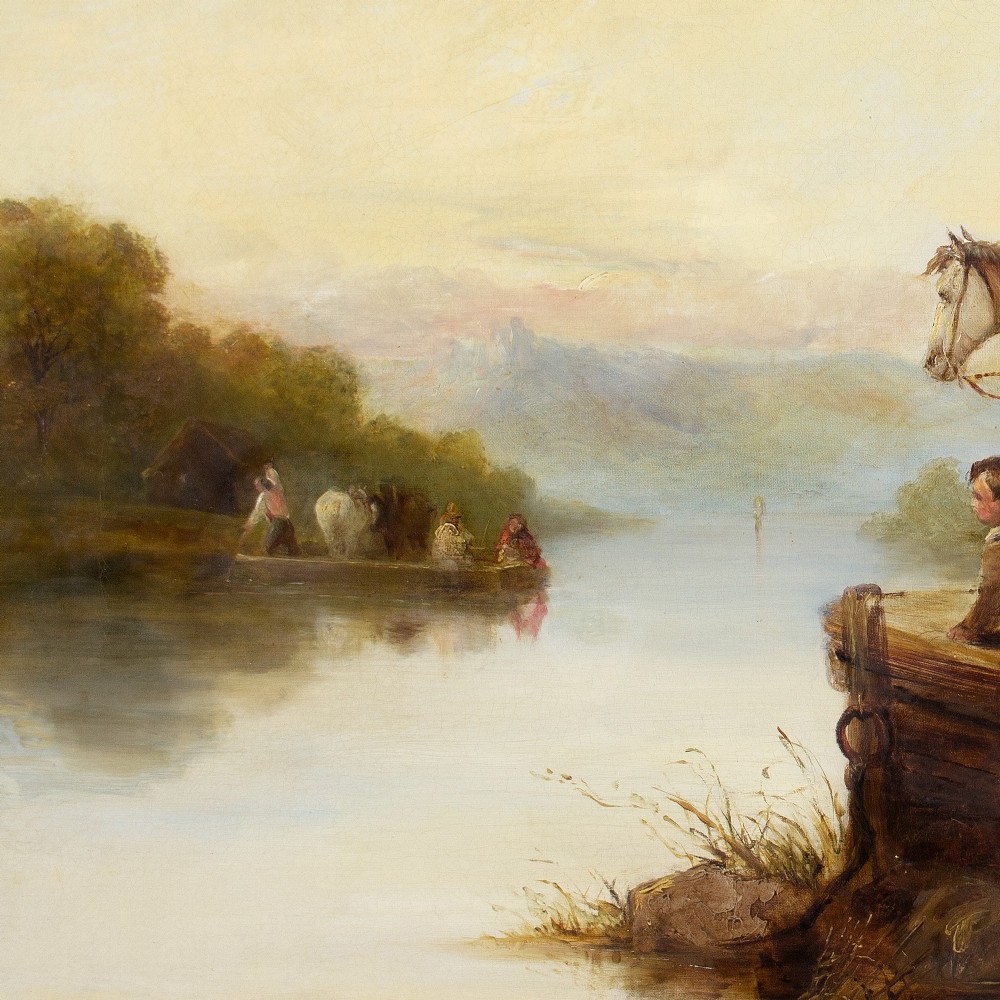
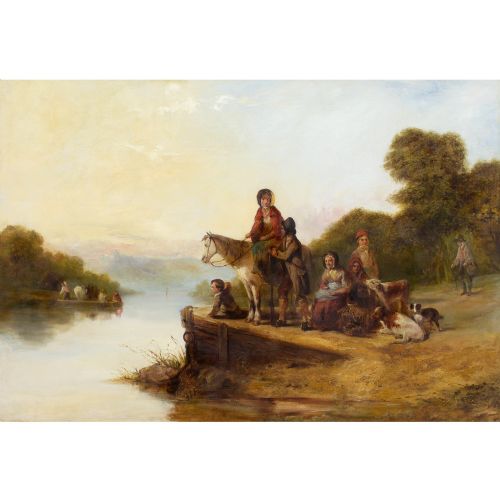
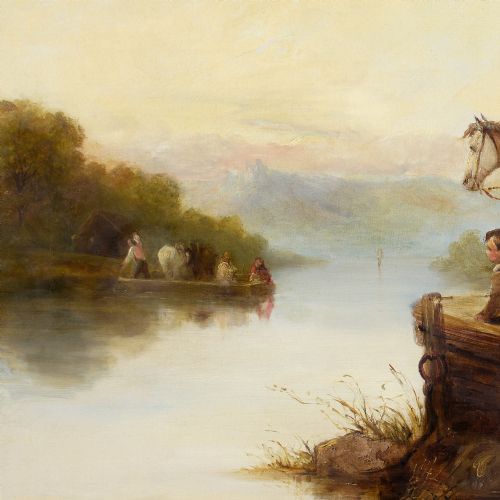
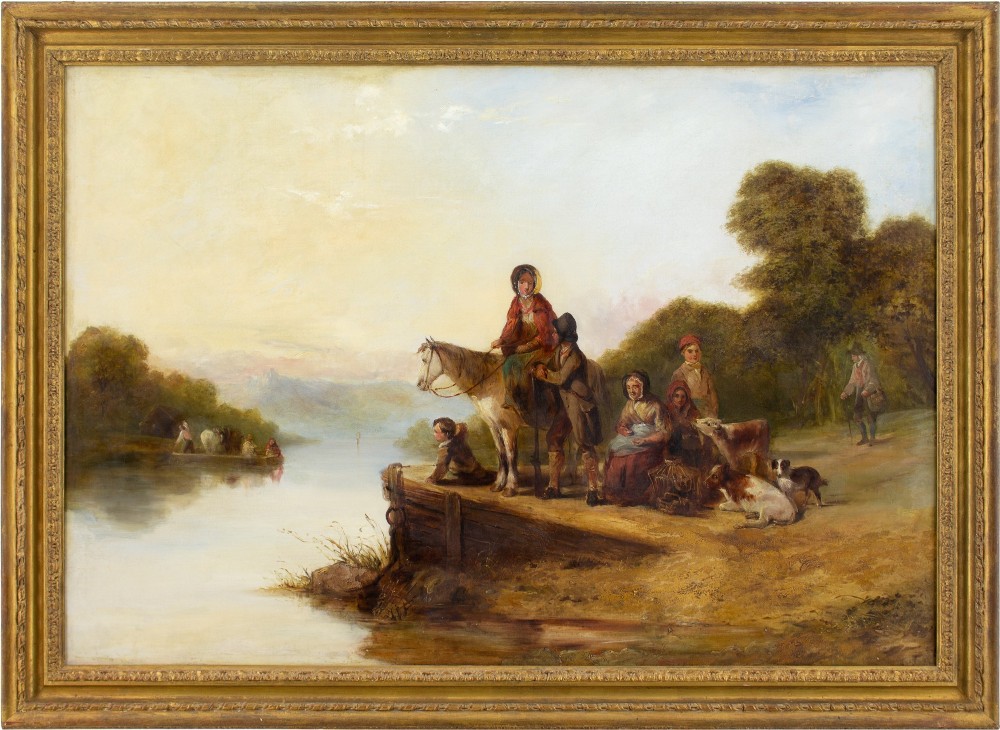
This charming mid-19th-century oil painting by British artist William Shayer (1787-1879) depicts a river landscape with villagers waiting for a ferry. Shayer was an accomplished painter of figures and rural scenes.

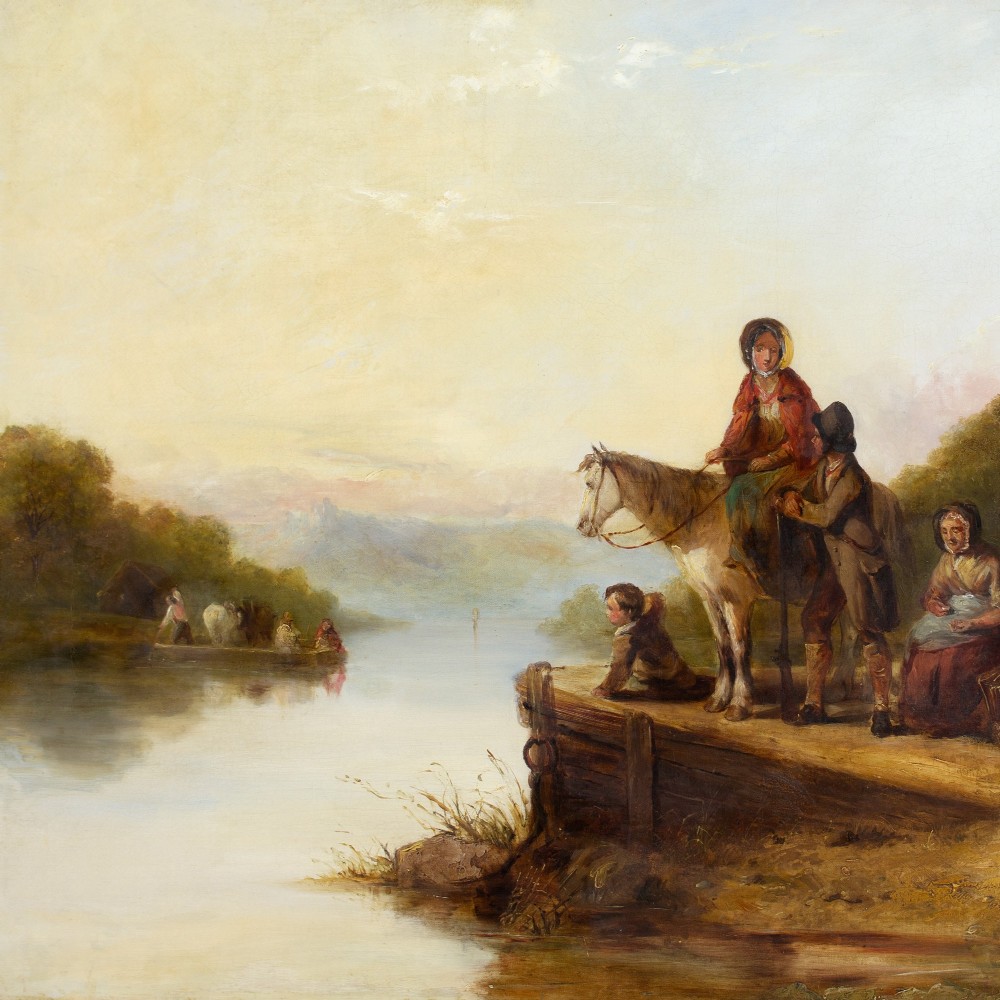
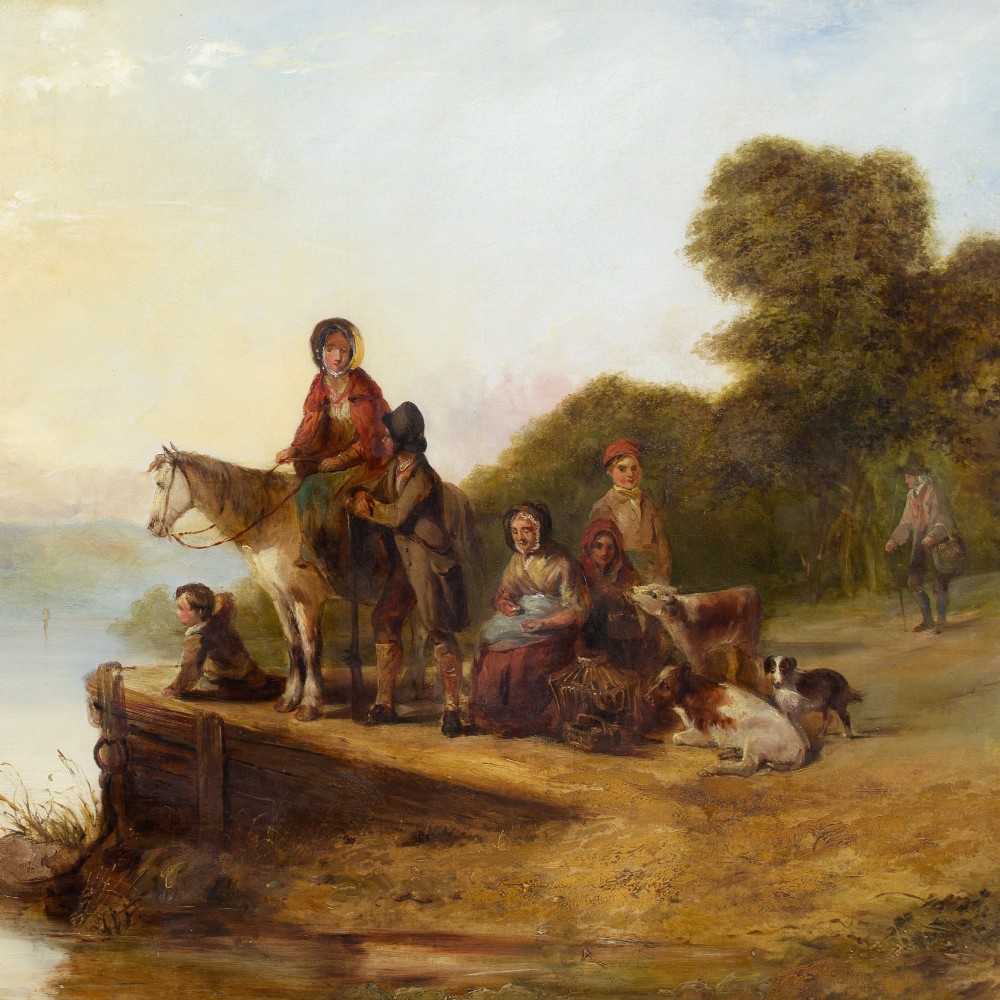
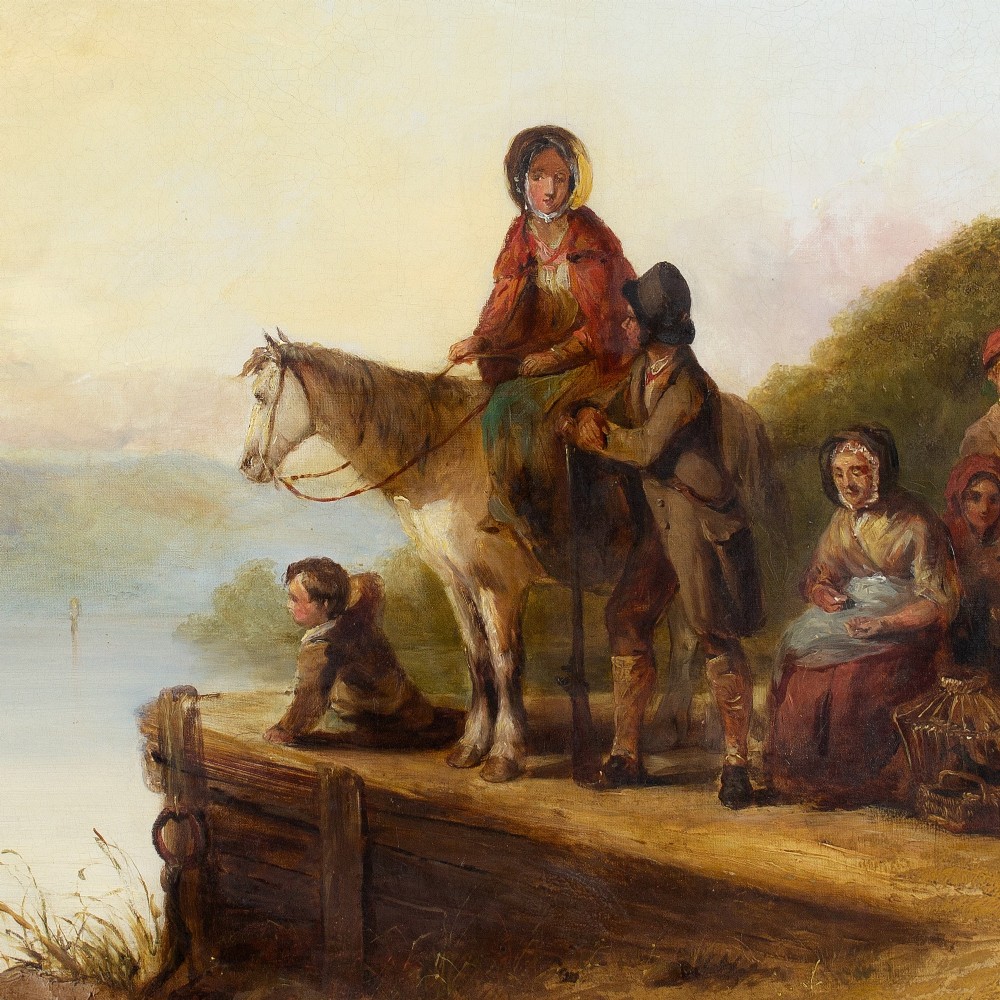
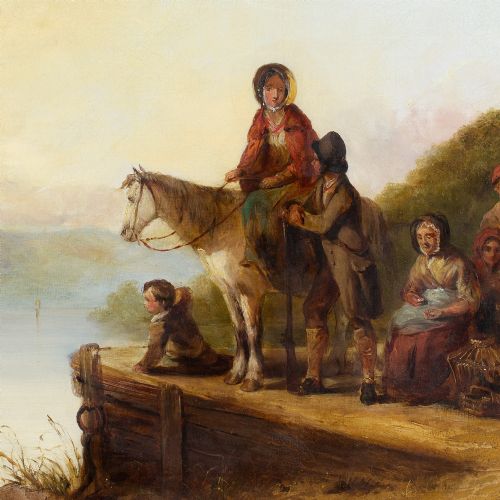
Several local characters including a bonneted young lady atop a white pony rest awhile as they wait for the river ferry to return. An elderly lady holds a baby swaddled in blue, while a calf tilts its head in the hope of a meal. It’s a restful scene of everyday rural life, probably sketched in the New Forest where Shayer often drew inspiration.
Born the son of a publican, Shayer was raised in the ‘Horse and Jockey’ pub in Southampton, Hampshire. His father passed away early in life, leaving his widowed mother to take care of the family single-handedly while also serving customers. As such, to generate some much-needed income, he was sent to work as a young lad, decorating rush-bottom chairs. Subsequently undertaking an apprenticeship as a carriage painter.
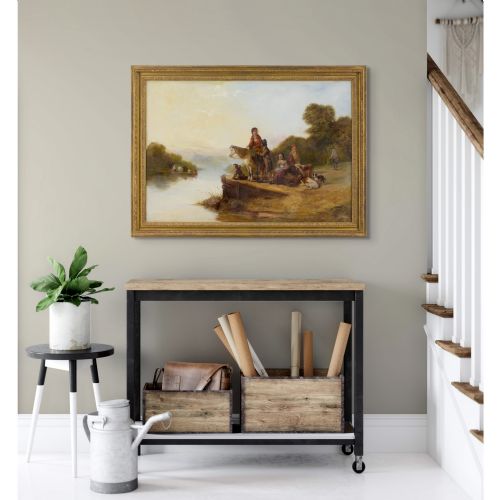
Numerous artists from this period began their careers as carriage painters and it was far from an easy endeavour. Aside from the skills required for paint preparation, apprentices were expected to learn how to apply designs accurately and with care. Shayer excelled and was soon employed as a heraldic painter for George Parsons of Chichester, a coachbuilder. It’s said that he possessed a keen eye for detail and developed a solid reputation for the quality of his craft.
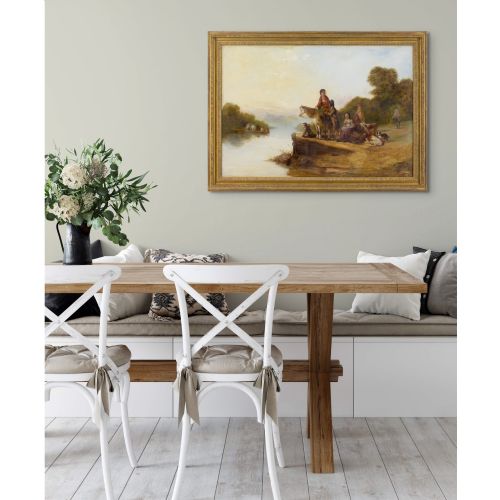
In his spare time, he produced copies of engravings and etchings to supplement his income. All the while honing his draughtsmanship and gaining experience of old master prints.

In 1819, with the encouragement of a generous local patron, Michael Hoy, he began to establish himself as a painter in oils. The following year debuting at London’s Royal Academy. His subjects were the ‘rural poor’, for want of a better expression. The local working communities of Hampshire, particularly the New Forest. He painted the everyday scenes he knew and the people he interacted with. His scenes are comparable with those of George Morland (1763-1804) and Edmund Bristow (1787-1876).
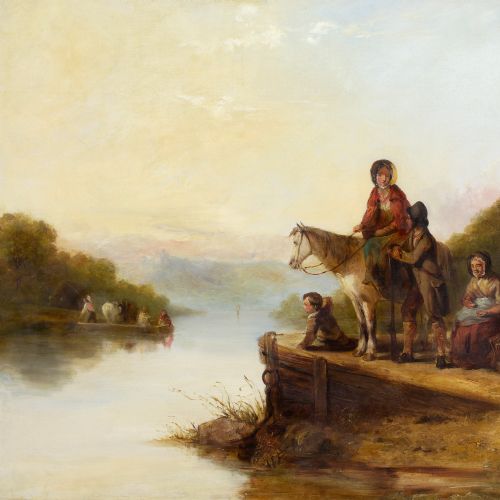
Painting the ‘poor’ was a Victorian endeavour fraught with complexity as critics often scorned those who reminded viewers of the symptoms of their abject poverty. Peasants, as they were usually referred to, needed to be seen as hard-working, in relatively good health, and morally upstanding. In recent years, historians have suggested that Shayer was influenced by these demands and overly romanticised his portrayals. However, it’s more likely that he simply focused on the positive aspects of close-knit brethren, community togetherness, and good honest labour. After all, he too faced the day-to-day struggles of providing for an extensive family.
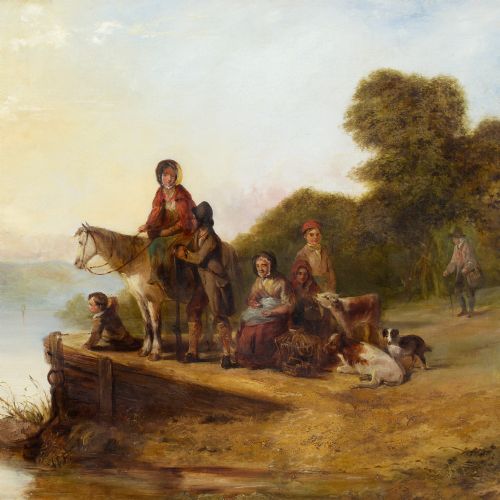
In terms of his technique, he blended an advanced understanding of composition with a sympathetic eye and a keen wit. He’d also gained experience in using glazes via his work as a heraldic painter and adapted this with great success. When painting faces, for example, he often applied a thin transparent layer atop dry opaque oil paint to create a glowing effect.
With his stock rising, several of his peers urged him to move to London to further his opportunities. These included the animal painter, Thomas Sidney Cooper (1803-1902), who was an admirer. He declined, however, resolute to remain in Southampton where he spent his entire life. He often reminded them that he was selling works as quickly as he could paint them - straight from the easel.
Alongside his fruitful career as a painter, he worked as a drawing master, also producing designs for the local theatre. Finally retiring in 1870 due to failing eyesight.

William Shayer exhibited at the Royal Academy, British Institution, and the Society of British Artists. He’s represented in numerous public collections including the

Physical Dimensions
Height
84cm (33.07")
Width
116cm (45.67")
Depth
5cm (1.97")
Declaration

Brave Fine Art has dated this piece to the 1850s.

Reference Numbers
Sellingantiques Reference
SA1091969
Description
This charming mid-19th-century oil painting by British artist William Shayer (1787-1879) depicts a river landscape with villagers waiting for a ferry. Shayer was an accomplished painter of figures and rural scenes.
Several local characters including a bonneted young lady atop a white pony rest awhile as they wait for the river ferry to return.
Brave Fine Art

An elderly lady holds a baby swaddled in blue, while a calf tilts its head in the hope of a meal. It’s a restful scene of everyday rural life, probably sketched in the New Forest where Shayer often drew inspiration.

fig 1. William Shayer, Waiting For The Ferry - Antique Oil Painting
fig 1. William Shayer, Waiting for the Ferry - Antique Oil Painting

Born the son of a publican, Shayer was raised in the ‘Horse and Jockey’ pub in Southampton, Hampshire. His father passed away early in life, leaving his widowed mother to take care of the family single-handedly while also serving customers. As such, to generate some much-needed income, he was sent to work as a young lad, decorating rush-bottom chairs. Subsequently undertaking an apprenticeship as a carriage painter.

fig 2. William Shayer, Waiting For The Ferry - Antique Oil Painting
fig 2. William Shayer, Waiting for the Ferry - Antique Oil Painting

Numerous artists from this period began their careers as carriage painters and it was far from an easy endeavour. Aside from the skills required for paint preparation, apprentices were expected to learn how to apply designs accurately and with care. Shayer excelled and was soon employed as a heraldic painter for George Parsons of Chichester, a coachbuilder. It’s said that he possessed a keen eye for detail and developed a solid reputation for the quality of his craft.

fig 3. William Shayer, Waiting For The Ferry - Antique Oil Painting
fig 3. William Shayer, Waiting for the Ferry - Antique Oil Painting

In his spare time, he produced copies of engravings and etchings to supplement his income. All the while honing his draughtsmanship and gaining experience of old master prints.

In 1819, with the encouragement of a generous local patron, Michael Hoy, he began to establish himself as a painter in oils. The following year debuting at London’s Royal Academy. His subjects were the ‘rural poor’, for want of a better expression. The local working communities of Hampshire, particularly the New Forest. He painted the everyday scenes he knew and the people he interacted with. His scenes are comparable with those of George Morland (1763-1804) and Edmund Bristow (1787-1876).

fig 4. William Shayer, Waiting For The Ferry - Antique Oil Painting
fig 4. William Shayer, Waiting for the Ferry - Antique Oil Painting

Painting the ‘poor’ was a Victorian endeavour fraught with complexity as critics often scorned those who reminded viewers of the symptoms of their abject poverty. Peasants, as they were usually referred to, needed to be seen as hard-working, in relatively good health, and morally upstanding. In recent years, historians have suggested that Shayer was influenced by these demands and overly romanticised his portrayals. However, it’s more likely that he simply focused on the positive aspects of close-knit brethren, community togetherness, and good honest labour. After all, he too faced the day-to-day struggles of providing for an extensive family.

fig 5. William Shayer, Waiting For The Ferry - Antique Oil Painting
fig 5. William Shayer, Waiting for the Ferry - Antique Oil Painting

In terms of his technique, he blended an advanced understanding of composition with a sympathetic eye and a keen wit. He’d also gained experience in using glazes via his work as a heraldic painter and adapted this with great success. When painting faces, for example, he often applied a thin transparent layer atop dry opaque oil paint to create a glowing effect.

fig 6. William Shayer, Waiting For The Ferry - Antique Oil Painting
fig 6. William Shayer, Waiting for the Ferry - Antique Oil Painting

With his stock rising, several of his peers urged him to move to London to further his opportunities. These included the animal painter, Thomas Sidney Cooper (1803-1902), who was an admirer. He declined, however, resolute to remain in Southampton where he spent his entire life. He often reminded them that he was selling works as quickly as he could paint them - straight from the easel.

fig 7. William Shayer, Waiting For The Ferry - Antique Oil Painting
fig 7. William Shayer, Waiting for the Ferry - Antique Oil Painting

Alongside his fruitful career as a painter, he worked as a drawing master, also producing designs for the local theatre. Finally retiring in 1870 due to failing eyesight.

William Shayer exhibited at the Royal Academy, British Institution, and the Society of British Artists. He’s represented in numerous public collections including the

Height
84cm (33.07")
Width
116cm (45.67")
Depth
5cm (1.97")
Date of Manufacture

Brave Fine Art has dated this piece to the 1850s.

Reference Numbers
Sellingantiques Ref
SA1091969
Brave Fine Art
Brave Fine Art
Sellingantiques verified Since Nov 2018

Exquisite antique paintings that capture the imagination.

Dealer Profile

You can view the stock and full dealer information on the Brave Fine Art Profile Page
PDF SHARE
SAVE
William Shayer, Waiting For The Ferry - Antique Oil Painting
1 / 9
Archive I William Shayer, Waiting For The Ferry - Antique Oil Painting

William Shayer, Waiting for the Ferry - Antique Oil Painting
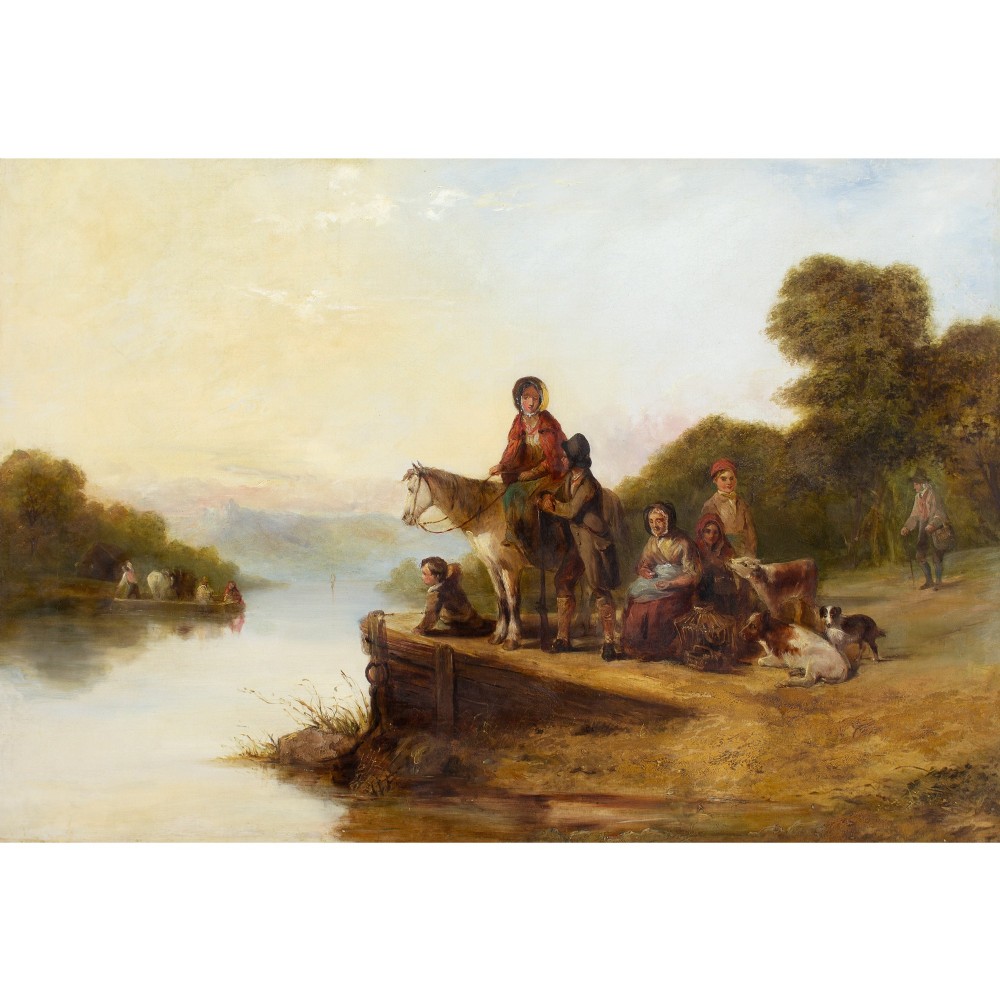
Archive II William Shayer, Waiting For The Ferry - Antique Oil Painting  View II
Archive III William Shayer, Waiting For The Ferry - Antique Oil Painting  View III
Archive IV William Shayer, Waiting For The Ferry - Antique Oil Painting  View IV
Archive V William Shayer, Waiting For The Ferry - Antique Oil Painting  View V
Archive VI William Shayer, Waiting For The Ferry - Antique Oil Painting  View VI
Archive VII William Shayer, Waiting For The Ferry - Antique Oil Painting  View VII
Archive VIII William Shayer, Waiting For The Ferry - Antique Oil Painting  View VIII
Archive IX William Shayer, Waiting For The Ferry - Antique Oil Painting  View IX
Enlarged Archival View
Telephone 01684 215986
Location
21 Enterprise Way
Arle Road
Cheltenham
Cotswolds
GL51 8LZ
United Kingdom

Under appointment only.
Verified Since Nov 2018
Items For Sale 66
Items Sold 1,841
Brave Fine Art
Brave Fine Art
Verified Since Nov 2018
View Dealer Info
Location: 21 Enterprise Way, Arle Road, Cheltenham, Cotswolds, GL51 8LZ, United Kingdom, , Under appointment only.
Verified
Nov 2018
For Sale
66
Sold
1,841
William Shayer, Waiting For The Ferry - Antique Oil Painting
Ref: SA1091969
William Shayer, Waiting For The Ferry - Antique Oil Painting
Detail View 1
Detail View 2
Detail View 3
Detail View 4
Detail View 5
Detail View 6
Detail View 7
Detail View 8
Archival Detail
Every single antique dealer on our platform is individually approved by our internal team. We verify their professional trade history, ethical standards, and photographic quality to ensure a secure, high-standard buying environment. Upon joining, every dealer agrees to a strict 9-point code of conduct. While issues can occasionally arise, our dealers typically resolve them swiftly and directly with the buyer. In fact, since our founding in 2002, Sellingantiques has only had to step in to help resolve an issue on roughly five occasions—a true testament to the quality of our dealers and their dedication to your happiness.
Our dealers are highly experienced in packing and shipping fragile, high-value antiques. Because you are in direct contact with the dealer, you will be able to easily go through all available shipping and insurance options together to ensure your item arrives safely.
Antiques are the ultimate green purchase. By choosing historical pieces over newly manufactured goods, you completely eliminate the carbon footprint of modern mass production while preserving exceptional, timeless craftsmanship.
items
Add keywords to the filter
Price
£100
£250000
Era
Movements
Material
Origin
Stock Location
Freshness
Online Payments
Categories