




Yellow Sienna Marble
Yellow sienna marble objects bring rich, golden-ochre warmth and striking veining into a room through classical clocks, pedestals and decorative pieces.
Yellow Sienna Marble
Yellow sienna marble items encompass a range of decorative and functional objects designed to catch the eye in a classical interior. When you search yellow sienna marble, you encounter pieces that combine this distinctive Italian stone with cast metals and patinated bronzes.
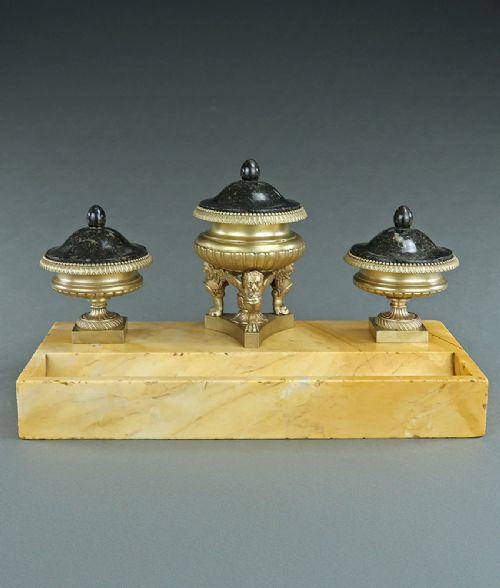
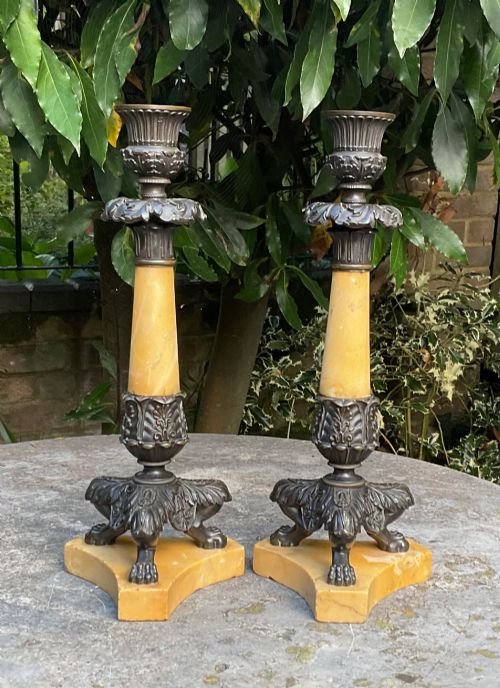
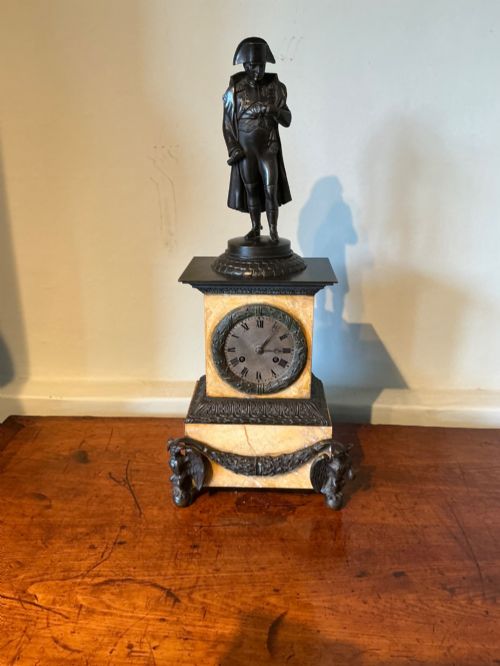
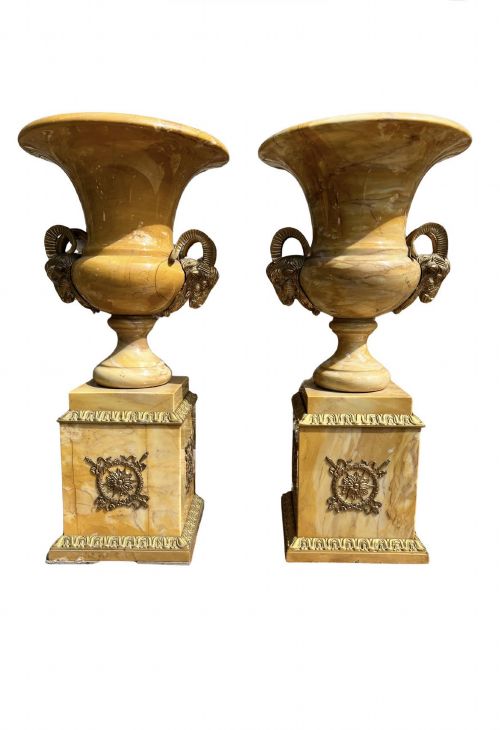
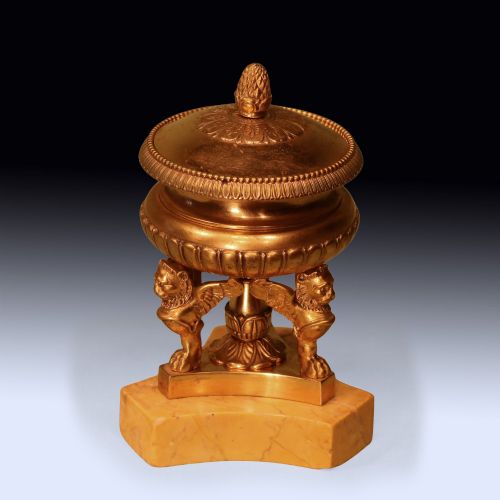
Mantel clocks and candlesticks form the core of what appears in this stone, alongside decorative urns, tazzas, inkwells and occasional tables. These pieces draw on Neoclassical, Regency, French Empire and Grand Tour aesthetics, reflecting European tastes from the early nineteenth century onwards.
The material frequently pairs with ormolu, gilt bronze, brass and patinated bronze, creating high-contrast compositions of warm stone and metallic lustre. Objects range from small desk accessories like encriers and inkstands to larger architectural elements such as wall panels and pedestals.
How they were made
Masons shaped the yellow sienna marble by hand, cutting and polishing the stone to reveal its intense yellow ground and dark, branching veining. This dense limestone takes a high gloss polish that contrasts sharply with matte patinated surfaces.
Foundries cast accompanying figures, mounts and bezels in bronze or brass, which were then gilded with ormolu or finished with a dark patina. Craftsmen assembled these mixed-media objects using threaded rods and screws to secure the heavy stone bases to metal components.
A nineteenth-century sculptor once carved solid Italian marble into the likeness of St Mark's winged lion just to hang on a wall.
What varies in quality
Quality rests heavily on the depth and drama of the marble's veining and the clarity of its yellow ground. Stones with rich, unbroken colouration and minimal repairs stand apart from plainer, heavily patched blocks.
The crispness of the bronze or brass casting determines the refinement of mounts, clock bezels and figural garnitures. Sharp chiselling and careful mercury gilding or patination indicate a higher tier of workshop production.
The Yellow Sienna Marble Glossary
- Sienna marble
- A decorative limestone quarried in Tuscany, renowned for its golden-yellow background and dark purple-grey branching veins. It became a favourite material for Grand Tour souvenirs and Neoclassical mantel garnitures.
- Ormolu
- Finely chopped and amalgamated gold applied to a bronze base using a mercury amalgamation process, yielding a brilliant golden finish. This technique flourished in French Empire and Regency decorative arts.
- Grand Tour
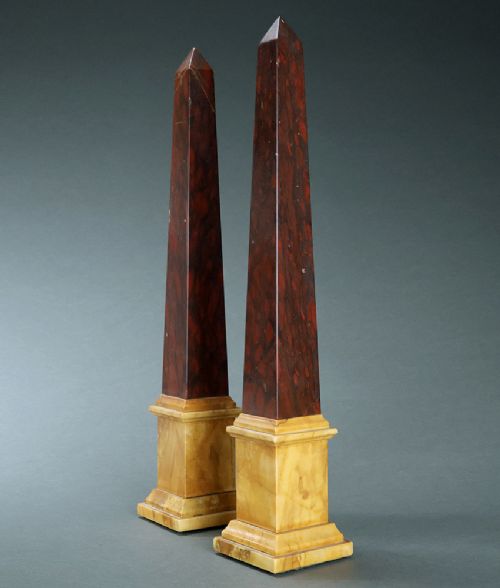
- A traditional trip of Europe undertaken by upper-class European young men of means to flourish their cultural education, bringing back items like marble obelisks, tazzas and bronzes. These objects served as tangible proof of intellectual and aesthetic refinement.
- Encrier
- A French term for an inkstand or inkwell desk accessory, often combining a sienna marble base with bronze or brass fittings for pens and sanders.
- Garniture
- A set of matching decorative objects, typically comprising a mantel clock flanked by two matching vases, urns or candelabra designed to sit together on a fireplace mantel.
Yellow Sienna Marble: Frequently Asked Questions
What is yellow sienna marble?
Yellow sienna marble is a distinctively patterned decorative stone quarried in Tuscany, Italy, featuring a rich ochre-yellow ground with dark branching veins.
Craftsmen prized it for luxury decorative objects and furniture throughout the nineteenth century, particularly during the Neoclassical and Grand Tour periods.
How do I care for yellow sienna marble?
Clean the stone using a soft, dry or slightly damp cloth without harsh chemical detergents that can strip the polished surface.
Keep acidic liquids away from the marble to prevent etching, and protect the stone base if placing heavy metal objects on top.
Where were these pieces made?
Many items originated in Italian workshops catering to travellers on the Grand Tour, while French and British cabinetmakers also imported the stone.
Parisian foundries frequently combined the Tuscan marble with cast bronze and ormolu for mantel clocks and garnitures.
How do I identify a Regency period piece?
Regency items often display strict classical restraint, utilising clean architectural lines, patinated bronze figures and restrained ormolu mounts.
They date from the early nineteenth century and lean heavily on ancient Greek and Roman design motifs.