

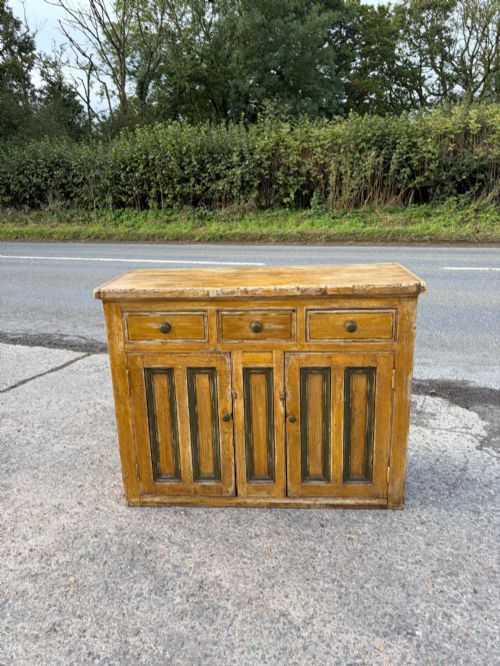
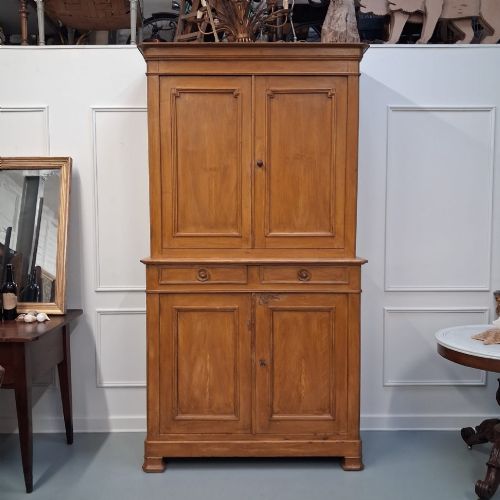
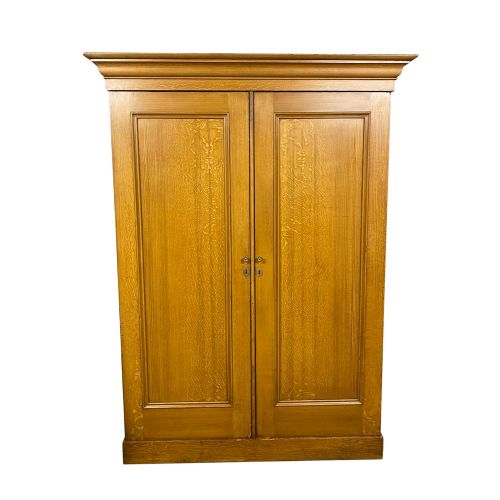
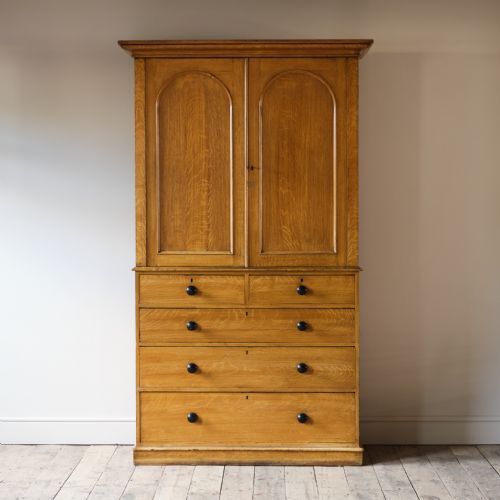

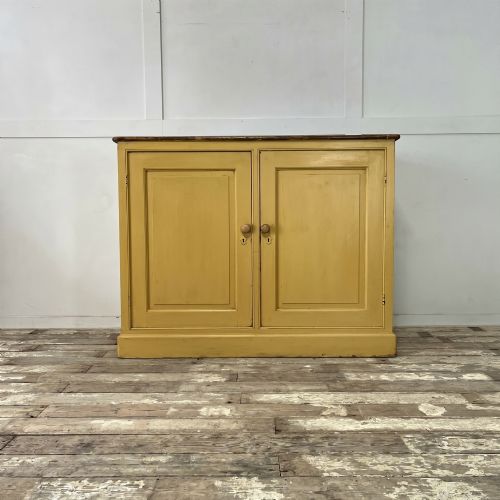


Yellow Painted Pine Cupboard
These yellow painted pine cupboard pieces bring robust utility and regional character straight into the home.
Yellow Painted Pine Cupboard
A yellow painted pine cupboard spans sturdy utilitarian forms from the nineteenth century, including large housekeeper cupboards, linen presses, school cabinets, and dressers. Buyers seeking these items typically encounter pieces shaped by Victorian country, Regency, and Scandinavian country traditions, often retaining their initial surface finishes.
The selection here encompasses substantial storage furniture built from softwood timber and finished with historical paintwork. Forms range from towering four-door bookcase cabinets and compactum wardrobes to smaller country dressers, representing diverse regional workshops across England, France, and Sweden.
How they were made
These items are constructed primarily from solid pine wood, joined with traditional carpentry methods suited to everyday domestic or institutional service. Cabinet makers utilised iron and brass hardware such as hinges and handles to secure doors and drawers.
Surfaces were frequently coated in layers of pigment, occasionally employing scumble paint or ragwork techniques to imitate richer timbers like oak. This painted finish protected the softwood underneath while delivering a distinct decorative appearance.
Yellow Painted Pine Cupboard Retail Price Guide 2026
Typical asking prices for yellow painted pine cupboard among the pieces listed under this phrase on Sellingantiques today, from the lower quarter to the upper quarter. They describe what is for sale here now, not the wider market.
Listings feature pieces from the nineteenth century, including Victorian, Regency, and circa 1850 examples utilising pine, paint, brass, and iron.
What varies in quality
Quality rests significantly upon the survival and integrity of the original paint surface, distinguishing examples with untouched historical patination from those with later re-paintings. The depth of regional character and the complexity of the cabinet form also dictate distinction.
Proportion and scale play a vital role, as larger architectural pieces such as four-door bookcases or housekeeper cupboards require sound structural joinery to remain stable. The execution of decorative surface treatments, including ragwork or scumble graining, further separates standard utilitarian items from finer examples.
The Yellow Painted Pine Cupboard Glossary
- Scumble paint
- A translucent glaze manipulated with tools to create faux wood grain effects over a base colour. It was frequently used on pine to emulate expensive hardwoods.
- Housekeeper cupboard
- A large storage cabinet traditionally used in country houses for linen, preserves, and household provisions. These pieces typically feature panelled doors and generous interior shelving.
- Linen press
- A tall piece of furniture designed for storing folded garments and bedding, combining upper cupboard storage with lower drawers. They form a staple of nineteenth-century domestic interiors.
- Ragwork
- A decorative painting technique where rags are used to apply or remove colour, producing a mottled texture. This method appeared often on Scandinavian country furniture.
- Compactum wardrobe
- A versatile fitted wardrobe layout divided into internal sections for hanging clothes, sliding trays, and drawers. It maximised storage efficiency in Victorian bedrooms.
Yellow Painted Pine Cupboard: Frequently Asked Questions
What rooms suit a painted pine cupboard?
These large storage pieces fit comfortably into kitchens, boot rooms, and bedrooms where substantial capacity is required. Their painted finishes allow them to anchor both contemporary and traditional interior schemes.
Because they provide deep shelving and hanging space, they organise linens, crockery, or clothing with ease. Selecting the right scale ensures the cabinet complements rather than dominates the floor space.
How do I care for original paintwork?
Maintenance requires only gentle dusting with a dry microfibre cloth to protect the historical surface layers. Avoid commercial sprays or harsh chemical cleaners that can soften or strip aged paint.
Keeping the timber away from direct heat sources and excessive moisture prevents warping and paint flaking. Stable room temperatures preserve both the pine structure and the decorative finish.
Are these cupboards purely decorative?
Every piece serves a practical storage function alongside its visual presence in the home. Nineteenth-century examples were built for heavy daily use in country houses, schools, and farmhouses.
Sturdy shelves, deep drawers, and robust doors make them fully operational for modern storage needs. Their dual nature combines utilitarian strength with distinct regional style.
How do I identify the period of a piece?
Dating relies on construction methods, timber selection, and the specific style of the hardware and mouldings. Nineteenth-century examples often display hand-planed pine boards and forged iron fittings.
Regional variations also offer clues, such as the characteristic palette of Swedish ragwork or the formal lines of English Regency design. Examining the interior construction reveals how the cabinet was assembled by period makers.