


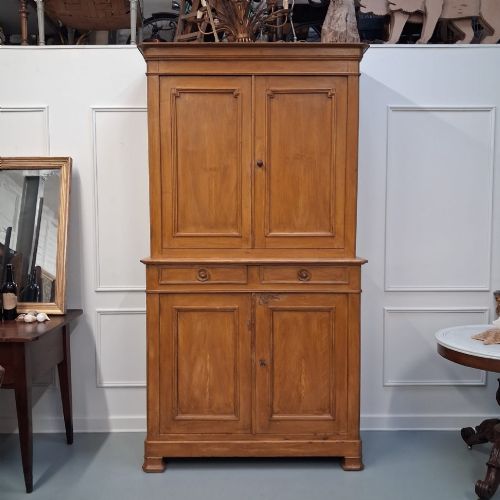
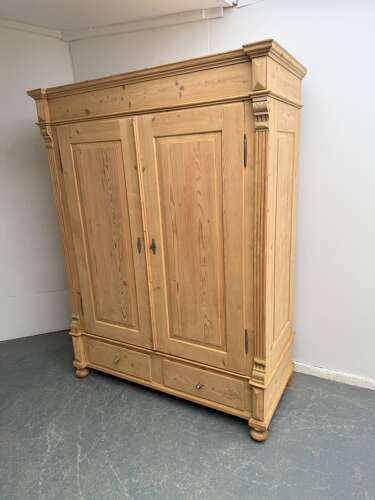


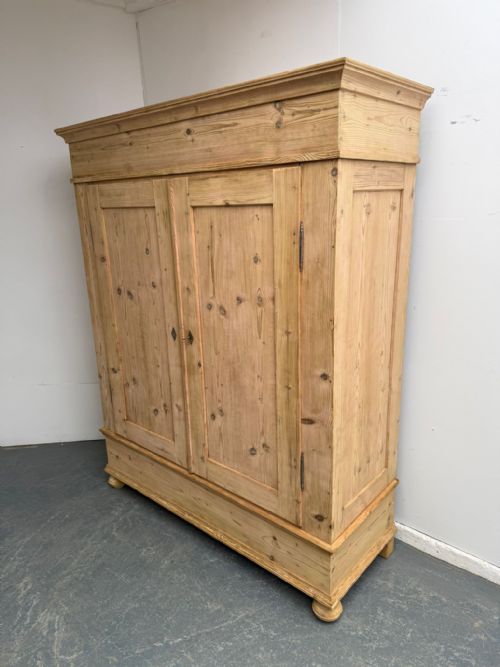
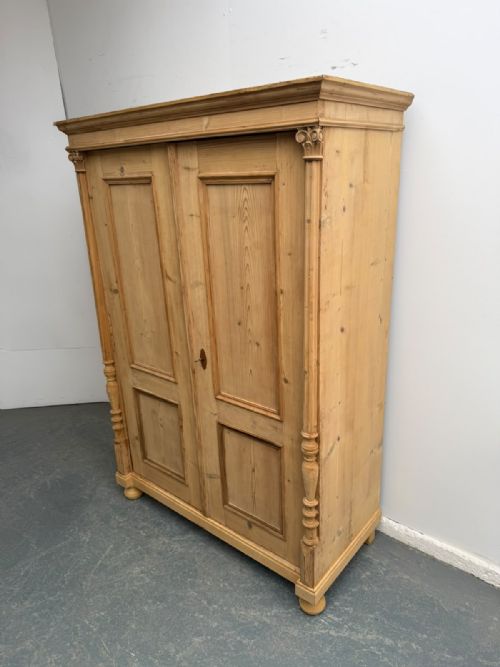
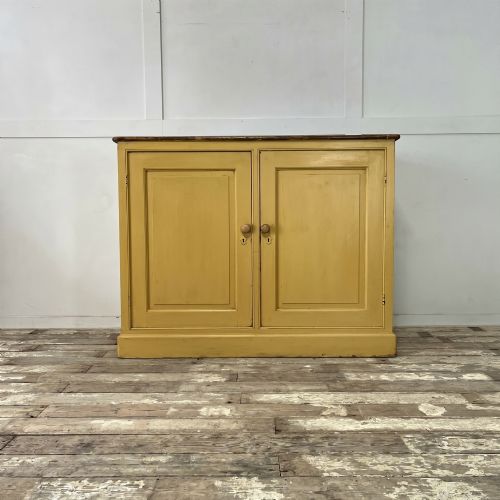


Large Pine Housekeeper Cupboard
A large pine housekeeper cupboard brings substantial storage and domestic history to a kitchen, hallway, or utility room.
Large Pine Housekeeper Cupboard
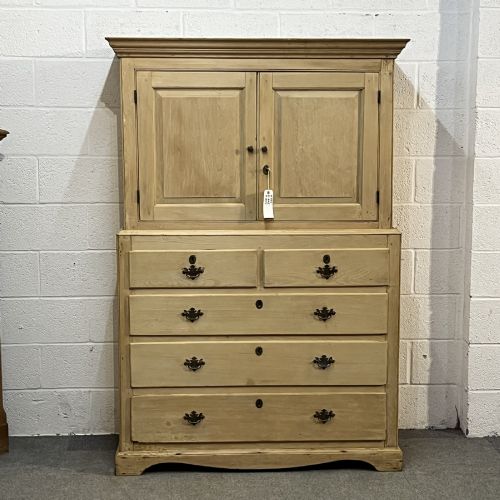
A large pine housekeeper cupboard is a substantial storage piece designed for domestic utility, frequently found in Georgian, Victorian, and nineteenth-century forms. These substantial pieces served working households for linen, provisions, and general storage, and they remain popular for modern homes needing deep storage.
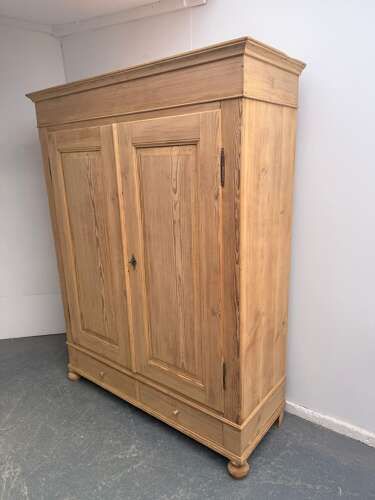
The versions most common on this page span English, French, Dutch, and Scandinavian origins, often featuring multiple doors, adjustable shelves, or knockdown construction. Many retain traces of original paint finishes, while others appear in stripped or waxed pine.
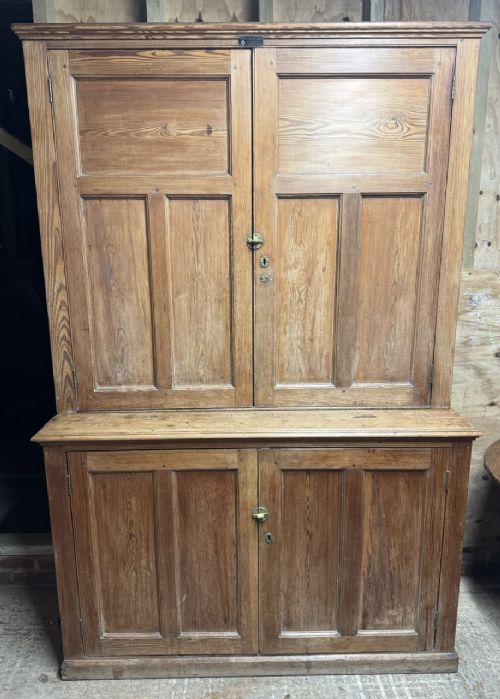
Forms range from tall single-door cabinets to massive multi-door cupboards, kitchen dressers, and linen presses. They reflect regional vernacular traditions across the periods represented in the archive.
How they were made
Construction relies primarily on pine and pitch pine timber, shaped into panels, frames, and shelving systems with iron or brass hardware. Joinery often includes bead detailing and knockdown structures designed for transport.
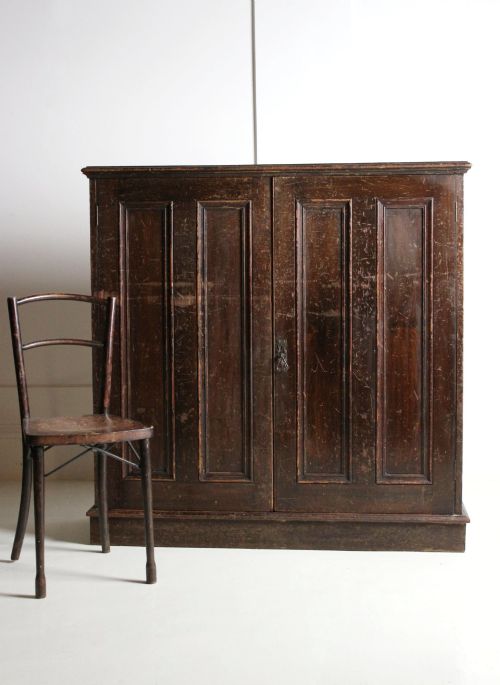
Surfaces receive various finishes, spanning original paint, later green or grey paint, and wax or stripped wood treatments. Iron and brass hinges, latches, and handles secure heavy doors on these tall storage units.
Large Pine Housekeeper Cupboard Retail Price Guide 2026
Typical asking prices for large pine housekeeper cupboard among the pieces listed under this phrase on Sellingantiques today, from the lower quarter to the upper quarter. They describe what is for sale here now, not the wider market.
Listings feature pieces spanning the 18th century, Georgian era, Victorian period, and early 20th century up to 1920.
What varies in quality
Quality rests in the integrity of the original construction, the presence of untouched period paint finishes, and the survival of original hardware like brass and iron fittings. Pieces retaining their structural robustness and original surfaces command greater interest.
Proportion and scale also distinguish examples, particularly where multiple doors or tall cornices remain balanced and unaltered by later modifications. The character of the timber grain and the honesty of the wear contribute significantly to the appeal.
The Large Pine Housekeeper Cupboard Glossary
- Knockdown wardrobe
- A large wardrobe or cupboard engineered to be disassembled into panels and sections for easier transport between rooms or houses.
- Linen press
- A tall storage piece traditionally used for storing folded linen and textiles, typically featuring upper shelving enclosed by doors.
- Original paint
- A surface finish applied during the period of manufacture that has survived subsequent decades without being stripped or repainted.
- Breakfront
- A piece of furniture where the central section projects forward from the flanking outer sections, creating visual depth.
- School cupboard
- A utilitarian institutional cabinet built for heavy daily use in classrooms or administrative storage.
Large Pine Housekeeper Cupboard: Frequently Asked Questions
What rooms suit a large pine housekeeper cupboard?
These large storage pieces fit well in spacious kitchens, utility rooms, and large hallways where substantial volume is needed.
Their deep proportions and tall frames provide practical storage for kitchenware, linens, and provisions while adding historical presence to domestic interiors.
How do I care for waxed pine surfaces?
Waxed pine requires occasional gentle cleaning and re-waxing to maintain the timber finish and protect against household moisture.
Avoid placing these cupboards near direct heat sources or damp areas to preserve the stability of the pine panels and joints.
Are original paint finishes common?
Many cupboards retain original or early painted surfaces in shades of green, grey, or neutral tones applied during the nineteenth century.
These surviving finishes offer a record of changing domestic interiors across the Georgian and Victorian eras.
How do I distinguish Georgian from Victorian cupboards?
Georgian examples often display simpler proportions and earlier joinery details, whereas Victorian pieces frequently incorporate more robust mouldings and multiple doors.
Comparing the construction methods, hardware types, and overall architectural styling helps identify the likely period of manufacture.