

Writing Bureau Cabinet
When you seek a writing bureau cabinet, you look for a dual-purpose piece that combines enclosed storage with a dedicated fall-front desk.
Writing Bureau Cabinet
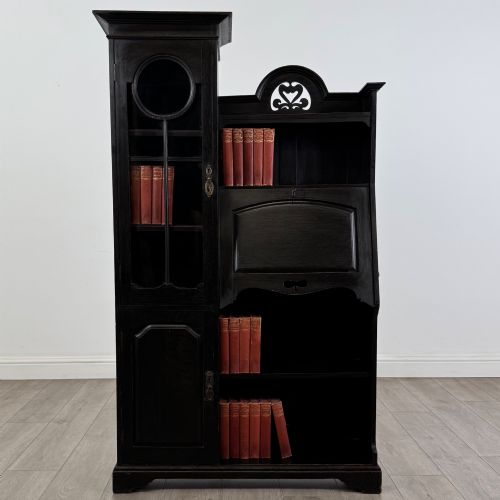
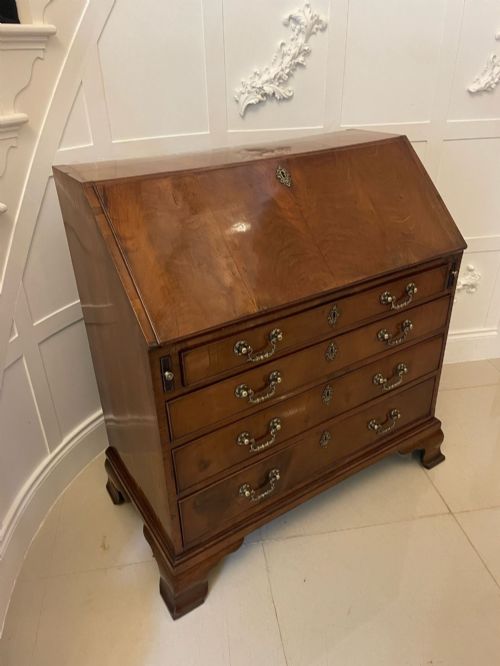
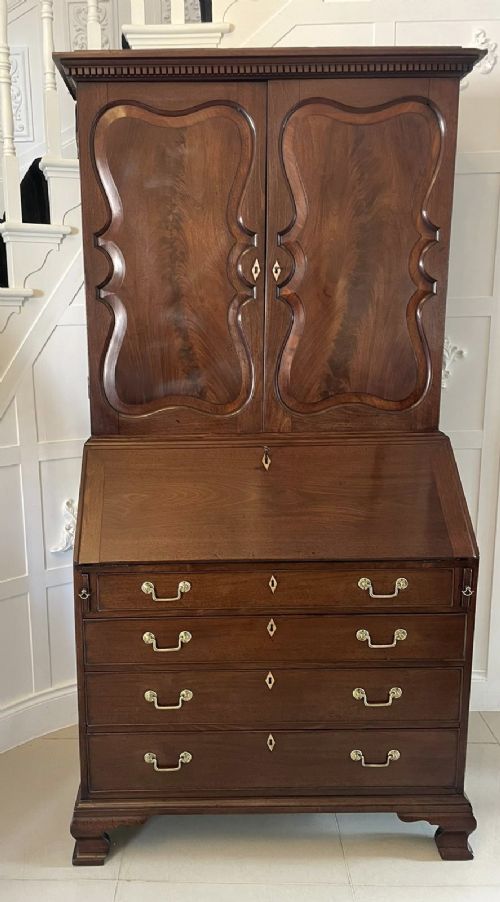
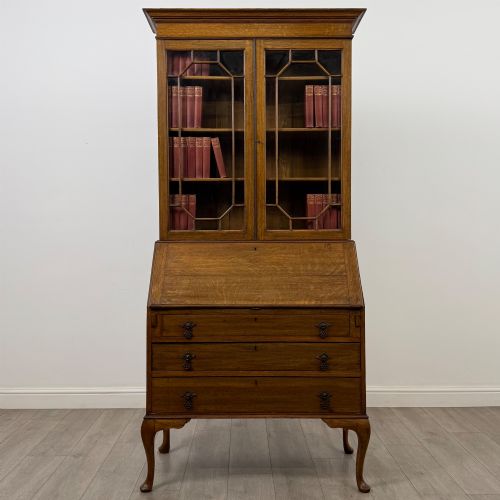
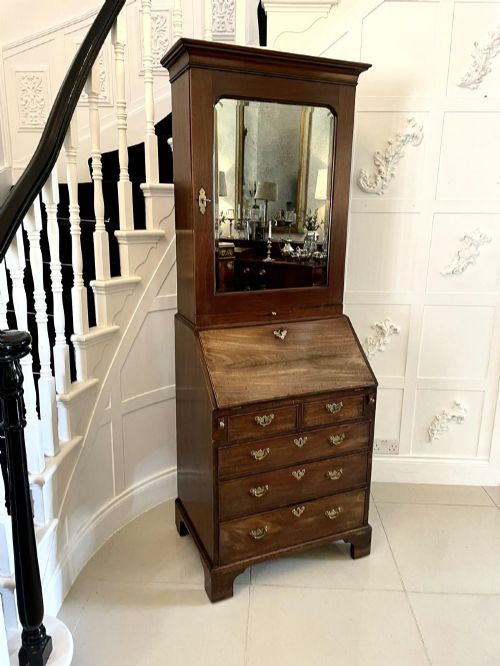
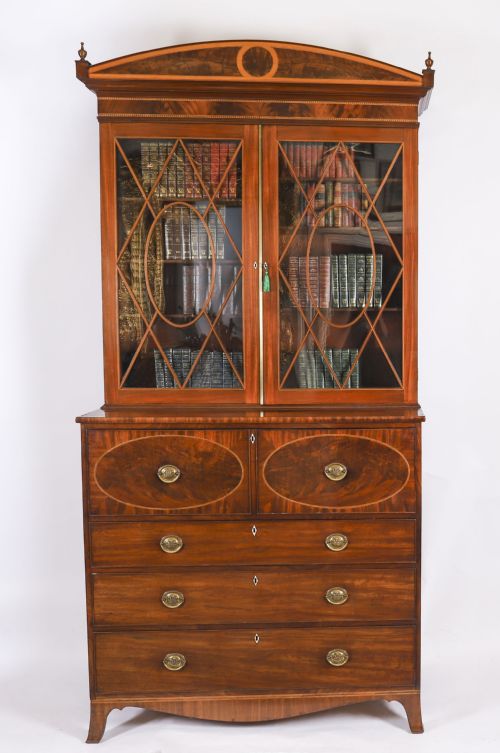
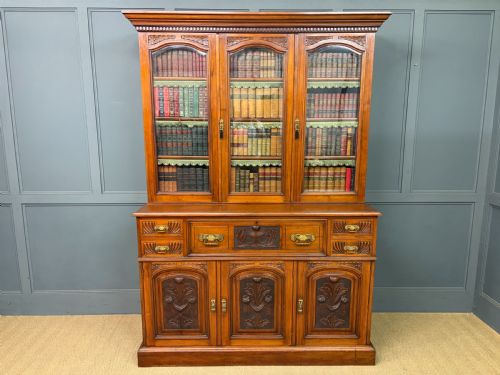
A writing bureau cabinet brings together a compact fall-front writing surface and concealed interior compartments, frequently topped by a glazed or panelled bookcase section. These double-duty pieces emerge across the eighteenth, nineteenth, and twentieth centuries, spanning periods from Queen Anne and Georgian to Victorian and Edwardian.
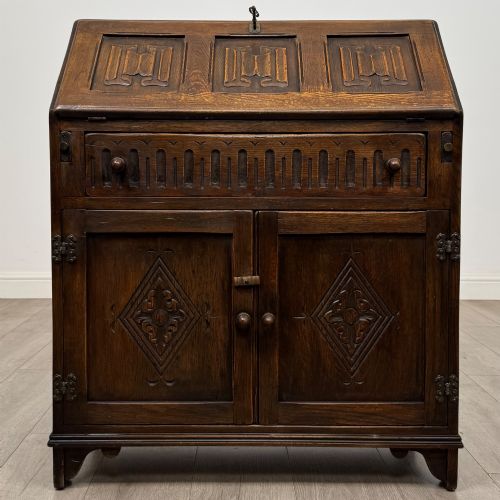
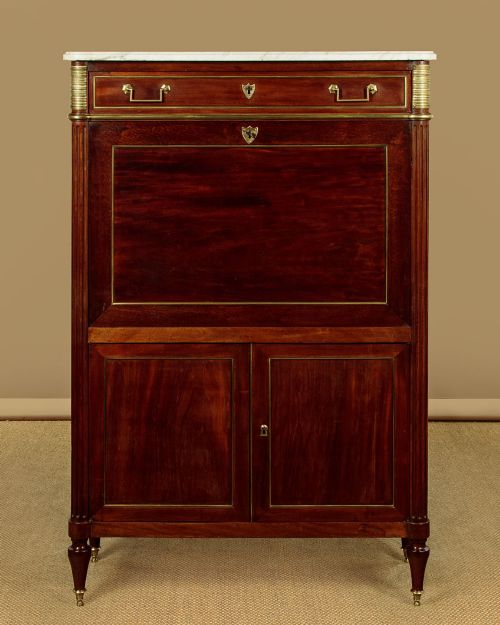
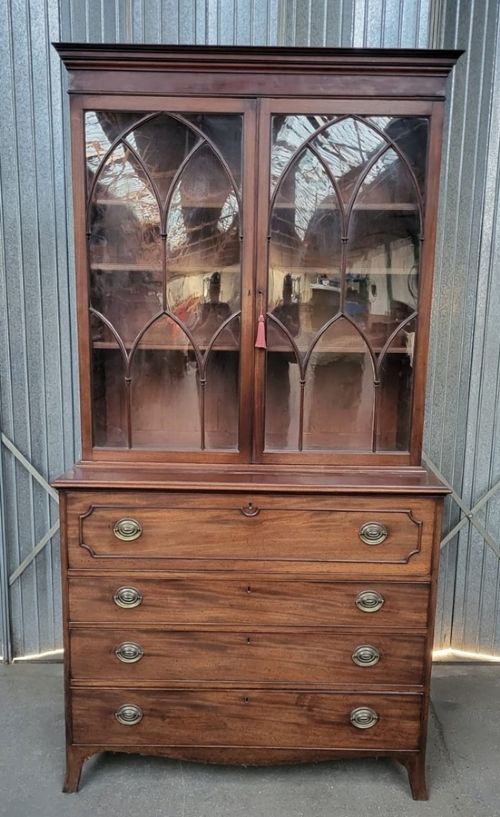
The version you meet most often on this page is the oak or mahogany bureau bookcase, alongside smaller freestanding fall-front desks and secretaire abattants. Makers shape these forms in regional woods like oak and walnut, as well as imported timbers including mahogany, rosewood, and kingwood.
Forms range from modest student or apprentice pieces to grand bureau bookcases featuring multiple internal pigeonholes, small drawers, and glazed upper shelving. These items serve simultaneously as workspaces and display cabinets for books or household papers.
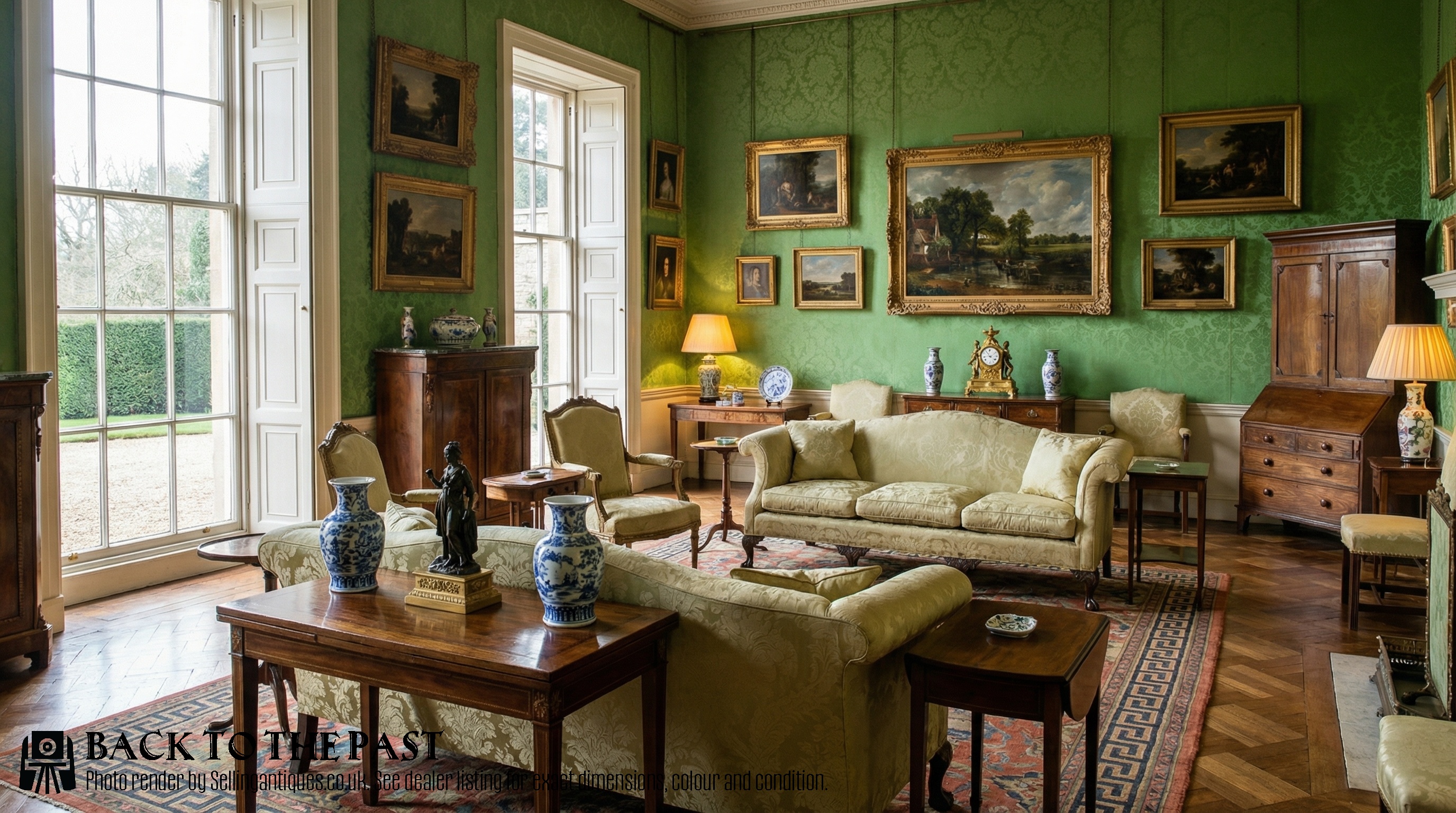
How They Were Made
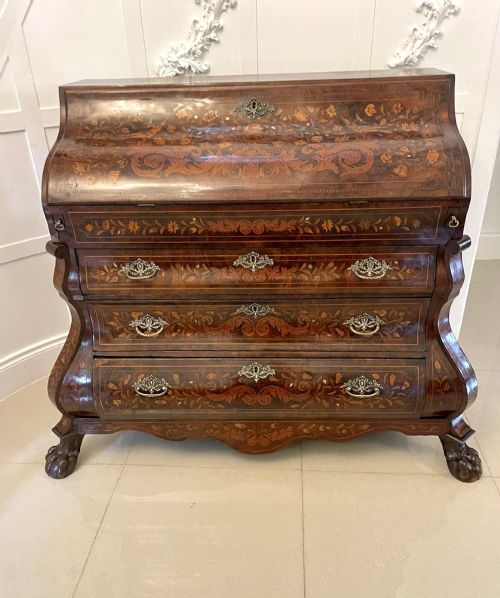
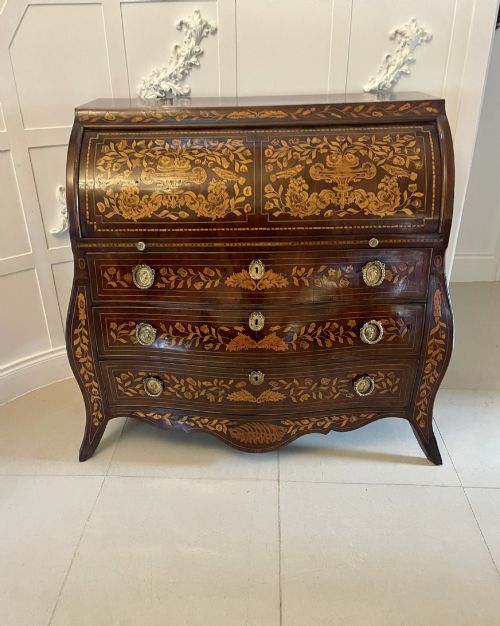
Cabinetmakers construct these pieces primarily using solid hardwoods and decorative veneers laid over supportive secondary timbers. Surfaces often display intricate marquetry, crossbanding, or herringbone inlay executed in contrasting woods.
Joinery relies on traditional dovetail construction for drawer boxes and mortise and tenon joints for structural framing. Drop-front writing slopes require sturdy brass hinges and internal support lopers to bear the weight of daily writing.
Apprentice pieces let young woodworkers prove their skills by building tiny, perfectly scaled cabinets before tackling full-sized furniture.
What Varies in Quality
The standard of a writing bureau cabinet depends on the selection of timber and the precision of its decorative veneers. Figured mahogany, burr walnut, and matched flame grains distinguish finer examples from standard commercial production.
Interior architecture marks another tier of distinction, where master makers incorporate secret compartments, carved pigeonholes, and fitted leather writing surfaces. Exterior details such as hand-cut dovetails, original brass hardware, and fine floral marquetry separate exceptional items from simpler utility furniture.
Gillows·The Bath Cabinet Makers
The Writing Bureau Cabinet Glossary
- Secretaire abattant
- A tall, vertical cabinet featuring a drop-front writing flap that conceals an internal arrangement of small drawers and pigeonholes.
- Marquetry
- Decorative veneer patterns formed by fitting together thin pieces of wood, ivory, or shell to create pictorial or floral designs.
- Lopers
- Wooden pull-out brackets or arms that slide out from beneath a fall-front desk to support the writing surface when open.
- Herringbone
- A distinctive banded inlay pattern composed of small diagonal veneers arranged in a repeated V-shape.
- Pigeonhole
- A small, open compartment fitted inside the interior desk section used for sorting letters and documents.
Writing Bureau Cabinet: Frequently Asked Questions
How do I use a bureau cabinet daily?
You pull out the wooden support lopers and lower the fall-front flap to reveal the internal writing surface and pigeonholes. This provides a compact workspace that folds away to conceal papers when not in use.
The upper bookcase section allows you to store books or display decorative items behind glass doors. This keeps your working area tidy while maintaining traditional storage space in the lower drawers.
Where should I place this cabinet?
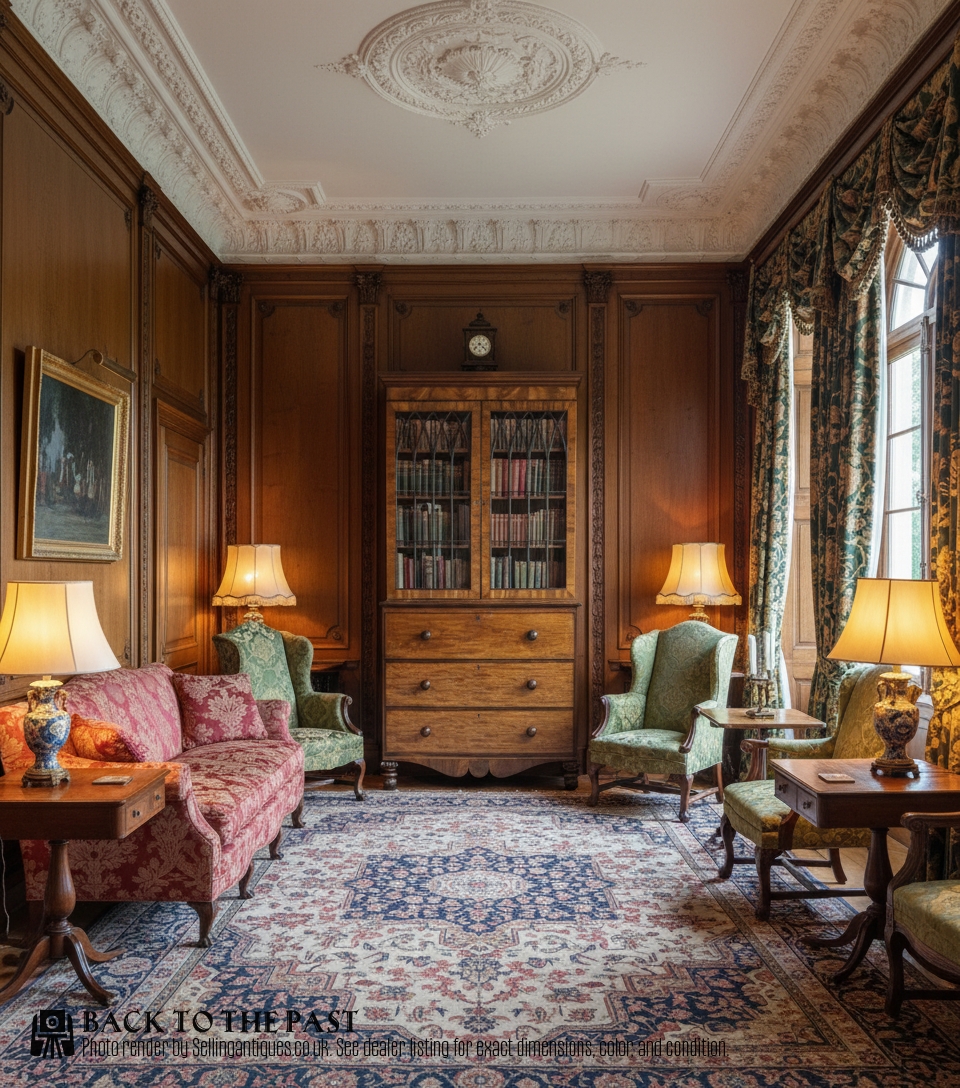
These pieces suit living rooms, studies, or bedrooms where floor space is limited yet storage is required. Position the cabinet away from direct sunlight and heat sources to protect timber veneers and leather surfaces.
Ensure there is sufficient clearance in front of the cabinet to lower the fall-front flap and pull out the support lopers comfortably.
How do I tell Georgian from Victorian pieces?
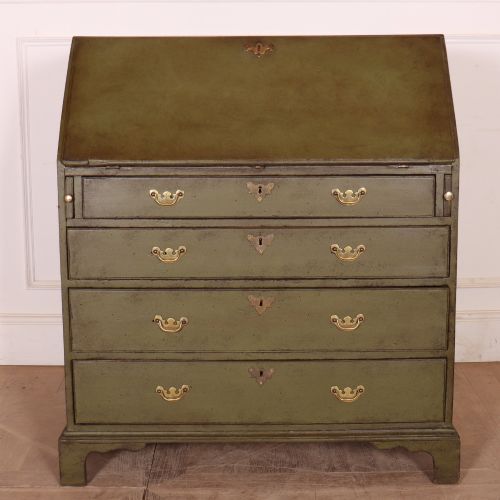
Georgian examples often display restrained proportions, bracket feet, and refined mahogany or walnut veneers with subtle inlay work. Interior fittings focus on simple classical arrangements of drawers and pigeonholes.
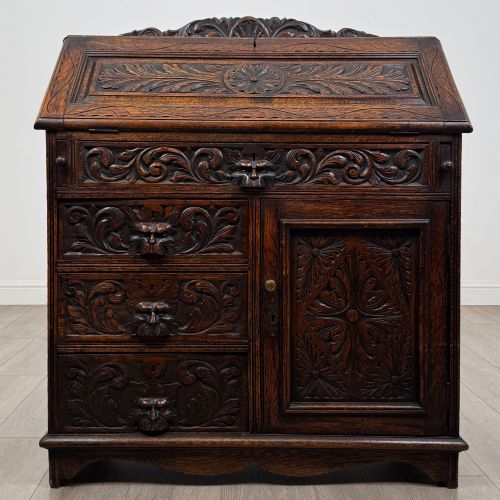
Victorian items frequently exhibit darker ebonised finishes, heavier carved decorations like green man motifs, or burr walnut with extensive marquetry. Proportions tend to be heavier and construction incorporates machine-sawn components alongside traditional joinery.
What is a Davenport desk?
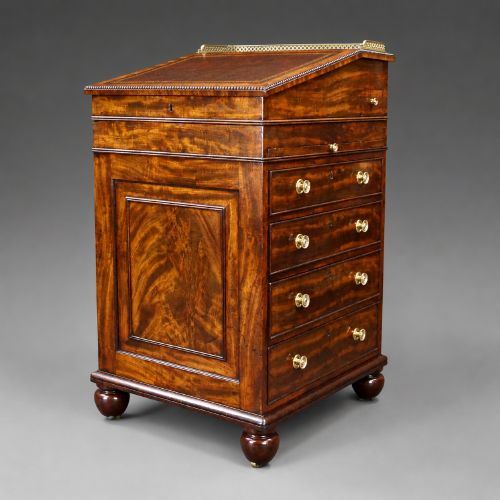
A Davenport is a compact form of small writing desk featuring a sloping, hinged writing bed above a pedestal of side drawers. These items often include internal stationery compartments accessible by lifting the top slope.
Cabinetmakers designed these smaller desks to occupy minimal floor space while offering functional storage for correspondence and writing materials in drawing rooms.