





Woven Wool Tribal Pouch
When you search for a woven wool tribal pouch, you are looking at utilitarian textile art created by nomadic makers across Persia, Central Asia, and Afghanistan.
Woven Wool Tribal Pouch
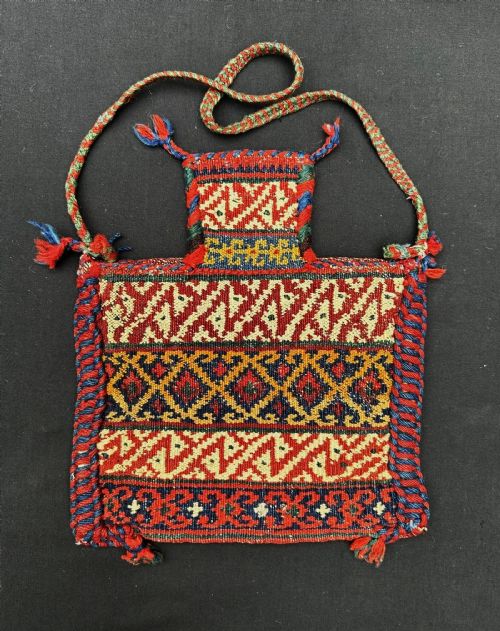
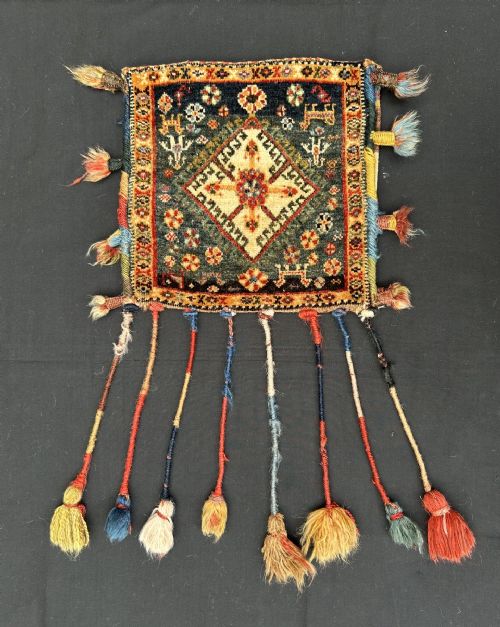
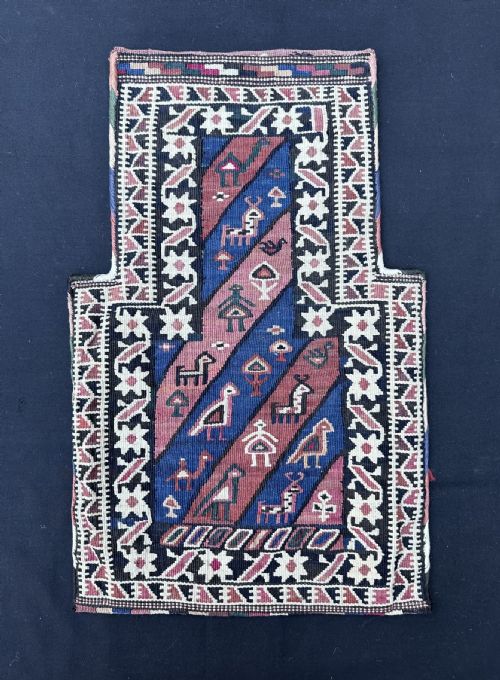
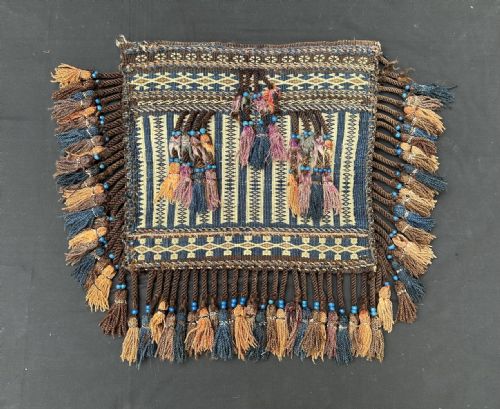
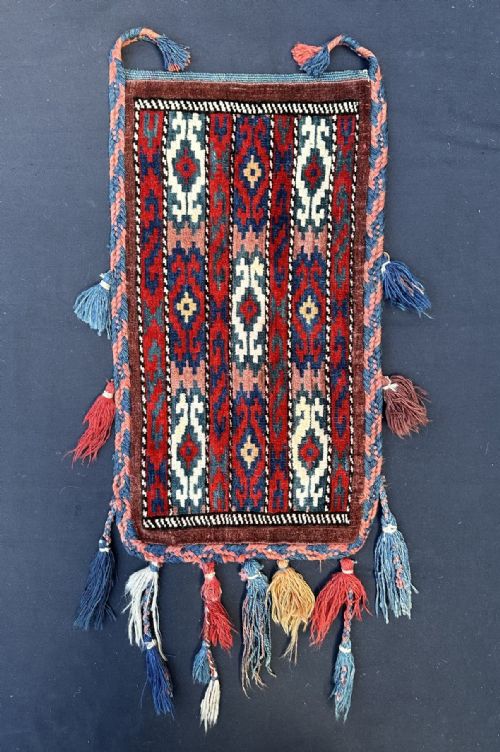
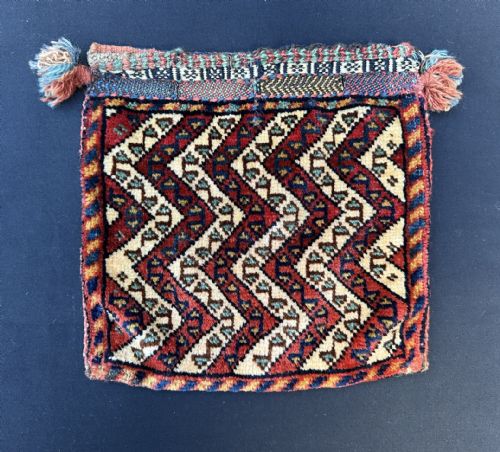
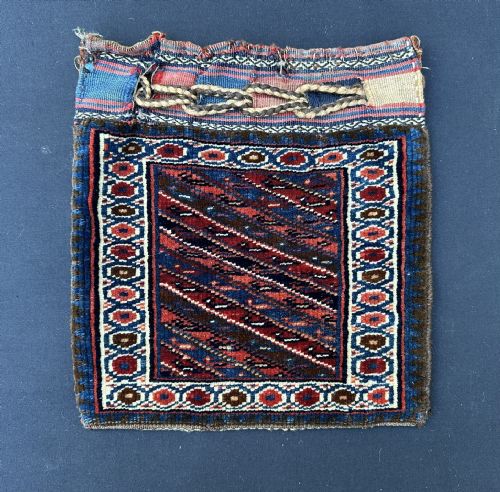
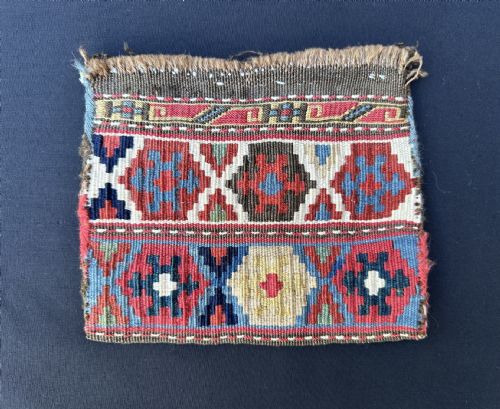
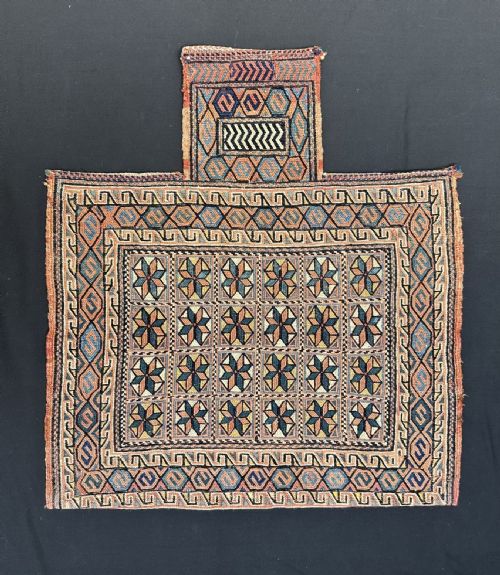
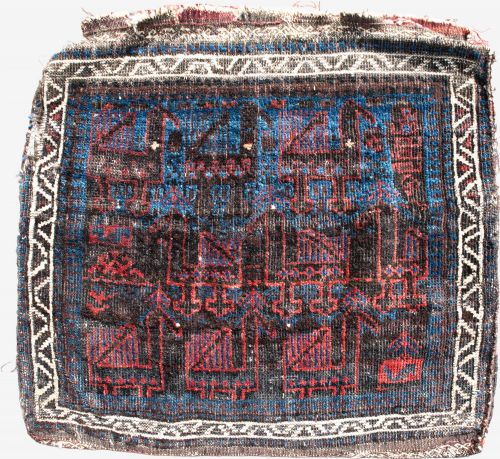
A woven wool tribal pouch represents a diverse group of portable containers made by various confederacies and tribes for daily nomadic life. These utilitarian objects served specific domestic purposes, functioning as salt-bags, vanity-bags, spindle-bags, and tobacco-bags.
The pieces available on this page originate from regions spanning South Persia, Khorassan, Azerbaijan, and Turkmenistan. They reflect the distinct weaving traditions of groups such as the Qashqa'i, Afshar, Baluch, Shahsevan, and Yomut Turkmen.
Most examples date from the mid-nineteenth century through to the early twentieth century. They demonstrate the practical application of textile skills to items intended for carrying personal possessions, salt, or household implements.
Markers of Quality
Quality in these textiles rests upon the fineness of the weave and the clarity of the tribal motifs. Tightly packed knots or precise flatweave execution indicate a high level of technical competency by the maker.
The depth and brilliance of the natural dyes significantly influence the visual impact of the pouch. Complex arrangements of traditional symbols, such as guls or specific tribal layouts, distinguish exceptional examples from standard utilitarian pieces.
The survival of original components, including complete backs and closure systems, elevates the integrity of an individual pouch. Well-preserved structures show how the object functioned in its original nomadic context.
Listings feature pieces spanning from 1850 to 1920, predominantly constructed from wool and cotton using natural dyes.
The Woven Wool Tribal Pouch Glossary
- Torba
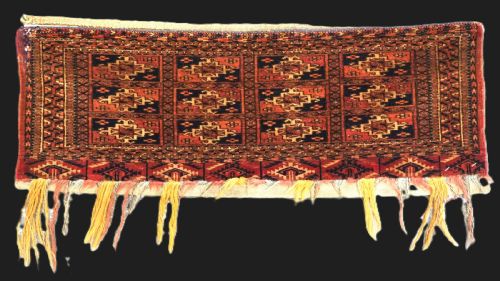
- A Turkmen wall-pocket or bag used for storage inside a tent. These pieces often feature prominent guls and finished backs.
- Chanteh
- A small personal bag or vanity pouch used by Persian and Kurdish tribes. They were frequently woven with intricate face designs.
- Namakdan
- A specialised salt-bag characterised by a narrow neck and a broader base. Nomads utilised these containers to store rock salt for household use.
- Soumak
- A flatweave technique where weft threads are wrapped over and under warp threads. This method creates a textured surface resembling a braided chain.
- Gul
- A medallion-like design motif repeated across Turkmen and Central Asian weaving. Each pattern often identifies a specific tribe or sub-group.
Woven Wool Tribal Pouch: Frequently Asked Questions
What were tribal pouches used for?
Nomadic groups utilised these bags for carrying personal items, tobacco, salt, and spinning tools during migration and daily camp life. Each specific shape corresponded to a domestic function, such as storing salt or holding a water-pipe.
Because they were made for practical tasks, they were subjected to regular handling and use within the tribal tent. Their portable nature made them essential everyday utilities.
How do I tell different tribal styles apart?
Distinguishing between styles relies on observing the specific structural patterns, colour combinations, and regional motifs present in the weaving. For instance, Turkmen pieces frequently display repeated guls, while Afshar or Qashqa'i examples often feature geometric field designs.
Geographic origins heavily influenced the design vocabulary passed down through generations of weavers. Comparing the border designs and colour palettes helps reveal the specific tribal confederacy behind the piece.
Are most of these bags complete with backs?
Many surviving examples retain their original plain weave or decorated backs, which protected the contents from dirt and wear. Pieces that include the original back provide a complete view of how the textile was constructed and used.
Collectors look for intact rear sections because they confirm the original dimensions and form of the bag. Front faces were occasionally separated from their backs, making complete examples particularly informative.
How should I care for a textile pouch?
These delicate wool and cotton items require gentle handling, protection from direct sunlight, and stable indoor humidity levels. Displaying them away from high-traffic areas prevents unnecessary friction against the ancient fibres.
Periodic inspection for dust and gentle surface cleaning help maintain the condition of the natural dyes and wool. Avoiding harsh chemical treatments ensures the historical integrity of the weave remains undisturbed.