


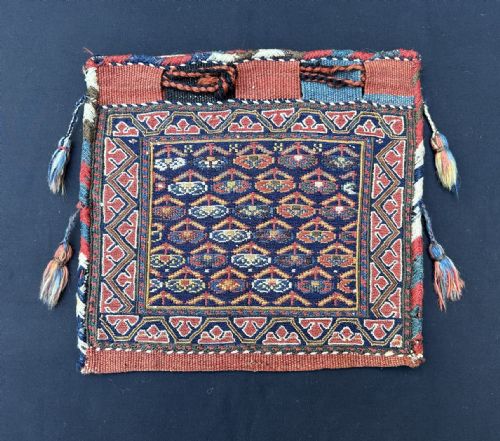
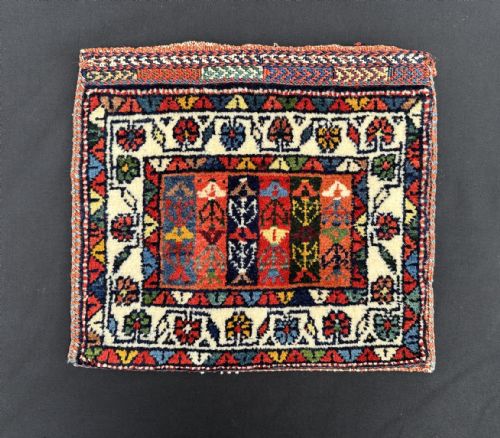
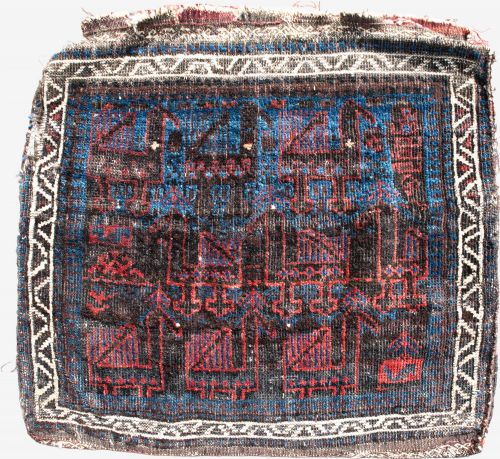
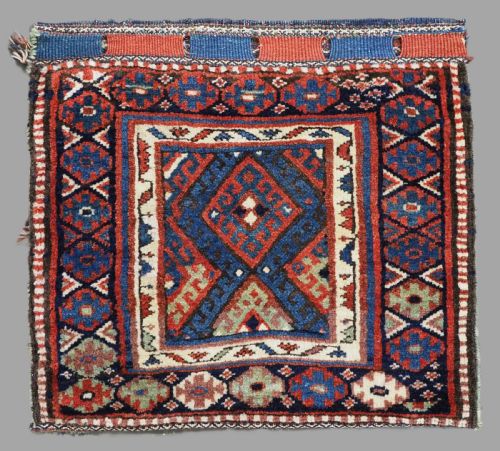
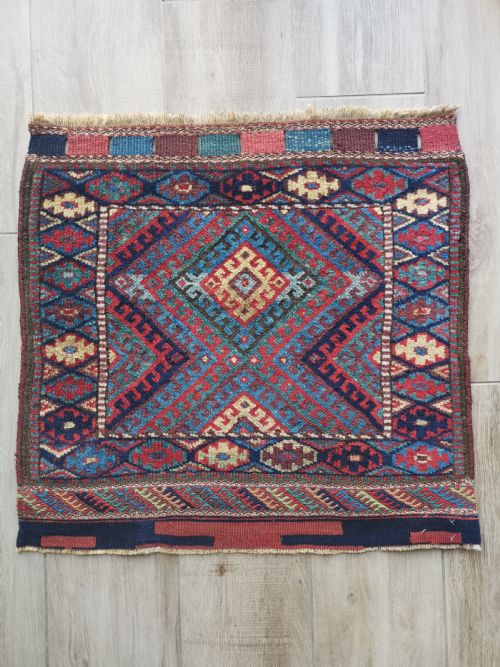


Woven Wool Khorjin
A woven wool khorjin is a traditional tribal storage bag or saddlebag, prized by collectors for its rich patterns and nomadic craftsmanship.
Woven Wool Khorjin
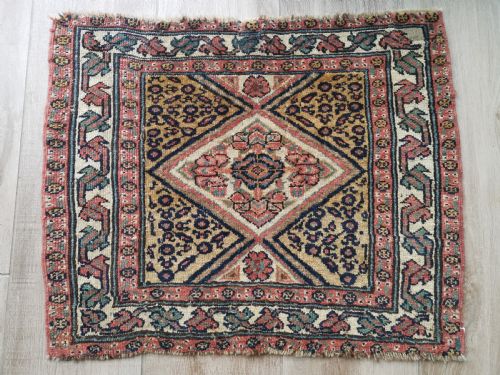
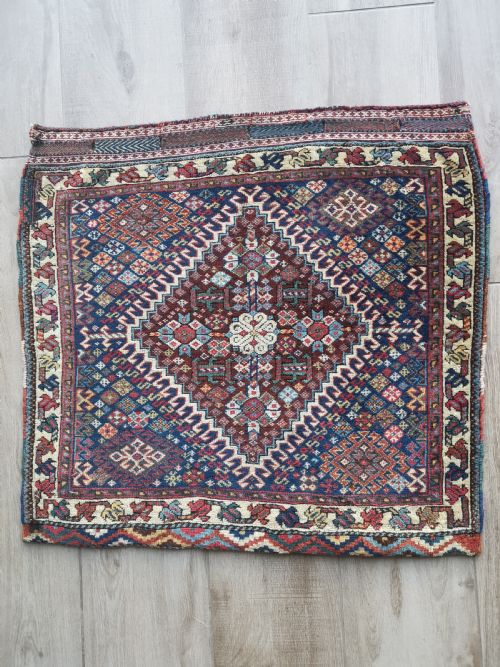
The pieces available typically date from the nineteenth century into the early twentieth century, spanning periods from the eighteen-fifties through the nineteen-twenties. Many surviving examples exist as single bag faces or halved sections, though complete double bags and pieces retaining their original plain weave backs occasionally appear.
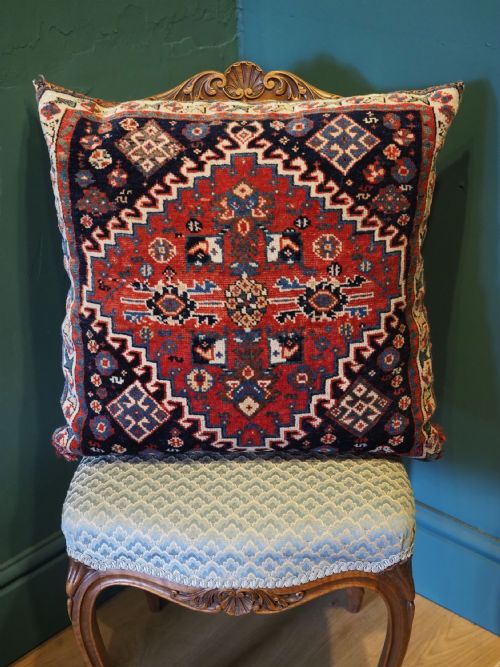
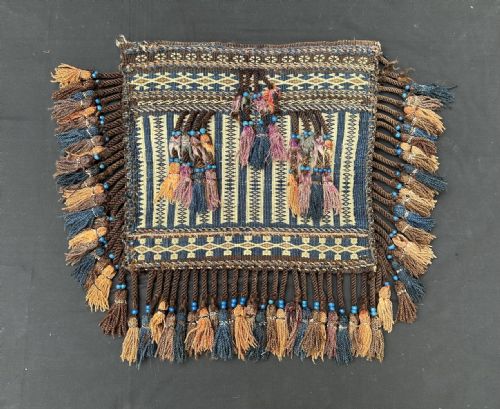
Makers include various tribal confederations and regional sub-groups, ranging from the Luri tribes of Luristan to the Kurds of western Persia. The forms encompass complete saddlebags, vanity bags known as chantehs, and cushions repurposed from historic textile fragments.
Distinctions in quality
Quality rests upon the tightness of the weave, the precision of the tribal motifs, and the clarity of the natural dyework. Finer knotting and balanced symmetry elevate certain bag faces, while coarser utility sacks demonstrate robust, utilitarian construction.
The preservation of original structural elements, such as complete back panels, side cords, and undisturbed fringes, distinguishes superior survivals from heavily altered fragments.
Object variations range from large storage sacks and saddlebag pairs down to miniature personal vanity bags.
The Woven Wool Khorjin Glossary
- Khorjin
- A traditional Middle Eastern double saddlebag used by nomadic tribes for transport and storage. These bags feature two pouches connected by a central web.
- Bagface
- The decorative front panel of a khorjin, which remains visible when the bag is packed and folded. Collectors frequently frame or mount these panels as standalone textile art.
- Soumac
- A warp-wrapping flatweave technique that produces a durable, textured surface without a cut pile. This method creates crisp geometric patterns often seen on Caucasian and Persian pieces.
- Chanteh
- A small personal carrying bag or vanity bag produced by nomadic women for intimate possessions. These smaller pouches frequently display exceptionally fine detail.
- Boteh
- A stylised almond or paisley motif representing a floral spray or cypress tree. This ancient design appears frequently across Persian tribal weaving.
Woven Wool Khorjin: Frequently Asked Questions
What is a khorjin used for?
Nomadic tribes utilised khorjin saddlebags to transport personal belongings, household goods, and provisions across difficult terrain during seasonal migrations.
Mounted across pack animals, these heavy wool containers doubled as domestic storage units once the tribe reached a temporary campsite.
How do I care for a textile bag?
Protect antique wool textiles from direct sunlight to prevent natural dyes from fading over time. Gentle vacuuming through a mesh screen removes surface dust without damaging fragile hand-spun fibres.
Avoid hanging heavy pieces by a single point to prevent structural distortion along the upper edge.
Are these bags complete or cut?
Many surviving examples on the market are single bag faces or halved sections rather than complete double saddlebags. During historical use, pairs were frequently separated or damaged down the central connecting web.
Pieces retaining their original plain weave backs or complete paired pouches are less common and highly sought after.
How do I identify tribal origins?
Specific knotting structures, colour palettes, and characteristic geometric or figurative motifs help attribute pieces to groups like the Qashqai, Afshar, or Shahsevan. Regional weaving centres and nomadic confederations employed distinct design vocabularies passed down through generations.
Examining the selvedges and secondary foundation fibres provides further clues to geographic provenance.