




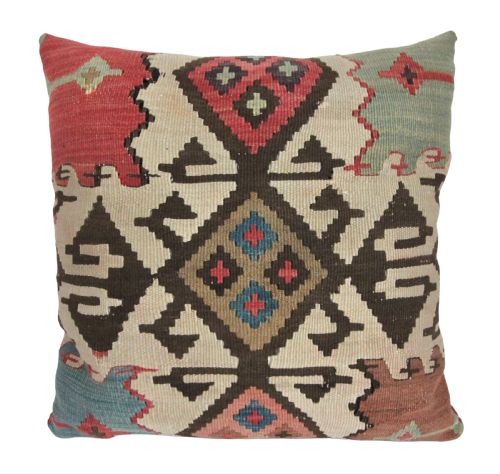
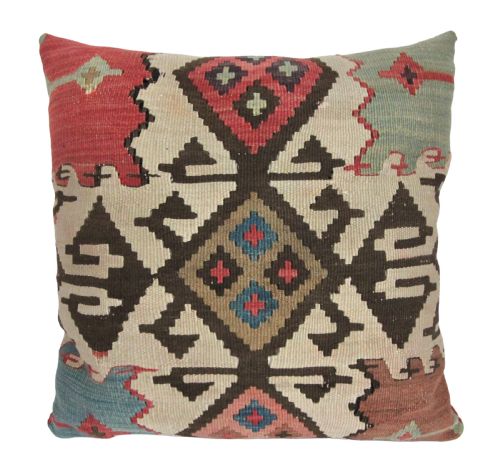


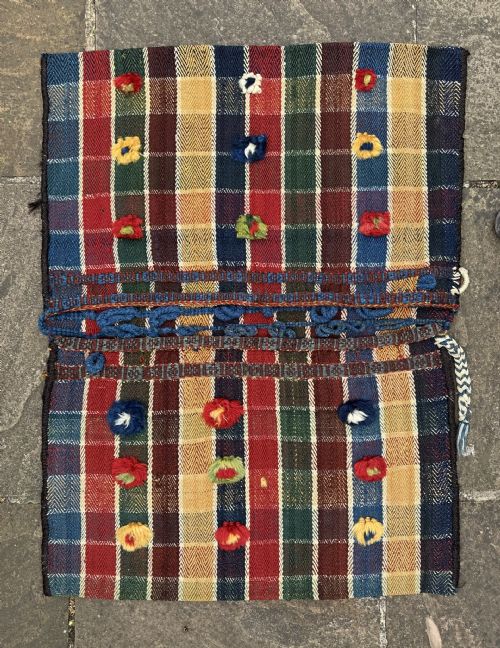
Tribal Kilim Pillow Cover
These tribal kilim pillow covers bring flatwoven wool textiles from nomadic and village looms directly into modern interiors as scatter cushions.
Tribal Kilim Pillow Cover
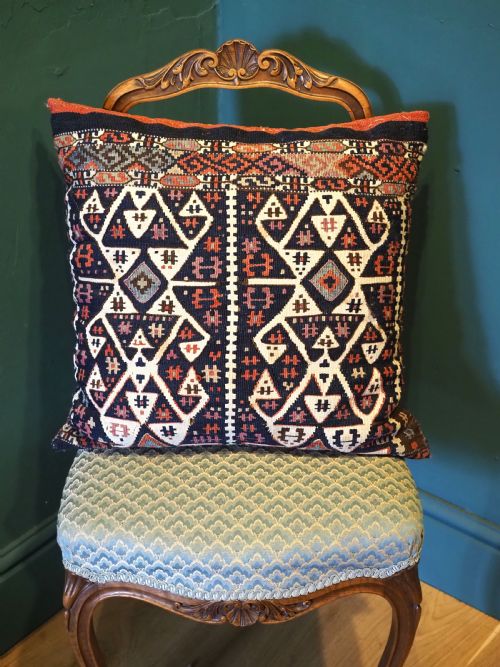
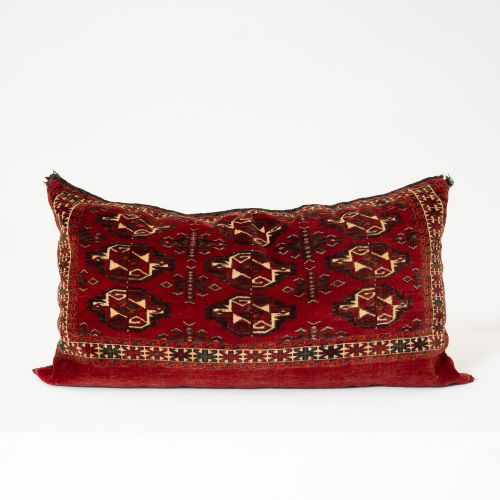
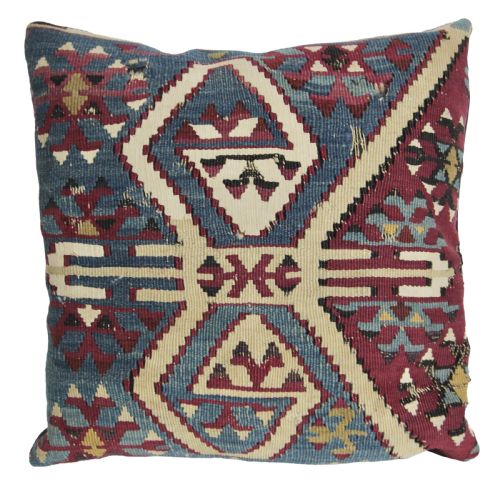
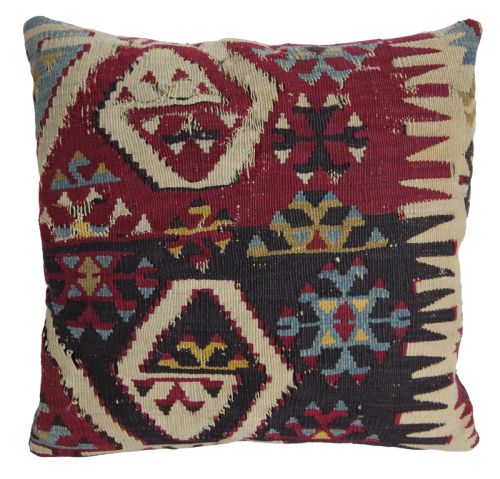
When you search for a tribal kilim pillow cover, you encounter flattened fragments and complete faces of vintage bags and saddlebags repurposed into cushions. The examples on this page span the nineteenth and early twentieth centuries, drawing on styles from Anatolian, Persian, Turkmen, and Central Asian weaving traditions.
Many of these pieces originate from utilitarian nomad items such as chuvals, mafrashes, torbas, and saddlebags. Rather than decorative throws made yesterday, these covers utilise authentic antique flatweaves created by tribal makers for domestic storage and transport.
The most common formats you will meet here are square cushions fashioned from single bag faces or paired flatweaves. They preserve traditional geometric patterns, tribal motifs, and banded designs originally woven on horizontal ground looms.
What varies in quality
Quality in a tribal kilim pillow cover rests upon the integrity of the original weave and the depth of the natural dyes. Closely packed wool yarns and finely balanced tribal proportions distinguish superior bag faces from simpler, coarser textiles.
The degree of conservation also shapes the piece, as master weavers created strong structural geometry that survives repurposing. Original selvedges and intact tribal symbols elevate the visual impact of the flatweave.
Listings span periods from eighteen-fifty to nineteen-twenty, featuring wool, cotton, and natural dyes across Anatolian and Persian tribal styles.
The Tribal Kilim Pillow Cover Glossary
- Kilim
- A flatwoven textile produced by tightly interweaving warp and weft strands without creating a pile. This technique produces a smooth, durable fabric ideal for domestic furnishings.
- Bag Face
- The decorative front panel of a nomadic storage bag or saddlebag. These panels form the primary visual surface of most antique kilim cushions.
- Chuval
- A large tent storage bag made by Turkmen tribes. Fragments of these bags frequently supply the patterned fabric for antique scatter cushions.
- Mafrash
- A rectangular storage container or bedding bag woven in flatweave technique. Pieces of these structures are often converted into cushion covers.
- Natural Dyes
- Colouring agents derived from plants, insects, and minerals rather than synthetic chemistry. They produce the nuanced, shifting tones characteristic of older tribal textiles.
Tribal Kilim Pillow Cover: Frequently Asked Questions
What is a tribal kilim pillow cover?
It is a cushion cover made from an antique flatwoven tribal textile, such as a saddlebag face or storage bag fragment. These items repurpose nomadic weaving into functional home decor.
The textiles originate from regions like Anatolia, Persia, and Central Asia, dating from the nineteenth and early twentieth centuries.
Are these covers made from old kilims?
Yes, the listings comprise genuine antique flatweaves and bag faces rather than modern reproductions. They utilise materials like hand-spun wool and natural dyes from past centuries.
Each cover preserves traditional geometric designs and tribal motifs created by nomadic makers long before contemporary manufacture.
How do I care for a wool kilim cushion?
Wool flatweaves require gentle treatment to preserve the hand-spun fibres and natural dyes. Professional dry cleaning or careful spot cleaning is typically recommended for antique textiles.
Avoid prolonged exposure to direct sunlight to prevent fading in the natural dyestuffs used by the original weavers.
How can I tell different tribal styles apart?
Different regions and confederations employed distinct geometric vocabularies, colour palettes, and weaving structures. Turkmen pieces often feature deep madder reds and gul motifs, while Anatolian and Persian examples show varied tribal layouts.
Comparing the specific flatweave technique and border patterns helps identify whether a piece leans toward Turkmen, Anatolian, or Qashqa'i origins.