




Persian Khorjin Rug
A persian khorjin rug is a nomadic textile crafted to carry possessions, offering a glimpse into nineteenth-century tribal life.
Persian Khorjin Rug
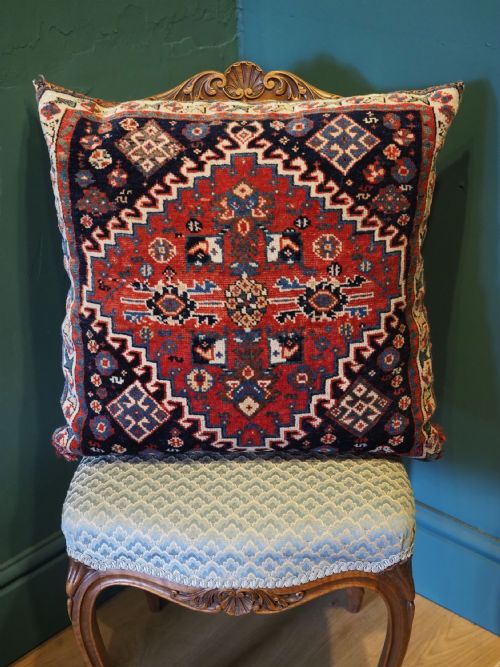
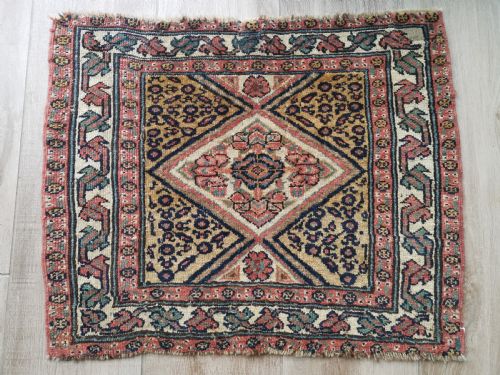
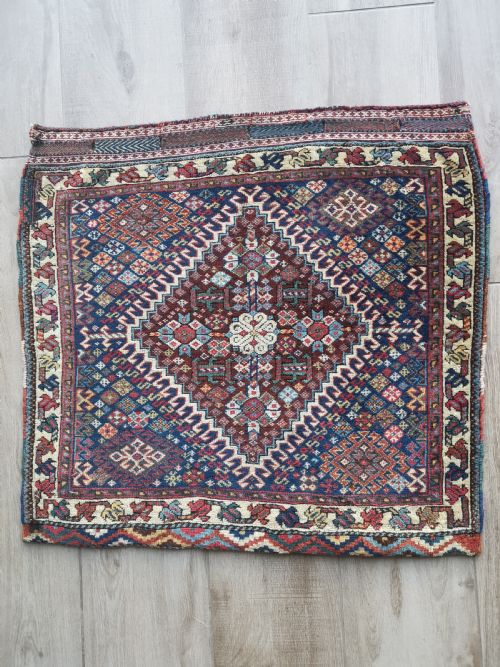
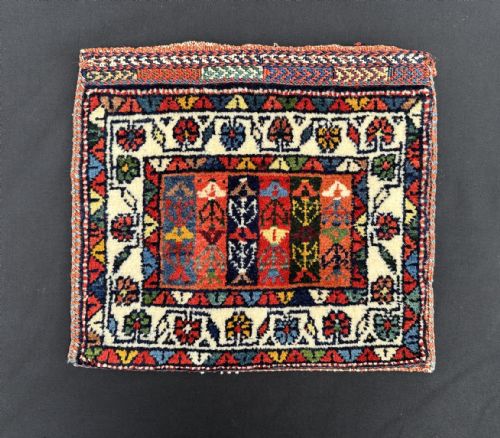
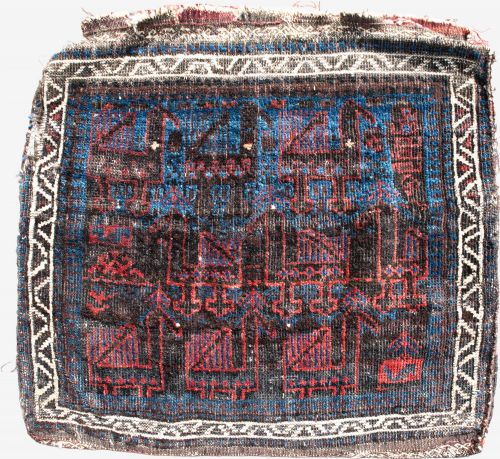
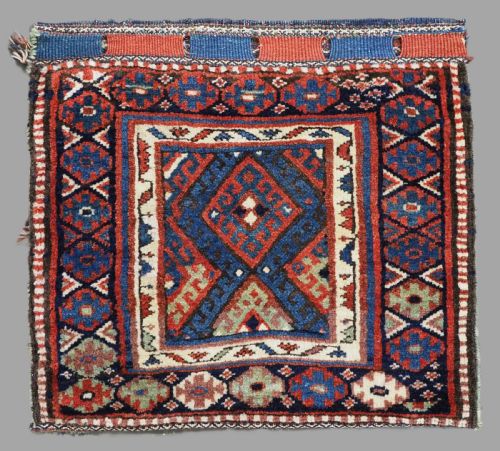
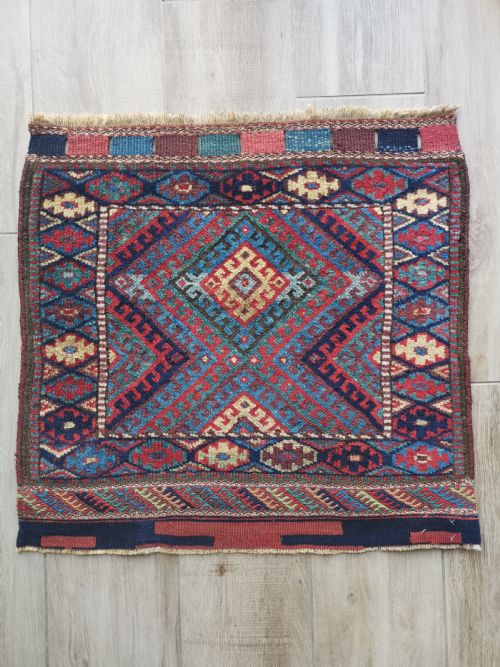
A persian khorjin rug takes the form of a saddlebag or bag face, created by nomadic and tribal groups across Persia. Buyers frequently encounter single bag faces, complete saddlebags with original plain weave backs, or pieces adapted into cushions.
Originating from tribal confederations such as the Qashqai, Afshar, Shahsavan, Jaf Kurd, and Baluch, these textiles served practical daily functions during migrations. The pieces span periods from the mid-nineteenth century into the early twentieth century.
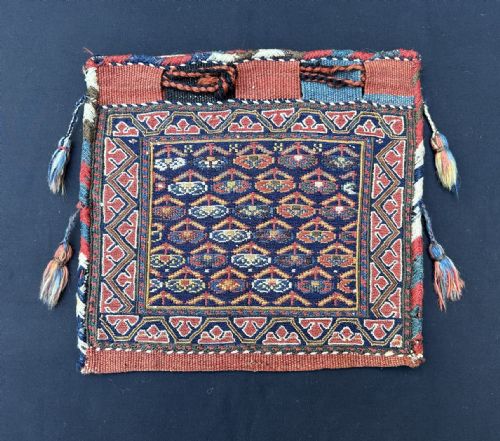
Formats range from small personal vanity bags, known as chanteh, to larger storage bags and double-faced saddlebags. Each example reflects the distinct regional aesthetics and weaving traditions of western, south, and north-west Persia.
How They Were Made
Weavers utilised hand-spun wool for the pile and structure, often paired with cotton foundations and structural elements of goat hair or leather. Natural dyes provide the enduring palette observed across the textiles.
Techniques combine hand-knotted pile work with flat-woven plain weave backs and sumac structural details. Additional decorative touches sometimes incorporate cowrie shells into the completed bags.
Listings feature natural dyes, hand-spun wool, and materials such as cowrie shells and leather across nineteenth and early twentieth-century dates.
What Varies in Quality
Quality rests upon the fineness of the knotting and the crisp execution of tribal designs such as boteh, tile patterns, or central medallions. Tightly packed structures and precise geometric drawing distinguish superior examples from simpler work.
The survival of original elements, including complete backs, banded weft work designs, and intact side cords, elevates an individual piece. The depth and complexity of the natural dye palette also define the upper tier of these textiles.
The Persian Khorjin Rug Glossary
- Khorjin
- A traditional Persian double saddlebag used by nomads for transport and storage during migration. These textiles are frequently found divided into single bag faces or preserved complete with their original backs.
- Bagface
- The decorative front portion of a khorjin saddlebag. When saddlebags wore out along the connecting bridge, the decorated faces were often preserved separately as small rugs or mats.
- Sumac
- A supplementary weft-wrapping technique that produces a durable, textured fabric with a smooth face and ribbed reverse. It appears frequently on Shahsavan bags.
- Chanteh
- A small personal vanity bag or pocket woven by tribal makers for carrying small possessions. These miniature pouches represent some of the finest knotting found in nomadic work.
- Boteh
- A motif resembling a almond, pear, or stylized floral spray. This ancient Persian design appears repeatedly across tribal bag faces.
Persian Khorjin Rug: Frequently Asked Questions
How were these bags used?
Nomadic families used khorjins to transport household goods, clothing, and personal belongings across difficult terrain.
Pairs of bags were slung over pack animals, and many surviving pieces retain their original plain weave backs and hanging systems.
How should I live with a bag face?
Bag faces and smaller khorjins work well as small floor rugs in low-traffic areas, wall hangings, or table covers.
Some period examples are also padded and utilised as decorative cushions for seating.
How do I identify different tribal styles?
Different tribal groups utilised distinct colour palettes, structural techniques, and specific motifs like tile patterns, birds, or large medallions.
Afshar, Qashqai, Shahsavan, and Baluch weavers each left recognizable characteristics in their knotting and wool preparation.