
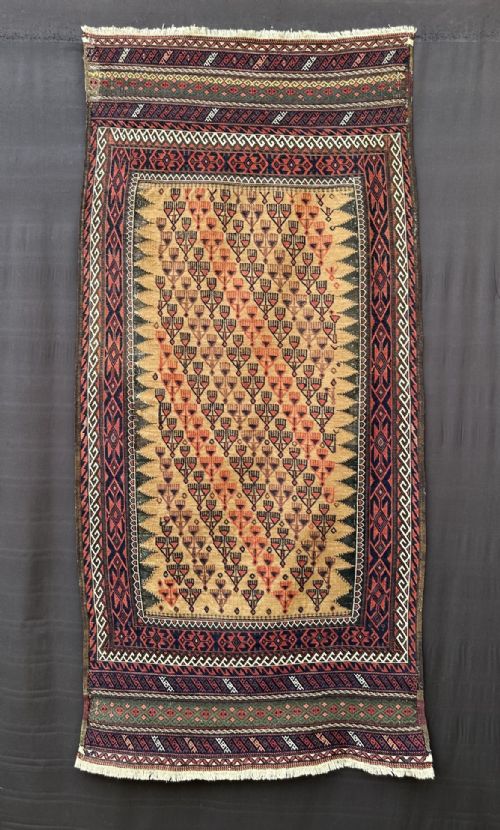
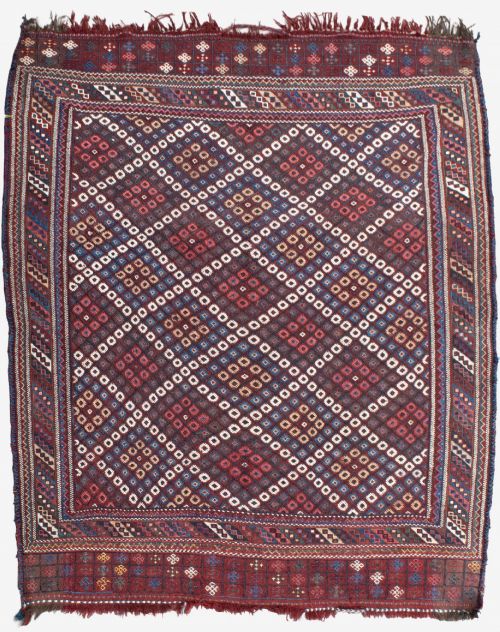


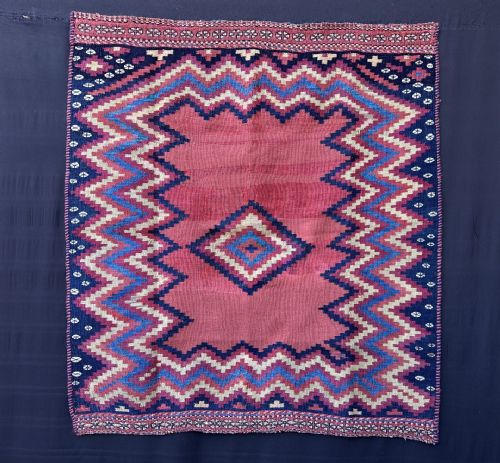


Wool Persian Sofreh
These wool persian sofreh are woven flatweaves and cloths created by tribal groups across Persia for dining and bread making.
Wool Persian Sofreh
A wool persian sofreh is a traditional textile created by nomadic and tribal weavers across Persia for domestic use, specifically associated with eating and bread preparation. The pieces encountered here span the late nineteenth century into the early twentieth century, originating from regions such as Kerman, Luristan, and the north-eastern borderlands.
Forms include both dining sofreh and bread sofreh, often taking square or rectangular flatweave formats produced by groups like the Afshar, Luri-Bakhtiari, and Baluch tribes. Buyers find these textiles used historically on the ground for communal meals or dough kneading, functioning as practical items of daily tribal life.
What varies in quality
The standard of a wool persian sofreh depends on the tightness of the weave and the handling of the natural dyes. Finer examples display precise geometric execution and greater complexity in the tribal motifs.
Condition and regional attribution also influence the character of the piece, with well-preserved tribal attribution holding particular interest. The quality of the wool and the depth of the natural dye palette separate standard domestic examples from finer tribal works.
The listings show wool and cotton materials combined with natural dyes across nineteenth and early twentieth-century Persian tribal flatweaves.
The Wool Persian Sofreh Glossary
- Sofreh
- A spread or cloth used for eating or making bread in Persian households. These textiles served a central role in nomadic domestic rituals.
- Flatweave
- A textile produced without knotting, by interweaving warp and weft threads directly. This technique creates a lightweight, durable cloth without a pile.
- Tribal
- Pertaining to nomadic or semi-nomadic groups outside major urban centres. These pieces reflect distinct regional weaving traditions passed down through generations.
- Natural dyes
- Colourants obtained from organic sources such as plants, roots, and insects. They yield rich, varied hues that age with distinct character over time.
Wool Persian Sofreh: Frequently Asked Questions
What is a wool persian sofreh used for?
These textiles served practical domestic functions within nomadic households, primarily as floor cloths for communal dining or as surfaces for preparing bread dough.
Families laid them directly on the ground during meals or baking tasks, which accounts for the durable flatweave construction found in surviving examples.
How do I care for a wool persian sofreh?
Maintenance requires gentle vacuuming without a rotating brush to protect the flatweave structure. Professional textile cleaning is advisable when necessary to preserve the natural dyes.
Keeping the textile out of direct sunlight prevents fading of the organic colours over extended periods.
Where were these textiles made?
Nomadic and tribal groups produced them across various Persian provinces, including Kerman, Luristan, and Khorassan. Specific tribes such as the Afshar and Baluch created distinct regional variations.
The borderlands between Persia and Afghanistan also yielded notable pieces through tribes like the Timuri.
How can I tell the age of a sofreh?
Dating relies on examining the materials, particularly the use of natural dyes predating synthetic alternatives, and the structural characteristics of the weave. Regional motifs and tribal attributions also help narrow the period of production.
Most surviving pieces date from the late nineteenth century through the early decades of the twentieth century.