
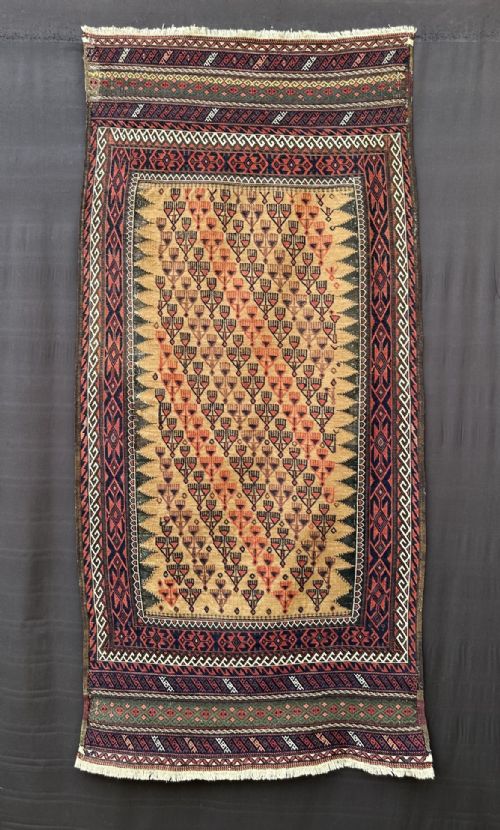
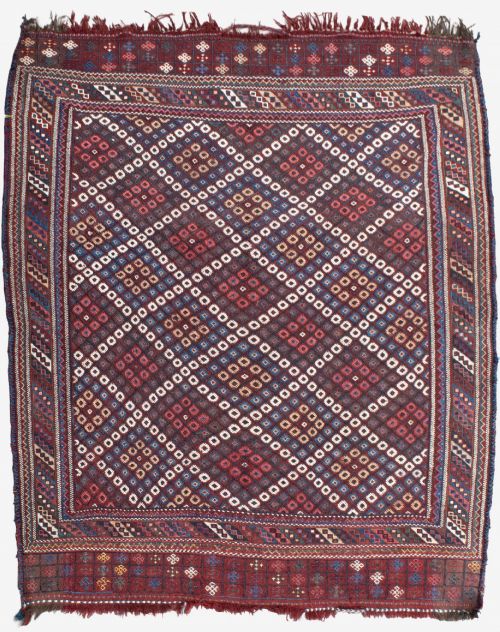


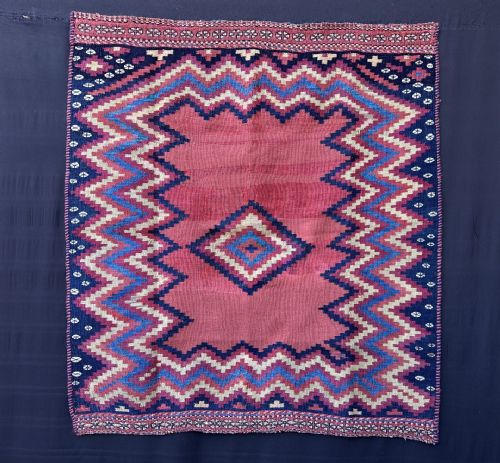


Vintage Persian Sofreh Rug
A vintage persian sofreh rug is a woven tribal cloth used for dining or kneading bread, prized by collectors for authentic nomadic artistry.
Vintage Persian Sofreh Rug
When you search for a vintage persian sofreh rug, you are looking at utilitarian textiles created by tribal and nomadic groups across Persia. These cloths served specific daily functions within the tent or household, primarily acting as spreads for communal meals or surfaces for preparing bread dough. The examples found here span the late nineteenth century into the early twentieth century, originating from regions such as Luristan, Kerman Province, and the borderlands of North-East Persia.
The forms on this page include flatweave rugs, kilims, and mixed technique textiles designated as dining or bread sofrehs. Tribal weavers from groups like the Afshar, Luri-Bakhtiari, Timuri Sangtshuli, and Djhan Beghi produced these pieces using traditional methods passed down through generations. Their designs reflect the distinct visual vocabulary of each specific tribe, often stripped of urban refinement in favour of bold geometric arrangements.
You are most likely to encounter bread sofrehs and dining sofrehs attributed to Afshar nomads or Luristan tribes when browsing these listings. These particular pieces showcase the functional utility of tribal textiles, where the weave had to withstand daily domestic use while displaying the weaver's artistic expression through symbolism and colour composition.
How vintage persian sofreh rug items were made
The construction relies fundamentally on wool and cotton, frequently utilising natural dyes to achieve deep and earthy colour palettes. Some pieces incorporate camel hair alongside standard wool to introduce natural tonal variations without artificial dyeing. Weavers worked on portable horizontal looms set up in nomadic camps or village settlements, allowing them to produce flatweaves and kilims suited to a mobile lifestyle.
Techniques centre on flatweaving and kilim construction, resulting in durable textiles without dense pile surfaces. The manipulation of warp and weft threads created crisp geometric patterns and fields designed to catch flour or hold food during communal gatherings. Natural dye stuffs provided the reds, blues, browns, and neutrals that matured gracefully over decades of exposure and use.
Listings for this phrase span the late nineteenth century to the early twentieth century, featuring wool and cotton flatweaves created by nomadic tribes.
What varies in quality across these pieces
Quality in a vintage persian sofreh rug rests upon the tightness of the weave and the purity of the wool. Finer examples display an exceptional handling of the flatweave structure, resulting in a crispness to the geometric motifs and a supple drape in the fabric. The choice of materials also plays a role, particularly where superior hand-spun wool and well-rendered natural dyes create a luminous quality across the field.
Another measure of distinction is the clarity and intentionality of the tribal design work. Pieces that exhibit a confident layout, balanced proportions, and a rich array of natural dye colours stand apart from simpler or more utilitarian outputs. The integrity of the edges and the sophistication of the minor border motifs further elevate certain examples above standard domestic textiles.
The Vintage Persian Sofreh Rug Glossary
- Sofreh
- A cloth or spread used traditionally for sharing meals or preparing bread. It formed the literal and social centre of domestic life in nomadic and village households.
- Kilim
- A flatweave textile produced by tightly interweaving the warp and weft strands without creating a pile. This technique yields a lightweight, durable fabric with identical patterns visible on both sides.
- Flatweave
- A general category of rugs and textiles constructed without knotted pile. These pieces rely entirely on the interlacing of warp and horizontal weft threads.
- Natural Dyes
- Colourants derived from plant, root, insect, and mineral sources prior to the widespread introduction of synthetic aniline dyes. They produce complex, harmonious tones that age with subtle depth.
- Camel Hair
- Un-dyed fibre clipped from camels, ranging from light fawn to deep brown. It was often incorporated into tribal weaving to provide durable, natural contrast without chemical processing.
Vintage Persian Sofreh Rug: Frequently Asked Questions
What is a sofreh used for?
A sofreh served as a clean surface spread upon the ground for communal dining or for kneading and shaping bread dough. Families gathered around these textiles for meals, making them central to domestic daily routines.
Because they were made for practical use rather than decoration, their dimensions and formats directly reflect their utilitarian origins in nomadic tents and village homes.
How do I display a sofreh rug?
Many collectors choose to mount these textiles on a wall as a tapestry or display them over large flat surfaces. Their graphic geometric patterns translate effectively to vertical presentation.
When hanging a flatweave piece, proper support prevents undue strain on the historic textile fibres and preserves the structural integrity of the weave over time.
How do I identify tribal origins?
Attribution relies upon recognising specific design motifs, structural traits, and colour palettes associated with particular groups like the Afshar or Luri-Bakhtiari. Each region developed distinct visual markers.
Comparing the geometric symbols and weave characteristics against documented examples helps narrow down the geographical source and cultural background of the maker.
Are natural dyes easy to spot?
Natural dyes present a rich, variable hue that often shows subtle shifts in tone, known as abrash, across the field. These colourants absorb light differently than synthetic alternatives.
Examining the depth of colour and how the shades interact within the wool provides insight into the dyeing materials utilised by the tribal weavers.
How should I clean my textile?
Gentle surface cleaning and regular cautious vacuuming without a beater bar help maintain wool and cotton flatweaves. Professional textile conservators should handle major washing.
Avoiding direct, harsh sunlight prevents the natural dye colours from fading prematurely and keeps the historic fibres from becoming brittle.