




Wool Kurdish Textile
A wool kurdish textile brings raw tribal energy and geometric rhythm into a room, offering tactile warmth that modern weaving simply cannot replicate.
Wool Kurdish Textile
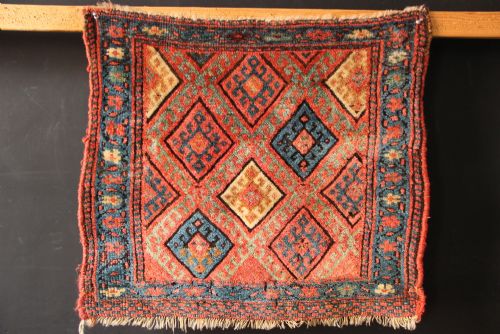
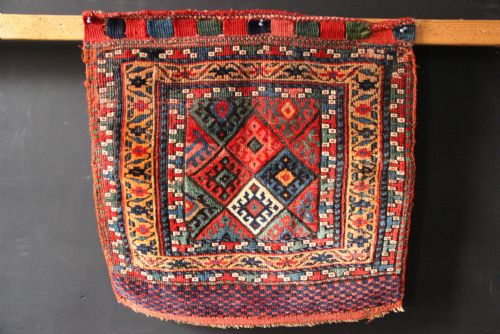
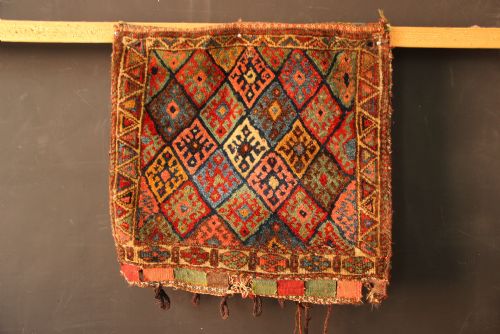
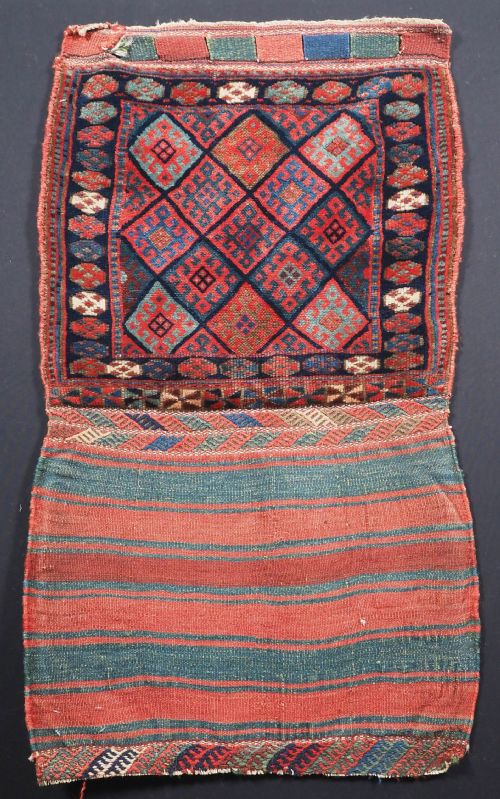
When you search for a wool kurdish textile, you encounter nomadic weaving traditions spanning from the late nineteenth century into the early twentieth century. These objects primarily take the form of utilitarian bags, bag faces, saddlebags, and cushions created by tribal groups such as the Jaf and Bidjar.
The pieces appearing on this page date from 1880 to 1920, reflecting regional variations across Persian and Anatolian spheres. Collectors generally find bag faces and complete saddlebags rather than large floor carpets, preserving the intimate scale of tribal handwork.
Materials and construction methods
The makers utilised hand-spun wool for the pile and primary structures, frequently incorporating goat hair and cotton for added durability and contrast. These natural fibres respond well to traditional spinning and dyeing techniques, resulting in resilient textiles designed for nomadic life.
Tribal weaving styles such as Kurdish and Persian tribal methods dictate the dense knotting and flatweave backs seen on these items. The physical structure relies on sturdy foundations to withstand the rigours of transport and daily camp use.
Wool Kurdish Textile Retail Price Guide 2026
Typical asking prices for wool kurdish textile among the pieces listed under this phrase on Sellingantiques today, from the lower quarter to the upper quarter. They describe what is for sale here now, not the wider market.
Nomads wove wheat sacks with such care that grain storage occasionally gained the status of tribal art.
Distinctions in quality
Quality rests in the crispness of the tribal motifs and the integrity of the hand-spun wool. Superior examples display tightly packed knots and vibrant wool that maintains its lustre over decades of use.
The handling of plain weave backs and structural completeness also separates standard examples from finer survivals. Better preserved pieces retain their original dimensions and structural edges without extensive modern intervention.
The Wool Kurdish Textile Glossary
- Bagface
- The decorative front panel of a tribal storage bag, separated from its plain weave back. These panels are typically preserved and framed as small wall hangings or used as cushions.
- Chanteh
- A small traditional tribal bag used for personal items or documents. These small pouches showcase intricate weaving compressed into a miniature format.
- Juval
- A large tent storage bag produced by nomadic groups. They were utilised for bedding and household goods within the tribal tent.
- Saddlebag
- A paired set of utility bags joined by a central web, designed to be draped over pack animals. Surviving pieces often retain only one side as a bag face.
- Plain weave
- A simple, unknotted textile technique forming the flat back sections of tribal bags. This structure contrasts with the denser pile front.
Wool Kurdish Textile: Frequently Asked Questions
What is a wool kurdish textile?
It is a hand-woven tribal item, often a bag face or saddlebag, produced by Kurdish weavers between 1880 and 1920.
These objects utilise hand-spun wool and traditional geometric designs reflecting nomadic life.
How were these bags used?
Nomadic tribes utilised them for transporting belongings on pack animals and storing household goods inside tents.
Over time, many larger storage pieces were separated into individual bag faces for easier handling.
How do I date these textiles?
Dating relies on material analysis, structural evidence, and stylistic comparisons to pieces originating between 1880 and 1920.
Hand-spun wool characteristics and specific tribal attributions help narrow the period of origin.
How do I live with them?
Collectors often display smaller bag faces on walls or utilise them as durable small floor rugs and cushion covers.
Their robust wool construction suits areas with moderate foot traffic or decorative placement.