




Handwoven Tribal Bagface
A handwoven tribal bagface is the surviving front panel of a nomadic container, prized by collectors for its dense wool geometry and village authenticity.
Handwoven Tribal Bagface
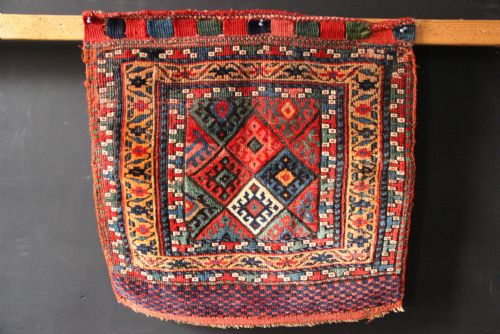
A handwoven tribal bagface represents the severed front panel of a larger nomadic container, such as a chuval, torba or saddle bag, produced by tribal weavers across Central Asia and Persia. These utilitarian faces survived because their intricate weaving and rich patterning made them too decorative to discard when the base bags wore out.
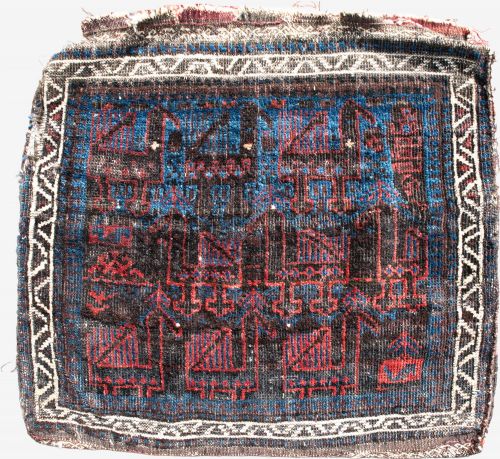
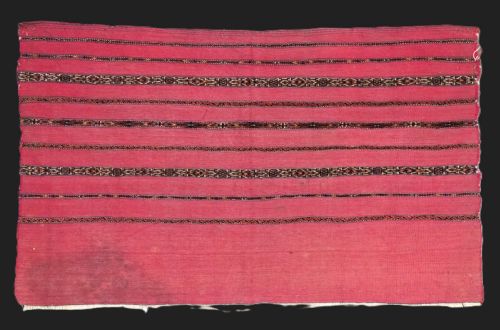
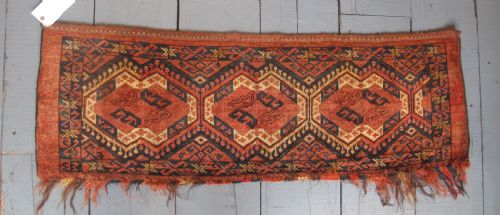
The pieces on this page span several distinct regional traditions, most notably Turkmen, Baluch and Kurdish groups. You will encounter smaller square formats like the Jaf Kurd or Baluch bird bag alongside larger storage bagfaces originating from the Ersary or Tekke tribes.
Makers fashioned these textiles for practical domestic storage or animal transport during migration, utilising durable wool and goat hair. Today, collectors display them as flat textile art or adapt them into cushions and pillows for interior settings.
Assessing quality and merit
Quality rests principally on knot density and the crispness of the tribal design execution. Finer weaves allow complex motifs like curled leaves or bird patterns to emerge with sharp definition rather than blurred edges.
The depth and integrity of the natural dye palette also determine distinction, with superior examples showing nuanced colour variation across the abrash rather than flat uniformity. Material purity, such as the use of entirely hand-spun wool, elevates the standing of an individual piece.
Handwoven Tribal Bagface Retail Price Guide 2026
Typical asking prices for handwoven tribal bagface among the pieces listed under this phrase on Sellingantiques today, from the lower quarter to the upper quarter. They describe what is for sale here now, not the wider market.
Current listings feature pieces dated from the eighteen-sixties through the nineteen-twenties, utilising wool, cotton, goat hair and natural dyes.
The Handwoven Tribal Bagface Glossary
- Bagface
- The decorative front panel of a nomadic storage or transport bag, preserved after the plain back panel deteriorated.
- Chuval
- A large Turkmen tent storage bag used for bedding and household goods, typically featuring multiple rows of guls.
- Torba
- A smaller Turkmen storage bag traditionally hung inside the yurt for smaller possessions and dowry items.
- Abrash
- Subtle colour variations within a field of wool caused by changes in dye batches or hand-spun yarn.
- Gul
- A repeating medallion or octagonal motif central to many Central Asian tribal rug and bag designs.
Handwoven Tribal Bagface: Frequently Asked Questions
What is a bagface?
A bagface is the ornamented front of a nomadic utility bag that has been separated from its plain back panel. These panels were preserved because their intricate wool work held significant aesthetic value.
Nomads originally used the complete bags for storage and transport within tents. Today, collectors frame them or use them as small wall-hanging textiles.
How were these bags used?
Tribal families used these containers inside portable dwellings to store clothing, bedding, grain, and dowry items. Saddle bags were additionally draped over pack animals during seasonal migrations.
Over decades of heavy use, the plain backs and sides wore out while the sturdy front panels survived. Families then trimmed and kept these decorative faces.
How do I care for a textile?
Keep these wool and natural dye textiles out of direct sunlight to prevent fading. Gentle vacuuming with a low-suction attachment through a mesh screen removes dust safely.
Avoid hanging them in damp areas, as natural fibres react poorly to moisture. Professional textile conservators should handle any necessary cleaning.
How do I identify different tribes?
Tribal attribution relies on specific structural traits, knotting styles, and distinct design motifs. Turkmen groups often employ deep red fields and geometric guls, while Baluch weavers lean towards darker wools and bird or tree motifs.
Kurdish and Qashqai bagfaces frequently display lively latch-hook diagonals and saturated blue or red highlights. Examining the side cords and end finishes provides further clues to regional origin.