

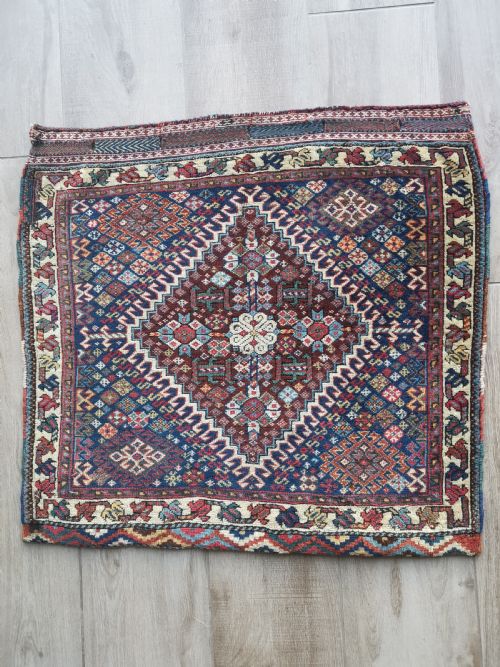
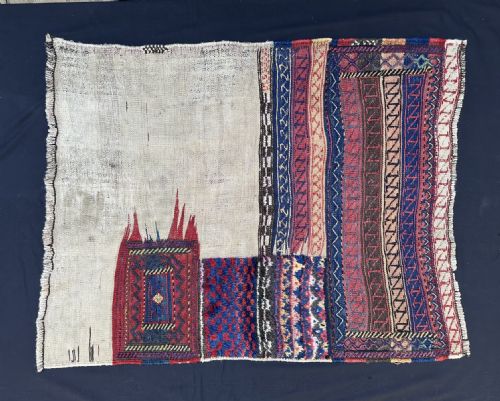

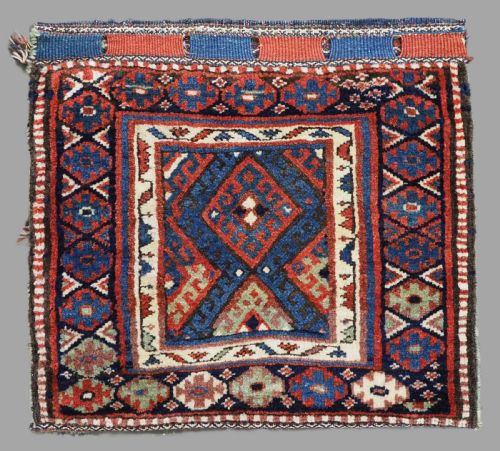

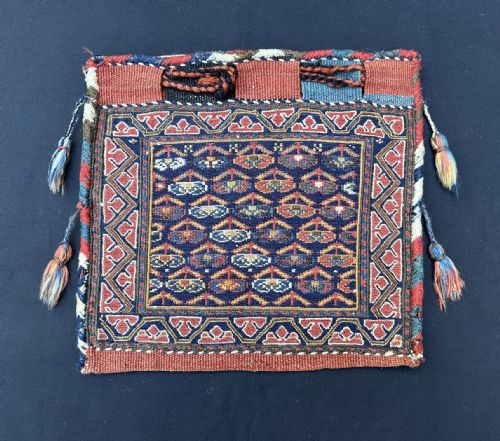
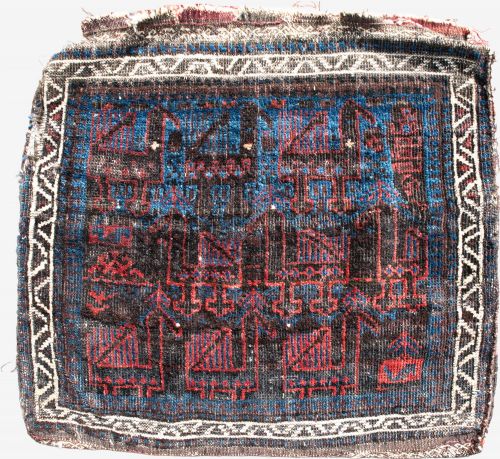
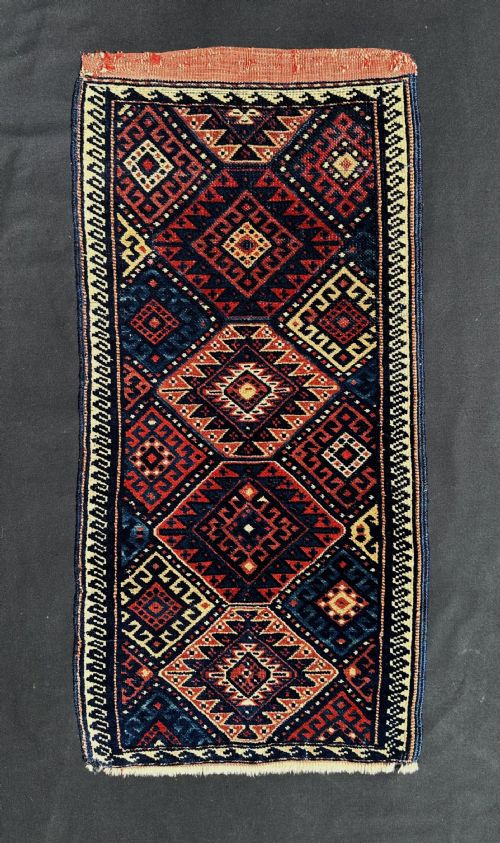


Persian Nomadic Bag Face
These persian nomadic bag face examples are woven tribal fragments carrying the direct heritage of weaving tribes across the Iranian plateaus.
Persian Nomadic Bag Face
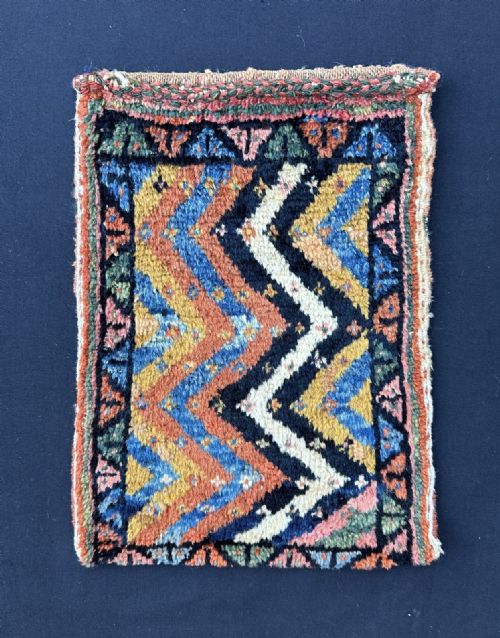
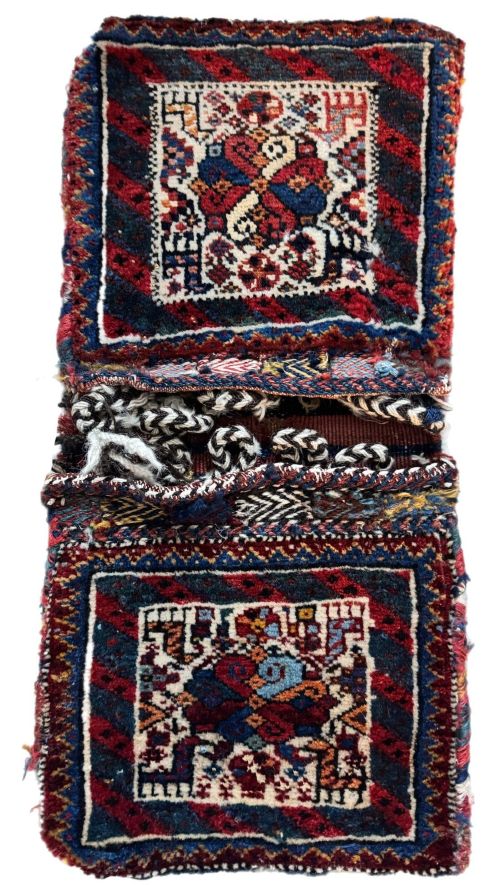
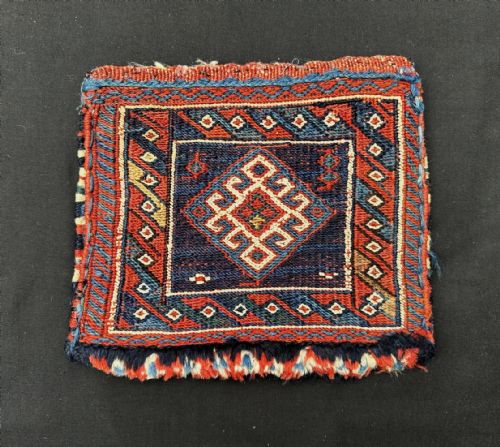
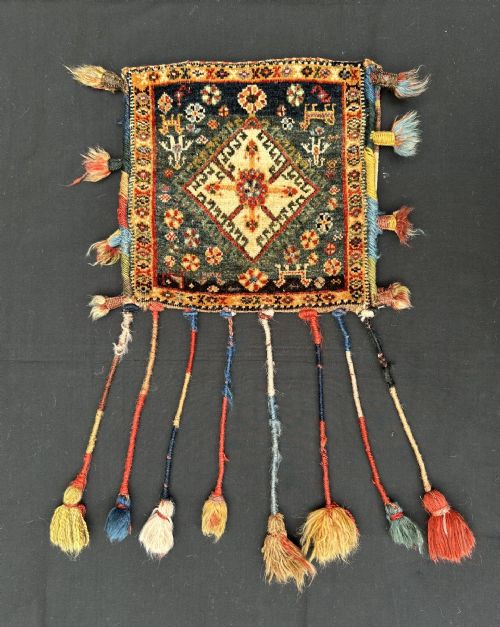
A persian nomadic bag face represents the front panel of a utilitarian storage sack, saddlebag or personal pouch woven by tribal groups. These items served daily nomadic functions for carrying personal possessions, bedding or household goods during seasonal migrations.
Most pieces encountered on this page originate from tribal confederations such as the Qashqai, Baluch, Kurdish, Afshar, Shahsavan and Lori. The forms appear as vanity bags, chantehs, khorjins or pillow faces originating from regions including Fars, Khorassan, Luristan and the Chahar Mahal.
The survival of these fragments isolates the most decorative aspect of a larger carrier, often detached once the structural backing wore away from use. Collectors encounter these works as self-contained textile compositions displaying characteristic tribal motifs and border systems.
Materials and construction
The construction relies fundamentally on wool, frequently hand-spun, combined with cotton foundations in specific regional works. Natural dyes supply the saturated colour palette seen across the pieces, providing tones derived from plant and mineral sources.
Weaving techniques include supplementary weft work, sumac wrapping and hand-knotted pile structures depending on the tribal group. The employment of robust wool fibres ensured the practical durability required for life on animal transport and inside tribal tents.
Persian Nomadic Bag Face Retail Price Guide 2026
Typical asking prices for persian nomadic bag face among the pieces listed under this phrase on Sellingantiques today, from the lower quarter to the upper quarter. They describe what is for sale here now, not the wider market.
Many a nomadic weaver tucked small tribal amulets or accidental stray goat hairs directly into the wool pile for good fortune.
Evaluating quality and handling
Quality rests in the fineness of the knotting or weaving density, the clarity of the drawing within geometric or medallion formats, and the integrity of the natural dye palette. Pieces executed with tightly spun wool and precise graphic execution demonstrate superior artisan skill within specific tribal traditions.
The handling of secondary borders and the complexity of inner motifs separate standard utility pieces from exceptional tribal expressions. Preservation of original plain weave backs or complete side finishes also influences the standing of an individual textile.
The Persian Nomadic Bag Face Glossary
- Khorjin
- A traditional double-sided saddlebag used for transport on animals during tribal migrations. Surviving examples are frequently separated into individual bag faces.
- Chanteh
- A small personal vanity bag or pouch woven by tribal makers for carrying small personal effects. These items often feature intricate miniature designs.
- Sumac
- A flat-weave technique where coloured weft threads wrap around the warp threads in a continuous wrapping motion. This produces a textured surface without a cut pile.
- Boteh
- A traditional almond or pear-shaped motif with a curved upper tip. This ancient symbol appears frequently across various tribal weaving traditions.
- Herati
- A repeating floral geometric pattern featuring a central rosette enclosed by curved leaves. It remains a standard design element in regional weaving.
Persian Nomadic Bag Face: Frequently Asked Questions
What is a persian nomadic bag face?
A persian nomadic bag face is the decorative front panel of a utilitarian storage container or saddlebag created by tribal weavers.
These pieces were made for practical use in nomadic households and transport before being separated from their original utility backs.
How were these bags used?
Nomadic tribes utilised these woven containers for storing household goods, personal possessions, grain or bedding inside tents and on pack animals.
Double saddlebags hung across the flanks of horses, donkeys or camels during seasonal migrations between summer and winter pastures.
How can I tell different tribes apart?
Tribal attribution relies on specific combinations of structural materials, colour palettes, border arrangements and characteristic geometric or figurative motifs.
For example, Baluch works often display deep indigo and reddish-brown tones with specific tile or tree patterns, while Qashqai pieces frequently feature vibrant reds and blues with medallion formats.
How should I display a bag face?
These textile fragments work well mounted and framed behind conservation glass or secured gently onto fabric-covered display boards.
Some collectors also utilise them as small floor accents in low-traffic zones or adapt them into decorative cushion covers.