
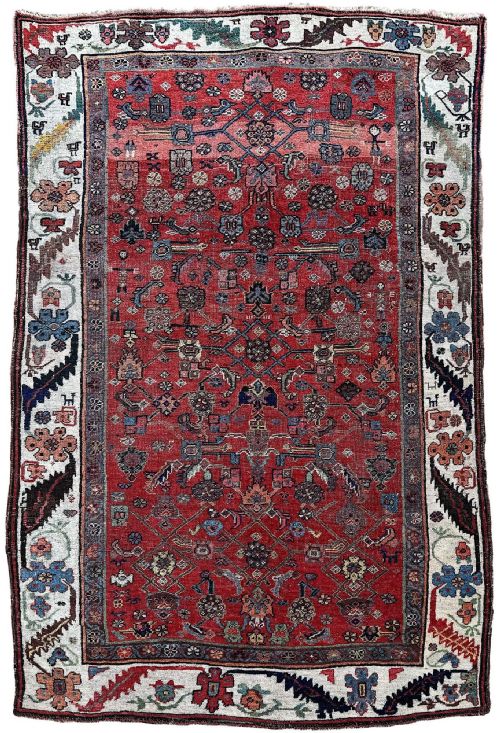
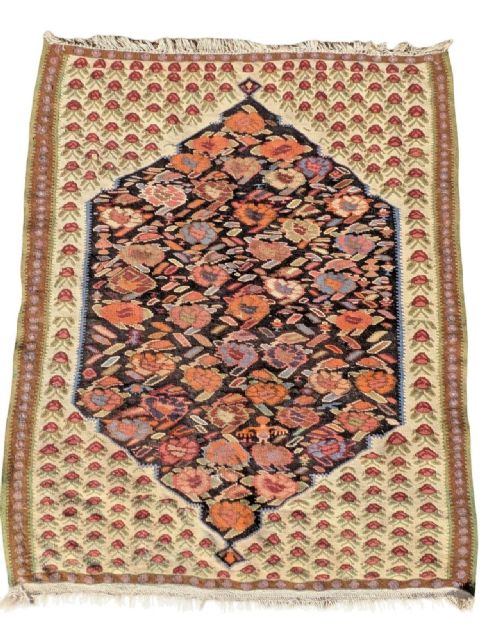
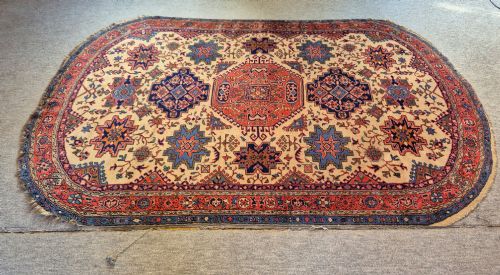
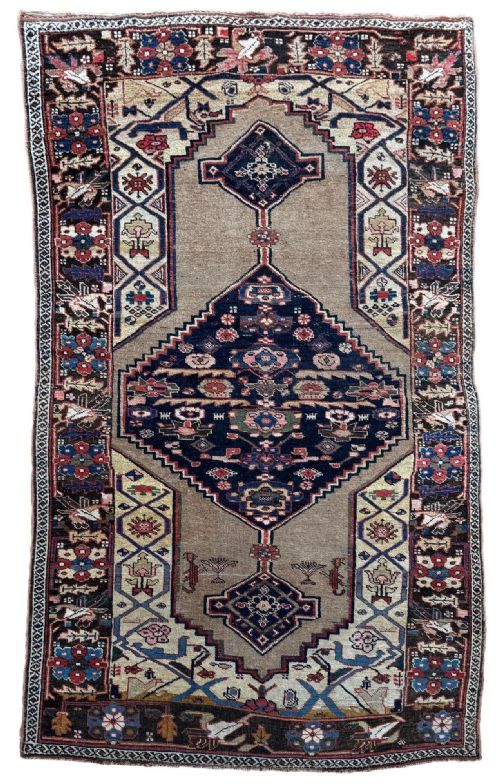
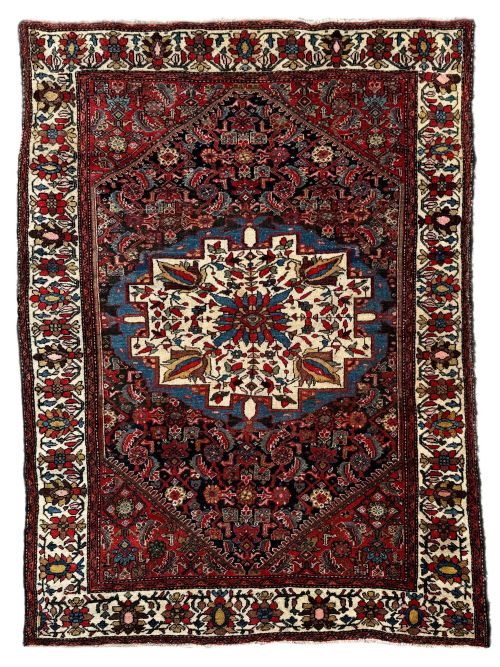


Wool Bidjar Rug
A wool bidjar rug brings heavy, enduring Persian craftsmanship into a room, offering dense piles and robust village construction.
Wool Bidjar Rug
When you examine a wool bidjar rug, you are looking at heavy woven floor coverings originating from Persian village and tribal workshops, particularly associated with Kurdish weavers in the Bidjar region. These pieces span production from the nineteenth century into the twentieth century, appearing in formats ranging from small scatter sizes and bag faces to long kellehs and oversized carpets.
The selections available here represent traditional Persian styles, including kilims and specific regional carpets featuring dense foundations. Buyers searching for this phrase encounter heavy, durable floor coverings designed for heavy daily use, characterised by sturdy structures that distinguish them from finer city weaves.
How they were made
The construction relies fundamentally on wool piles knotted onto sturdy cotton foundations, creating a dense and resilient textile structure. Weavers packed the knots tightly using heavy wooden combs, which forced the wefts down and made the finished pile stand upright.
This rigorous technique produced the characteristic stiffness and heavy handle known in Kurdish Bidjar production. Materials were sourced locally, utilising durable wool and dependable cotton to ensure longevity under heavy foot traffic.
Listings span production dates from the nineteenth century through the 1930s, featuring wool and cotton materials across various formats.
What varies in quality
Quality in these rugs is determined by the tightness of the knotting and the density of the foundation, which dictate how the piece holds its form over decades. Finer examples display greater precision in the geometric or traditional floral patterns and maintain an even, heavy pile across the entire surface.
The handle and flexibility of the rug also separate standard pieces from exceptional ones. While all genuine examples are robust, superior pieces combine this heavy construction with harmonious dye distribution and balanced proportions in formats like kellehs or large carpets.
The Wool Bidjar Rug Glossary
- Kelleh
- A long, narrow carpet format traditionally used in Persian interiors. These rectangular pieces offer substantial length while retaining a narrower width than standard room-size carpets.
- Kilim
- A flatwoven textile produced without a pile. These pieces rely on interlocking weft threads to create geometric patterns.
- Bag face
- The front panel of a storage sack made by nomadic or village weavers. These smaller fragments preserve portable examples of tribal design.
- Foundation
- The underlying structural grid of cotton warps and wefts that supports the wool knots. Its tightness dictates the rigidity and durability of the rug.
Wool Bidjar Rug: Frequently Asked Questions
Where were these rugs made?
These rugs were produced by Kurdish weavers and village communities in the Bidjar region of Persia, drawing on long-standing local traditions.
The makers utilised regional motifs and sturdy construction methods that set these pieces apart from urban Persian workshops.
How do I care for a heavy carpet?
Maintain the wool pile with regular gentle vacuuming without beater bars, and use a breathable underlay to keep the piece stable on hard floors.
Professional cleaning suited for antique textiles ensures the cotton foundation and wool fibres remain preserved over time.
What size options are available?
The selection ranges from small bag faces and scatter rugs to long runners, kellehs, and oversized carpets exceeding five metres in length.
This variety accommodates narrow hallways, compact rooms, and expansive open living spaces alike.
How do I identify a Kurdish weave?
Look for a remarkably heavy, stiff handle and dense pile resulting from tightly packed knots and sturdy cotton foundations.
These structural traits distinguish regional village pieces from lighter city-made Persian carpets.