



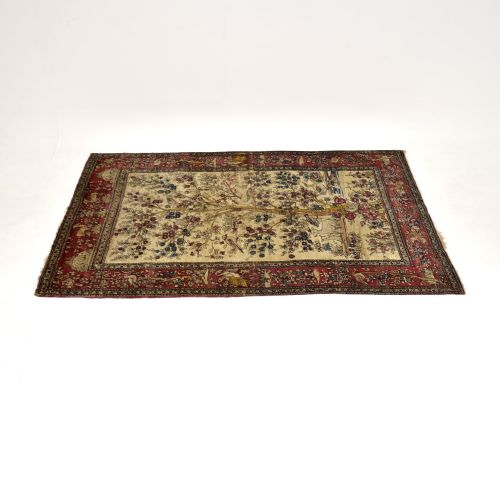
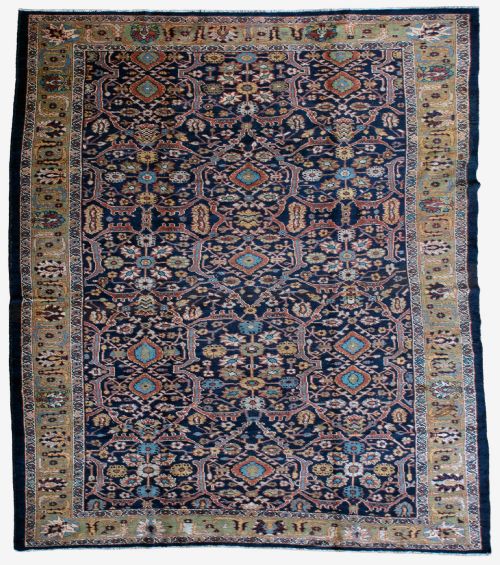
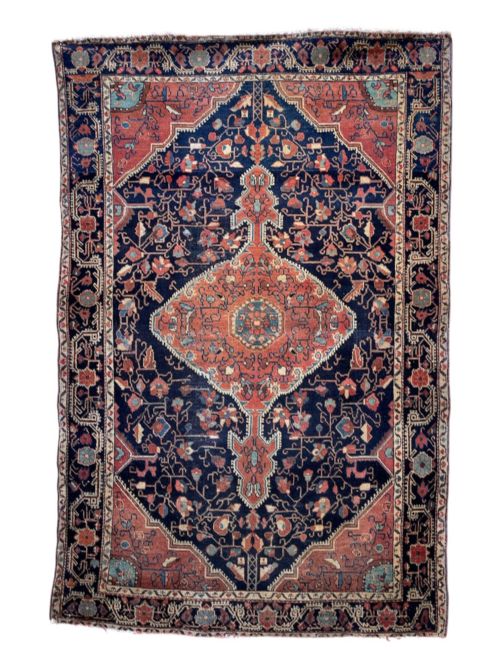
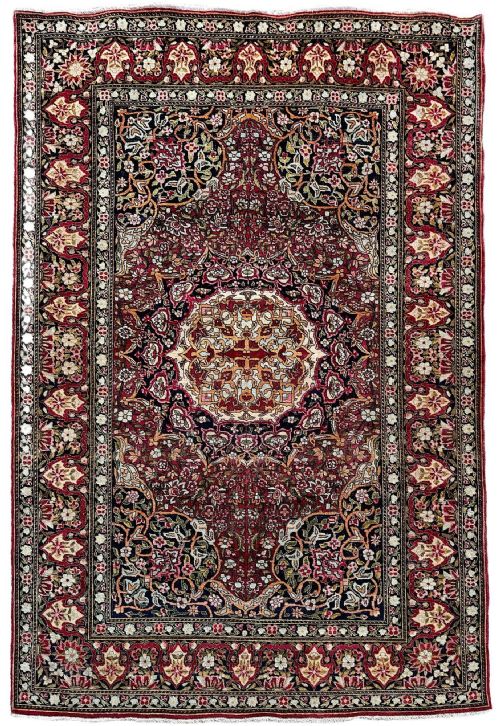
Traditional Persian Area Carpet
A traditional persian area carpet brings enduring pattern and rich dye work into a room, offering genuine historical depth underfoot.
Traditional Persian Area Carpet
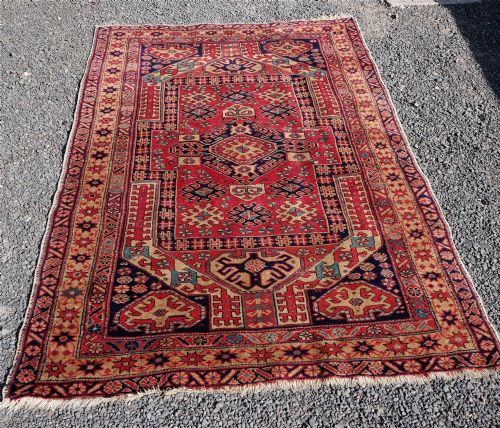
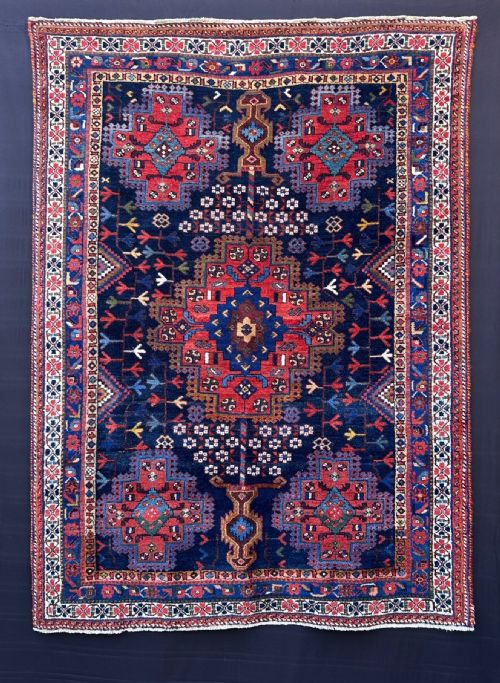
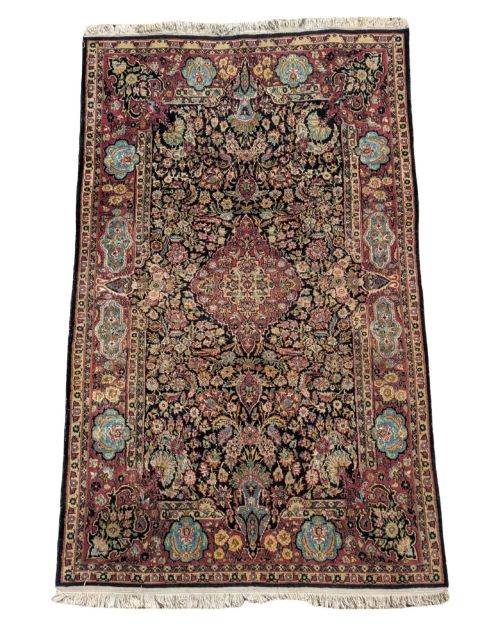
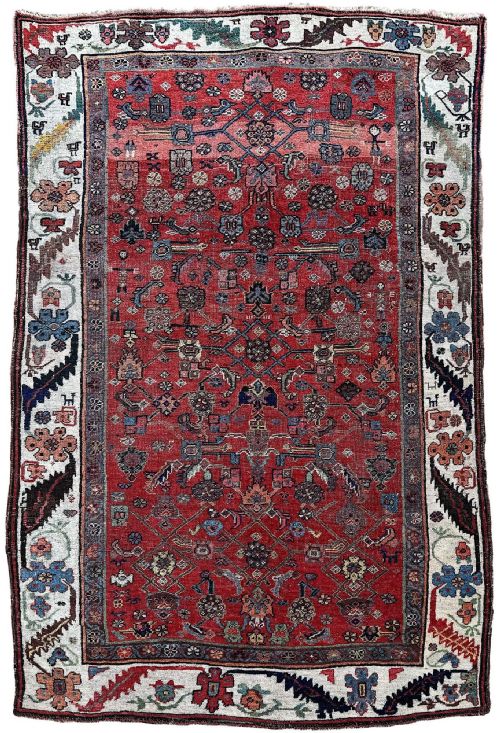
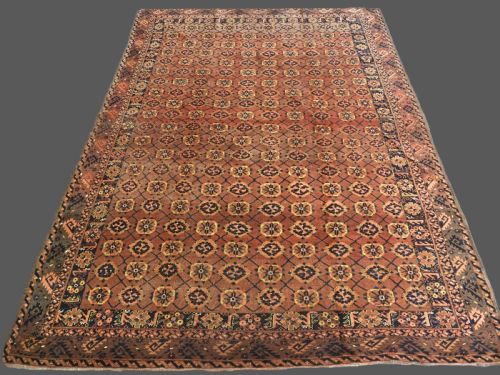
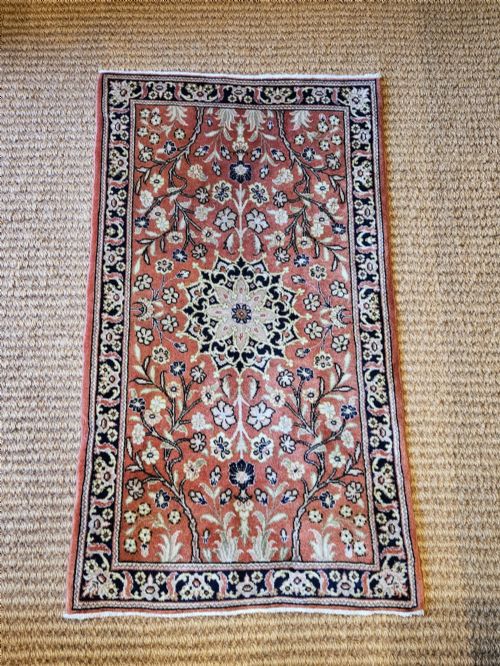
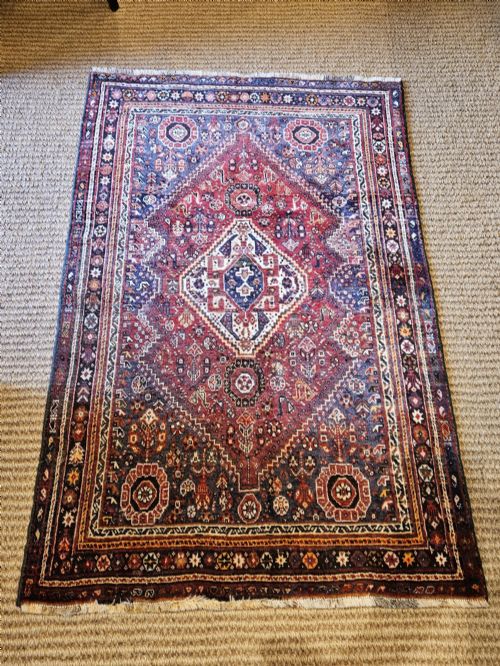
A traditional persian area carpet is a floor covering originating from village workshops, tribal confederacies, and urban centres across Persia and neighbouring regions. When buyers search this phrase, they encounter floor coverings spanning from the mid-nineteenth century through the early decades of the twentieth century. These textiles encompass room-sized carpets as well as compact hearth-sized rugs.
The most common formats on this page include room-sized Heriz and Mahal carpets alongside smaller tribal rugs from Khamseh, Bakhtiar, and Afshar weavers. Pieces range from large geometric room carpets down to narrower runner formats and square village pieces. Each region brings distinct structural habits and drawing styles to the surface.
Origins stretch across specific weaving provinces and tribal territories, including Isfahan, Saroukh, Bidjar, Kashan, and Veramin. Buyers select these works for their ability to anchor a room with saturated madder reds, deep indigos, and complex medallion or all-over layouts. They function as both decorative room foundations and historical textile artefacts.
How they were made
Weavers constructed these carpets using hand-spun wool, cotton foundations, and occasionally silk highlights or camel hair details. Wool pile provided durability for heavy foot traffic, while cotton warp and weft threads formed a stable underlying grid. Natural dyes derived from plants and minerals imparted the foundational palette.
Knotting techniques varied according to regional tradition, utilising symmetrical or asymmetrical knots tied tightly onto the vertical loom setup. Artisans beat the rows down firmly with heavy combs to ensure a dense, resilient pile structure. Finishing involved securing the selvedges and trimming the pile to an even height.
Traditional Persian Area Carpet Retail Price Guide 2026
Typical asking prices for traditional persian area carpet among the pieces listed under this phrase on Sellingantiques today, from the lower quarter to the upper quarter. They describe what is for sale here now, not the wider market.
Look closely for the stray wool tuft where an apprentice weaver changed dye pots mid-row.
What varies in quality
Quality rests upon the handling of dye and wool, where saturated natural colours and lanolin-rich fleece create depth and healthy pile resilience. Master weavers achieved exceptional clarity in drawing and consistent knot density across the foundation. The handling of secondary borders and corner transitions reveals the weaver's competence.
Structural integrity depends on firm packing and balanced tension during the weaving process, which prevents warping and keeps the carpet flat on the floor. Superior examples combine robust materials with confident, unhurried execution of traditional motifs. The harmony of the palette over time distinguishes standard village work from exceptional regional commissions.
Saroukh Mahal·Isfahan Workshop·Heriz Loom
The Traditional Persian Area Carpet Glossary
- Warp
- The vertical threads stretched on the loom that carry the fringe and support the entire knot structure.
- Weft
- The horizontal threads passed between rows of knots to bind the structure together firmly.
- Madder
- A natural red dye extracted from the roots of the Rubia plant, widely used in traditional dyeing.
- Gul
- A repeating medallion or octagonal motif characteristic of tribal weaving traditions.
- Sefidab
- A term referring to white highlights or specific structural elements in classical carpets.
Traditional Persian Area Carpet: Frequently Asked Questions
How do I clean a traditional persian area carpet?
Professional dusting and specialist low-moisture washing remain the safest maintenance methods for antique wool textiles. Regular gentle suction without a beating brush bar prevents grit accumulation in the lower pile.
Harsh chemical detergents and high-heat water extraction must be avoided to protect natural dye stability and lanolin content. Surface spills should be blotted immediately from the outer edge inward rather than rubbed.
Can I place these carpets in high traffic areas?
Durable wool pile and strong cotton foundations allow many regional carpets to withstand normal household foot traffic successfully. Hallways and sitting rooms benefit from the resilient nature of tightly packed hand-knotted pile.
Underlay provides essential cushioning and prevents the textile from slipping or sliding on hard floors. Rotating the placement periodically ensures even wear patterns across the surface over time.
How can I tell a village carpet from a city workshop piece?
Village rugs often display bolder, more geometric interpretations of traditional motifs with slight irregularities in symmetry and line. City workshop productions generally feature refined curves, balanced medallions, and meticulous drawing precision.
Palettes in village pieces frequently rely on saturated madder reds and deep indigos combined with locally available dyestuffs. City carpets sometimes incorporate silk highlights or complex pictorial elements not typical of rural production.
What is the difference between a carpet and a rug?
Size and intended placement traditionally distinguish larger room carpets from smaller hearth or area formats. Carpets usually measure over three metres in length, designed to anchor an entire room layout.
Rugs cover smaller floor zones, such as beside a bed, in front of a fireplace, or beneath a specific piece of furniture.