
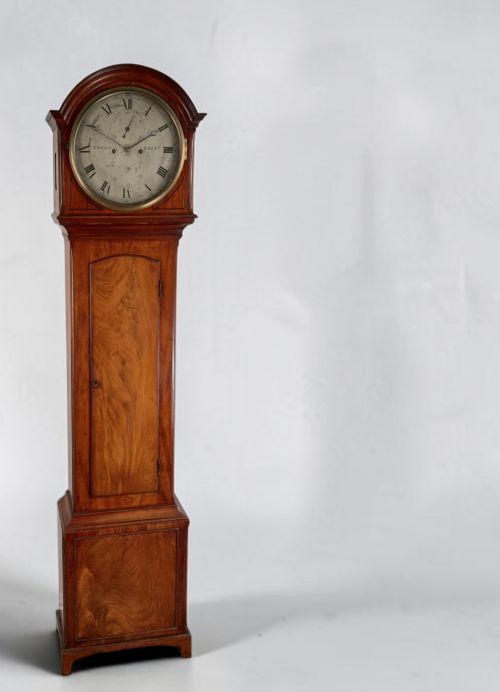
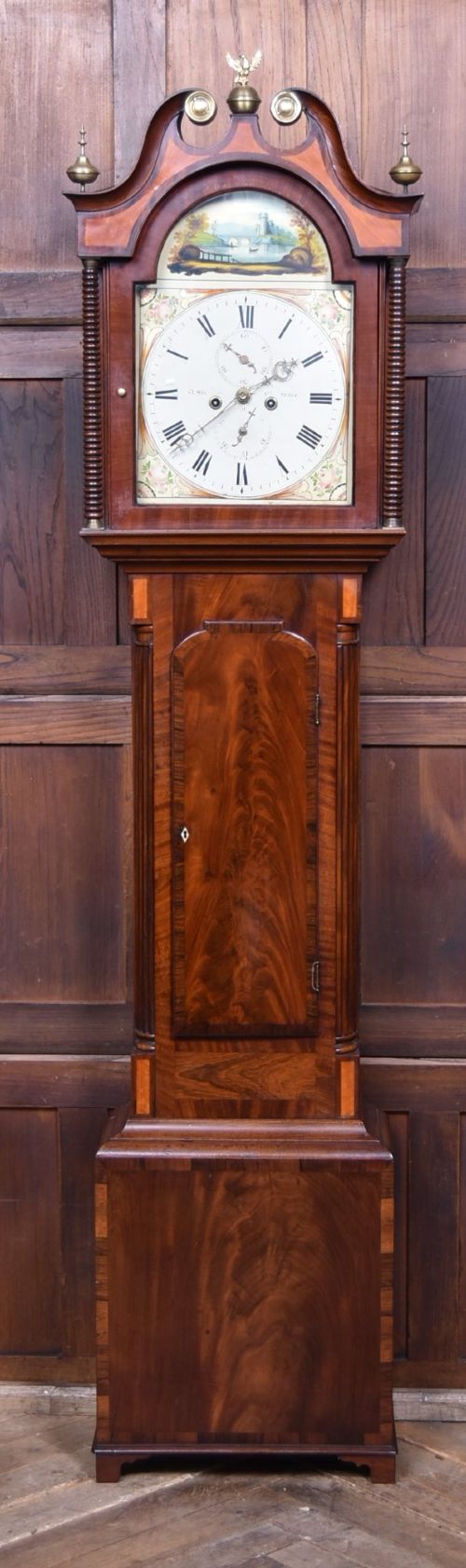

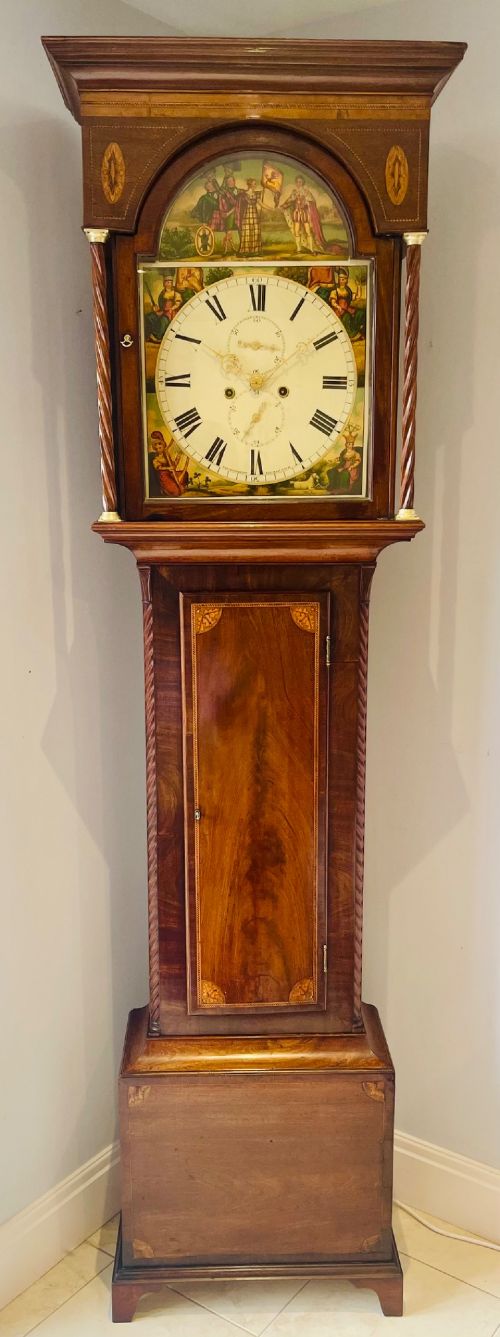
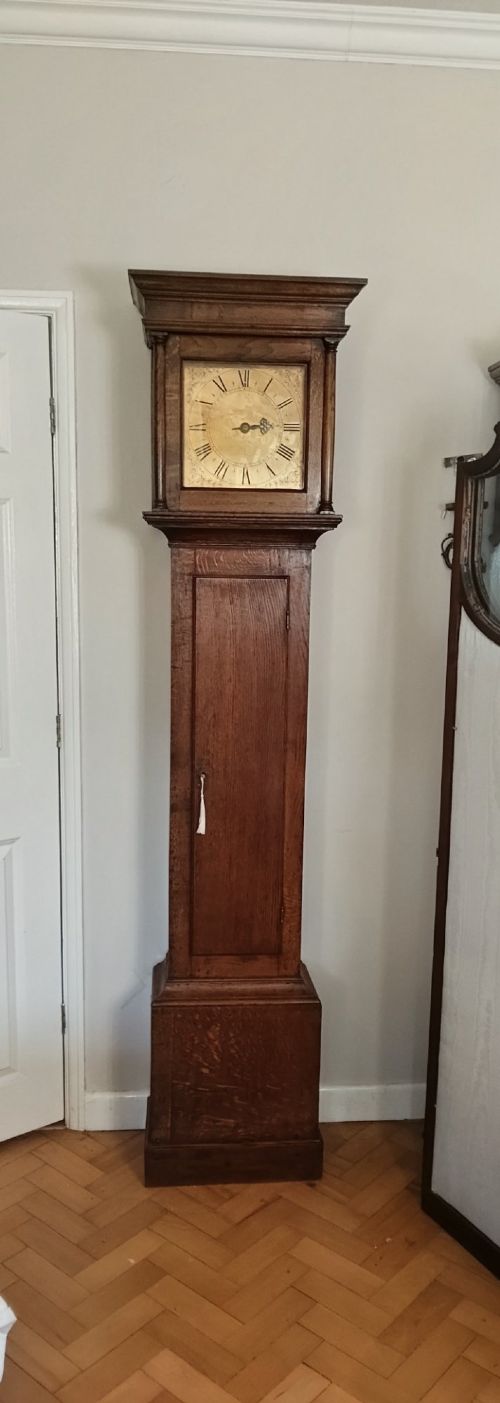
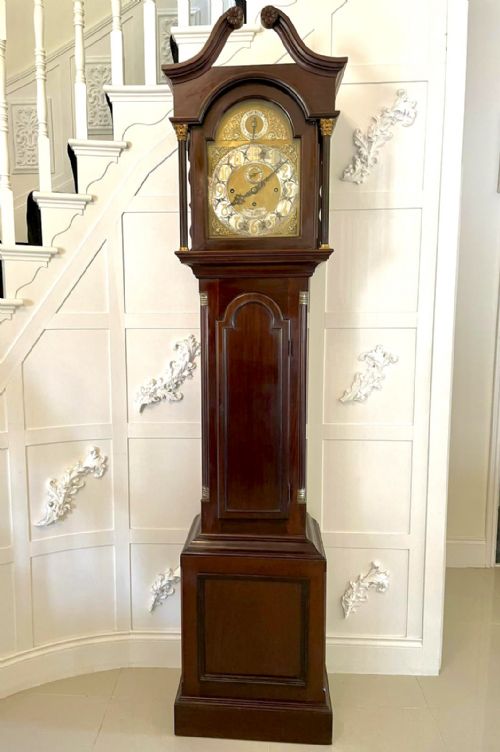
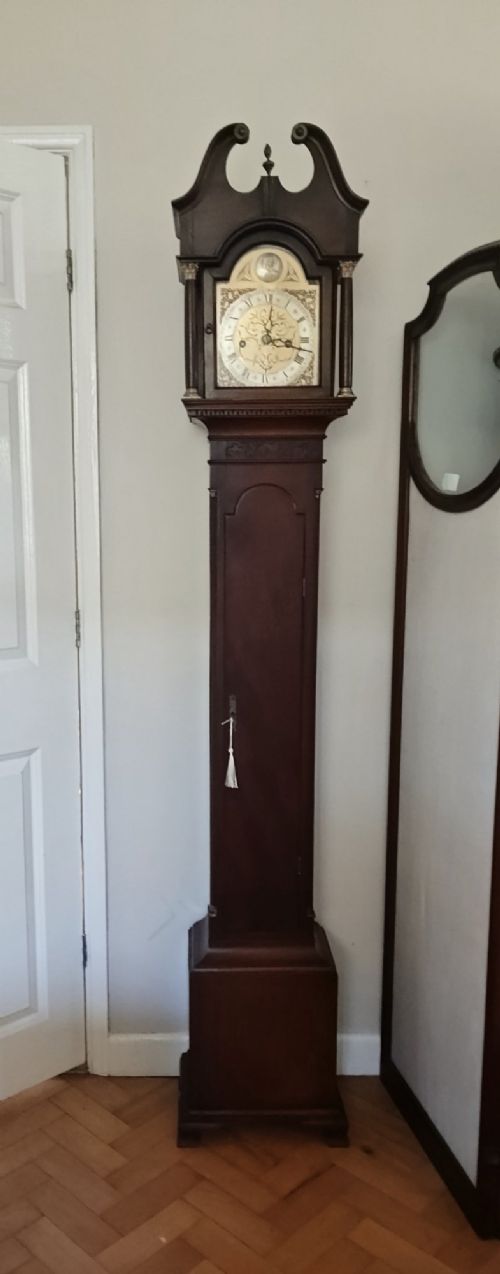
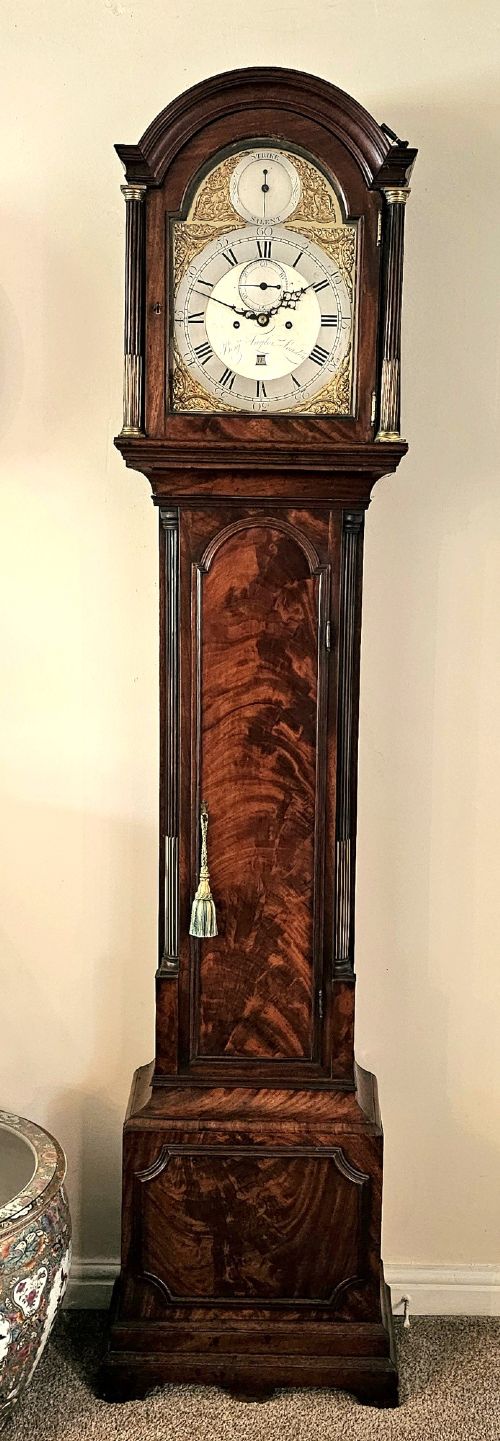
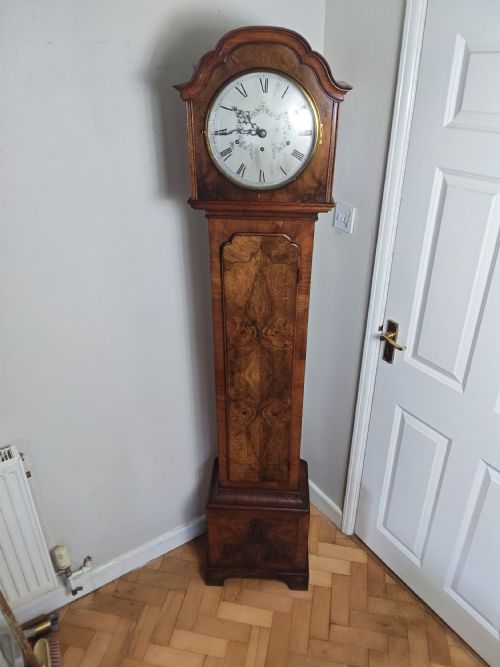


Wooden Tallcase Clock
These wooden tallcase clock examples unite precise timekeeping with monumental floor-standing cabinetry across Georgian, Victorian, and later periods.
Wooden Tallcase Clock
A wooden tallcase clock houses a weight-driven or spring-driven movement inside a tall floor-standing wooden case, serving as both a functional timepiece and a substantial piece of furniture. Buyers searching for a wooden tallcase clock encounter various regional and scale iterations, from full-size grandfather models to more compact grandmother and granddaughter variants.
The pieces appearing on this page span several centuries, with a strong representation of Georgian and 18th-century examples alongside 19th-century and later 20th-century revivals. Regional British origins feature prominently, including Scottish makers from Edinburgh, Montrose, and Peebles, as well as English provincial workshops.
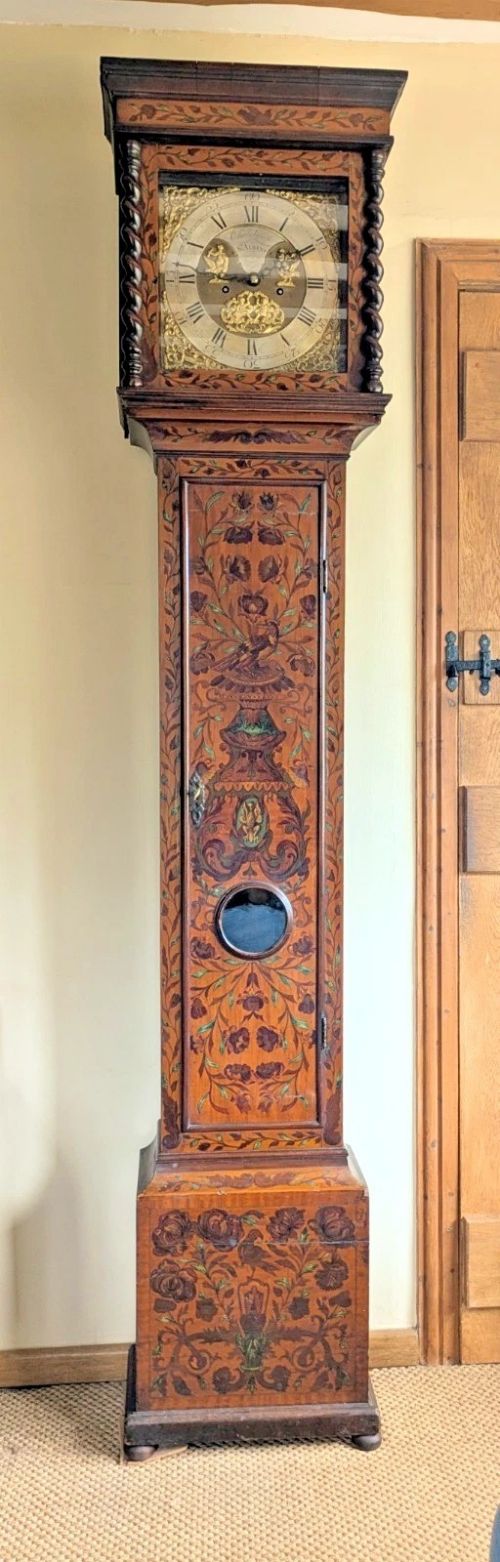
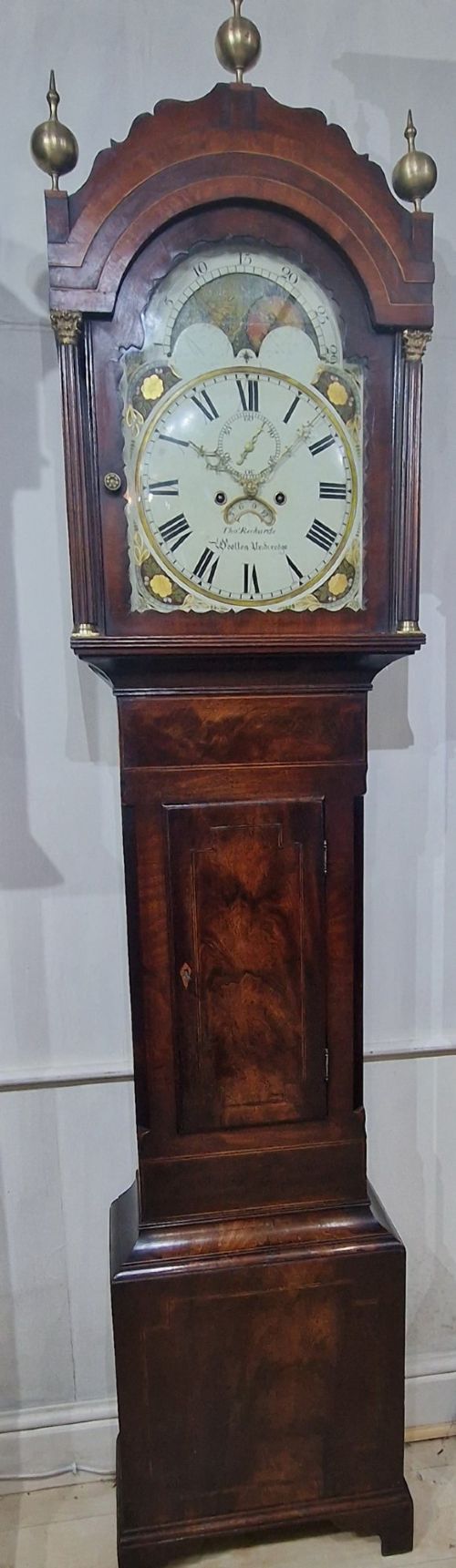
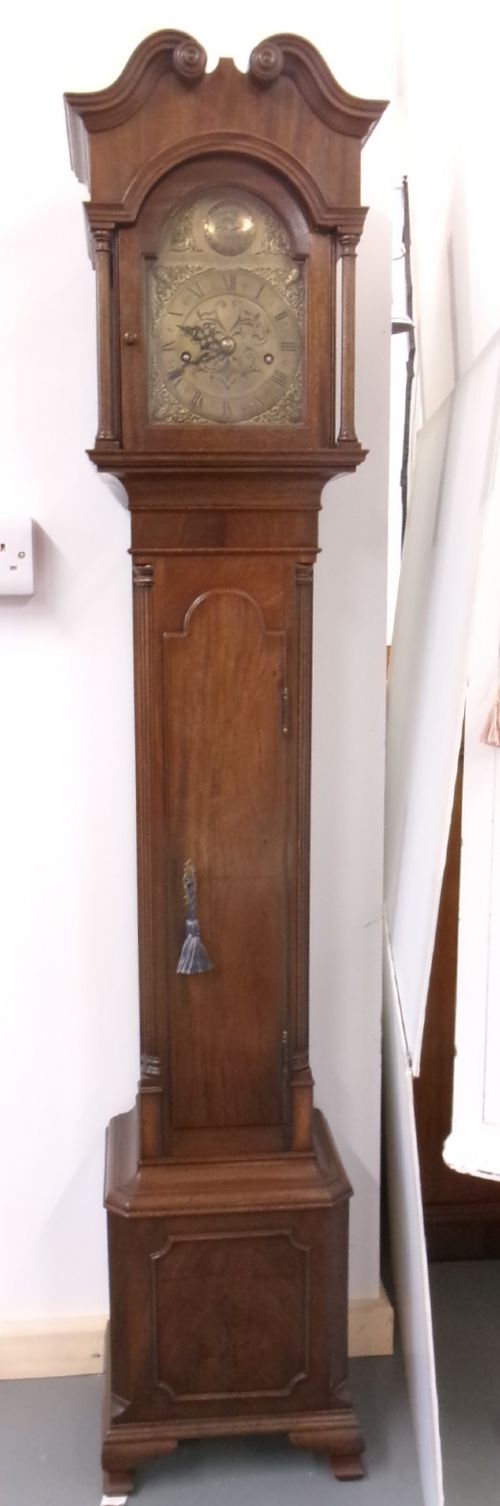
Cabinetry forms range from simple oak floor clocks to elaborate mahogany and burr walnut models featuring marquetry, flame mahogany veneers, and quarter-veneered surfaces. Dials vary between painted iron, brass, and enamel, sometimes incorporating moon phases, rocking automata, and musical chime mechanisms.
Materials and Construction
Cabinet makers utilised dense hardwoods including oak, mahogany, and walnut, often applying decorative veneers such as flame mahogany and burr walnut to the primary surfaces. These timbers were selected for structural stability and visual grain patterning, then polished or waxed to a durable finish.
Dial construction combined brass chapter rings, engraved faceplates, and painted iron or enamel substrates to display the hours, minutes, and subsidiary functions. Movements relied on brass gear trains, steel arbors, and lead or cast iron weights suspended by cords or chains.
The inventory records regional English and Scottish provincial makers alongside London houses, utilising painted iron, brass, and enamel dials.
Evaluating Craftsmanship
Quality rests upon the crispness of the movement's engraving, the precision of the dial work, and the integrity of the cabinet timbers. Superior examples display refined proportions, harmonious wood selection, and maker signatures of established repute.
The sophistication of the internal mechanism separates standard timepieces from higher-tier musical or chiming clocks equipped with multiple weights and bells. Cabinet execution, such as the skillful matching of walnut veneers and marquetry inlay, further elevates a piece.
Green of Edinburgh·D. Straiton Montrose·Tait Peebles·Winsor Bishop Norwich·Benjamin Taylor·Charles Louch St. Albans·Edward Upjohn Exon·Edward East·Joseph KnibB·Garman Meonstoke
The Wooden Tallcase Clock Glossary
- Grandfather clock
- A large, floor-standing pendulum clock enclosed in a wooden case, typically standing over six feet tall. These tallcase clocks house weight-driven movements.
- Grandmother clock
- A smaller, more slender version of the traditional tallcase clock, usually produced during the 20th century. They occupy less floor space while retaining the mechanical complexity of larger models.
- Marquetry
- The art of applying decorative pieces of veneer to a structure to form intricate floral or geometric patterns. Eighteenth-century examples often utilise this technique on walnut cases.
- Moon phase
- A dial mechanism tracking the lunar cycle through a rotating disc showing the phases of the moon. This feature appears on provincial and London dials alike.
- Chapter ring
- The outer ring on a clock face bearing the numerals for the hours. Brass variants often feature engraved Roman and Arabic numerals.
Wooden Tallcase Clock: Frequently Asked Questions
Where should I place a tallcase clock?
Position your clock on a stable, level floor against a solid interior wall to ensure the pendulum swings evenly without interference from foot vibrations.
Avoid placing the timber case in direct sunlight or near active heat sources, as extreme temperature fluctuations can warp the wood and affect the movement.
How do I wind an eight day clock?
Insert the winding key into the appropriate winding hole on the dial face and turn it steadily clockwise until the weights reach their upper limit.
Take care not to overwind the mechanism, stopping as soon as firm resistance indicates the spring is fully tensioned or the weights are raised.
What is the difference between a grandfather and grandmother clock?
Grandfather clocks are the standard full-sized tallcase timepieces dating primarily from the 18th and 19th centuries, designed with imposing floor presence.
Grandmother clocks are significantly smaller, more delicate versions that emerged later, offering the aesthetic of a tallcase clock in a reduced scale.
How do I tell an 18th-century clock from a later revival?
Examine the construction of the wooden case, looking for period-appropriate timber shrinkage, hand-cut dovetails, and secondary woods consistent with Georgian workshop practices.
Movement characteristics, dial fixings, and signature styles also help differentiate genuine 18th-century engineering from later Edwardian or Victorian reproductions.