
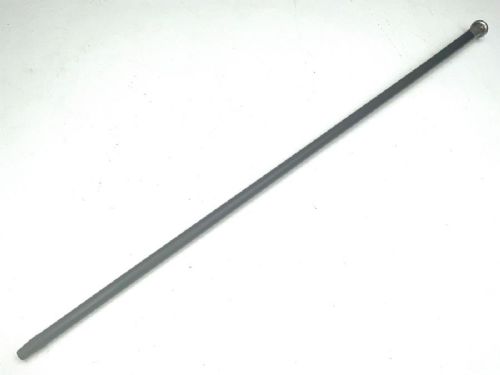
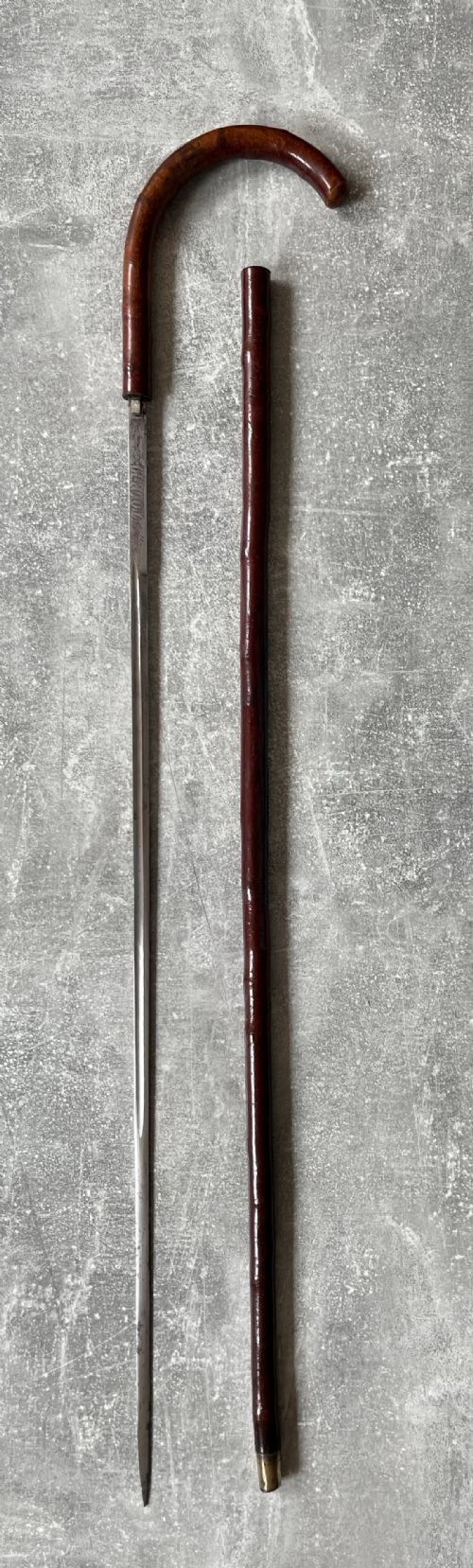
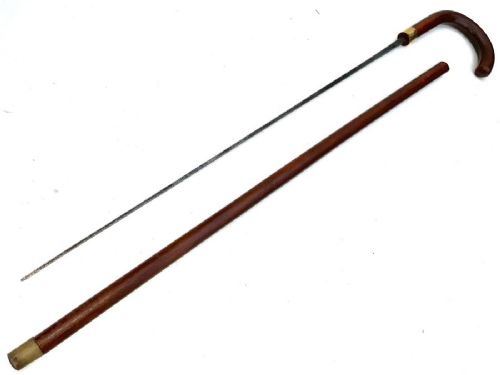
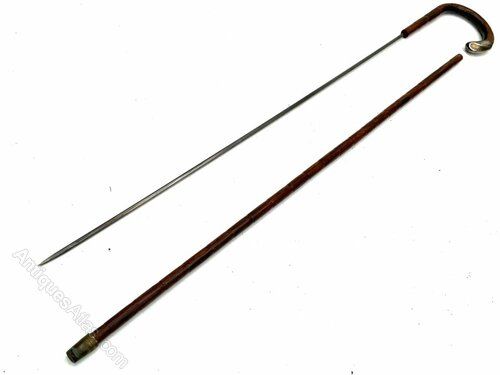


Wooden Sword Cane Stick
These wooden sword cane stick items are gentlemanly supports concealing a steel blade, originating from the Victorian and Edwardian eras.
Wooden Sword Cane Stick
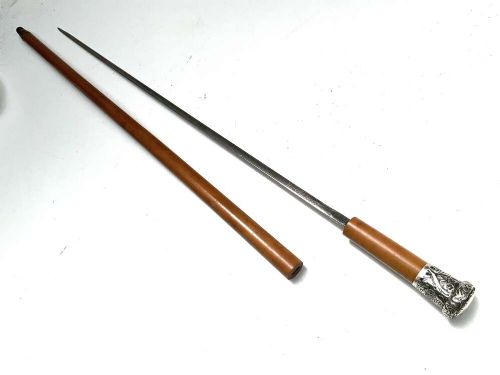
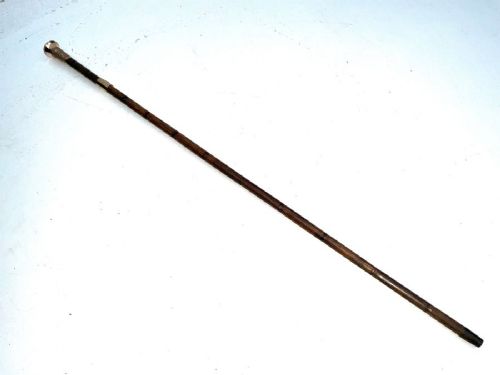
A wooden sword cane stick is a disguised self-defence tool or gentleman's accessory formed from timber shafts housing a hidden blade. When you search for a wooden sword cane stick, you uncover pieces designed for everyday carrying by officers, gentlemen, and travellers during the nineteenth and early twentieth centuries.
The most common examples on this page date from the Victorian and Edwardian periods, stretching from eighteen eighty into the nineteen twenties. These pieces take the form of standard walking sticks, swagger sticks, and specific sword sticks utilised for discretion.
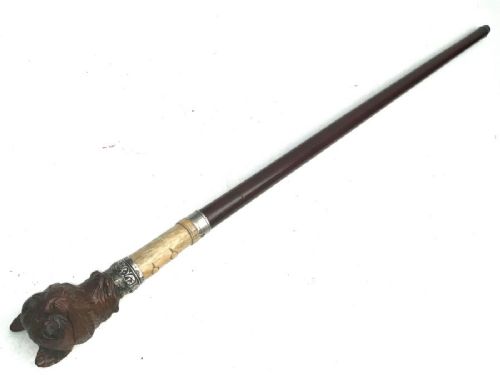
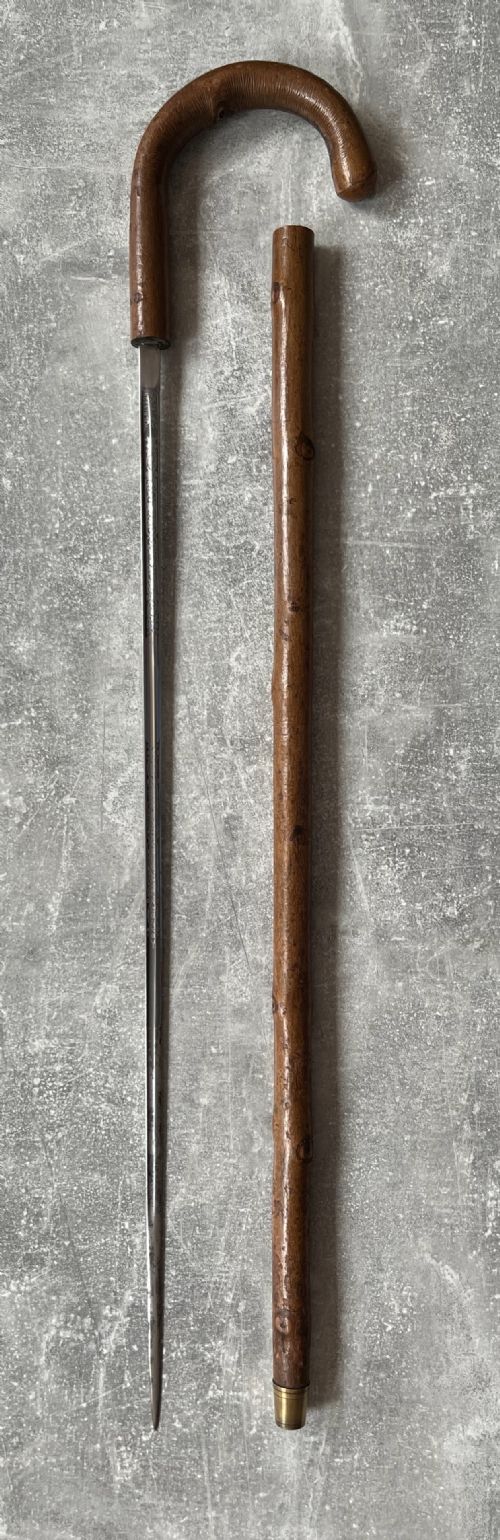
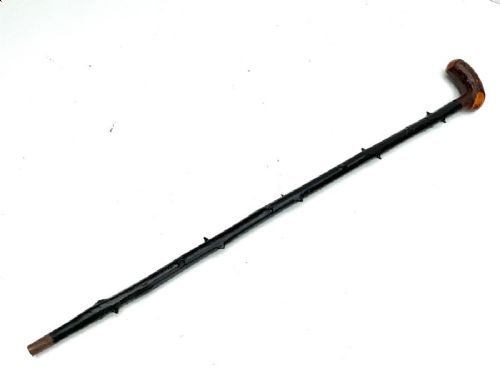
Varieties include specimens with plain wood shafts, crook handles, novel grips, root ends, and hammered horn or antler handles. Regional styles such as traditional Irish blackthorn wood emerge alongside military pieces linked to regiments like the Grenadier Guards and Imperial Germany.
Materials and Construction
Makers formed the shafts from natural timbers including cherrywood, partridge wood, hazel, malacca, rosewood, and blackthorn wood. These woods provided durable outer housings designed to withstand daily use while concealing the internal cavity.
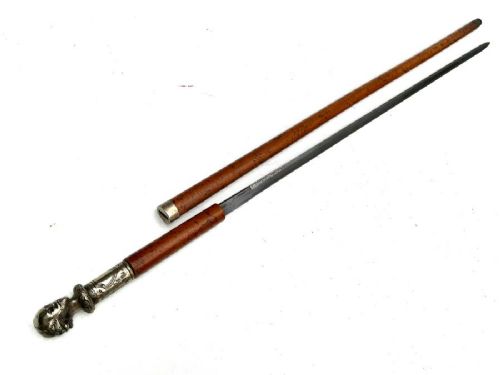
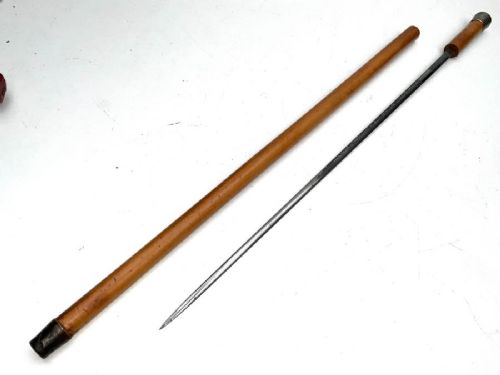
Concealed inside the wooden shafts sit steel blades, frequently sourced from renowned makers such as Toledo or Wilkinson. Collars and mounts fashioned from silver, brass, and other metalwork secure the handles and strengthen the joins.
Handles incorporate organic materials including horn, bone, and antler alongside carved wood roots and novel grips. These components combine to present an innocent appearance that masks the functional weapon within.
One listed piece comes complete with a hammer head grip, ensuring the owner was prepared for both botanical strolls and sudden carpentry emergencies.
Assessing Quality and Execution
Quality rests upon the integrity of the timber shaft and how seamlessly the two halves meet when closed. A superior piece conceals the join completely, ensuring the wooden sword cane stick looks like an ordinary walking cane.
The provenance and maker of the internal steel blade elevate a piece considerably. Blades bearing marks from established workshops such as Toledo or Wilkinson indicate higher manufacturing standards than unmarked steel.
Detailing on the handle and collar demonstrates the original commissioner's investment. Finely carved horn, antler grips, and hallmarked silver collars distinguish finer gentleman's accessories from standard military swagger sticks.
The Wooden Sword Cane Stick Glossary
- Swagger stick
- A short cane carried by military officers as a symbol of authority. These slender sticks occasionally housed concealed blades.
- Malacca
- A slender rattan palm featuring distinctive rings, prized for its flexibility and strength as a walking stick shaft.
- Blackthorn
- A dense, tough wood traditionally used for Irish walking sticks, often featuring natural knot formations and a dark bark.
- Toledo blade
- A steel blade produced in a Spanish city celebrated for sword-making traditions. These blades denote high craftsmanship.
- Crook handle
- A curved top formed on a walking stick to allow hooking over the arm. This shape aids comfortable carrying during walks.
Wooden Sword Cane Stick: Frequently Asked Questions
How do I open a sword stick?
Most wooden sword cane sticks rely on a threaded screw mechanism, a spring catch, or a simple friction fit to secure the handle to the shaft.
Gentlemen pulled or unscrewed the handle sharply to release the concealed steel blade from the wooden housing when protection was needed.
Were these carried for self defence?
Yes, these items served as practical personal protection for travellers and gentlemen walking through unlit or dangerous city streets during the nineteenth century.
The concealed blade allowed the owner to defend against threats while maintaining the respectable appearance of carrying a standard walking cane.
How do I date a wooden sword cane stick?
Dating relies on examining the style of the handle, the materials used, and any hallmarks found on silver collars.
Pieces frequently display design characteristics from the Victorian and Edwardian eras, with specific years occasionally recorded in military or presentation engravings.
What woods were used for the shafts?
Makers selected dense and resilient timbers capable of being hollowed out safely to house a steel blade.
Common materials seen across these listings include cherrywood, partridge wood, hazel, malacca, rosewood, and Irish blackthorn wood.
What is a Masonic sword stick?
A Masonic sword stick is a specialised gentleman's cane featuring symbols associated with Freemasonry upon the handle or blade.
These pieces were carried by members during the Victorian and Edwardian periods as part of fraternal dress and identity.