


Silver Top Sword Stick
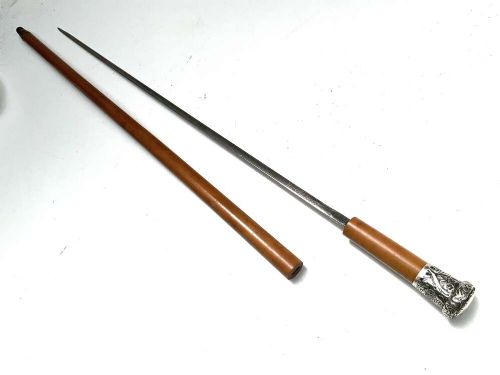
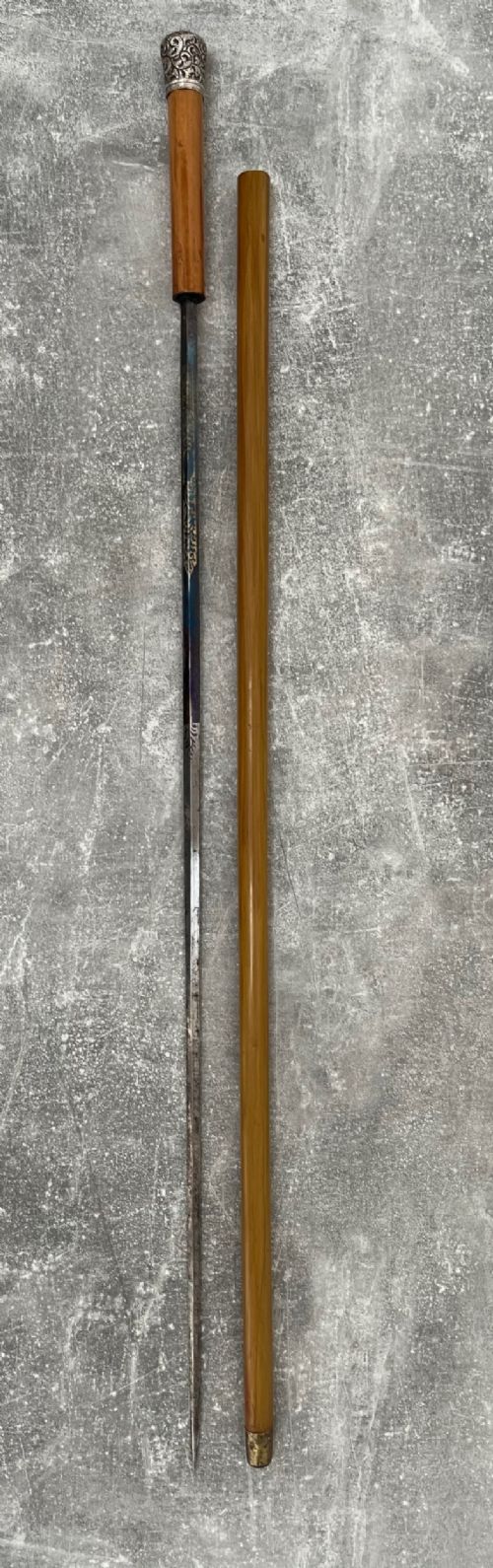
These silver top sword stick pieces are discreet personal defences disguised as gentlemanly walking canes, offering both utility and a hidden blade.
Silver Top Sword Stick
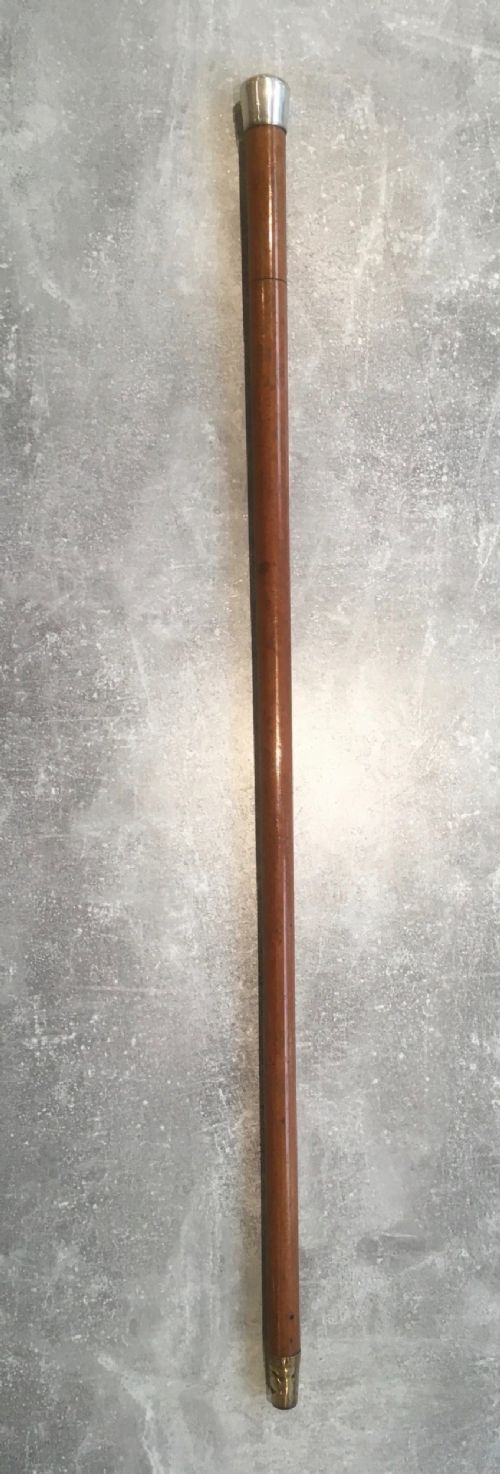
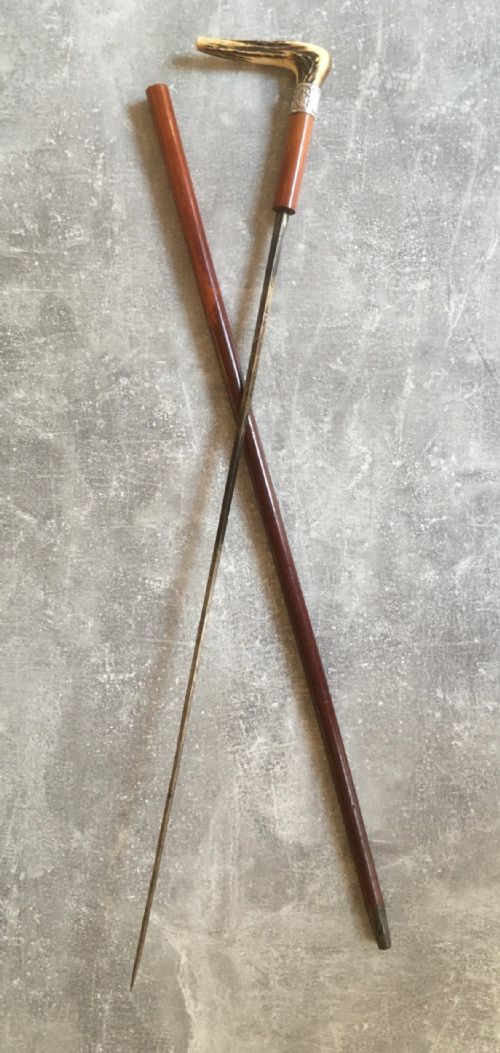
When you search for a silver top sword stick, you are looking at dual-purpose gentleman's accessories designed for discretion and personal protection during the Victorian and Edwardian eras. The pieces recorded here take the form of walking sticks, walking canes, and military swagger sticks spanning from the late nineteenth century through to the interwar period.
You are most likely to meet examples fashioned from malacca cane or ebonised wood, fitted with a silver knop or handle that conceals a steel blade within the shaft. Other variations utilise rosewood, horn, or brass mountings alongside traditional silver tops originating from London, Birmingham, or Warsaw.
The assortment includes standard gentleman's walking sticks alongside specific military items such as a Fourth Battalion Grenadier Guards swagger stick and pieces bearing hallmarks or engravings. Whether styled as plain silver knobs, repousse work, or pineapple shapes, each object combines the appearance of an ordinary walking aid with a concealed weapon.
Materials and construction
Makers constructed the shafts of these sticks from sturdy natural materials such as malacca cane, ebony, rosewood, and ebonised wood, chosen for straightness and strength. These shafts were then fitted with concealed internal channels to house the steel blades safely.
Handles were cast or beaten from silver, frequently decorated with repousse or engraving, and secured to the top of the cane alongside brass collars or horn tips. Smiths paired the wooden and cane exteriors with forged steel blades, occasionally drawing on Toledo manufacture for the cutting edge.
The records for this search phrase show materials including malacca cane, ebony, rosewood, horn, and ebonised wood paired with silver tops.
Evaluating the standard of a piece
The distinction between a standard walking aid and a finer piece lies in the weight and substance of the silver top, alongside the quality of the engraving or repousse work. Better examples exhibit precise hallmarking, firm joins between handle and shaft, and superior timber selection.
The integration of the blade into the cane further separates the range, with superior items ensuring a flush fit when closed and a balanced feel in the hand. The origin, whether bearing a London or Birmingham hallmark or associated with a notable maker like Brigg, elevates the standing of the piece.
Brigg of London
The Silver Top Sword Stick Glossary
- Knop
- A rounded knob or handle at the top of a walking stick, often fashioned from silver in these pieces.
- Malacca
- A slender, mottled rattan cane imported from Southeast Asia, prized for resilience and used extensively for walking stick shafts.
- Repousse
- A metalworking technique where silver is hammered into relief from the reverse side to create decorative patterns on the handle.
- Swagger stick
- A short, light cane carried by military officers as a symbol of authority rather than for physical support.
- Hallmark
- An official stamp applied to silver items indicating the assay office, such as London or Birmingham, and the year of testing.
Silver Top Sword Stick: Frequently Asked Questions
What is a silver top sword stick?
A silver top sword stick is a gentleman's walking cane featuring a decorative silver handle that conceals a hidden steel blade inside the wooden or cane shaft.
These items functioned as both everyday walking aids and discreet personal protection during the Victorian and Edwardian periods.
How do you reveal the blade?
The blade is secured within the hollow shaft of the cane and is typically released by pulling the silver handle away from the body of the stick.
A friction fit or a slight twist mechanism usually keeps the handle secure until the user pulls it straight out.
Were these used in the military?
Certain examples, such as swagger sticks, were carried by officers in regiments like the Grenadier Guards as part of their military kit.
These military pieces often date from the early twentieth century and reflect specific battalion associations rather than civilian use.
How can you tell the age of a stick?
Age is primarily determined by examining the silver hallmarks on the handle, which indicate the assay office and year of manufacture.
Stylistic details, such as the use of malacca cane, ebony, or specific engraving patterns, also help narrow down the period of production.