




Vintage Defence Walking Cane
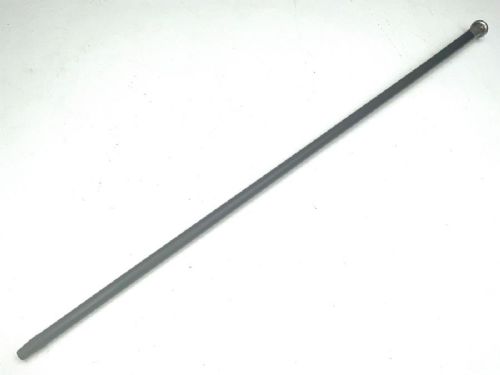
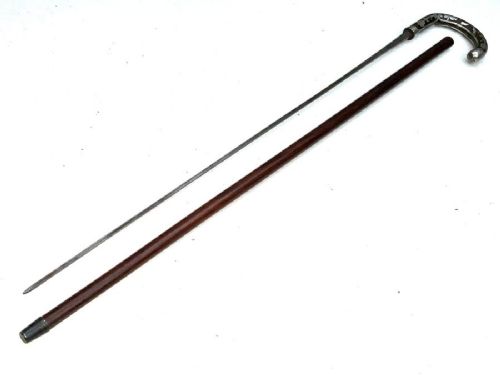
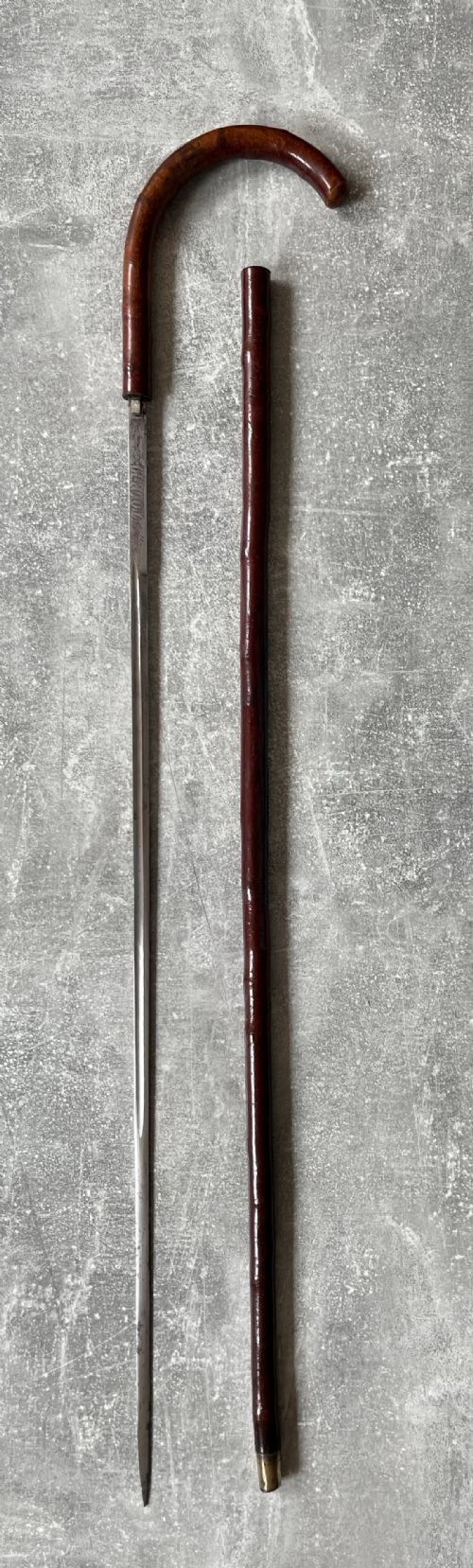
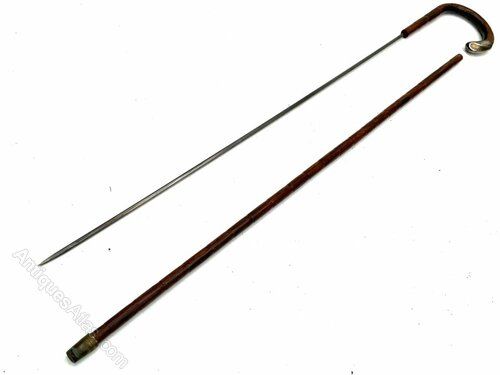
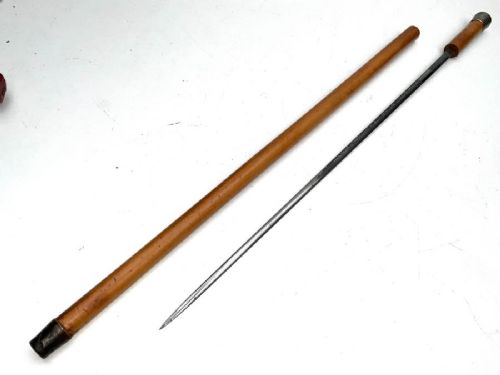
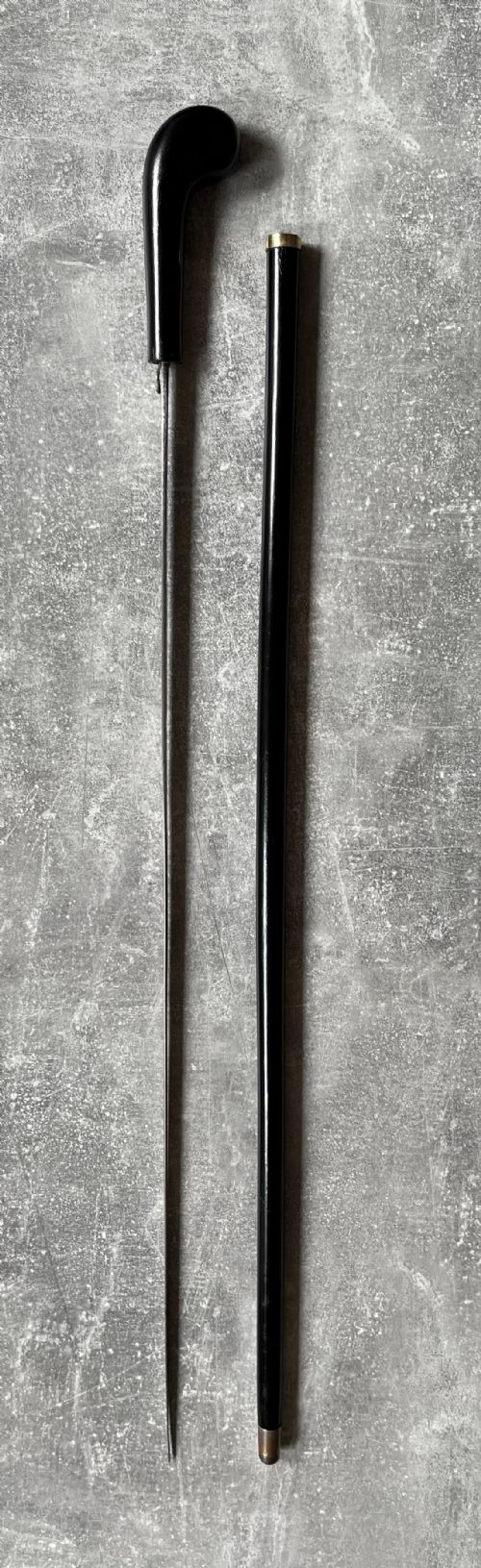
A vintage defence walking cane is a concealed blade stick from the Victorian and Edwardian eras, combining daily support with discreet personal protection.
Vintage Defence Walking Cane
A vintage defence walking cane serves as both a gentleman's support and a concealed weapon, frequently catalogued as a walking stick sword stick. These pieces emerge predominantly from the Victorian and Edwardian periods, stretching from the late nineteenth century through to the nineteen-twenties.
The common versions met on this page include woods such as partridge wood, malacca, ebonised wood, and bamboo, often finished with horns, silver collars, or bone knops. Makers incorporated specific functional forms like hammer head grips, root ball handles, and horse head handles to suit the gentleman owner.
Origins trace back to urban and rural British and European workshops, featuring notable examples carrying blades from Toledo or Wilkinson. Buyers encounter everything from simple ebonised shafts to pieces bearing masonic insignia or solid silver mounts.
Materials and construction methods
Construction relies heavily on dense natural timbers like partridge wood, malacca, and cherrywood, paired with internal steel blades. Shafts are carefully bored to house the concealed blade securely, whilst retaining the outward appearance of a standard walking stick.
Metals such as silver, brass, and plain steel form collars, mounts, and handles, secured with pins or screws. Horn, bone, and antler are shaped into grips, fixed to wood bodies that often feature ebonised finishes or natural root ball formations.
Owners occasionally concealed metal blades inside innocent bamboo stalks to maintain absolute surprise during urban strolls.
Distinctions in quality
Quality separates simple utility pieces from high-grade commissions through the origin and finish of the steel blade. Blades signed by makers such as Wilkinson or forged in Toledo mark the upper tier of production.
Mountings and handles dictate the overall refinement, moving from plain wooden grips to solid silver collars, carved horse heads, and intricate masonic details. The seamless fit of the blade within the wooden shaft demonstrates superior joinery.
Brigg·Wilkinson
The Vintage Defence Walking Cane Glossary
- Toledo blade
- A steel blade originating from Toledo, Spain, known for its flexibility and historical strength in sword stick manufacturing.
- Partridge wood
- A dense, heavily mottled tropical timber utilised for walking stick shafts due to its distinctive feather-like grain patterns.
- Malacca
- A smooth, spotted rattan cane imported from Southeast Asia, prized for its resilience and straightness in quality walking sticks.
- Silver collar
- A decorative and structural metal band fitted below the handle of a walking stick, frequently bearing assay marks.
- Root ball handle
- A natural wooden handle formed from the root mass of a tree, left organic and textured for grip.
Vintage Defence Walking Cane: Frequently Asked Questions
How do I open a sword stick?
Most defence canes utilise a screw mechanism, a catch, or a simple friction fit to secure the blade inside the wooden shaft. A gentle twist or pull releases the locking mechanism, allowing the blade to slide smoothly from its housing.
Users should ensure the cane is held upright during unlatching to prevent the blade from dropping unexpectedly. Regular cleaning of the internal channel prevents dirt accumulation that can jam the release mechanism.
Were these canes used for self-defence?
Gentlemen in the Victorian and Edwardian eras carried these sticks for personal protection whilst navigating poorly lit or unsafe city streets. The hidden blade provided a discreet means of defence during an era when open carrying of sidearms was restricted.
Beyond urban protection, many served as fashionable accessories for daily walks, combining utility with social status. The addition of masonic symbols or silver animal heads reflected the owner's personal affiliations and taste.
How do I date a vintage cane?
Dating relies on examining the style of the handle, the materials used, and any accompanying hallmarks on silver collars. Pieces from the eighteen-nineties often feature distinct regional styles like Irish blackthorn, whilst nineteen-twenties examples lean towards refined silver mounts.
Maker stamps on the steel blade or hallmarks indicating specific assay years provide precise chronological markers. Comparing the wood type and locking mechanism against documented Victorian and Edwardian standards confirms the era.
How should I display a sword stick?
Displaying these pieces safely involves using wall-mounted racks or vertical stands that support the weight of the cane without stressing the handle. Keeping them away from direct sunlight and extreme temperature fluctuations preserves the natural wood and prevents the blade housing from warping.
Collectors often store them fully assembled to maintain the natural alignment of the shaft and blade. Ensuring the room has stable humidity prevents the timber from drying out and cracking around the metal collar.