
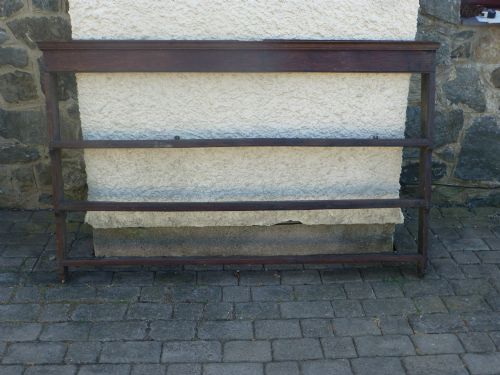
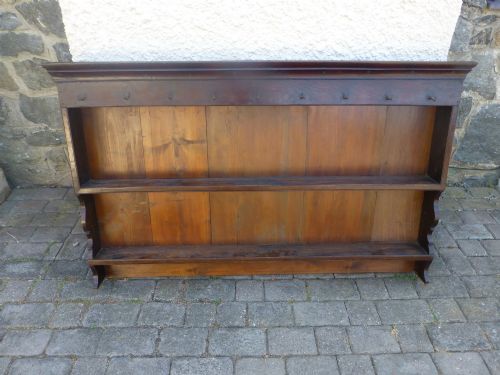
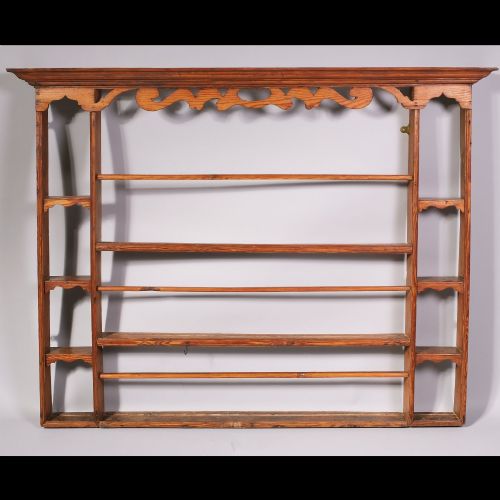
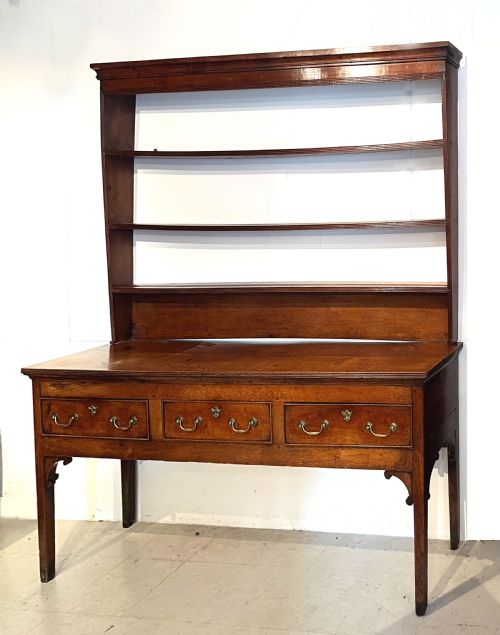


Wooden Plate Display Rack
A wooden plate display rack organises earthenware and porcelain against a wall, bringing functional country storage into daily view.
Wooden Plate Display Rack
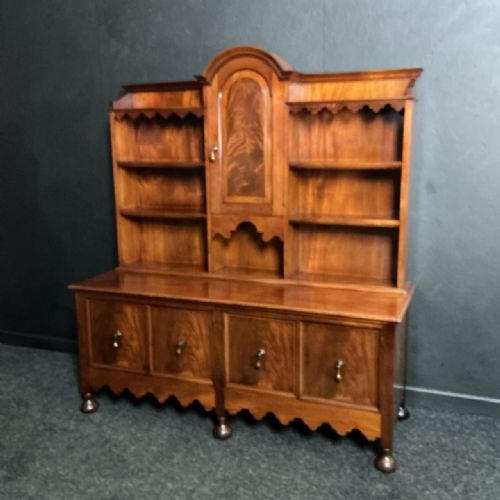
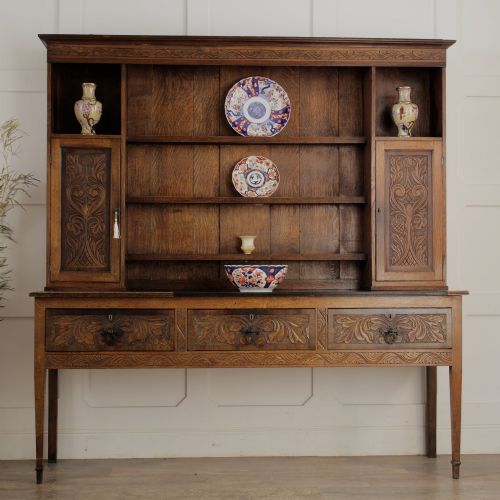
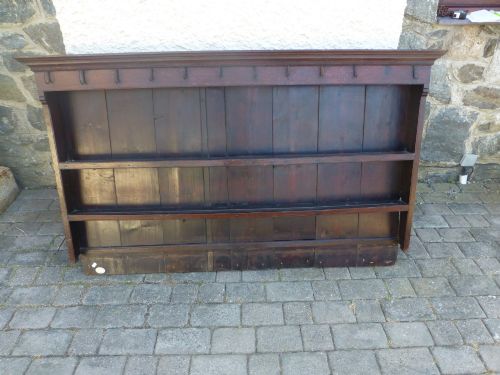
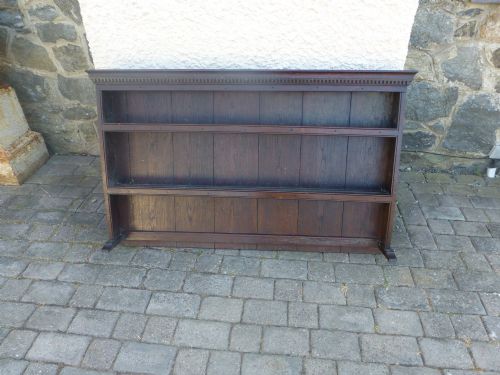
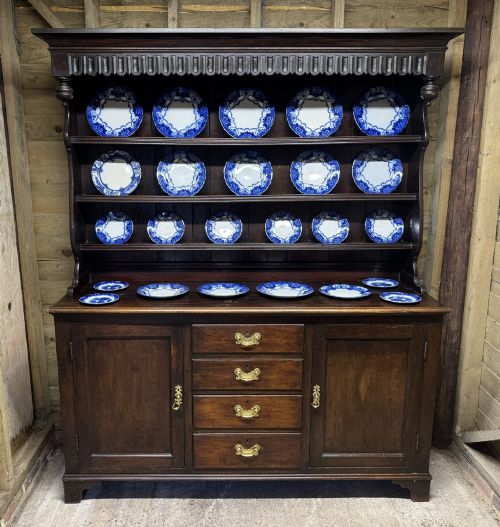
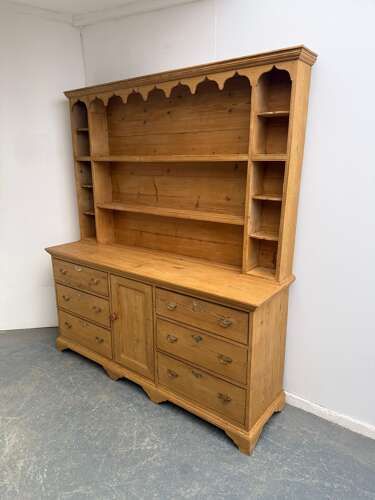
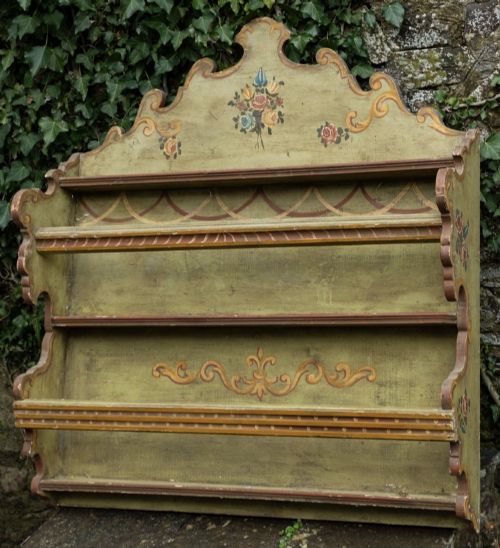
A wooden plate display rack is primarily found as a wall-mounted shelf or as the upper rack section belonging to a larger Welsh dresser. The pieces meeting this search phrase span the eighteenth, nineteenth, and early twentieth centuries, with Georgian country examples appearing frequently alongside Victorian and Edwardian wall shelves.
Makers working within English, Welsh, and French provincial traditions constructed these shelves to hold delftware and ceramic plates securely upright. The physical evidence shows forms ranging from simple pine wall racks to substantial oak and cherrywood dresser tops featuring column details and multi-tiered shelving.
Materials and Technique
Construction relies heavily on native timbers such as oak, pine, and mahogany, supplemented occasionally by walnut, cherrywood, and painted wood surfaces. Joinery techniques observed across the inventory combine traditional pegged framing with plain board backs and applied mouldings.
Metal elements appear in brass and iron hooks or structural fixtures, while decorative treatments extend to marquetry inlay, hand-painted finishes, and carved architectural details like Corinthian columns.
Evaluating Quality
The distinction between ordinary and superior pieces rests on the choice of timber and the proportion of the mouldings. Dense grain in early oak or finely figured mahogany elevates a rack above utility items made from soft pine.
Integrity of surface finish and originality of construction components determine the standing of an antique rack. Elements like matching timber pegging, undisturbed patination, and well-proportioned plate grooves separate regional vernacular pieces from later reproductions.
The Wooden Plate Display Rack Glossary
- Delft rack
- A wall-mounted or dresser-top wooden shelf specifically designed with grooved ledges to display ceramic plates upright. These fixtures originated in the seventeenth century to showcase imported tin-glazed earthenware.
- Welsh dresser
- A traditional two-part kitchen item comprising a base cabinet with drawers or cupboards surmounted by an open wooden plate display rack. The regional variants span oak, pine, and fruitwoods.
- Marquetry
- The decorative craft of applying small pieces of wood veneer to a structure to form intricate patterns or pictures. It appears on select nineteenth-century display racks.
- Corinthian column
- An ornate architectural support column featuring acanthus leaves and scrolled capitals. This classical detail appears on select eighteenth-century country furniture racks.
- Vaisselier
- A French term for a kitchen dresser or plate storage cupboard. These pieces frequently feature open upper shelving for display.
Wooden Plate Display Rack: Frequently Asked Questions
How do I hang a heavy wooden plate display rack?
Wall-mounted racks require direct fixing into structural timber studs or secure masonry anchors using appropriate steel screws through the back frame.
Because loaded shelves bear considerable downward and forward weight, professional installation prevents pulling away from the wall under the mass of heavy ceramics.
Are these racks deep enough for modern dinner plates?
Traditional racks were built for specific historical ceramic sizes, meaning older Georgian and Victorian ledges can occasionally prove shallow for oversized contemporary plates.
Checking the internal depth dimension of the specific shelf groove ensures your particular tableware rests securely without tipping forward.
How should I clean an antique wooden plate display rack?
Maintenance requires only a soft, dry cloth to remove dust from the timber surfaces and mouldings without disturbing the historic wax or polish.
Moisture and modern chemical sprays damage aged wood finishes and dry out centuries-old pine or oak, so liquid cleaners are best avoided entirely.
Can a plate rack stand on a sideboard instead of hanging?
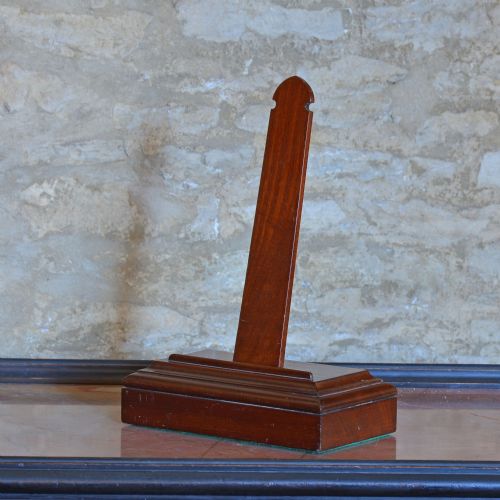
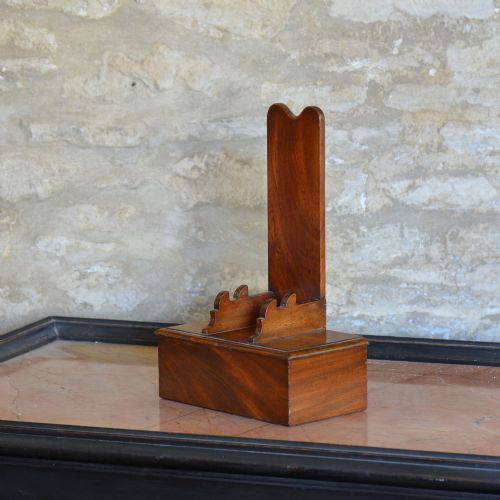
Many smaller racks function well resting on top of a sideboard or serving table rather than being fastened to a wall.
Ensuring the piece has a stable flat base and securing the upper frame to the wall with discreet brackets prevents accidental tipping in busy rooms.