
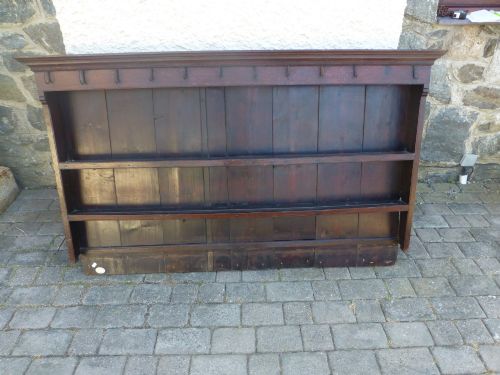
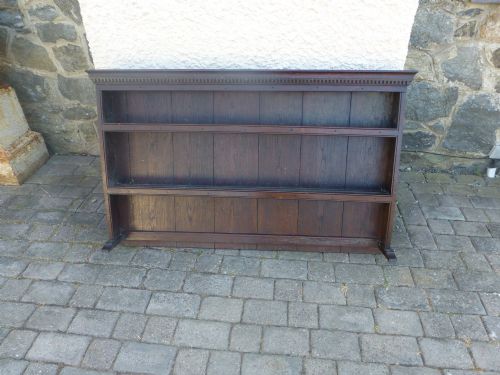
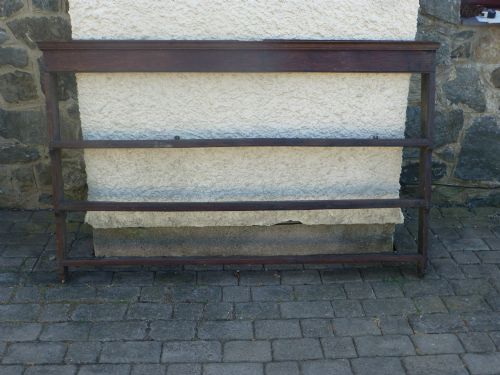
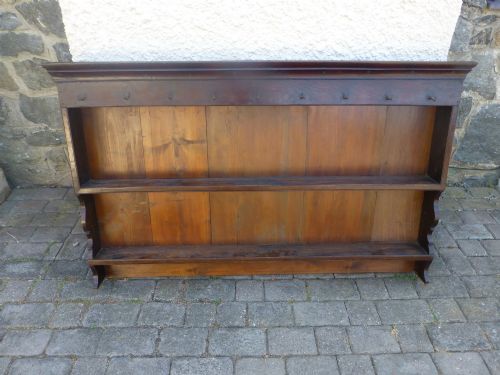


Oak Dresser Top Rack
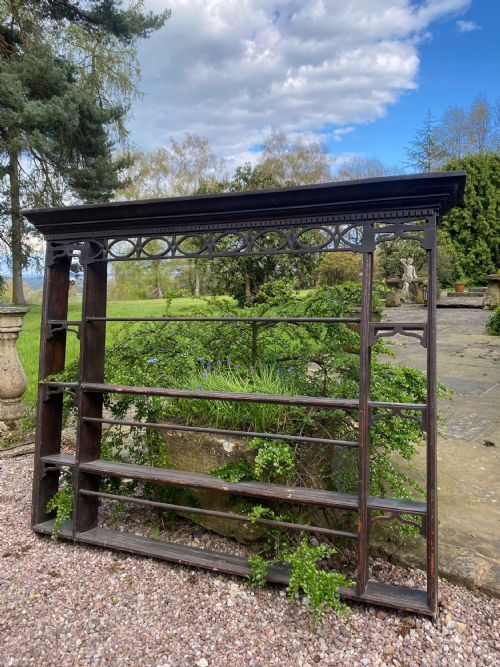
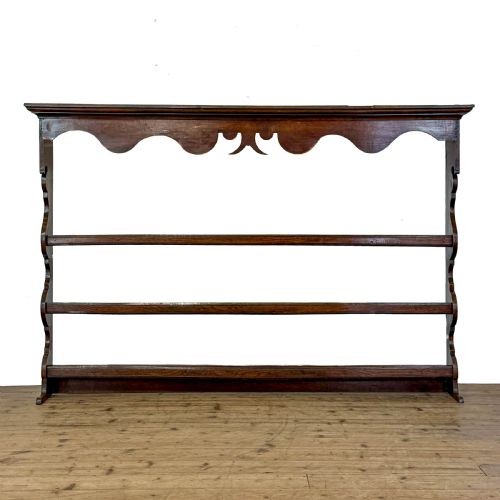
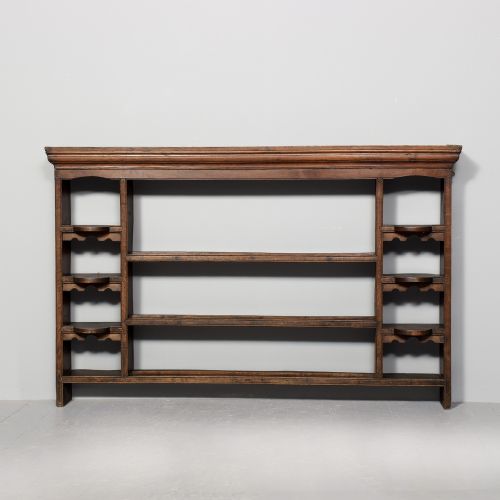
These oak dresser top rack examples are traditional plate and display shelves designed to mount upon a base or hang directly from a wall.
Oak Dresser Top Rack
When you search for an oak dresser top rack, you encounter open wall shelves and plate racks intended to display china, delftware and kitchen implements. The pieces on this page span the eighteenth and nineteenth centuries, taking the form of wall-mounted racks or upper sections separated from their original dresser bases.
Georgian and George III examples dominate the selection, showing the regional craftsmanship of English country workshops. You find both compact wall-hanging shelves and substantial plate racks designed to sit atop a Welsh dresser or a carved oak base.
Early forms include specialised configurations such as spice shelves alongside standard open shelving for plates. These sections reflect domestic storage traditions where everyday ceramics needed to be kept close to hand yet secure.
How they were made
Makers constructed these racks primarily from solid oak, sometimes utilising stained wood or incorporating iron and brass fittings for hanging and structural support. The timber was typically planed and jointed using traditional methods suited to domestic furniture production.
Surviving surfaces reveal the hand of the carpenter through pegged joints, moulded plate rails and occasional carved detail. Structural integrity relied upon sturdy backboards and side panels designed to bear the heavy weight of stacked ceramic plates.
Oak Dresser Top Rack Retail Price Guide 2026
Typical asking prices for oak dresser top rack among the pieces listed under this phrase on Sellingantiques today, from the lower quarter to the upper quarter. They describe what is for sale here now, not the wider market.
Materials recorded across the inventory include solid oak, stained oak, general wood alongside iron and brass hardware.
What varies in quality
Quality in these pieces rests upon the crispness of the mouldings, the proportion of the shelves and the integrity of the timber. Better examples retain their original surface patination and honest construction without excessive modern intervention.
Simpler country pieces display utilitarian charm through plain boards and straightforward peg construction, whereas finer George III items incorporate architectural cornices, shaped friezes or carved detailing that elevate the piece beyond mere utility.
The Oak Dresser Top Rack Glossary
- Delft rack
- An open wall-mounted shelving unit specifically designed for displaying tin-glazed earthenware plates and dishes. These racks feature narrow grooves or retaining rails to keep plates upright.
- Welsh dresser
- A traditional dining room or kitchen item comprising a lower storage base and an upper plate rack. The upper racks are frequently separated and sold independently as wall shelves.
- George III
- A stylistic period spanning the mid to late eighteenth century. Furniture from this era often displays refined proportions and classical architectural influences adapted for country timbers.
- Spice shelf
- A small partitioned section incorporated into a larger rack or built as an independent wall cabinet. These compartments held small jars, bottles and dry goods.
- Plate rail
- A horizontal wooden strip or groove fitted to a shelf to prevent plates from sliding forward. It is a defining feature of traditional display shelving.
Oak Dresser Top Rack: Frequently Asked Questions
Are these racks meant to hang on the wall or sit on a dresser?
Many of these pieces were made as standalone wall-hanging shelves designed to be secured directly to plaster or wood panelling. Others are the upper sections detached from complete dressers, intended to sit upon a matching base.
You can determine their original placement by examining the backboards for wall-mounting brackets or noting the flat base designed to rest upon a lower cabinet top.
How do I date an 18th century oak rack?
Dating relies upon construction techniques, timber characteristics and the stylistic conventions of the period. Eighteenth-century pieces typically exhibit hand-sawn boards, pegged joinery and vernacular mouldings distinct from later machine-made furniture.
Looking closely at the backboards, nail types and overall wear patterns helps distinguish an early Georgian example from a nineteenth-century revival piece.
Can these shelves support heavy modern dinnerware?
Solid oak construction gives these antique racks considerable structural strength, making them capable of holding standard ceramic plates and bowls. However, the weight distribution and wall fixings require careful assessment depending on the specific rack.
Ensuring that wall-hung versions are anchored securely into structural studs or masonry is essential for safely displaying heavy earthenware.
What is the difference between a country oak rack and a Georgian one?
Country oak pieces often display simpler, more utilitarian construction executed by local provincial makers using available regional timber. Georgian items frequently incorporate more deliberate stylistic details such as moulded cornices or refined proportions.
Both categories overlap significantly because many Georgian pieces were themselves made in rural workshops using traditional country methods.
How do I clean and maintain antique oak shelves?
Maintenance involves gentle dusting with a dry cloth and the occasional application of traditional beeswax to nourish the dry oak. Avoid modern liquid polishes and abrasive cleaners that can strip the historic surface patination.
Keeping the wood away from direct heat sources and sudden humidity changes prevents the timber from warping or splitting over time.