
Wooden Pedestal Dining Table
A wooden pedestal dining table provides a stable, versatile surface for gathering, resting upon central pillars rather than traditional corner legs.
Wooden Pedestal Dining Table
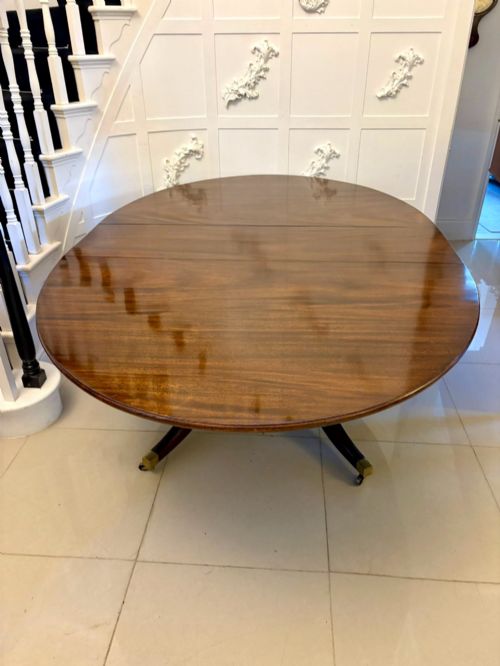
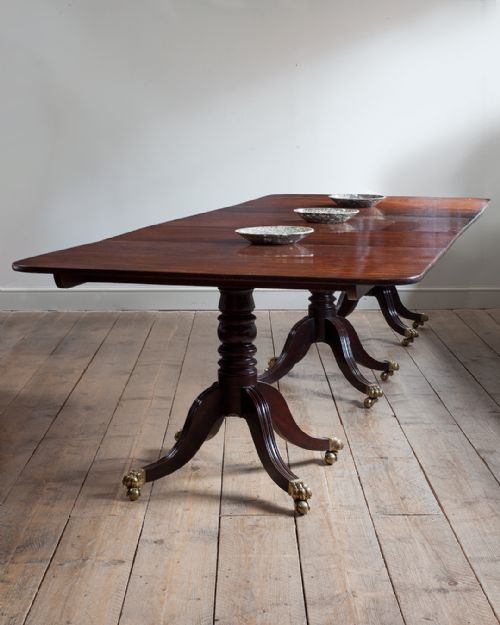
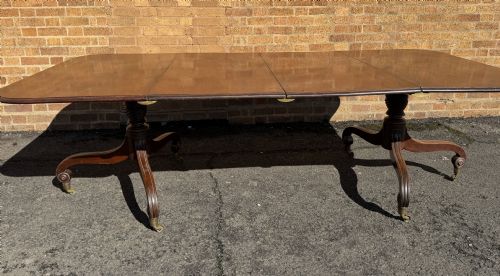
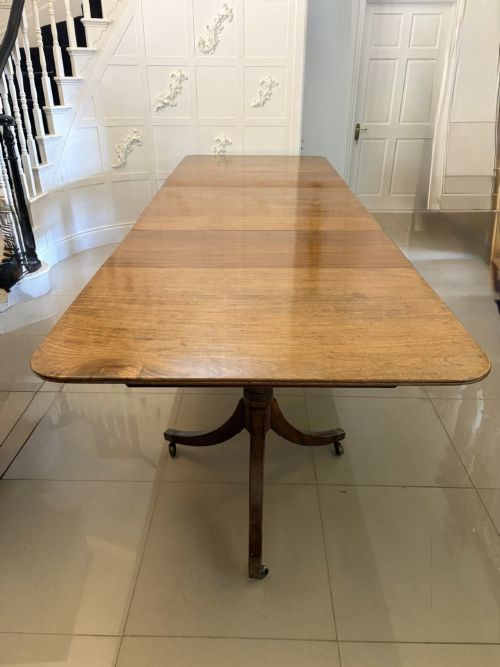
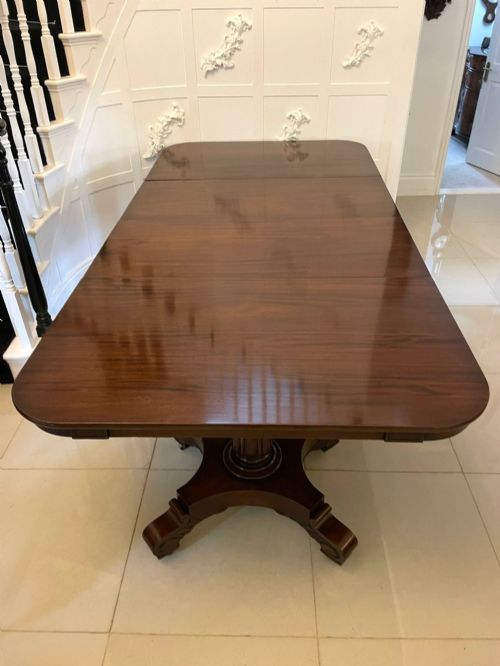
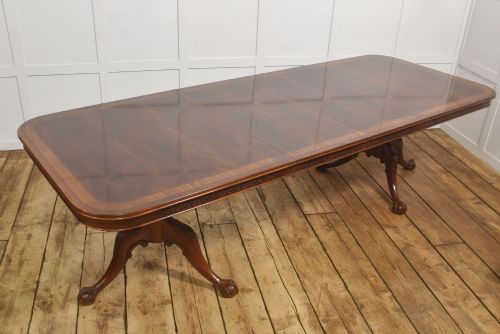
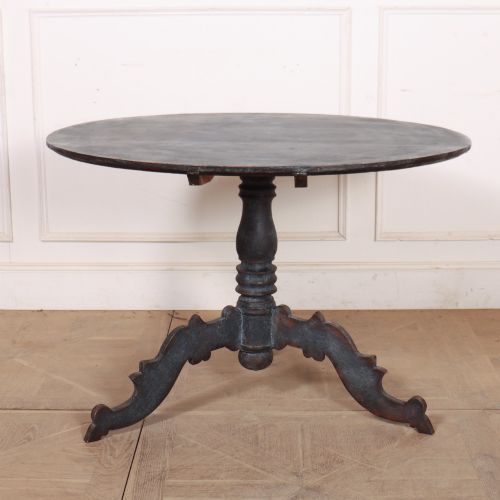
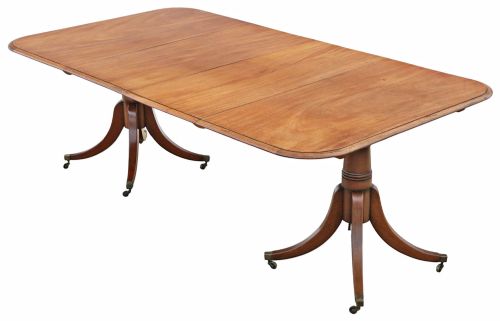
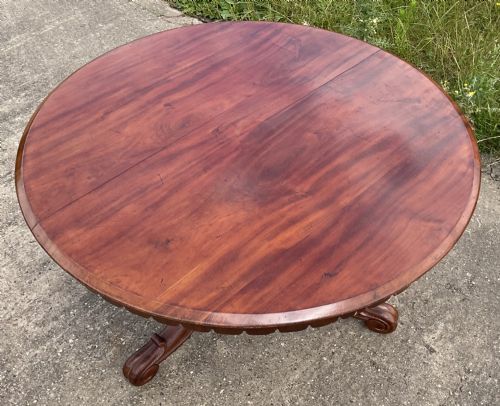
A wooden pedestal dining table brings together period craftsmanship and practical daily utility in dining rooms and large halls. Buyers searching for a wooden pedestal dining table encounter forms originating from the Georgian, Regency, and Victorian eras, often constructed with multiple pillars to support extended lengths. Twin-pillar and triple-pillar variations dominate the selection, alongside tilt-top breakfast tables and smaller round centre formats.
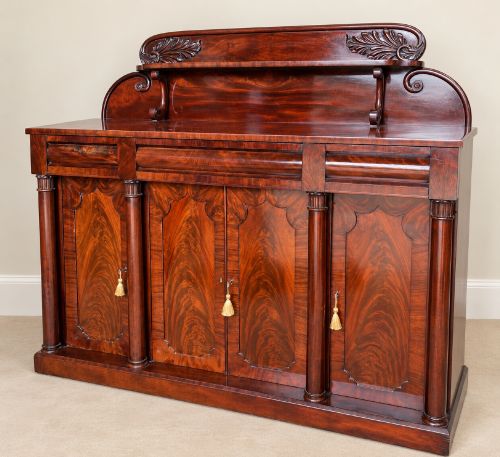
The prevailing timbers reflect British cabinet-making traditions, with mahogany forming the largest share of examples alongside oak, walnut, and rosewood. These pieces range from compact six-seater tables suitable for moderate spaces to substantial extending formats designed to seat twelve or more guests. Revival styles from the Edwardian period and early twentieth century also appear frequently among the listed objects.
How they were made
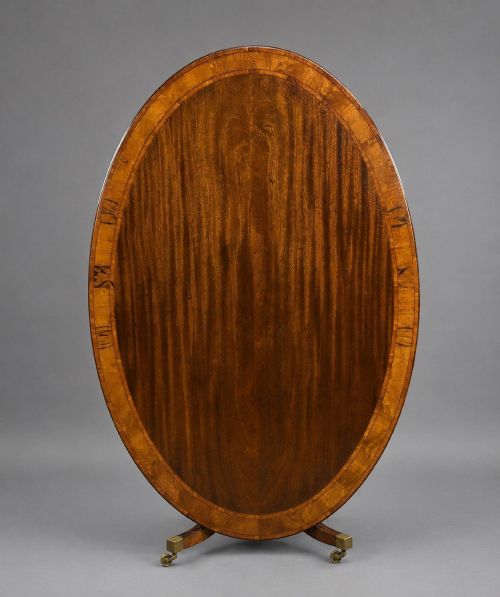
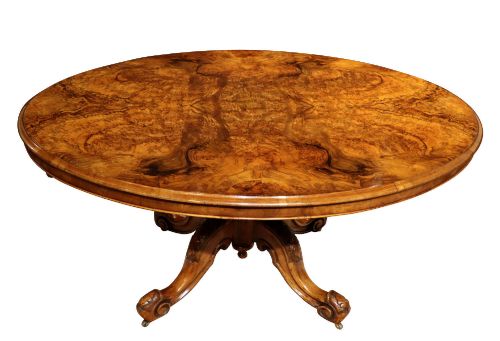
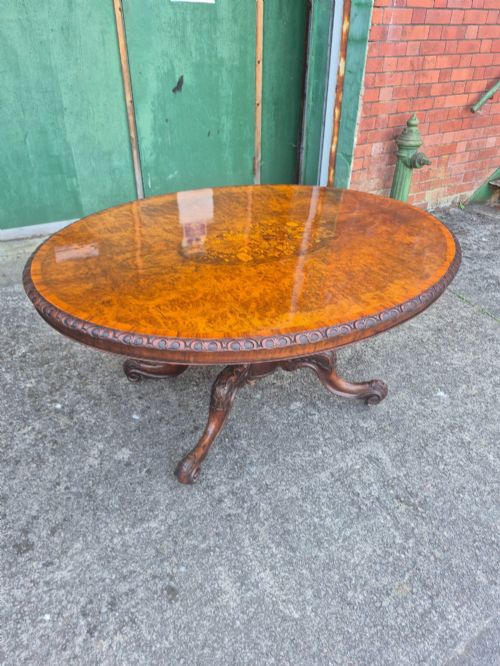
Cabinet-makers relied heavily on solid timber and figured veneers, selecting mahogany, burr walnut, and pollard oak for their rich grain patterns and durability. Surfaces often feature flame mahogany veneer or crossbanded borders, demanding precise hand-cutting and skilled gluing techniques to prevent splitting. Pedestal bases frequently incorporate carved wooden legs ending in brass castors for mobility.
Extending mechanisms utilise internal leaves supported by additional pillars, allowing tables to expand securely without losing central balance. Tilt-top breakfast tables employ a brass catch mechanism that allows the circular top to pivot vertically when not in use, saving space in domestic interiors.
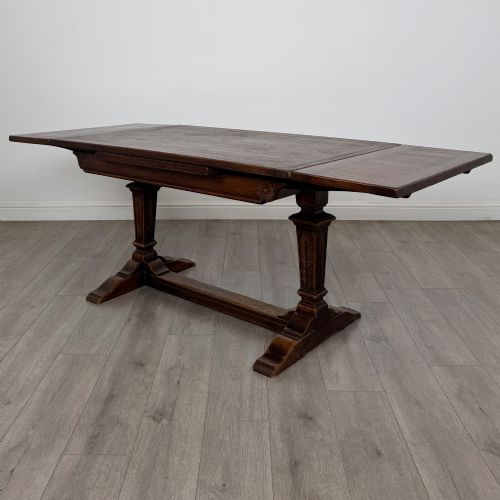
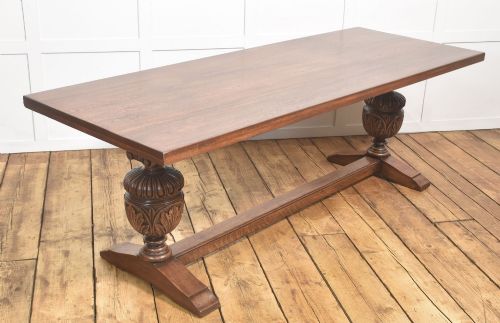
Listings feature nineteenth-century mahogany extending tables alongside oak refectory formats and walnut breakfast tables.
What varies in quality
The refinement of the timber selection dictates much of the visual distinction between examples, with highly figured mahogany and matched burr walnut commanding attention through depth of grain. The weight and stability of the central pillars, coupled with the crispness of hand-carved details on the pedestal feet, indicate the original maker's investment of time and skill.
Proportion and engineering integrity define the upper tier of extending tables, where smooth mechanical movement of the leaves aligns seamlessly with the fixed pedestals. The quality of the French polished finish determines how cleanly the wood reflects light and resists everyday wear over centuries of service.
Whytock & Reid·Gillows
The Wooden Pedestal Dining Table Glossary
- Pedestal
- A central columnar support replacing traditional corner legs on a table. This design allows greater legroom for seated diners.
- Tilt-top
- A table top hinged to pivot from horizontal to vertical. This mechanism permits the table to stand flat against a wall when not in use.
- Crossbanding
- A decorative border of veneer laid around the perimeter of a table top with the grain running perpendicular to the centre. It creates a contrasting visual frame.
- Quadrapod
- A four-legged pedestal base providing enhanced stability for large circular or oval table tops. It typically terminates in brass castors.
- Draw leaf
- An extending table mechanism where extension leaves are stored beneath the main top and pulled out for use. It offers a straightforward method for lengthening the surface.
Wooden Pedestal Dining Table: Frequently Asked Questions
How do I seat more guests?
Many tables utilise extending mechanisms with removable middle leaves supported by additional central pillars. Inserting these leaves lengthens the surface to accommodate larger dining groups.
When not in use, the extra leaves store separately while the main pedestals slide back together to restore standard proportions.
What is a tilt-top table used for?
Tilt-top tables served as versatile breakfast or supper tables that could be moved out of the way against a wall when dining concluded. The hinged mechanism allowed the heavy top to pivot upright to save floor space.
In daily use, a brass catch locked the circular top securely in the horizontal position.
How do I tell Regency from Victorian?
Regency tables date from the early nineteenth century and typically feature clean classical lines, brass reeded details, and rich mahogany timbers. Victorian examples from later decades often display heavier proportions and more elaborate carvings, such as burr walnut quadrapod bases.
Examining the construction methods and secondary timbers inside the pedestal joints helps clarify the period of manufacture.
Can I use polish on antique wood?
Traditional beeswax or dedicated antique furniture wax nourishes the timber and maintains the depth of the French polished finish. Apply the wax sparingly with a soft cloth and buff gently along the grain.
Avoid modern silicone sprays, which leave a synthetic film and attract dust over time.