

Regency Pedestal Breakfast Table
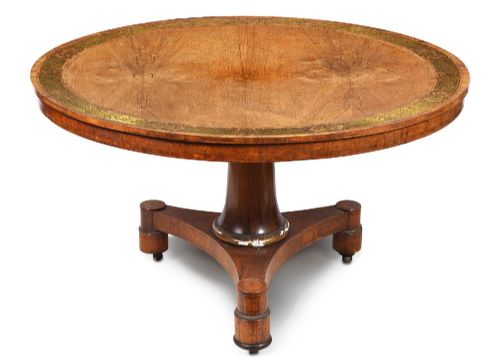
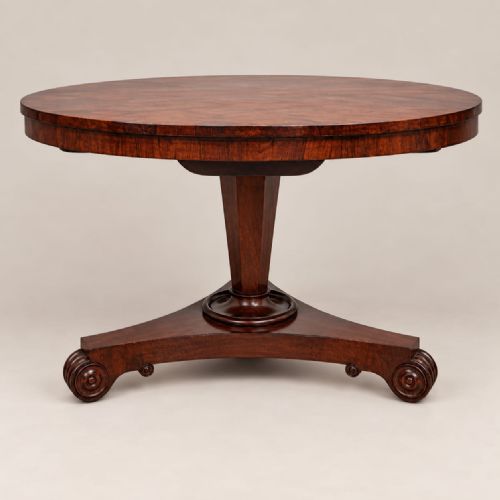
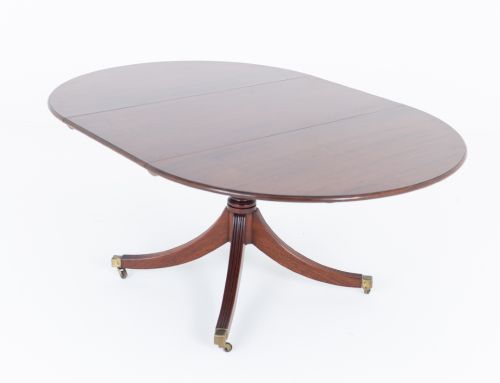
A regency pedestal breakfast table brings monumental scale and architectural balance to a room, offering a generous circular top raised on a sturdy pillar.
Regency Pedestal Breakfast Table
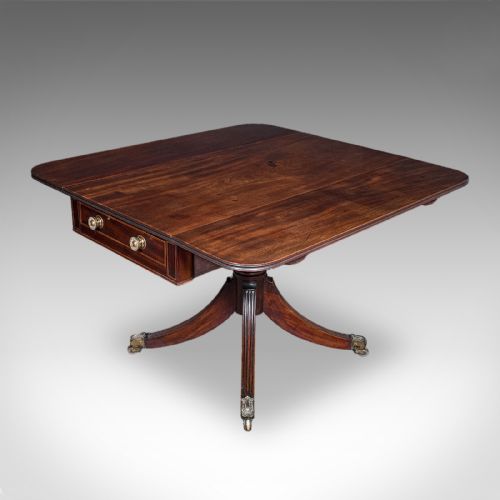
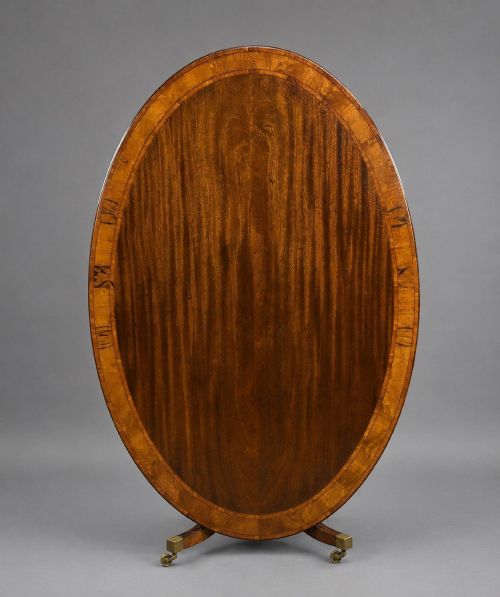
A regency pedestal breakfast table is a substantial freestanding piece designed to anchor a principal room, often featuring a circular or oval top mounted on a heavy central column. These items emerge predominantly from the nineteenth century, spanning George III, Regency, and William IV periods, alongside later revival iterations.
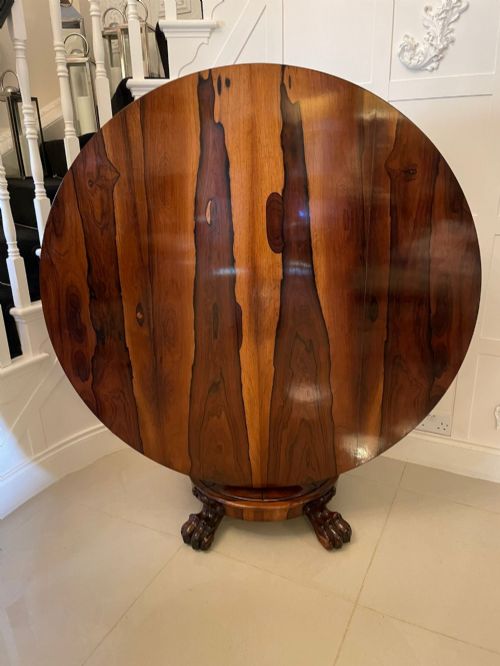
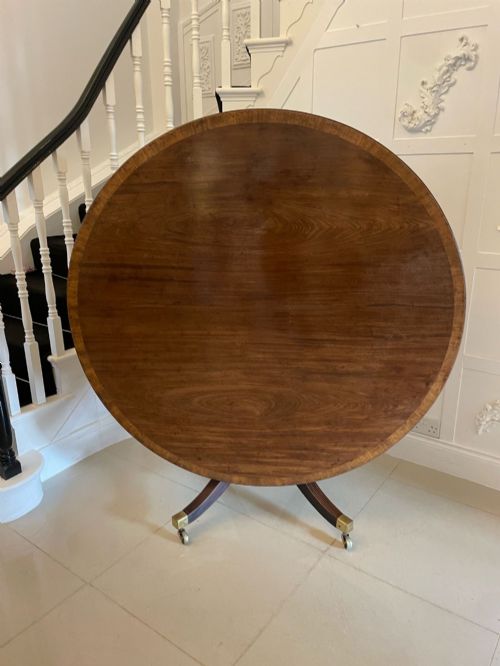
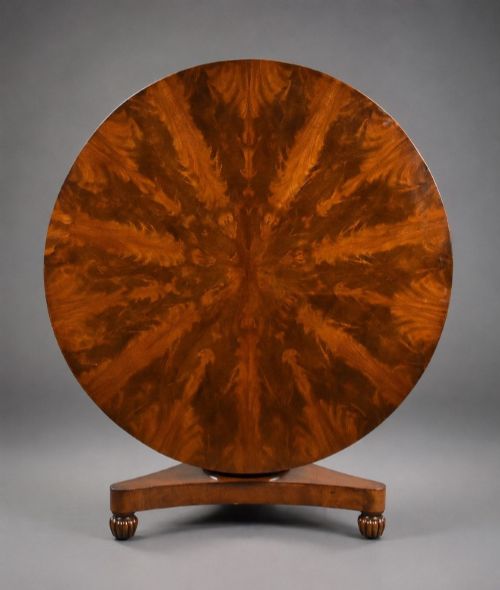
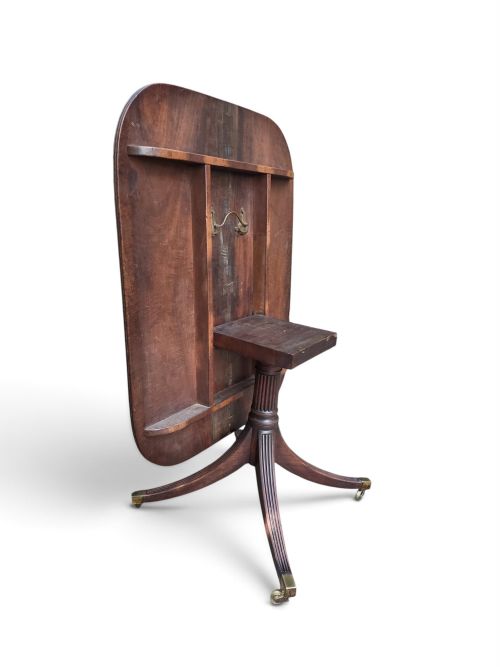
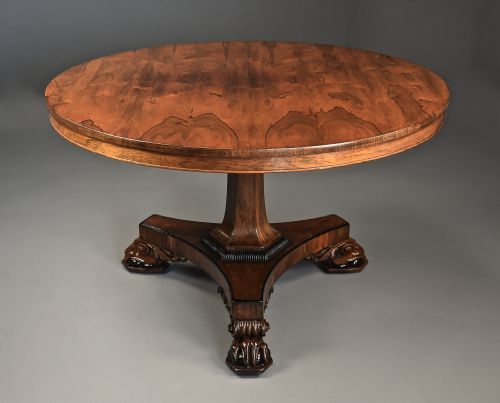
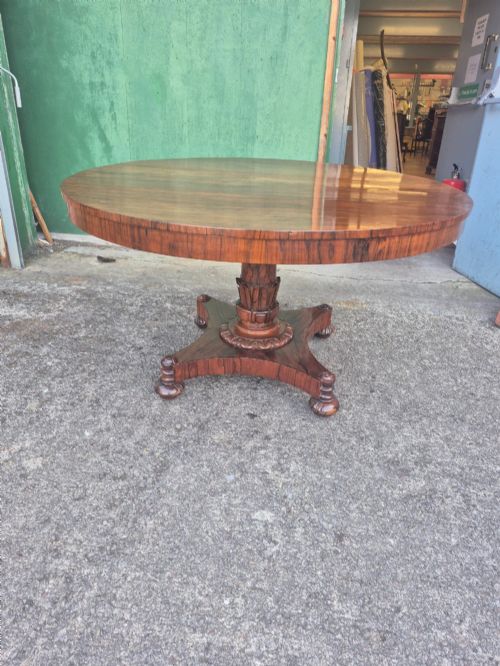
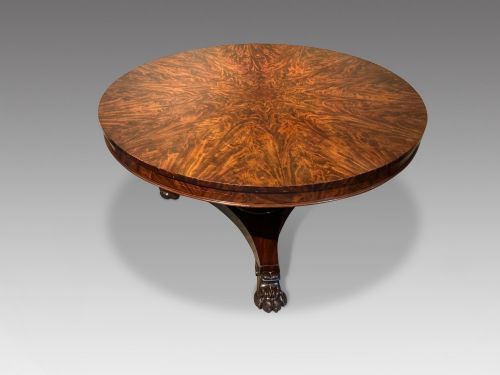
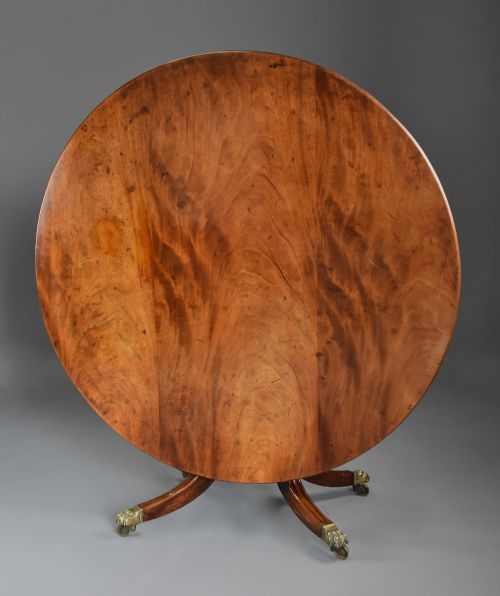
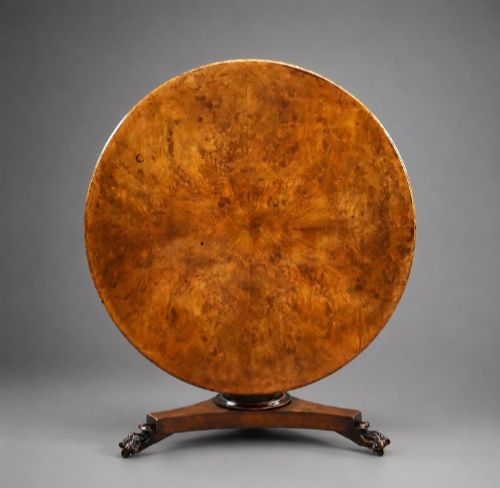
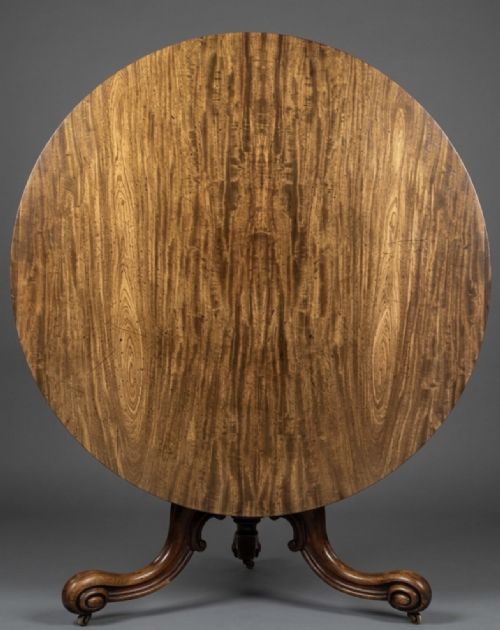
The version most commonly encountered on this page combines a rich mahogany, flame mahogany, or rosewood timber top with a robust pillar resting on a triform or quadruped base. Many examples incorporate a tilt-top mechanism, allowing the top to swivel vertically and stand flat against a wall when not in use for dining.
Makers and workshops constructed these pieces to serve as versatile morning dining surfaces or centre tables that could be cleared away to maximise floor space. They frequently display crossbanded borders, contrasting veneer work, or brass casters beneath their substantial feet.
How they were made
Craftsmen built these tables using solid foundational timbers like oak or mahogany, overlaid with figured mahogany, rosewood, burr elm, or pollard oak veneers to create striking surface grain patterns. Crossbanded borders in satinwood or ebony frequently frame the central field, while brass inlay adds linear precision.
The central pillar relies on robust joinery to support the cantilevered weight of the heavy top, often terminating in carved paw feet fitted with brass casters. Tilt-top mechanisms utilise sturdy wooden blocks and metal catches that allow the surface to pivot smoothly and lock securely into position.
Listings feature mahogany, rosewood, and burr elm alongside brass inlay and tilt-top mechanisms.
What varies in quality
Quality rests upon the selection of timber figures and the precision of the veneer work, where superior examples exhibit symmetrical flame mahogany, richly grained rosewood, or exotic pollard oak rather than plain boards. The depth of the natural patina and the crispness of any carved details on the pillar or base further distinguish finer workshops.
Structural integrity and the cleverness of internal engineering, such as secret drawers or smoothly operating tilt mechanisms, separate standard production from master craftsmanship. Well-balanced proportions ensure the heavy central column bears the expanse of the top without perceptible sway.
Gillows·Walker-Lancaster
The Regency Pedestal Breakfast Table Glossary
- Tilt top
- A pivoting tabletop mechanism that allows the surface to lock horizontally for use or fold vertically against the pillar for storage. This clever engineering saved valuable floor space in nineteenth-century interiors.
- Crossbanding
- A narrow strip of veneer laid around the border of a tabletop with the grain running perpendicular to the main centre panel. It creates a defined decorative frame for figured timbers.
- Triform base
- A three-sided supporting platform beneath the central column, often fitted with scroll feet and brass casters. It provides stable weight distribution for heavy circular tables.
- Patina
- The surface sheen and deep coloration developed by antique wood over decades of handling and waxing. A faded patina indicates gentle, natural ageing rather than harsh chemical stripping.
- Figured mahogany
- Timber cut from specific sections of a mahogany tree, such as where branches meet the trunk, yielding swirling grain patterns. Cabinetmakers prized these boards for their dramatic visual texture.
Regency Pedestal Breakfast Table: Frequently Asked Questions
How are these tables different from standard dining tables?
A regency pedestal breakfast table stands on a single central column rather than four corner legs, allowing chairs to tuck underneath more easily without obstruction.
They were originally conceived for morning dining or versatile living spaces, frequently including a tilt mechanism to clear the floor.
How do I distinguish a genuine period piece from a revival?
Original tables from the early nineteenth century exhibit traditional construction methods, hand-cut joinery, and timber shrinkage appropriate to their age.
Revival pieces from later decades often display machine tooling, heavier modern finishes, and structural proportions typical of Edwardian or twentieth-century workshops.
Can I use a tilt top table every day?
These tables are built from solid foundational timbers and sturdy pillars designed for practical domestic use, making them robust enough for daily dining.
Care should be taken when operating the pivot mechanism to support the weight of the heavy veneered top safely.
What woods were commonly used for these tables?
Cabinetmakers relied heavily on rich figured mahogany, flame mahogany veneer, and dark rosewood to achieve deep, warm surface tones.
More decorative examples incorporate exotic accents such as satinwood crossbanding, burr walnut, pollard oak, or coromandel wood.