




Wooden Linen Chest Drawers
Wooden linen chest drawers bring deep historical utility to domestic spaces, combining hanging or sliding storage with robust lower drawer capacity.
Wooden Linen Chest Drawers
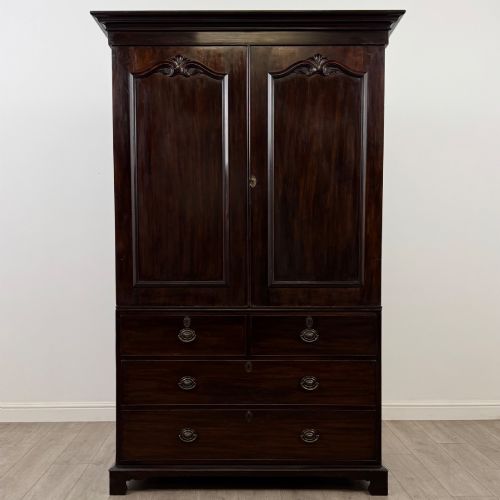
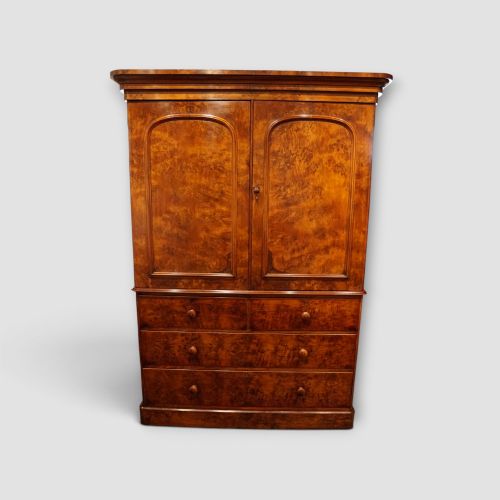
Buyers seeking wooden linen chest drawers encounter a substantial variety of large storage furniture, predominantly large presses, tallboys, and combination wardrobes. These pieces bridge the gap between linen storage and general apparel organisation.
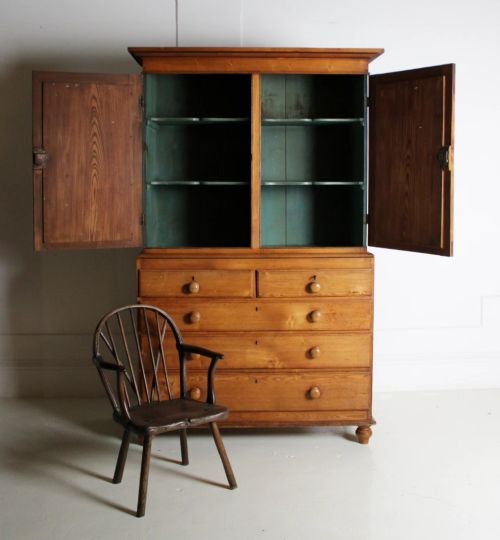
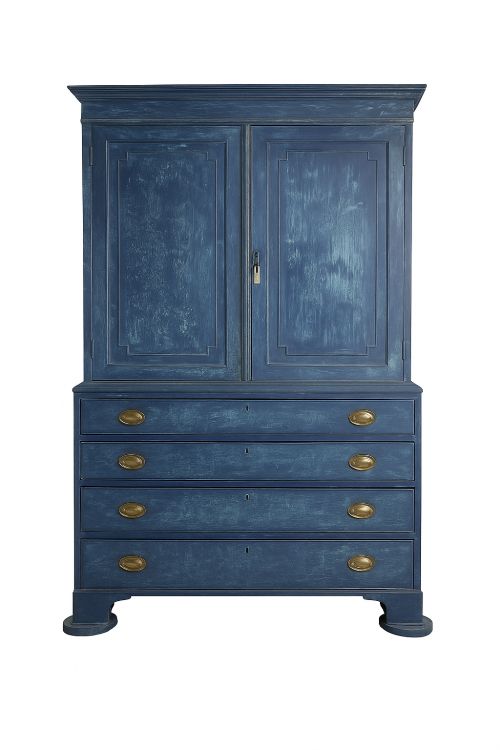
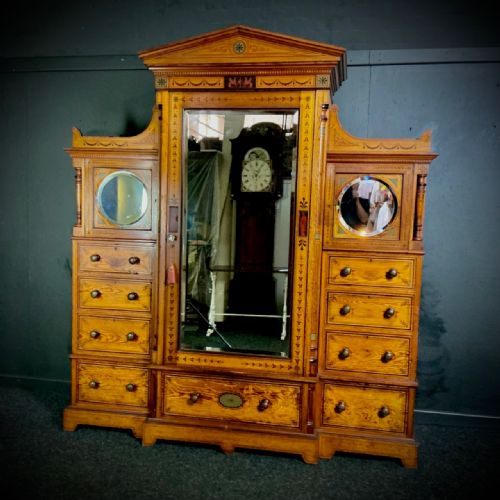
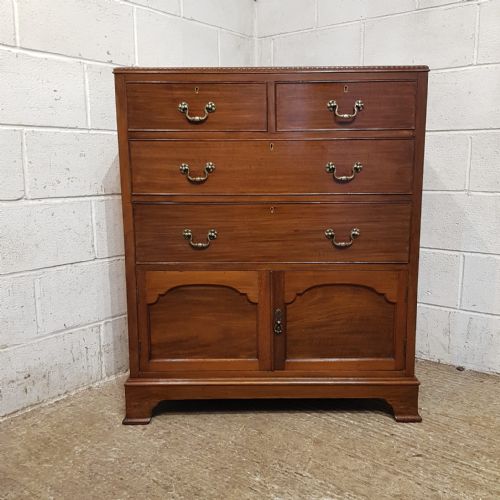
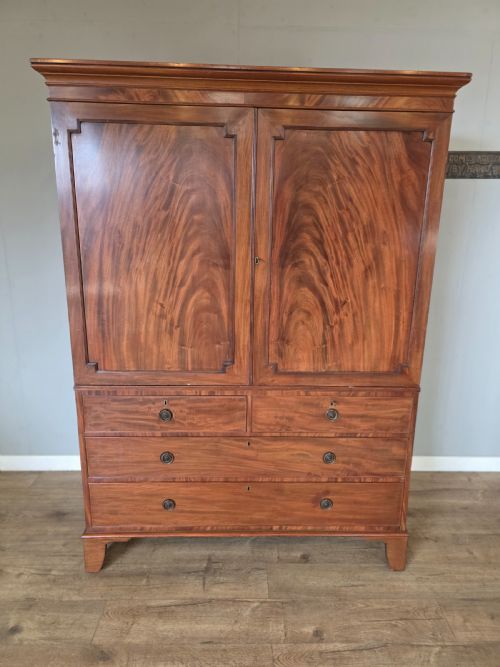
The selection ranges heavily across Georgian, Victorian, and Edwardian eras, bringing formal mahogany and walnut pieces alongside more relaxed pine and ash country variants. Tallboys and presses dominate the available forms, often pairing upper cabinet doors with multiple base drawers.
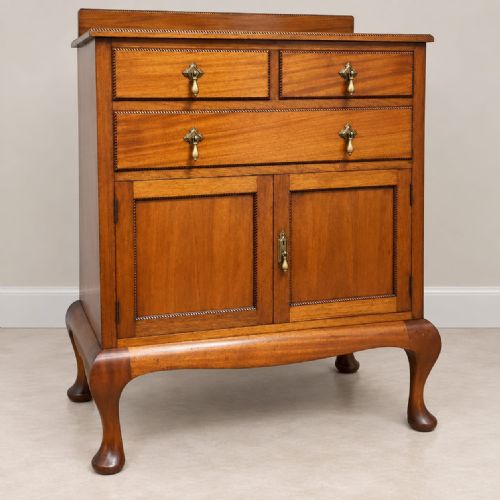
Provincial pieces sit alongside refined cabinetwork, spanning everything from compact miniature furniture to large Dutch and English country house cupboards. Buyers most frequently meet large Victorian and Georgian mahogany or pine iterations during their search.
How they were made
Cabinetmakers utilised dense timbers like mahogany, walnut, oak, and satinbirch for formal items, while pine and ash served provincial workshop production. Flame mahogany veneers and burr walnut surfaces provided decorative grain patterns on grander examples.
Construction relied heavily on traditional joinery methods, housing internal sliding trays behind upper panelled doors above graduating exterior drawers. Brass and iron hardware, from drop handles to operational screw mechanisms, secured the structural elements.
Surface treatments varied from wax polishes and clear varnishes to painted finishes and lacquering, protecting the timber while defining the visual character of each period.
Listings feature structural timbers including mahogany, oak, pine, walnut, ash, and satinbirch across multiple centuries.
What varies in quality
The grade of timber selection and veneer matching defines the visual hierarchy between standard workshop output and high-end cabinet work. Figured grains such as flame mahogany or burr walnut indicate superior material choice.
Joinery execution separates robust structural integrity from lesser builds, visible in the precision of drawer linings and the smooth operation of internal sliding trays. Original hardware and undisturbed surface patination elevate the standing of a piece considerably.
Maple and Co·Heal's
The Wooden Linen Chest Drawers Glossary
- Linen Press
- A tall storage cabinet designed with upper doors enclosing sliding trays or shelves, positioned above a base of multiple drawers. They traditionally stored household linens flat before the widespread use of hanging wardrobes.
- Tallboy
- A tall chest of drawers standing upon another chest, or a wardrobe-style cabinet raised over a tall drawer base. This form maximises vertical storage capacity while occupying a compact floor footprint.
- Mule Chest
- A traditional storage chest featuring one or two drawers built into the base beneath the main compartment. They represent an intermediate step in the evolution from simple coffers to multi-drawer cabinets.
- Satinbirch
- A pale, lustrous hardwood utilised for decorative furniture surfaces during the nineteenth century. It yields a distinctive golden sheen when polished.
- Sliding Trays
- Internal pull-out shelves housed within the upper cabinet section of a press. They allowed folded textiles to be stored and accessed without disturbing adjacent stacks.
Wooden Linen Chest Drawers: Frequently Asked Questions
What is a linen press?
A linen press is a tall storage cabinet featuring upper doors that enclose sliding trays or shelves, positioned above a base section of drawers. They were built to keep household textiles flat and organised.
Over time, many of these cabinets were converted for hanging clothes by removing the internal trays, though original unaltered examples retain their internal sliding shelving.
How do I date a tallboy?
Dating a tallboy relies on identifying the primary timbers, construction methods, and stylistic details of its period. Georgian pieces often display fine mahogany veneers and bracket feet, while Victorian examples lean towards heavier proportions and flame mahogany.
Edwardian and later 1900s variations frequently exhibit lighter woods or simpler oak construction, aligning with the prevailing aesthetic shifts of the early twentieth century.
Where do I put a linen press?
These large storage pieces suit bedrooms, dressing rooms, or wide hallways where their significant height and depth can be accommodated comfortably. Their combination of upper cabinet space and lower drawers provides substantial functional capacity.
Ensuring adequate clearance for the opening of cabinet doors and lower drawers is essential when planning placement within a room.
What is the difference between a wardrobe and a press?
A wardrobe is primarily designed for hanging garments vertically on rails, whereas a traditional press centres around internal horizontal sliding trays for folded linens. Many surviving pieces bridge this divide through combination formats.
Examining the interior configuration reveals whether a piece was originally built for folded storage or general apparel.