
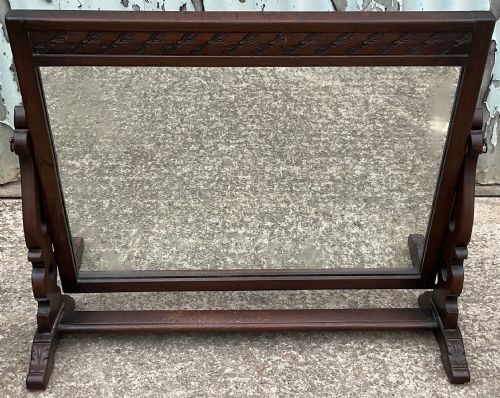


Wooden Free Standing Mirror
These wooden free standing mirror examples combine practical glass with solid timber frames, offering full-length reflections and adjustable angles.
Wooden Free Standing Mirror
When you search for a wooden free standing mirror, you encounter larger floor-standing pieces as well as smaller table-top designs intended for dressing tables. The selections here predominantly span the Victorian period and the nineteenth century, alongside Edwardian, nineteen-twenties, and nineteen-thirty examples.
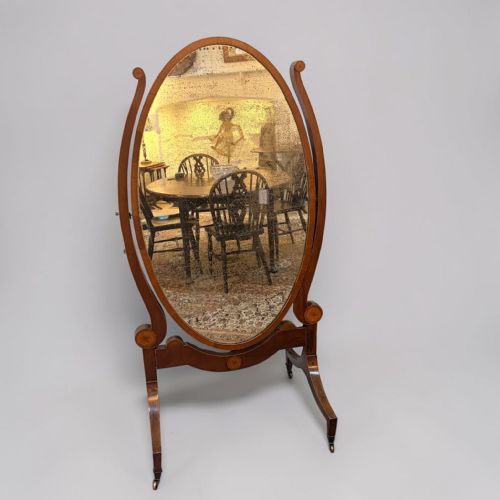
The dominant formats on this page are cheval mirrors and dressing mirrors, including toilet mirrors and overmantel variations. Many examples take the form of floor-standing cheval glasses supported by pivoted frames.
The origins and styles recorded in the inventory range from plain mahogany and oak to elaborate revival pieces influenced by the Louis XV style, Regency design, Arts and Crafts, and Art Deco.
How they were made
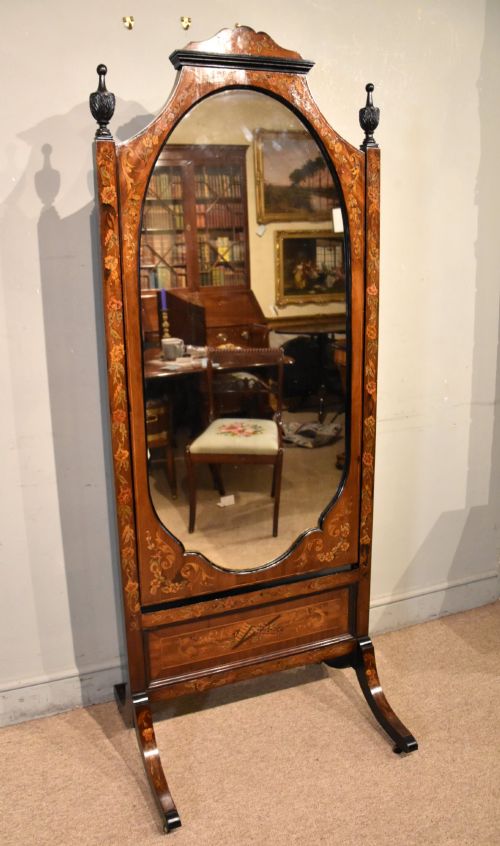
Makers constructed these frames using timber such as mahogany, oak, walnut, and burr walnut, frequently incorporating marquetry inlay for decorative effect. Brass fittings often secure the pivoted mirrors within their stands.
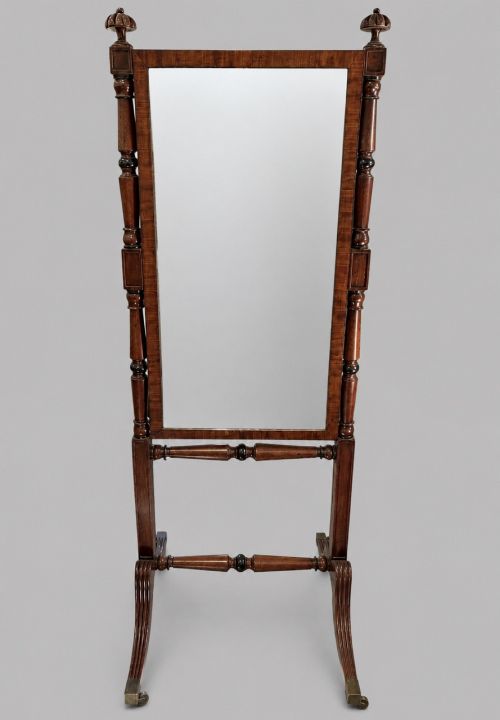
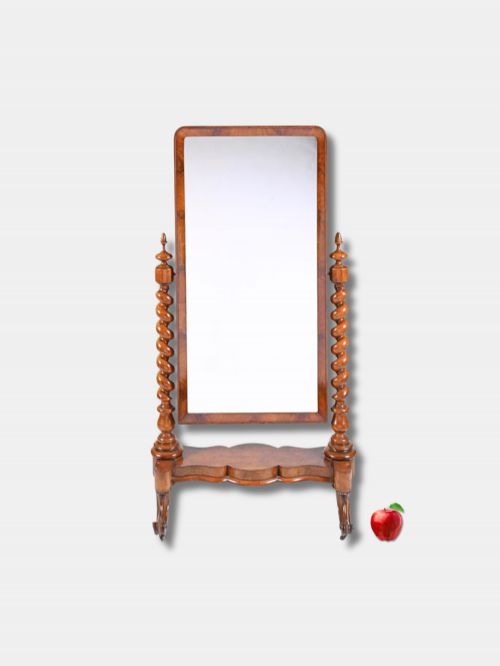
Support structures utilise turned columns, barley twist supports, and serpentine fronts to hold the glass securely while allowing movement. Cabinetmakers shaped the wood using traditional joinery appropriate to each period.
One double-sided cheval mirror comes equipped with tooled bronze framing straight from Versace.
What varies in quality
The refinement of the timber selection creates a clear distinction across the range, with figured veneers and flame mahogany marking out superior examples. Plain solid woods represent more utilitarian production from the same eras.
Complexity of the frame construction and decorative carving also set pieces apart. Elaborate turnings, marquetry inlay, and bronze framing elevate an object well beyond a simple functional glass.
Gillows
The Wooden Free Standing Mirror Glossary
- Cheval mirror
- A large floor-standing mirror suspended on a vertical frame that tilts on pivots. This allows the user to view their entire outfit.
- Toilet mirror
- A smaller dressing mirror designed to sit on top of a chest of drawers or a dressing table. They frequently incorporate small drawers within their bases.
- Marquetry inlay
- Decorative patterns formed by fitting contrasting pieces of wood veneer into the primary surface of the frame. This technique adds pictorial or geometric ornamentation.
- Barley twist
- A spiral turning applied to wooden supports and columns on furniture frames. The design resembles the twisting shape of barley stalks.
Wooden Free Standing Mirror: Frequently Asked Questions
What is a cheval mirror?
A cheval mirror is a full-length glass mounted in a frame that allows it to swing on pivots. This lets you tilt the glass to adjust the viewing angle.
Such pieces are designed to stand directly on the floor rather than hang on a wall or sit on a table.
How do I place a dressing mirror?
Dressing mirrors and toilet mirrors are traditionally placed on top of a dressing table or chest of drawers. Their height makes them suitable for seated use during grooming.
Smaller examples can sit on any sturdy surface provided there is sufficient clearance for the frame to tilt.
How do I identify a Victorian mirror?
Victorian mirrors often use dense timbers like mahogany and walnut, frequently featuring rich grain patterns or flame veneers. The construction methods reflect nineteenth-century cabinetmaking traditions.
Stylistic cues on this page also point towards revival movements and turned structural supports like barley twists.
Are these mirrors adjustable?
Many of the floor-standing and table mirrors on this page utilise pivoting mechanisms. These allow the glass frame to tilt forward or backward.
Metal screw caps or wooden side pins usually hold the glass securely at your chosen angle.