

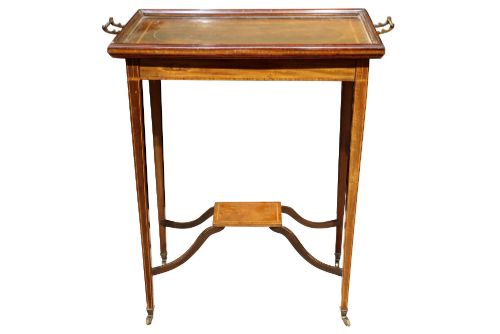
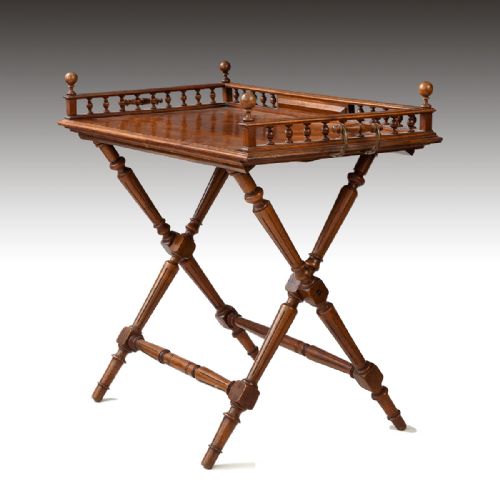
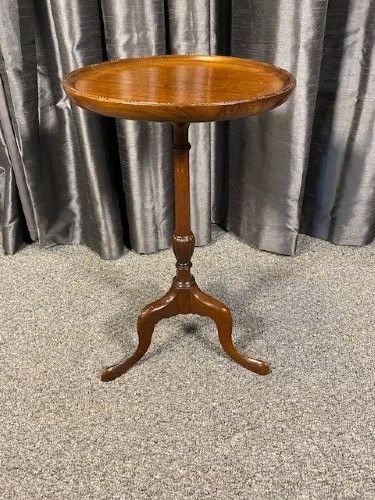
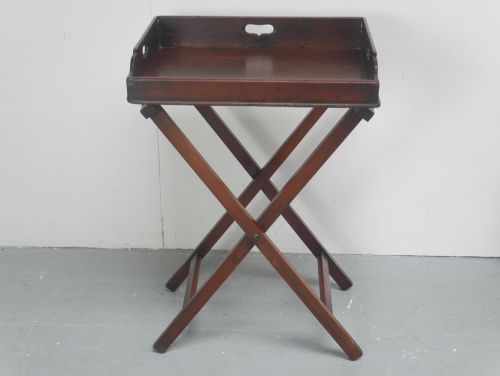
Wooden Drinks Table
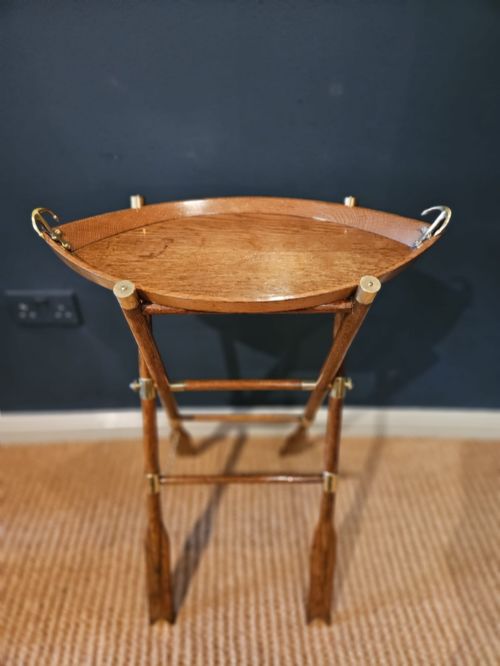
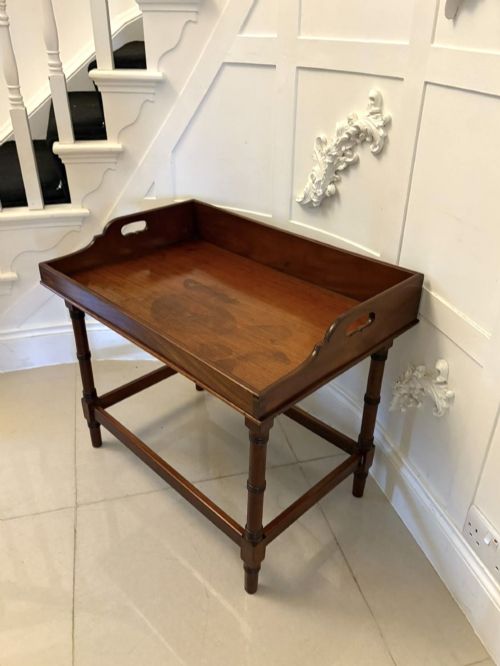
A wooden drinks table brings practical surface space and period character to a room, ranging from folding butler's trays to tiered service trolleys.
Wooden Drinks Table
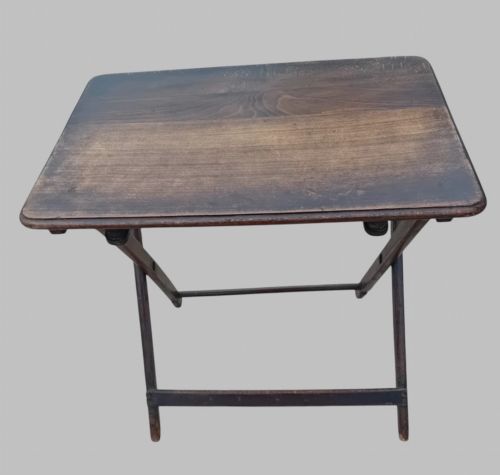
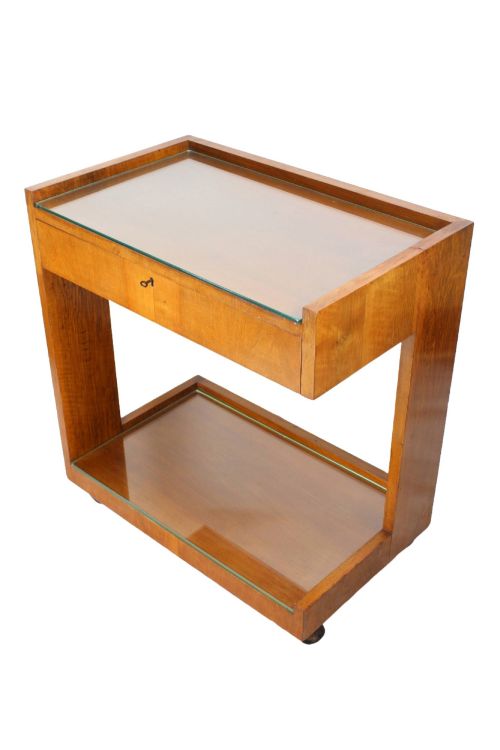
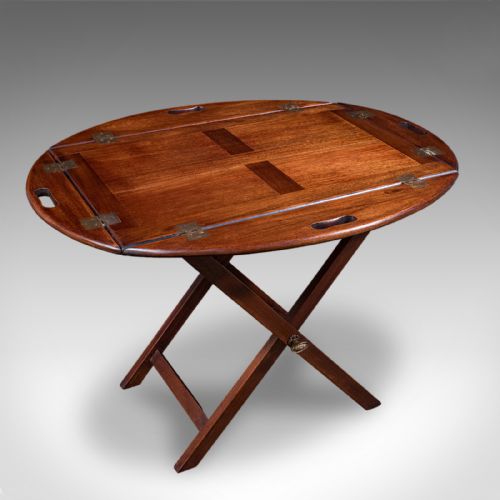
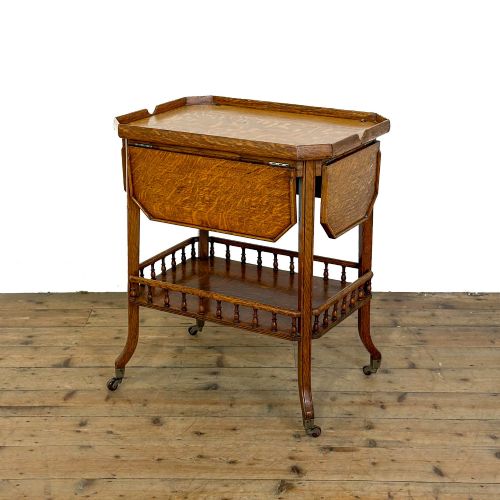
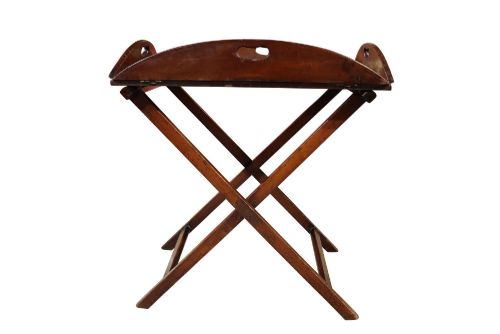
A wooden drinks table serves multiple functions across different periods, appearing most frequently as a traditional butler's tray on a folding stand or as a tiered afternoon tea trolley. These pieces originate from eras spanning the eighteenth century through to the art deco period, offering portable or fixed surfaces designed for serving refreshments.
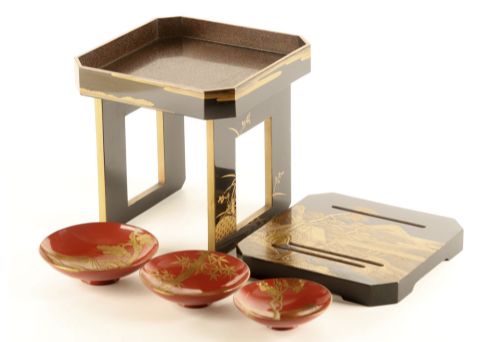
Origins range from Georgian and Victorian English workshops to early twentieth-century examples, alongside occasional international forms like Japanese sake sets or Anglo-Indian tables. Each variation reflects the social habits of its time, prioritising convenience, portability, or display.
How they were made
Cabinet makers utilised solid timbers and veneers, predominantly selecting mahogany, oak, and walnut for their durability and grain patterns. Brass fittings frequently appear as hinges, castors, or gallery rails on folding stands and serving trolleys.
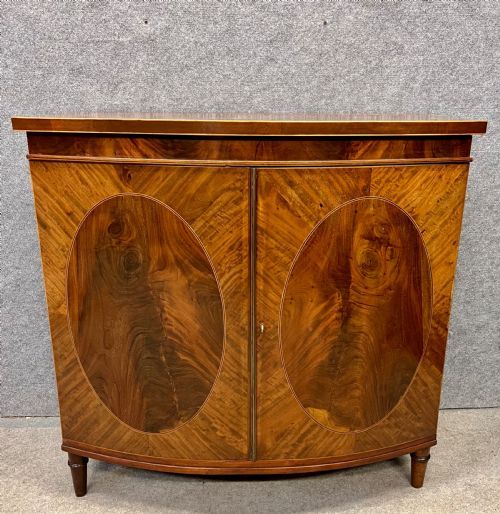
Construction techniques include traditional joinery for frames and stands, alongside clever folding mechanisms for campaign-style or removable trays. Inlaid decoration using contrasting woods adds detail to Edwardian surfaces, while turned legs and carved edges define earlier Georgian and Victorian examples.
A solitary elephant table from the nineteenth century joins the tea trays, bringing an unexpected beast to the drinks hour.
What varies in quality
Quality rests in the selection of timber figures, the crispness of carved or inlaid details, and the integrity of the original construction. Pieces retain greater appeal when trays and stands match in age, timber, and finish rather than being assembled from disparate parts.
Mechanical elements such as folding tray stands, drop-flaps, and original castors distinguish finer examples by operating smoothly and retaining their original hardware. The subtlety of edge mouldings and the depth of the polished wood finish further separate standard utility pieces from finer cabinet work.
The Wooden Drinks Table Glossary
- Butler's tray
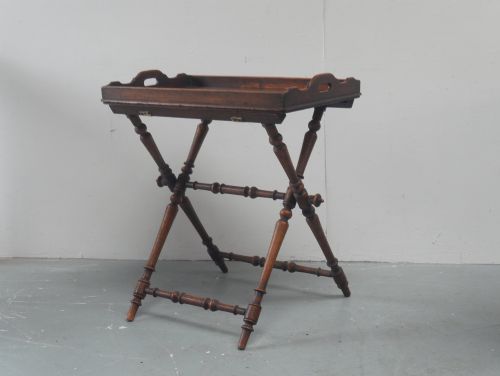
- A removable wooden tray with side handles, often featuring hinged flaps, designed to sit upon a folding or fixed stand.
- Tea trolley
- A wheeled serving table with multiple tiers, used for transporting and presenting afternoon tea or beverages.
- Wine table
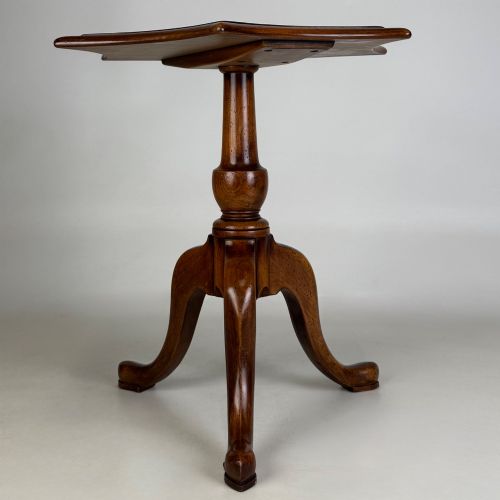
- A small, single-pillar occasional table traditionally sized to hold a single bottle and glass.
- Campaign style
- Furniture designed to fold or dismantle easily for travel and military use, typically fitted with brass corners and handles.
- Demi-lune
- A half-moon shape commonly found on the top surface and frame of side tables and cabinets designed to sit flat against a wall.
Wooden Drinks Table: Frequently Asked Questions
What is a butler's tray table?
A butler's tray table consists of a removable wooden tray resting on a collapsible or fixed wooden stand. These pieces were historically used to carry and serve drinks or food before being folded away.
Today, they function well as flexible coffee tables or side tables that can be easily moved or stored when space is needed.
How do I use a tea trolley today?
Tea trolleys provide mobile surface space with multiple tiers for holding glassware, bottles, or decorative items. Their castors allow them to be wheeled around a room during gatherings.
They also serve as static display units for plants, books, or bar accessories in living areas and dining rooms.
What woods were used for these tables?
Cabinet makers predominantly used mahogany, oak, and walnut, often employing veneers for figured surfaces. Beech, yew, and fruitwoods also appear in specific regional or period pieces.
Brass hardware frequently supplements the timber construction on folding mechanisms and handles.
Are these tables sturdy enough for daily use?
Traditional wooden tables and trolleys are built from solid hardwoods using period joinery designed for regular weight-bearing. Properly maintained joints and level stands provide reliable stability for everyday placement of drinks and objects.
Checking that folding mechanisms lock securely ensures safe usage in busy rooms.