


Wooden Cylinder Desk
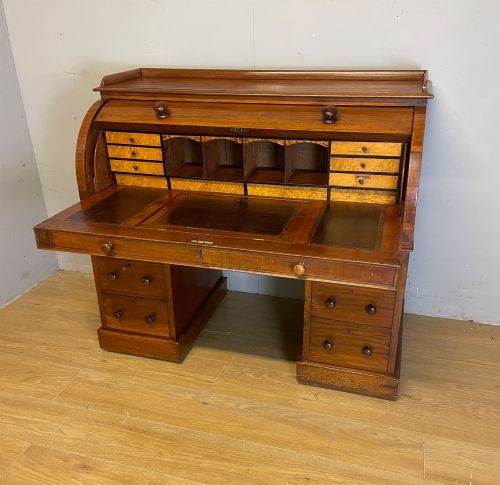
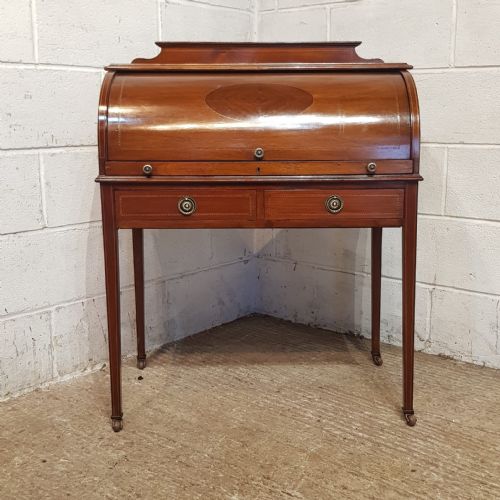
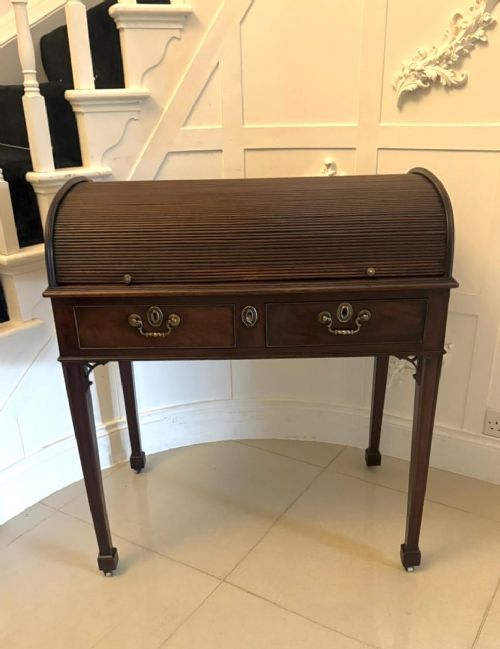
A wooden cylinder desk is a practical workspace offering a rolling curved cover to conceal your papers, spanning periods from the Georgian era to Edwardian times.
Wooden Cylinder Desk
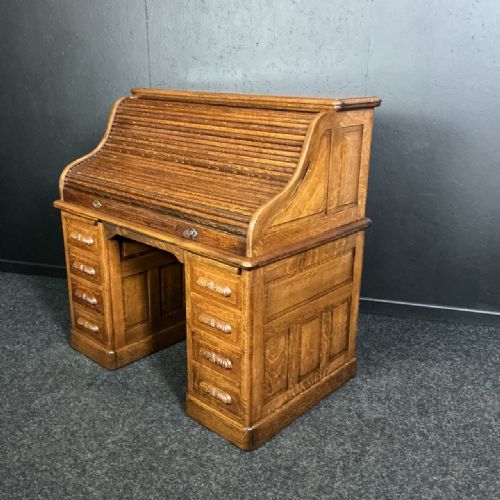
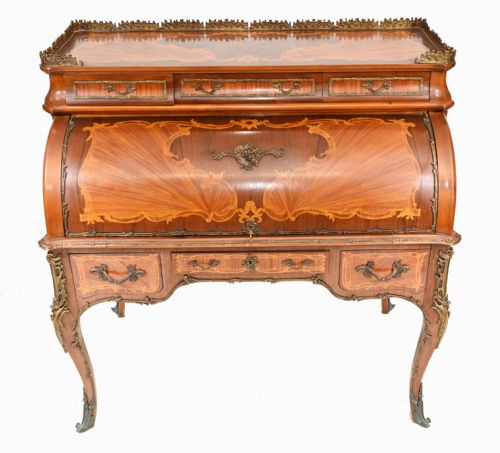
When searching for a wooden cylinder desk, you encounter various forms including roll-top desks, tambour desks, and fall-front bureaux across multiple eras. The pieces span Georgian, Victorian, and Edwardian periods, alongside revival styles and international examples.
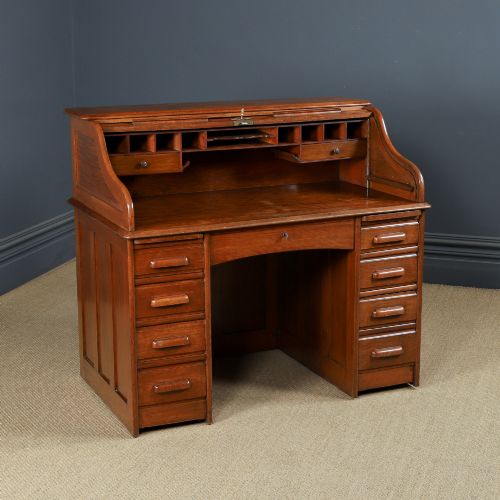
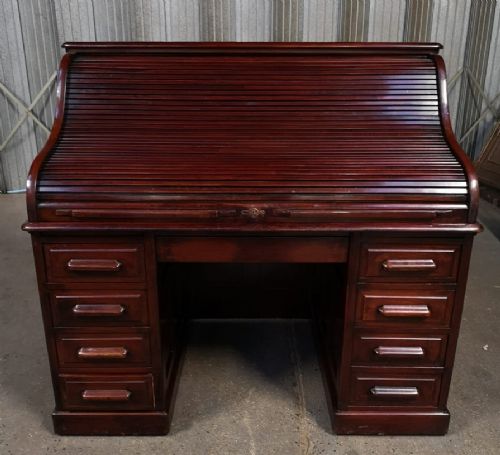
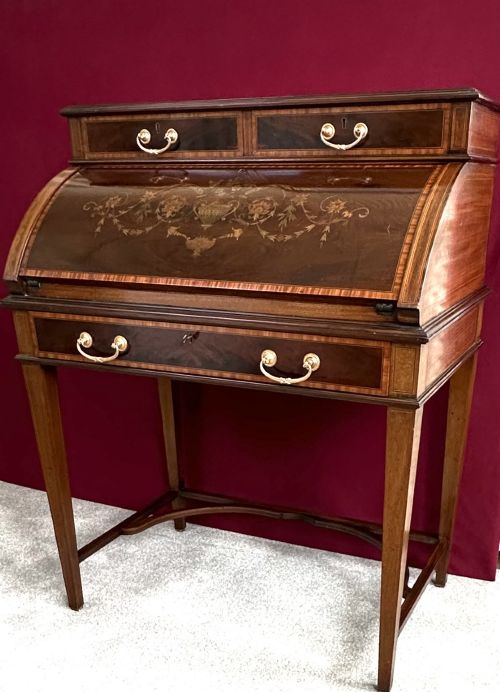
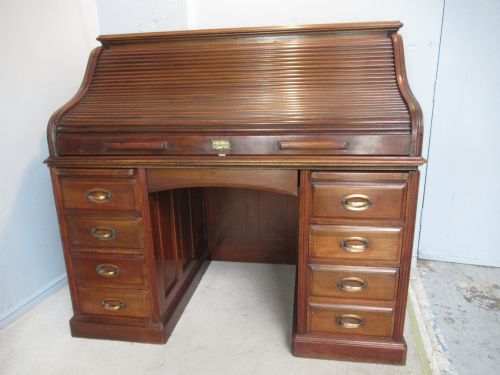
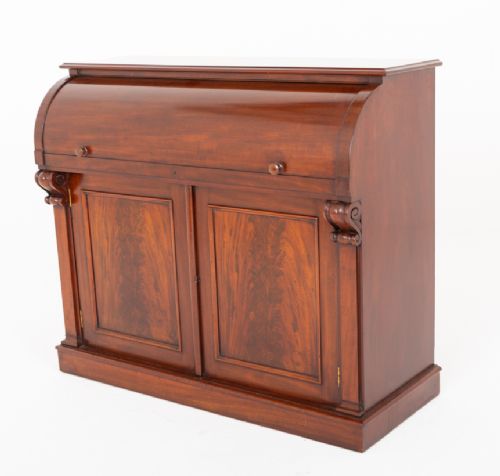
The version you are most likely to meet on this page is the Edwardian oak roll-top desk or the Victorian mahogany cylinder desk. These practical pieces range from large pedestal office furniture to compact home writing tables.
How they were made
Cabinet makers utilised solid woods and veneers, selecting mahogany, oak, and walnut as primary structures. Satinwood, maple, and burr walnut frequently provide contrasting interior details or decorative panels.
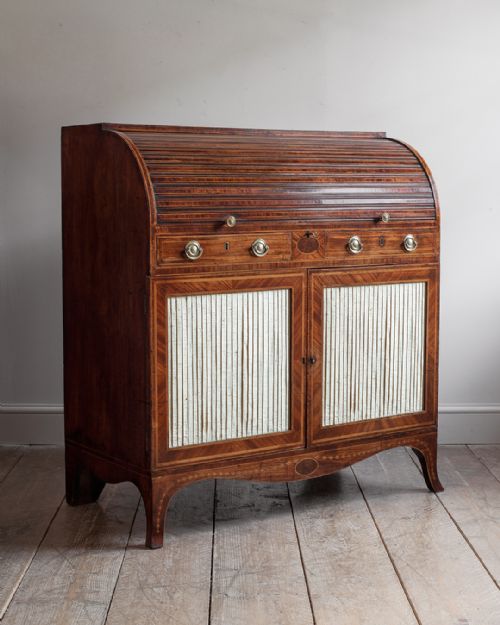
Mechanical roll-top and tambour covers rely on closely fitted wooden slats or curved panels moving within hidden tracks. Brass handles, hinges, and pulls complement the timber construction across many periods.
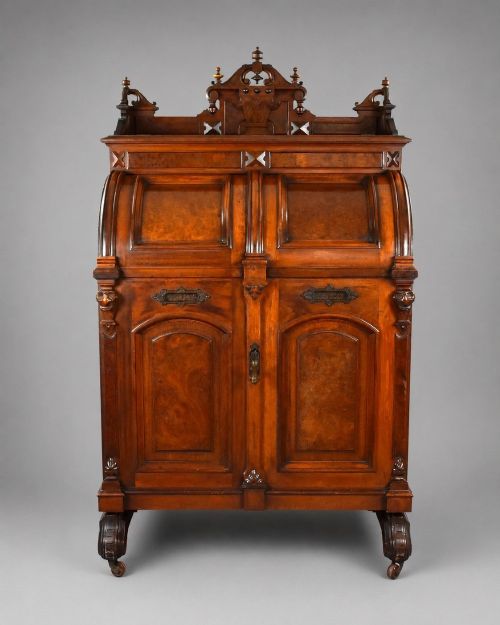
Surface decoration encompasses marquetry inlay, intricate wood carving, and polished finishes that highlight the natural grain of the material. Specialised techniques appear in specific regional pieces, such as Japanese Yosegi work or Dutch marquetry.
What varies in quality
The calibre of a wooden cylinder desk depends on the precision of its sliding mechanism and the smoothness of the internal writing slide. Superior examples operate effortlessly, allowing the curved shutter to glide smoothly into the body of the desk.
Material selection dictates the standing of a piece, with figured timbers, choice veneers, and refined inlay work marking out superior cabinet making. Secondary woods and robust structural joinery determine the longevity of heavy pedestal desks.
The integrity of the original hardware, including brass fittings and fitted interior pigeonholes, influences the overall character. Workshop origin and stylistic execution further distinguish standard commercial office furniture from exhibition pieces.
Wiggers
The Wooden Cylinder Desk Glossary
- Cylinder desk
- A writing table featuring a curving cylindrical shutter that rolls back to reveal a fitted interior and pull-out writing surface. This design protects paperwork while keeping the desk tidy.
- Tambour
- A flexible shutter made from narrow strips of wood glued to a canvas backing, allowing it to slide around a curve. It functions similarly to a roll-top mechanism.
- Pedestal desk
- A heavy freestanding desk supported by two matching banks of drawers or cupboards beneath the work surface. These large pieces often serve as substantial office furniture.
- Marquetry
- The art of applying decorative veneer pieces in various woods to form geometric or pictorial designs. It frequently appears on panels and cylinder fronts.
- Yosegi
- A traditional Japanese mosaic woodwork technique using different natural tree colours and grains to create intricate geometric patterns. This decorative method decorates specialised imported surfaces.
Wooden Cylinder Desk: Frequently Asked Questions
Where were these desks used historically?
These desks functioned primarily in libraries, studies, and offices for managing correspondence and keeping documents private. Larger pedestal versions suited professional chambers, while smaller bureau formats belonged in domestic rooms.
The pull-out writing slides provided extra workspace without requiring the main cylinder to remain open.
How do I care for a wooden cylinder desk?
Keep the timber away from direct heat sources and sudden humidity changes to prevent the rolling mechanism from binding. Regular dusting and occasional wax polishing preserve the finish.
Avoid forcing the sliding shutter if it resists, as the internal tracks require proper alignment.
How do I tell Victorian desks from Edwardian ones?
Victorian examples often utilise dense mahogany or walnut with darker finishes and substantial proportions. Edwardian pieces frequently feature lighter oak, simpler lines, or commercial roll-top formats.
Stylistic revival details or specific construction markers also help distinguish between mid-nineteenth-century and early twentieth-century workshop practices.