

Vintage Secretaire Bureau
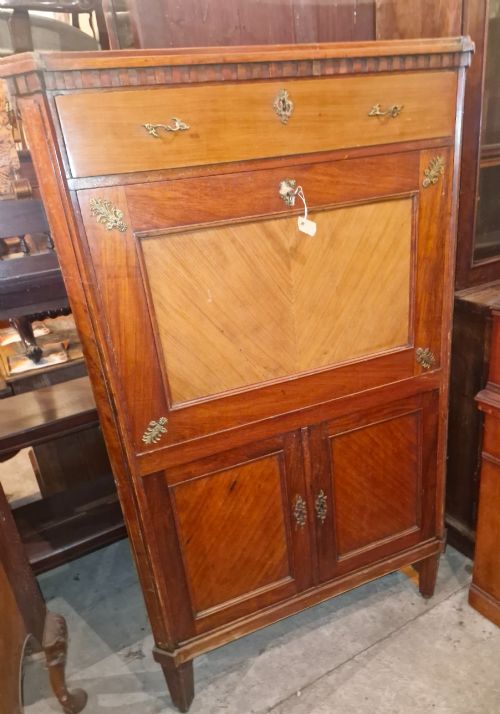
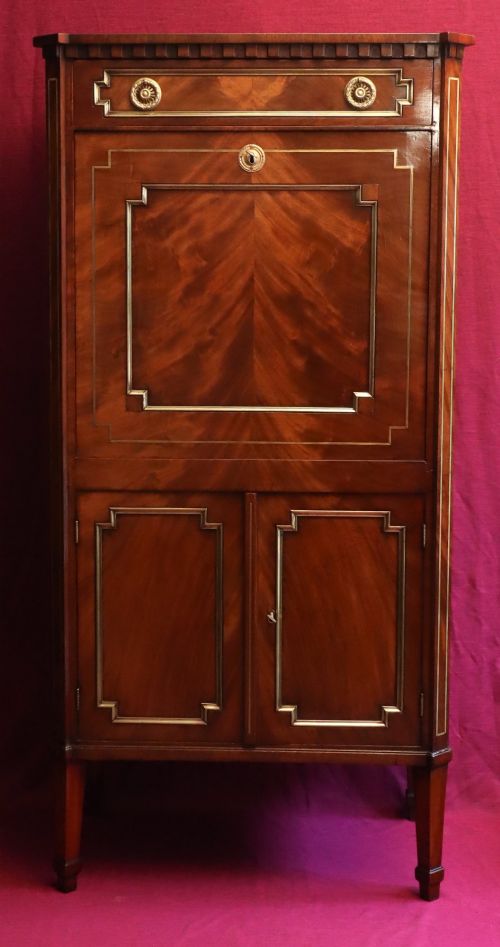
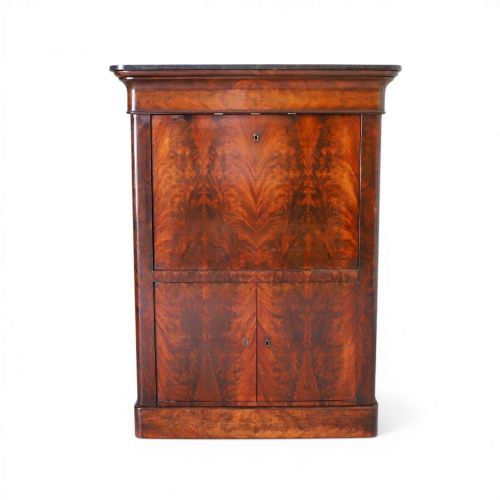
These vintage secretaire bureau pieces combine concealed writing surfaces with cabinetry, offering timber construction and fitted interiors for domestic study.
Vintage Secretaire Bureau
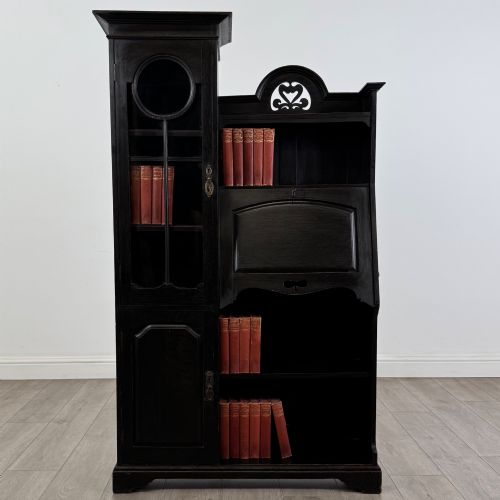
A vintage secretaire bureau encompasses varied writing furniture, from compact freestanding desks to towering bureau bookcases and tall cabinets. Pieces span the eighteenth, nineteenth, and early twentieth centuries, reflecting Georgian, Regency, Victorian, Edwardian, and Art Deco design periods.
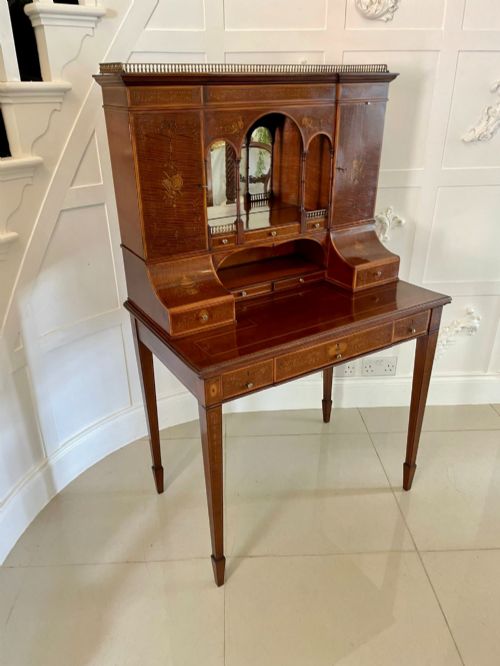
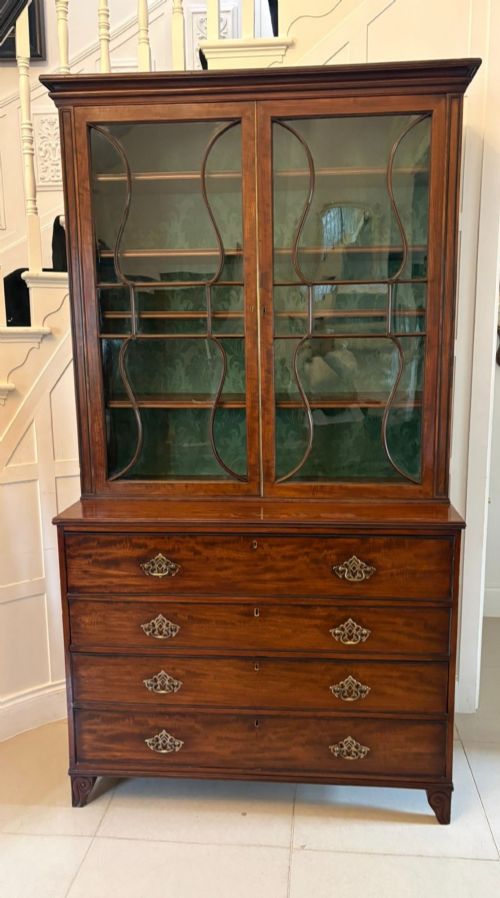
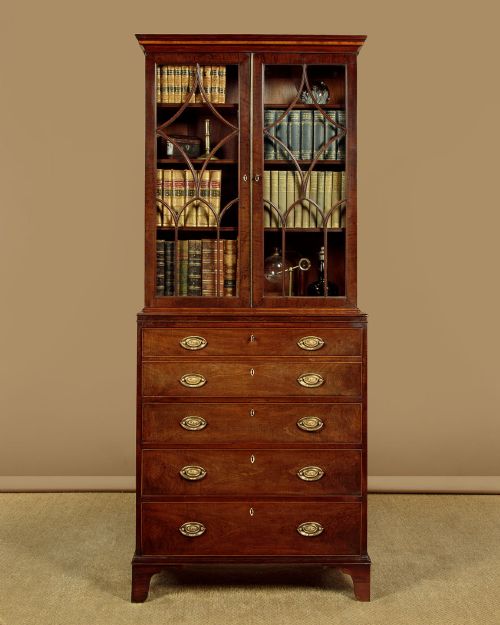
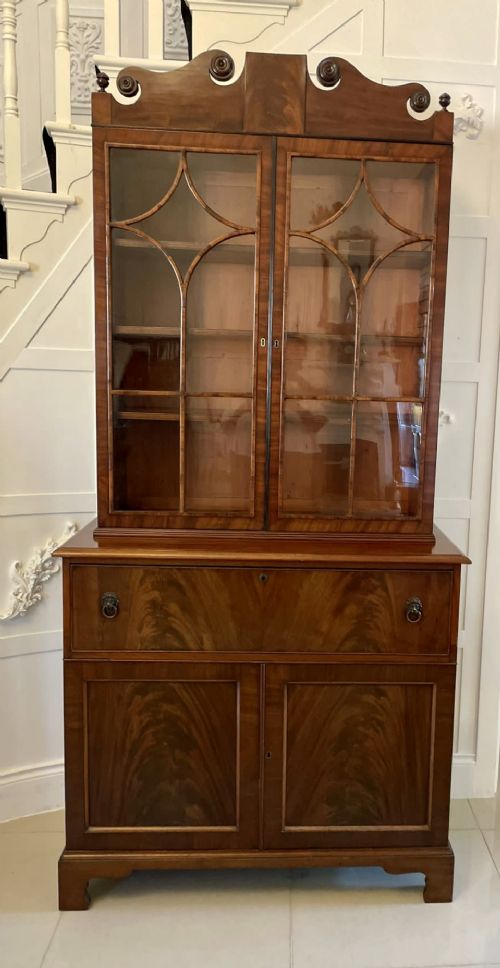
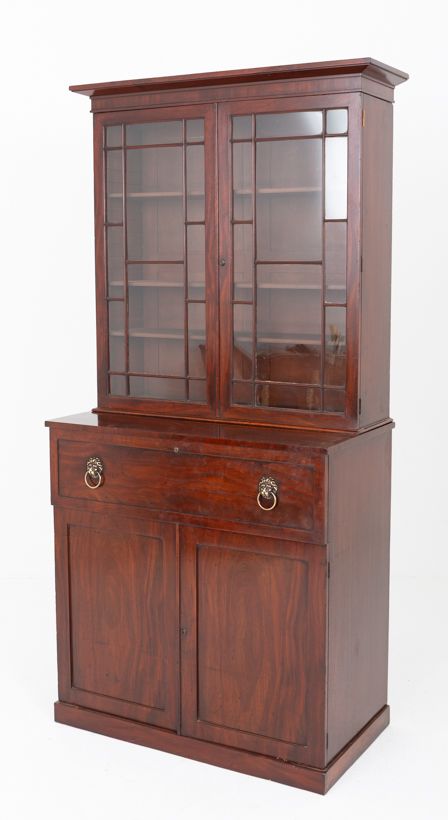
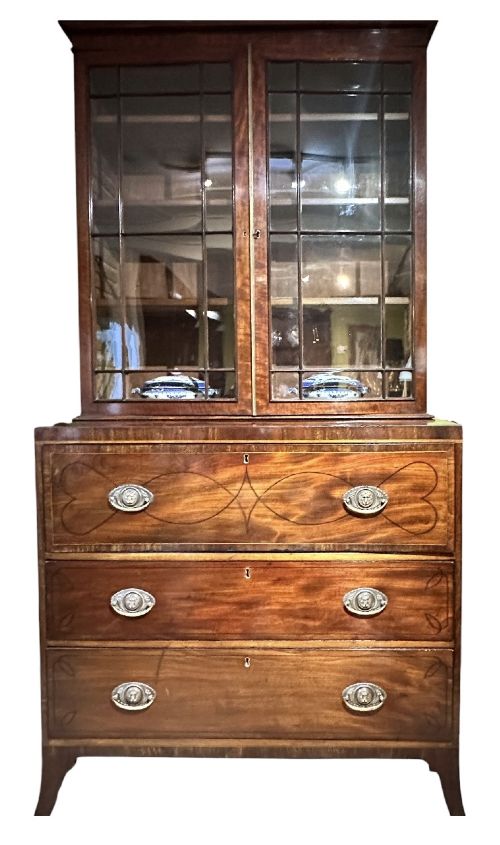
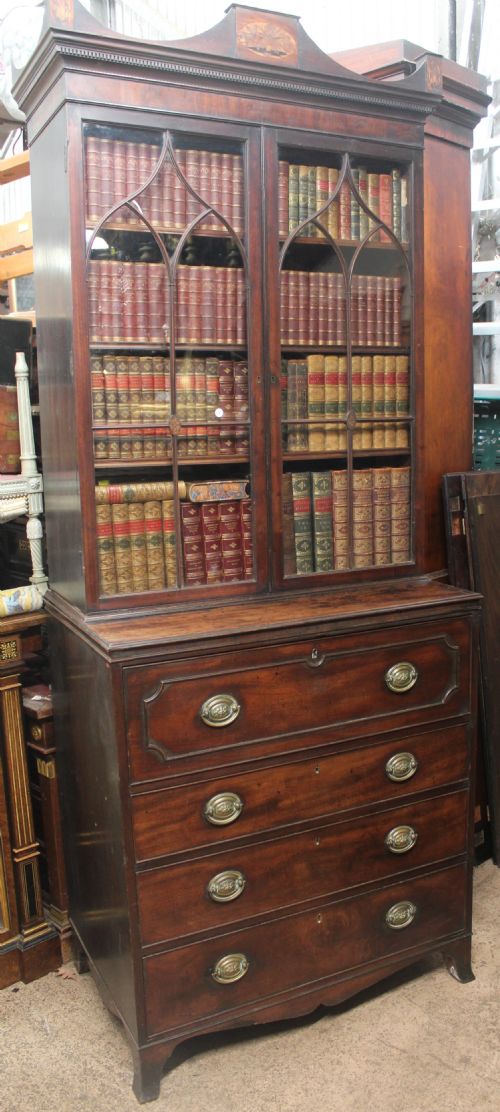
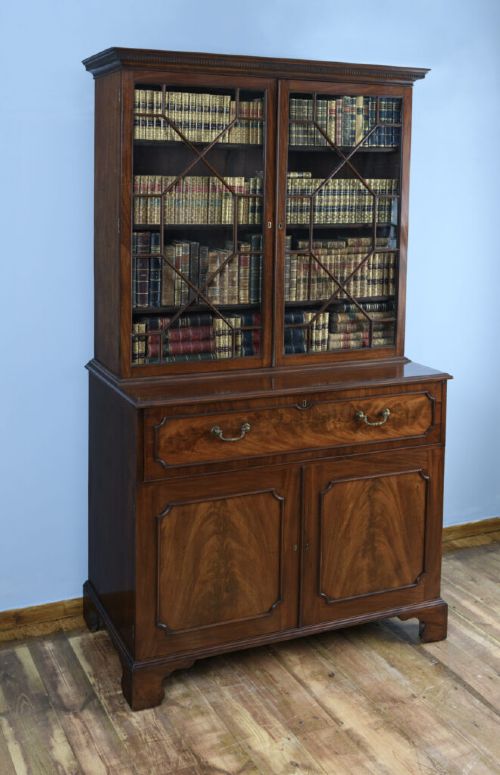
The selections on this page appear most frequently as mahogany secretaire bookcases featuring glazed upper doors, alongside drop-front cabinets, inlaid escritoires, and oak desks. Makers and makers' workshops span English cabinet-makers to continental European traditions, including French marquetry and Swedish painted finishes.
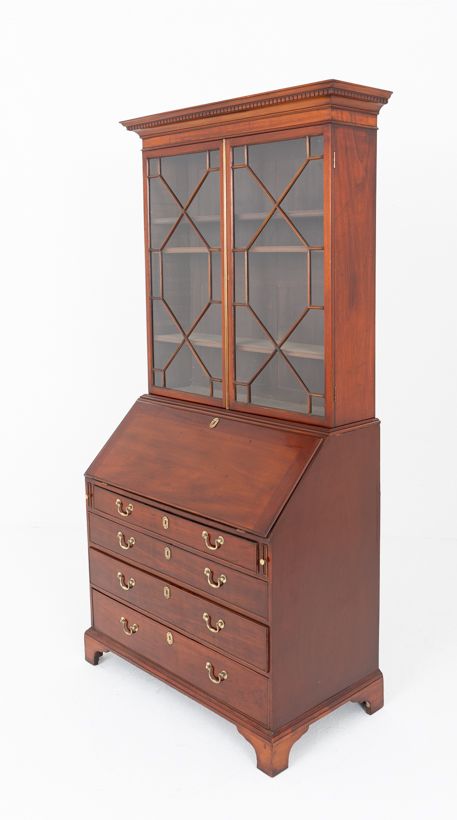
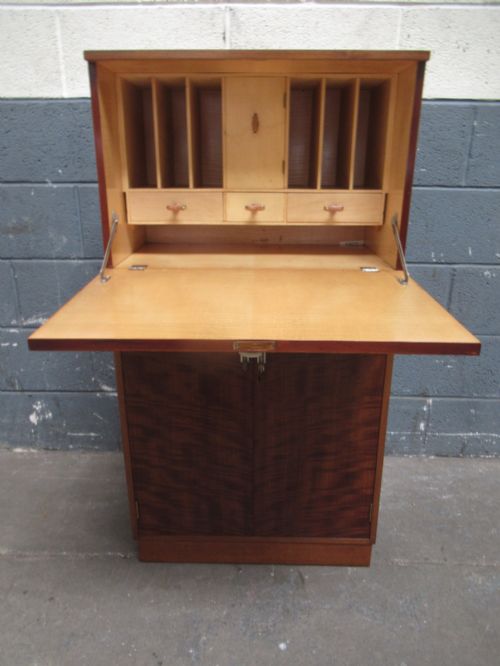
Buyers encounter both tall library pieces designed to hold books and papers alongside smaller compact writing cabinets intended for parlour use. The internal arrangement typically contains pigeonholes and small drawers revealed behind a fall-front flap or sliding writing surface.
Materials and construction
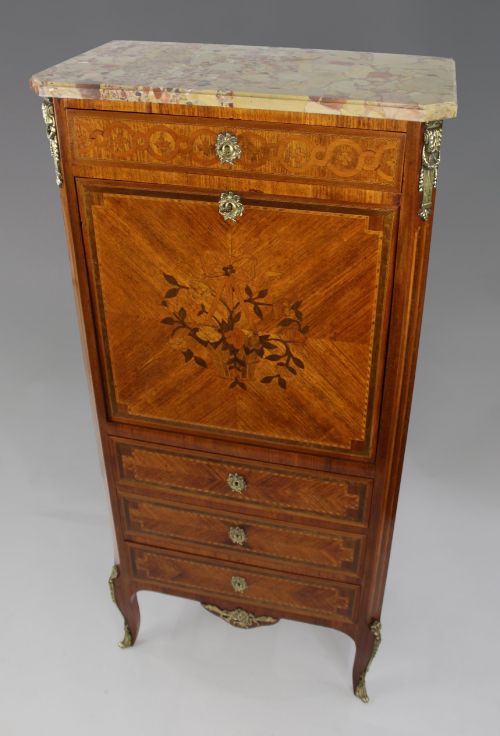
Cabinet-makers constructed these secretaire bureau items predominantly in solid timbers and veneers, utilising figured mahogany, walnut, oak, satinwood, and rosewood. Surface decoration frequently incorporates floral marquetry, geometric inlay, and brass hardware such as drop handles and escutcheons.
Upper display sections incorporate glazed doors with wooden astragal bars, while writing compartments rely on fitted internal drawers and hidden secret compartments. French and continental examples integrate contrasting marble tops and ormolu mounts to complete the casework.
Several items include hidden secret drawers designed to keep private correspondence safe from prying eyes.
Quality factors
The standard of a vintage secretaire bureau depends upon the figure and grain of the mahogany or walnut timber selected by the cabinet-maker. Superior examples exhibit tightly matched flame veneers and precise inlay work that demands advanced carpentry skills.
Design sophistication distinguishes finer items, seen in architectural pediments, finely proportioned astragal glazing bars, and complex internal fittings with secret drawers. The integrity of the original hinges, brasses, and fitted writing surfaces also dictates the distinction of the piece.
Gillows of Lancaster
The Vintage Secretaire Bureau Glossary
- Secretaire
- A desk or cabinet featuring a pull-out or drop-front writing drawer concealing a fitted interior. This mechanism transforms a chest of drawers or bookcase into a compact writing station.
- Escritoire
- A writing cabinet, frequently standing tall with a fall-front writing flap. French examples often incorporate marble tops and elaborate marquetry.
- Astragal
- Moulding framing the individual panes of glass within a cabinet door. These wooden bars form geometric patterns across bookcase fronts.
- Marquetry
- Decorative veneer work forming pictures or patterns using varied coloured woods. Artisans inlay pieces of satinwood, walnut, and other timbers into the primary surface.
- Ormolu
- Gilded bronze mounts applied as decorative ornamentation on furniture legs, friezes, and corners. This technique appears frequently on continental cabinets.
Vintage Secretaire Bureau: Frequently Asked Questions
How do I identify a Georgian secretaire?
Georgian secretaire pieces display the architectural proportions and timber choices characteristic of the eighteenth and early nineteenth centuries. They frequently utilise solid mahogany with flame veneer panels and hand-cut dovetail joints.
Look for traditional construction details like astragal glazed doors and simple brass hardware without modern fixings.
Where were these desks used?
These pieces served as functional writing and storage furniture in domestic libraries, studies, and formal reception rooms. The lockable writing compartments allowed owners to keep correspondence and financial documents secure.
The upper bookcase sections provided display space for leather-bound volumes and decorative objects.
How do French and English styles differ?
English secretaire designs from the Georgian and Regency periods rely primarily on architectural mahogany casework and clean linear proportions. They often take the form of tall bookcases with glazed top sections.
Continental and French examples frequently showcase floral marquetry, ormolu mounts, and contrasting marble tops on fall-front cabinets.