



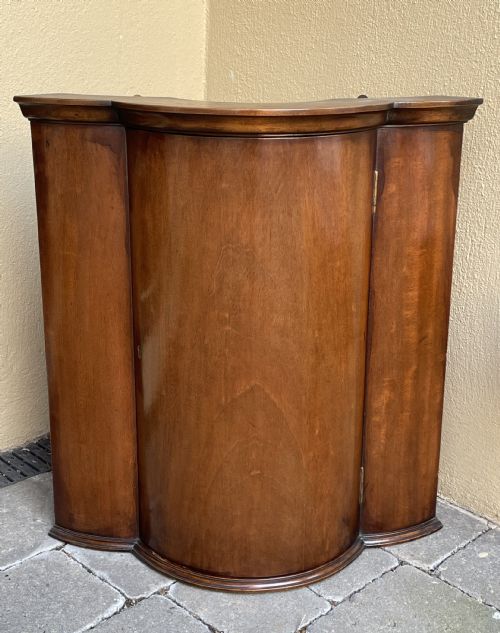
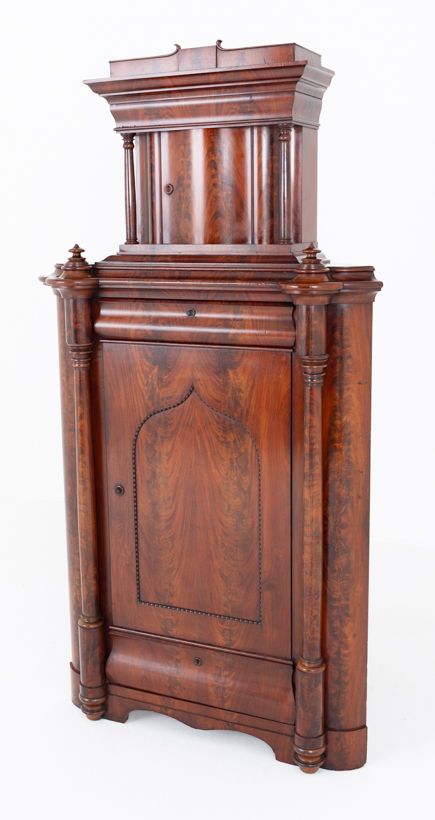


Wooden Corner Storage Cabinet
These wooden corner storage cabinet pieces turn neglected angles into display space, offering clever architectural storage in mahogany, oak, and elm.
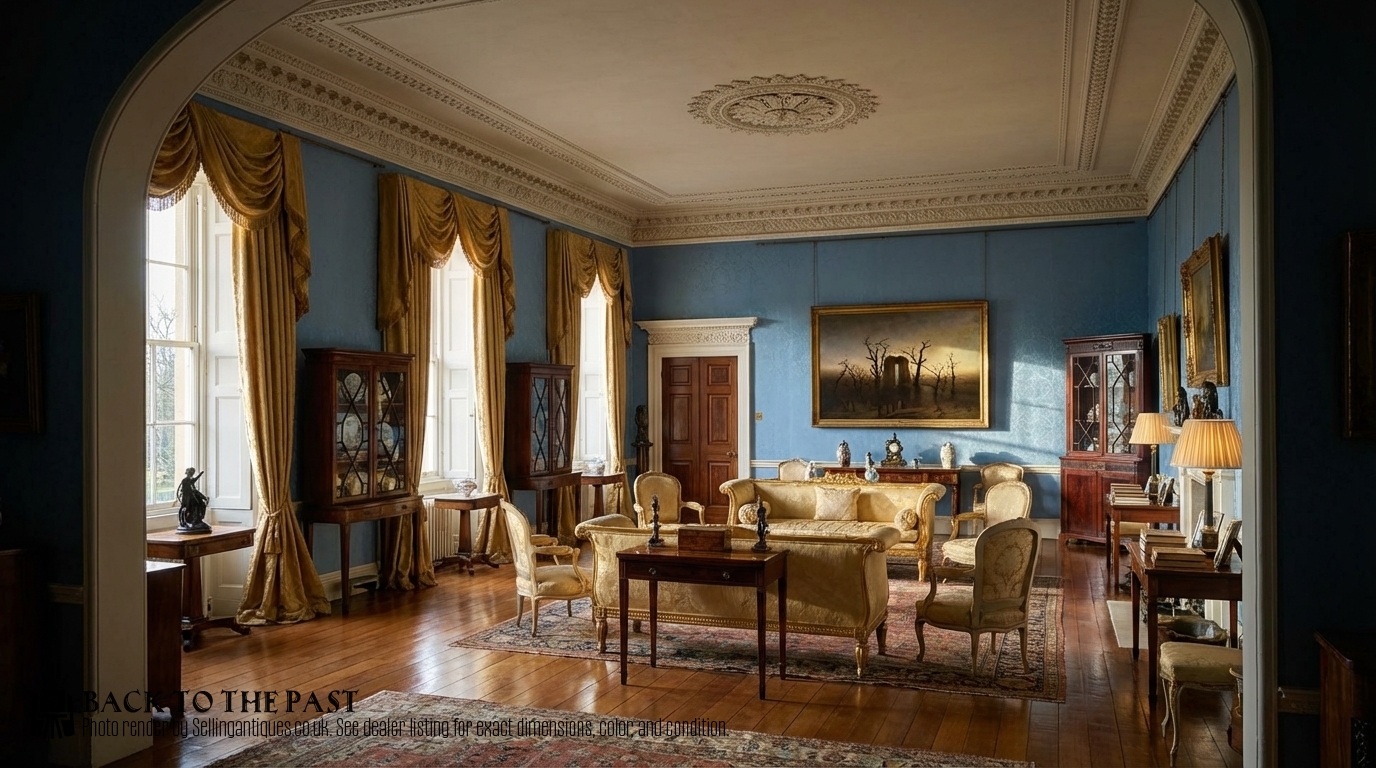
Wooden Corner Storage Cabinet
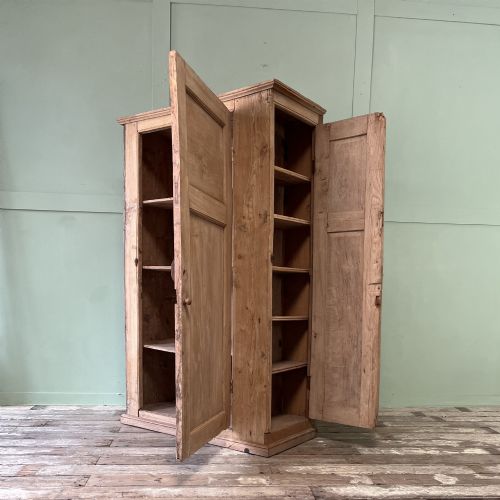
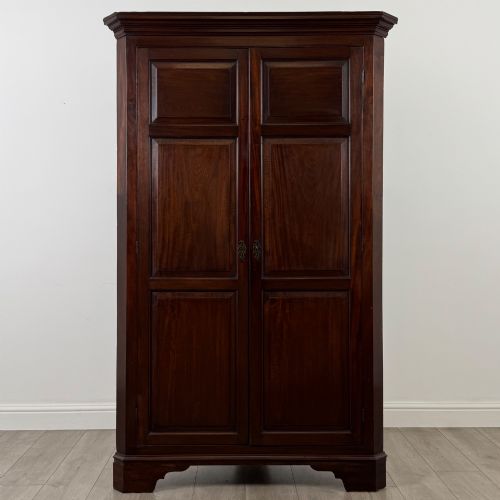
A wooden corner storage cabinet utilises awkward room angles efficiently, presenting as hanging wall cupboards, floor-standing units, or tall architectural pieces. The selections here span the Georgian and Victorian periods up through Edwardian and later vernacular examples.
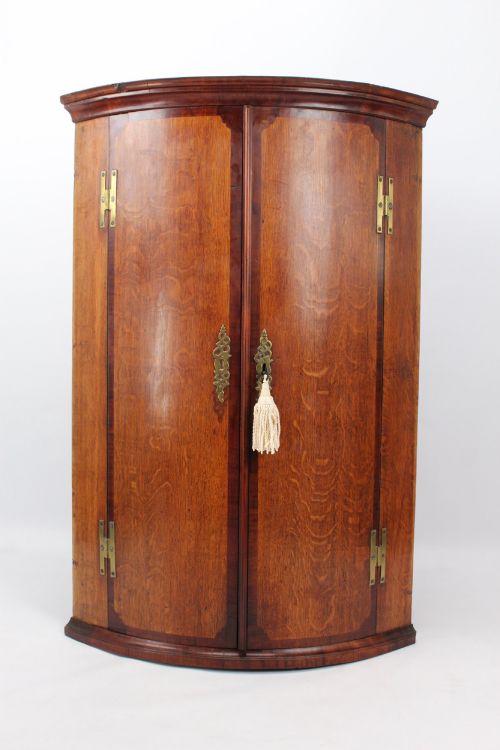
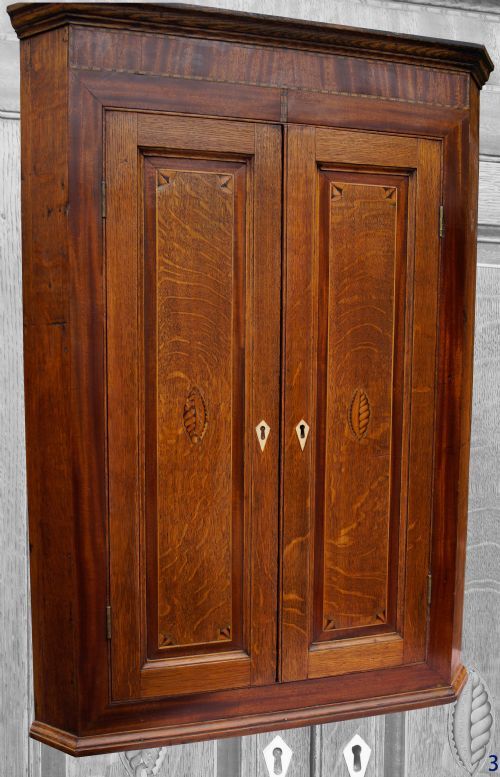
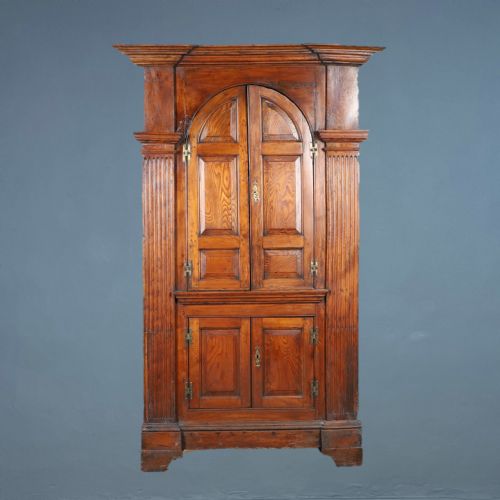
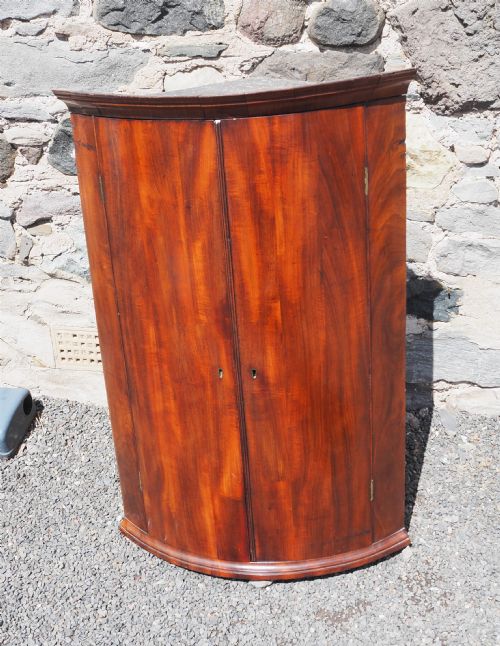
Most entries encountered on this page take the form of mahogany or oak corner cupboards, often featuring bow fronts or panelled doors designed to fit snugly into a ninety-degree junction. Regional pieces such as Welsh elm food cupboards and country pine cabinets also appear frequently.
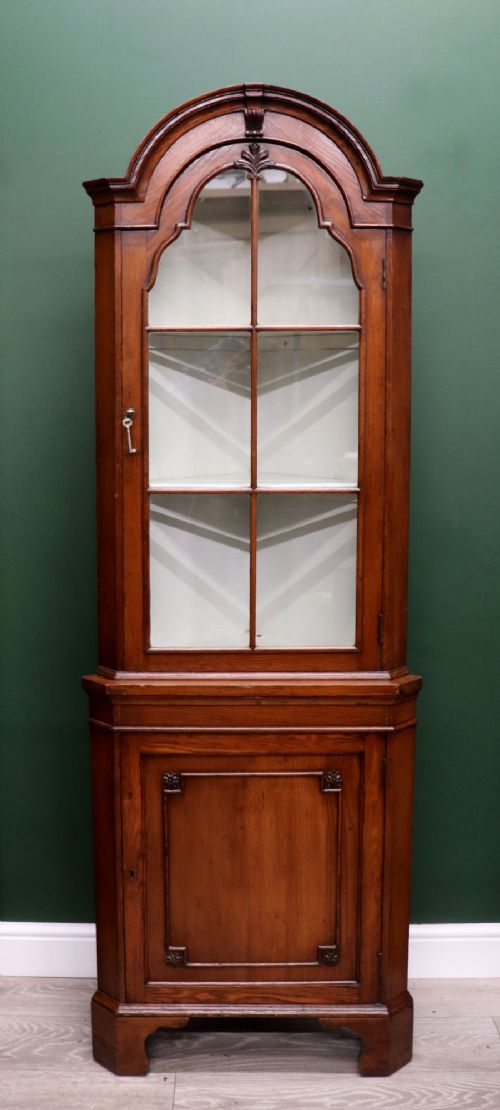
Makers utilised various formats including single-door hanging boxes, tall three-door standing drinks cabinets, and units raised on stands. The overarching purpose remains consistent across all eras: concealing provisions or displaying prized ceramics while saving floor area.
Materials and construction
Cabinet makers relied primarily on dense hardwoods like mahogany and oak, supplemented by regional timbers including elm, pine, walnut, and occasional boxwood stringing. Brass hardware such as hinges, escutcheons, and campaign mounts provide structural reinforcement and functional closure.
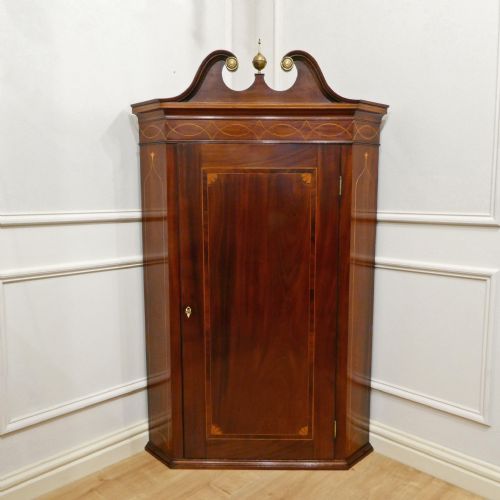
Joinery techniques ranged from dovetailed carcasses and pegged mortise and tenon frames in country workshops to delicate marquetry inlay and swan neck pediments on high-style urban pieces. Glass panels were integrated into upper doors for display, while solid timber doors kept stored contents out of sight.
Wooden Corner Storage Cabinet Retail Price Guide 2026
Typical asking prices for wooden corner storage cabinet among the pieces listed under this phrase on Sellingantiques today, from the lower quarter to the upper quarter. They describe what is for sale here now, not the wider market.
Listings span multiple eras from the 18th century through the 1930s, utilising brass, mahogany, oak, glass, pine, boxwood, iron, and elm.
Distinctions in quality
Quality reveals itself through timber selection, such as highly figured walnut or richly grained mahogany, contrasted against standard pine or utilitarian oak. The sophistication of architectural details, from moulded cornices and inlaid stringing to fine brass bound edges, separates standard utility cupboards from finer reception room pieces.
The integrity of the structural joinery and the survival of original hanging hardware or glass panes dictate the desirability of a piece. Finer examples retain their original surface patination and proportioned pediments without heavy alterations from later centuries.
The Wooden Corner Storage Cabinet Glossary
- Bow front
- A convex, curved front profile popular on Georgian and Regency cabinets. This shape softens the hard lines of a room corner and adds visual depth.
- Pediment
- The decorative architectural crowning structure above the upper cornice. Examples include swan neck variations featuring opposing curved scrolls.
- Marquetry
- The art of applying pieces of veneer to a structure to form decorative patterns. Dutch walnut pieces frequently display this intricate woodwork.
- Escutcheon
- A protective plate surrounding a keyhole, usually cast in brass. These often provide stylistic clues to the manufacturing period of the cabinet.
- Vernacular
- Regional furniture built by local craftsmen using native timbers rather than following strict London urban fashions. Welsh elm and rustic farmhouse pieces fall into this tradition.
Wooden Corner Storage Cabinet: Frequently Asked Questions
How do I hang a wall cabinet?
Hanging models require locating secure wall studs or masonry fixings capable of supporting the combined weight of dense timbers like oak and mahogany. Internal screw fixing points through the backboards are standard.
Ensure the unit is level before final tightening to prevent door warping over time.
Were these made for specific rooms?
These units served primarily in dining rooms, parlours, and kitchens for storing glassware, ceramics, or food provisions. Their triangular footprint made them ideal for secondary reception spaces where floor area was at a premium.
Tall floor-standing versions often functioned as drinks or corner display cabinets in larger country houses.
How do I date a wooden corner storage cabinet?
Dating relies on observing timber choices, hardware styles, and construction methods such as dovetailing and panel assembly. Georgian pieces often feature rich mahogany with straightforward brass H-hinges.
Later Victorian and Edwardian examples introduce darker carved oak, elaborate pediments, or machine-cut elements.
Are hanging and standing cupboards different?
Hanging cupboards feature flat rear sides designed to be fastened directly to wall surfaces at varying heights. Standing variants rest on the floor, occasionally elevated on bracket feet, low stands, or forming tall architectural columns.
Floor-standing versions generally offer greater internal storage capacity through multiple tiers.