
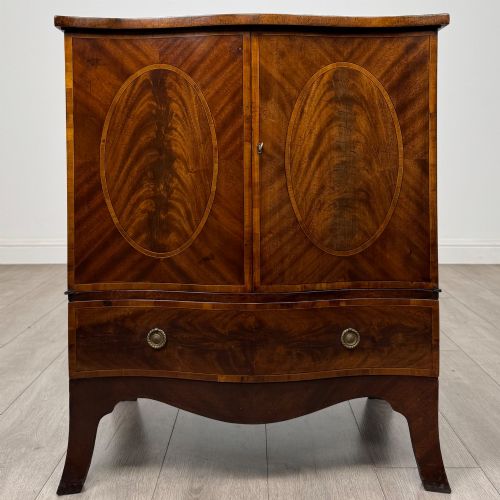
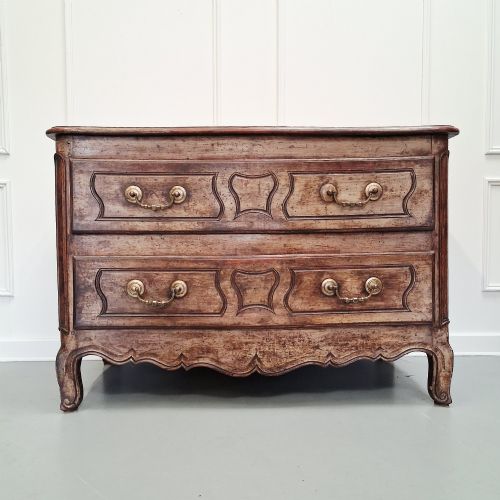
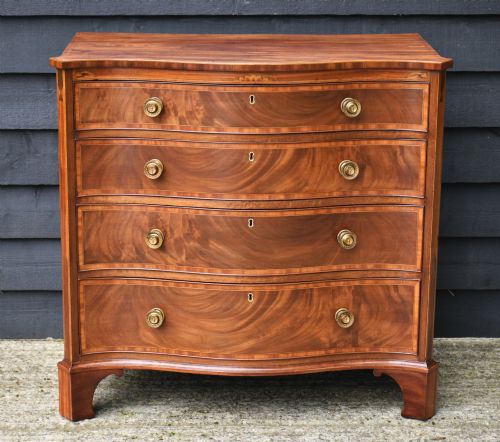
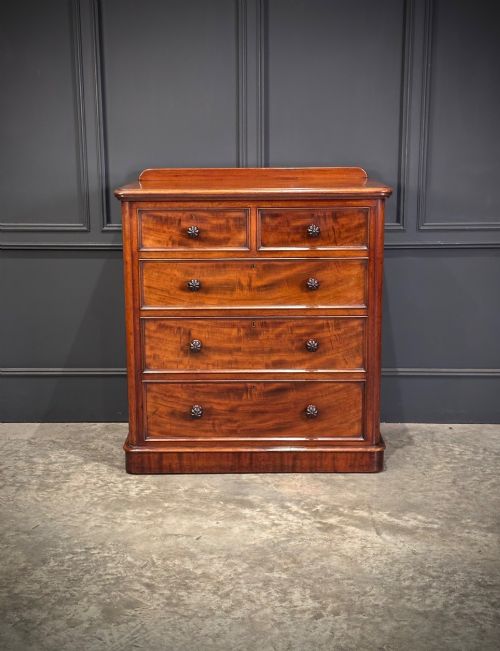
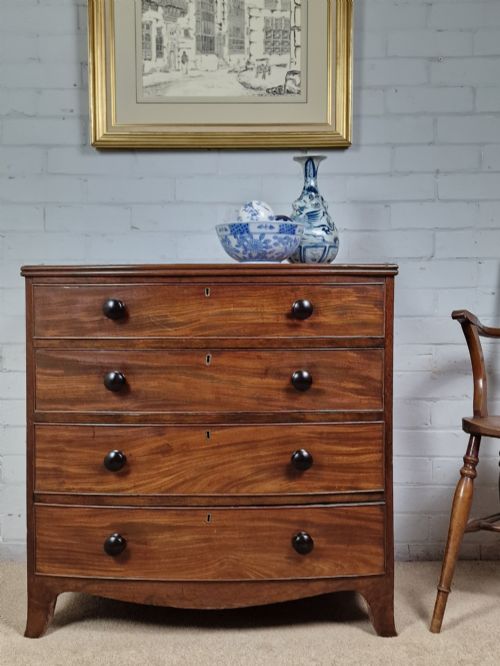
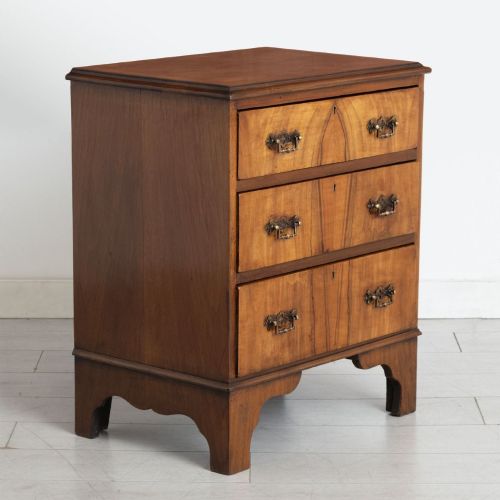
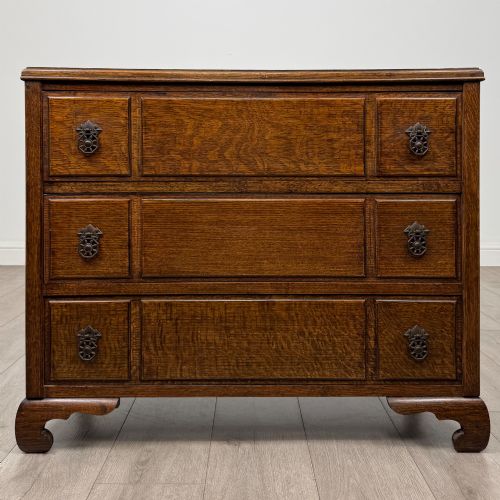
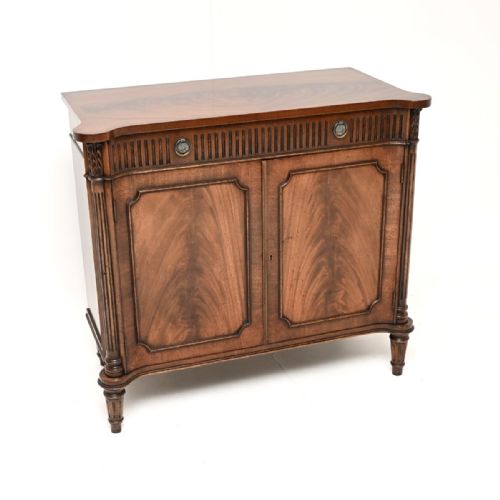
Wooden Commode Cabinet
A wooden commode cabinet brings period character to a room, offering practical storage through centuries of craftsmanship.
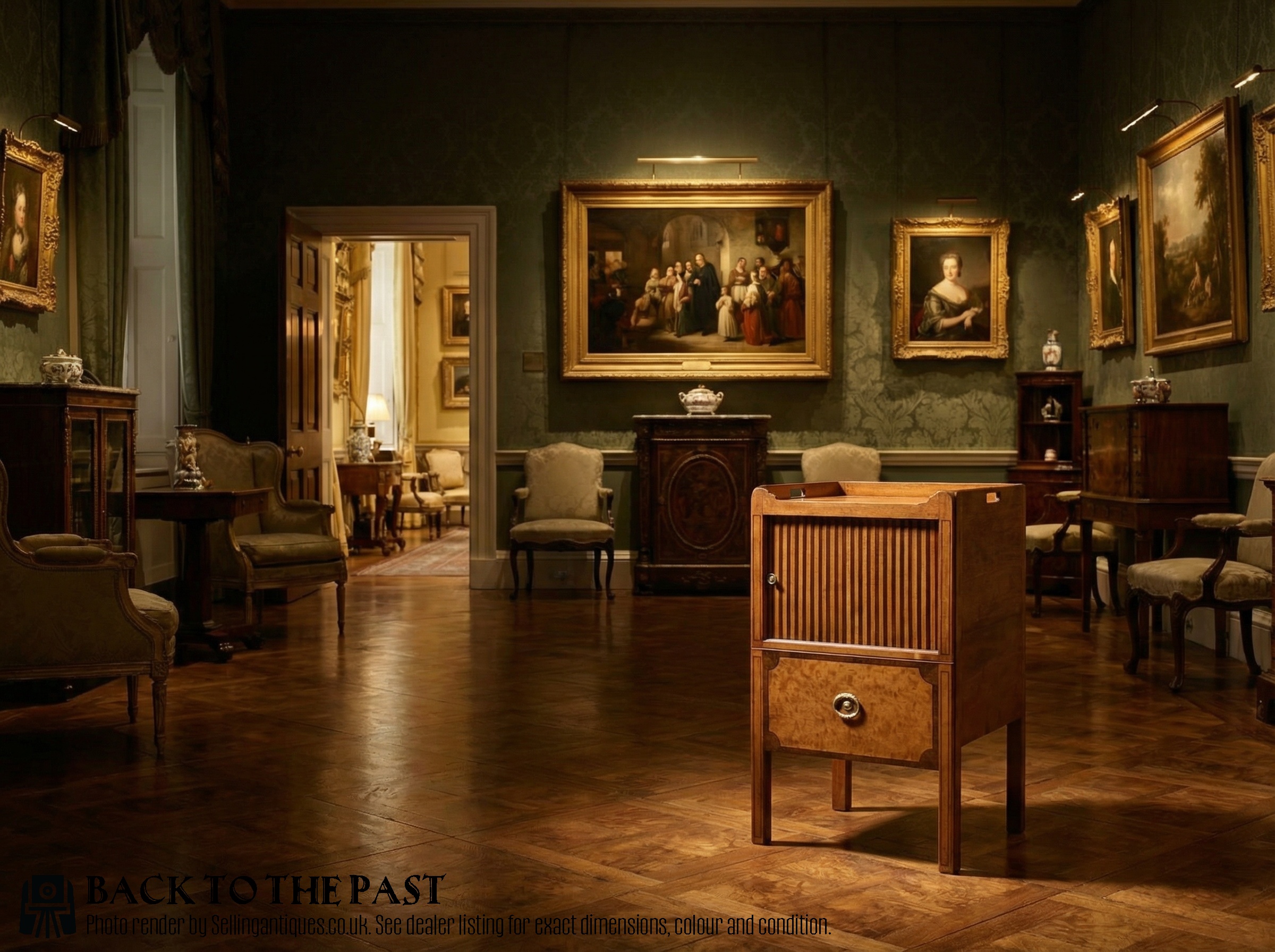
Wooden Commode Cabinet
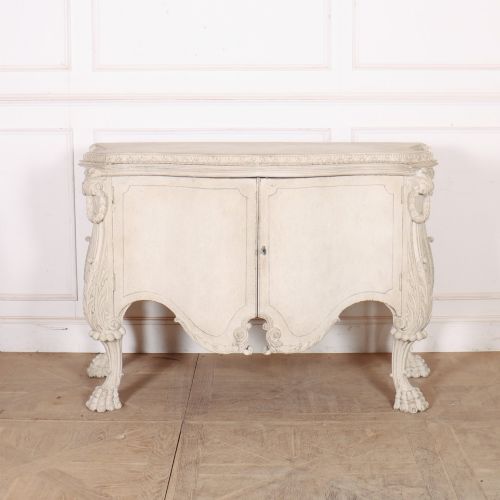
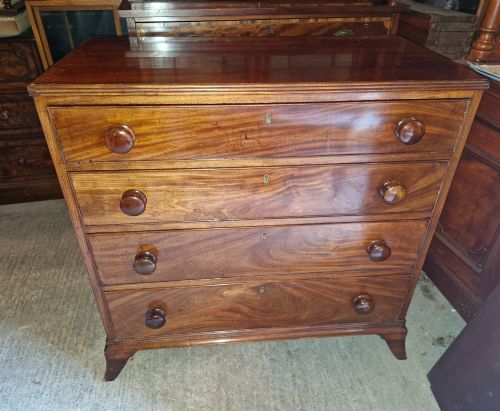
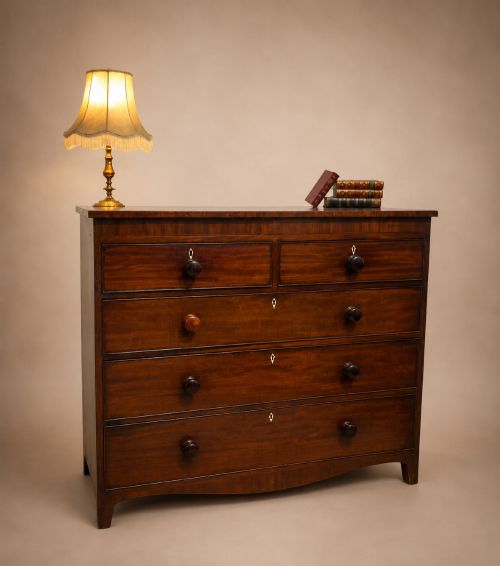
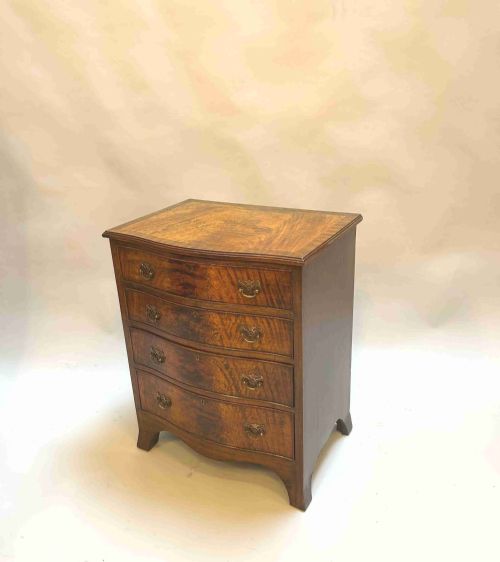
A wooden commode cabinet encompasses a variety of forms including chests of drawers, bedside cabinets, and close stools. These items span periods from the eighteenth century through to the Edwardian era and the 1930s. Buyers will encounter both British and continental pieces shaped by regional cabinet-making traditions.
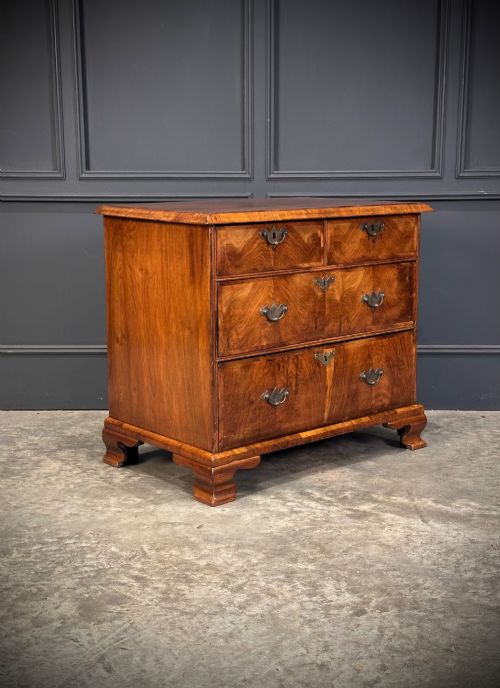
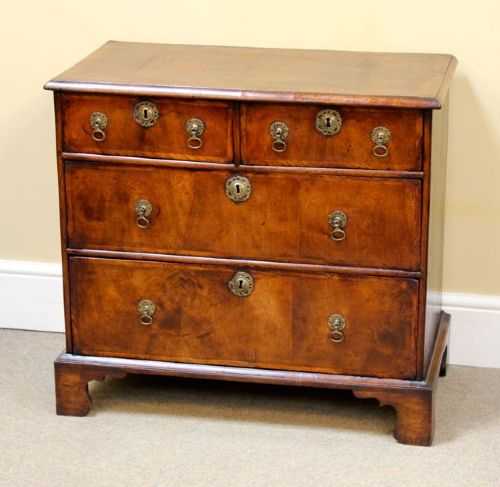
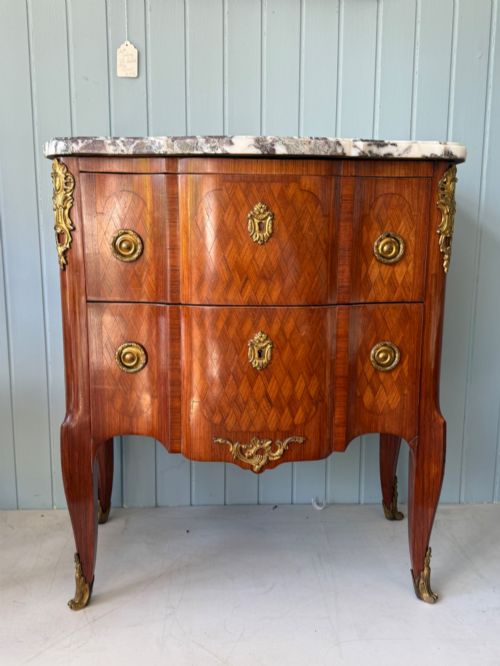
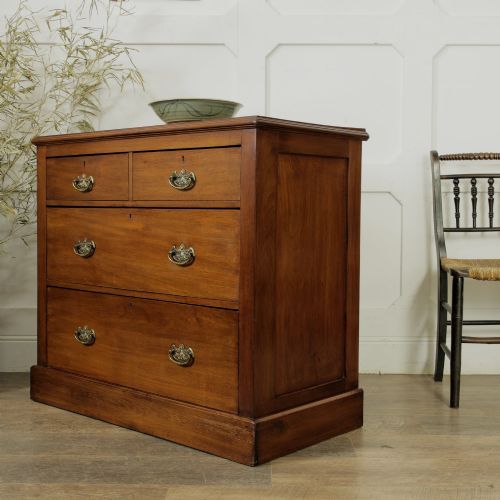
The most common examples on this page are mahogany and walnut chests of drawers from the Georgian and Victorian periods. Alongside these, buyers find bedside tables, side cabinets, and French commodes utilising cherrywood and marquetry. Each piece reflects the domestic storage needs of its original era.
Materials and Construction
Cabinet makers relied primarily on solid hardwoods such as mahogany, walnut, and oak, often enhanced with flame mahogany veneer or satinwood stringing. Carcasses were constructed using traditional joinery methods, with pine frequently employed for secondary internal elements like drawer linings. Marble tops and brass hardware also appear on select continental and revival pieces.
Surface finishes varied from waxed pine to polished walnut and mahogany, protecting the timber while highlighting the natural grain. Inlaid marquetry panels and faux bamboo turnings demonstrate the decorative techniques applied by period artisans. Structural integrity depended upon precise dovetail joints in the drawer construction.
Several eighteenth century pieces cleverly disguise sanitary needs as polite bedroom furniture by presenting as small bedside chests.
Judging Execution
Quality in a wooden commode cabinet rests on the selection of timber and the precision of the cabinet work. Finer examples display carefully matched veneer grains and tight dovetail joinery that has survived decades of daily use. Lesser pieces often exhibit coarser secondary timbers and heavier, less refined structural alterations.
The sophistication of the brass mounts, the subtlety of any marquetry inlay, and the retention of original surfaces distinguish superior pieces. Proportions and the crispness of moulded edges separate standard workshop production from master cabinet making. Original marble tops and intact handles add to the integrity of surviving specimens.
The Wooden Commode Cabinet Glossary
- Commode
- A low cabinet or chest of drawers, often of French origin, designed for domestic storage.
- Close stool
- An eighteenth-century piece disguised as a small bedside chest, originally enclosing a chamber pot.
- Bow front
- A convex curved front profile popular on Georgian and Regency chests of drawers.
- Marquetry
- Decorative patterns formed by inserting pieces of contrasting wood into a veneer surface.
- Tray top
- A raised rim around the top surface of a bedside cabinet or table to prevent items rolling off.
Wooden Commode Cabinet: Frequently Asked Questions
What is a wooden commode cabinet?
A wooden commode cabinet is a freestanding storage unit that typically takes the form of a chest of drawers, bedside table, or cupboard.
These pieces developed across the eighteenth, nineteenth, and early twentieth centuries to serve practical household functions in bedrooms and living spaces.
How do I date a wooden commode cabinet?
Dating relies on identifying the primary timber, construction methods, and stylistic cues such as serpentine fronts or brass hardware.
Georgian and Regency pieces display different proportions and joinery techniques compared to later Victorian or Edwardian workshop productions.
Where were these cabinets used?
Original locations included bedrooms, dressing rooms, and parlours, where they held linens, clothing, or personal items.
Bedside cabinets and close stools were specifically designed for intimate chamber use alongside a bed.
How do I care for antique wood?
Antique timber benefits from stable indoor humidity levels and protection from direct sunlight and heat sources.
Applying traditional wax polish periodically helps maintain the moisture and lustre of the original polished surface.