


Turned Knob Chest Drawers
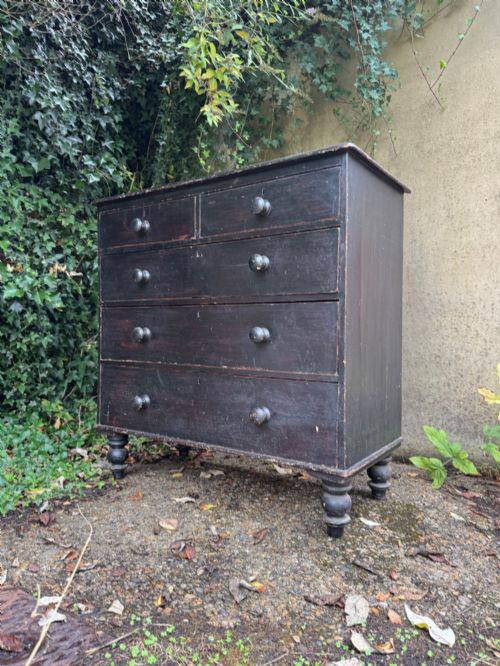
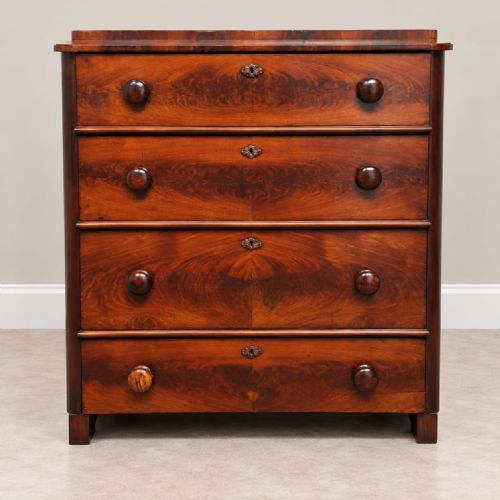
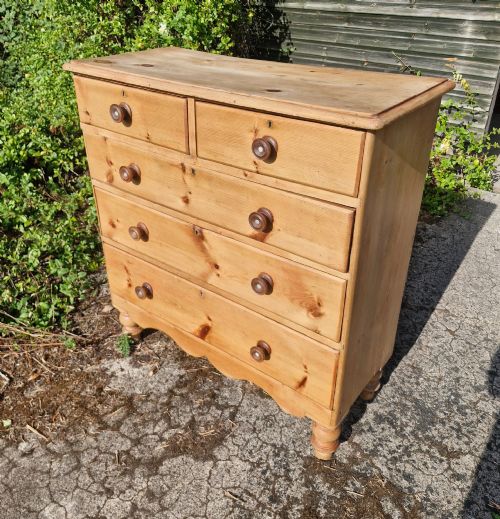
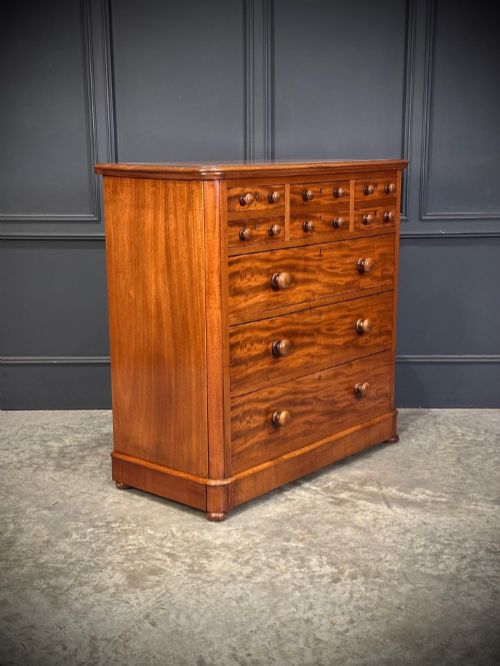
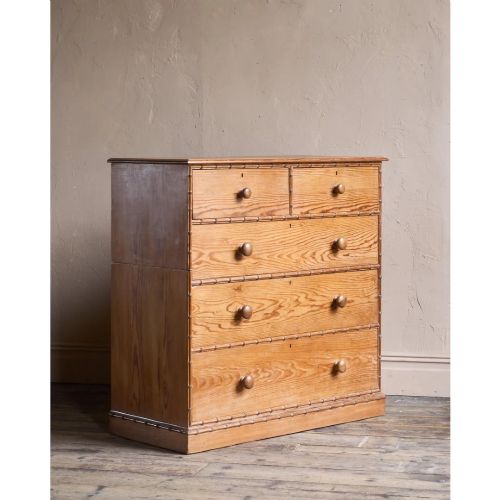
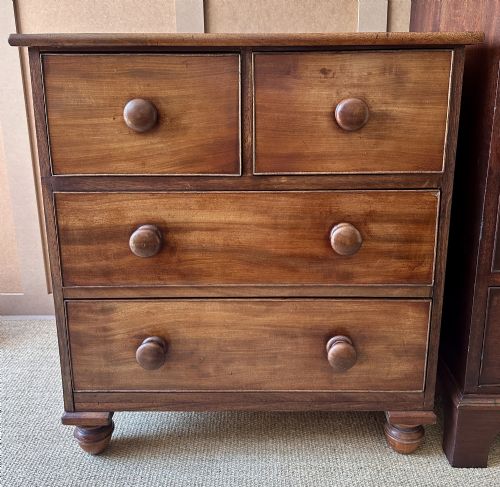
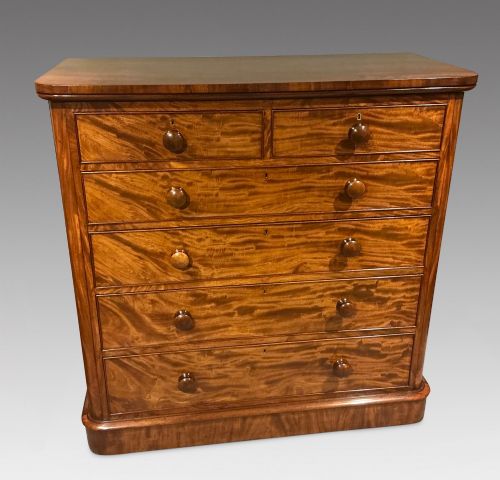
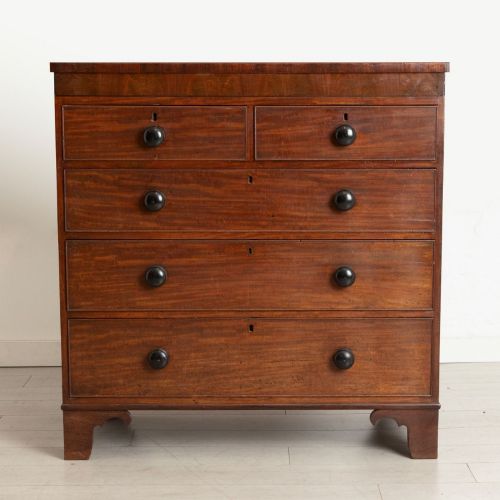
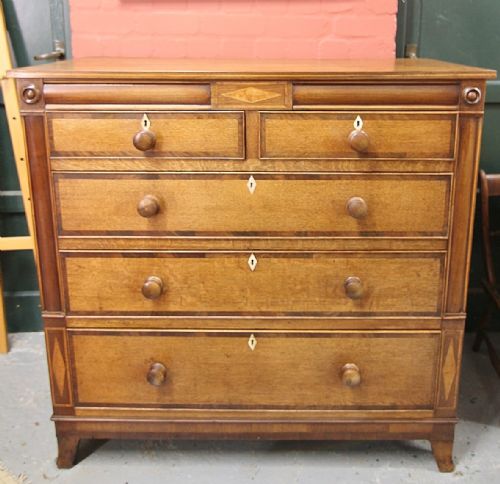
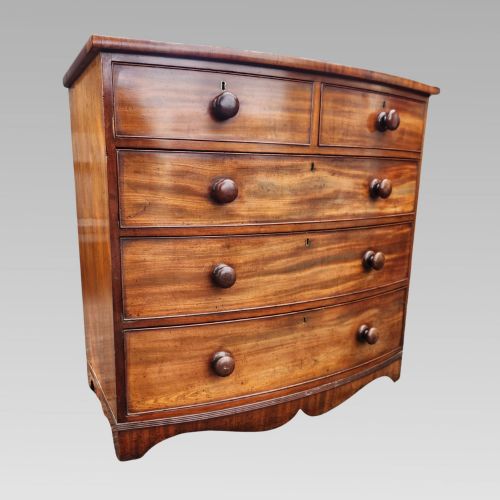
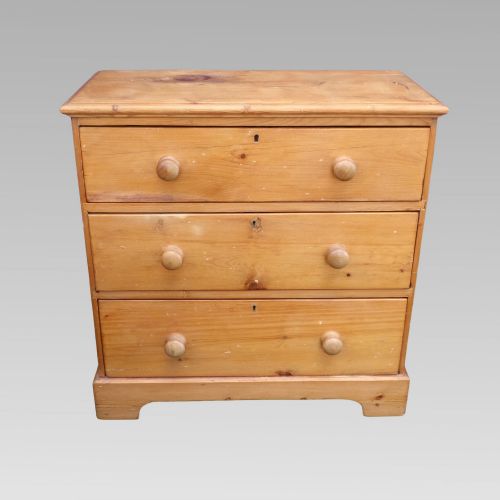
Turned knob chest drawers are practical storage furniture defined by characteristic circular wooden handles, appearing frequently in sturdy Victorian pine and rich mahogany.
Turned Knob Chest Drawers
A turned knob chest drawers offers generous domestic storage through stacked horizontal compartments fitted with characteristic wooden pulls. These storage pieces appear across nineteenth-century periods, spanning Georgian origins through Victorian and Arts & Crafts revivals.
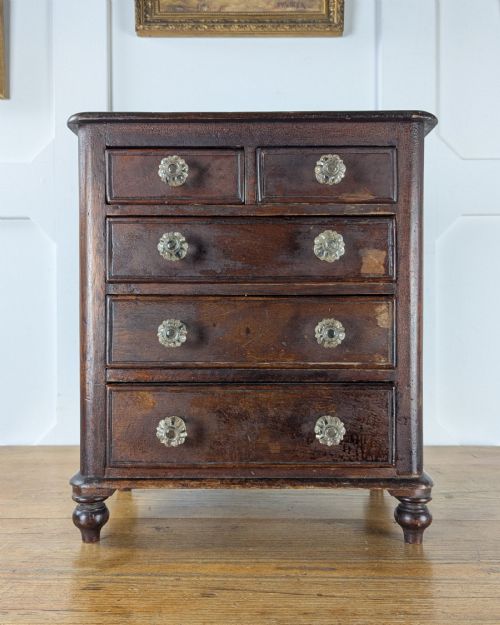
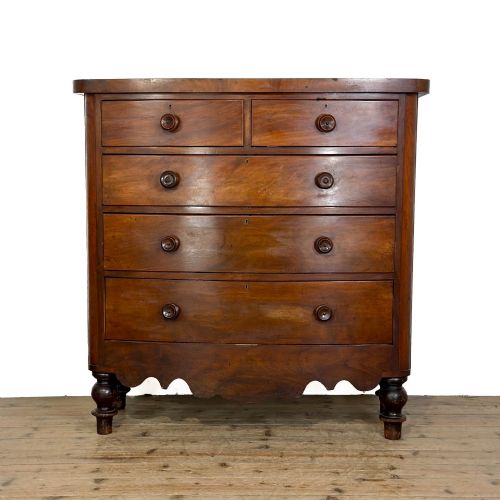
Buyers meet sturdy country pine examples alongside formal mahogany items, including compact miniature apprentice pieces and large bow front layouts. The core domestic form remains a reliable stack of drawers raised on turned feet.
Proportions vary from small three-drawer variants to tall Scottish configurations with seven compartments. Surviving examples frequently retain original turned knobs and brass or bone keyhole escutcheons.
Materials and construction
Carpenters constructed these storage units primarily using solid pine and dense mahogany, sometimes selecting figured timbers for primary display surfaces. Drawers operate within carcases assembled with traditional joinery, often paired with secondary pine drawer linings.
Makers shaped matching wooden handles on a lathe to create the distinctive turned knobs that secure each drawer front. Details such as ivory or brass escutcheons and iron hardware finish the construction.
Turned Knob Chest Drawers Retail Price Guide 2026
Typical asking prices for turned knob chest drawers among the pieces listed under this phrase on Sellingantiques today, from the lower quarter to the upper quarter. They describe what is for sale here now, not the wider market.
Secret drawers hidden within the upper mouldings let owners safely stash valuables out of sight from curious household guests.
Distinctions in quality
Quality rests upon the selection of timber and the preservation of original elements like turned feet and matching knobs. Uniformity in the lathe-turned handles and smooth operation of the drawers separate superior pieces from standard domestic storage.
Finer examples display careful timber matching, such as figured mahogany veneers or clean waxed pine surfaces, while retaining period locks and escutcheons.
Howard and Sons
The Turned Knob Chest Drawers Glossary
- Escutcheon
- A protective plate surrounding a keyhole, usually fashioned from brass, bone or ivory.
- Bow front
- A convex curved cabinet front popular during the Georgian and Victorian periods.
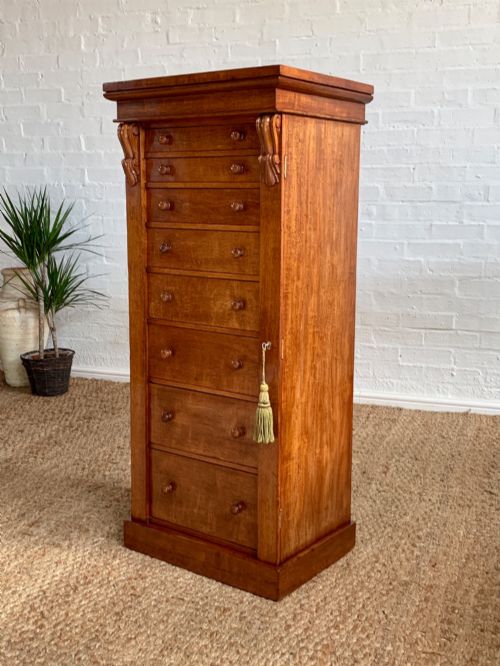
- Wellington chest
- A tall, narrow locking chest of drawers secured by a hinged side locking bar.
- Pine
- A softwood commonly utilised for domestic country furniture, finished with wax or paint.
Turned Knob Chest Drawers: Frequently Asked Questions
How do I date a turned knob chest?
Dating relies on timber choice, construction methods, and hardware styles. Georgian and early nineteenth-century pieces often display hand-cut dovetails and classical proportions.
Later Victorian examples introduce standardised pine construction and distinct turned wooden knobs fixed to the drawer fronts.
Are turned knobs original?
Original knobs match the surrounding timber species and wear pattern of the drawer fronts. They fit securely into the central boring hole without modern washers or mismatched screws.
Many surviving pieces retain their factory-turned wooden handles fitted tightly to the primary drawer panels.
What is a Scottish chest of drawers?
A Scottish chest is a tall regional variant typically housing seven drawers arranged in a distinctive configuration. These often feature a deep top drawer flanked by smaller compartments above standard graduated tiers.
Cabinetmakers utilised figured mahogany veneers to highlight the imposing scale of these northern storage pieces.
How do I care for waxed pine furniture?
Waxed pine requires gentle cleaning with a soft dry cloth to preserve the polished surface. Avoid placing wooden furniture near direct heat sources or damp environments that cause timber movement.
Applying a traditional beeswax polish occasionally maintains the lustre and protects the historic finish.