


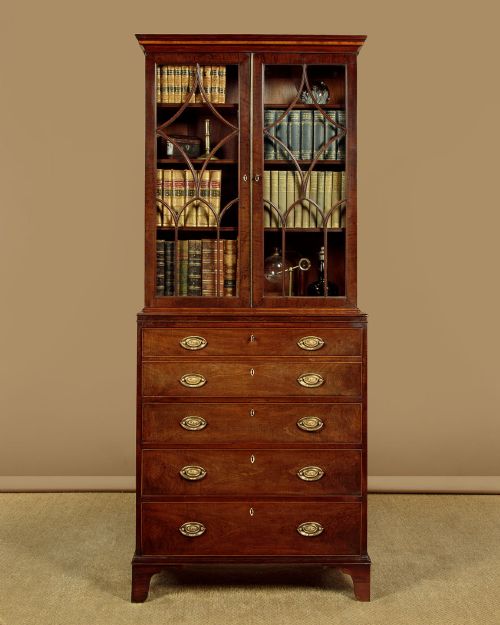
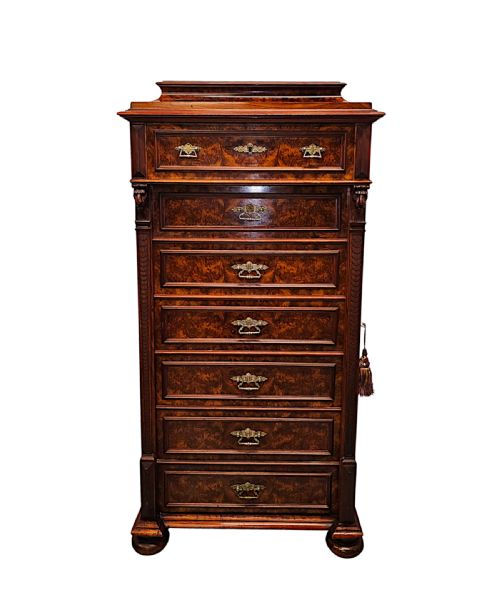
19th Century Mahogany Drawers
These 19th century mahogany drawers bring rich timber grain and traditional cabinet-making into a room, offering enduring utility alongside period character.
What 19th century mahogany drawers are
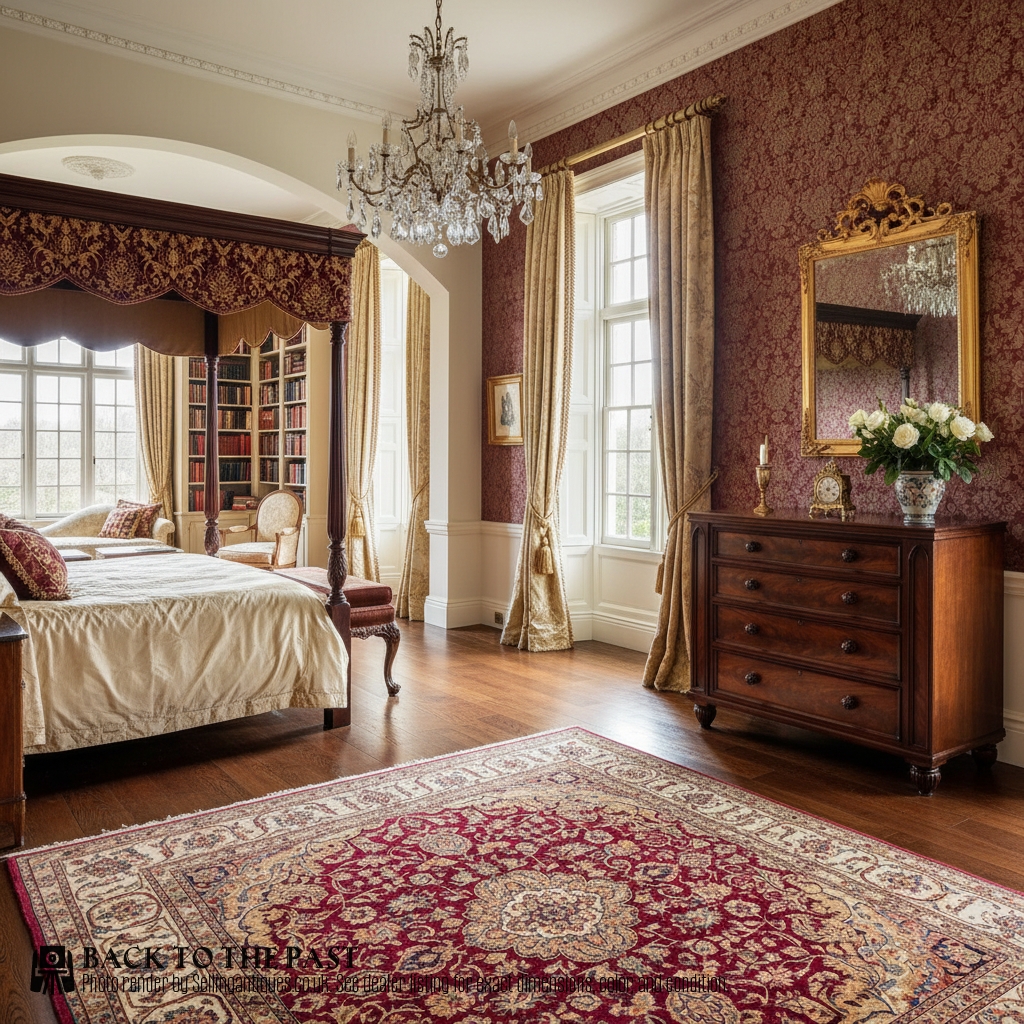
When you search for 19th century mahogany drawers, you encounter substantial chests built to hold clothing and household linens in domestic bedchambers and dressing rooms. These storage pieces form the backbone of traditional furniture, spanning multiple decades of changing British and continental design.
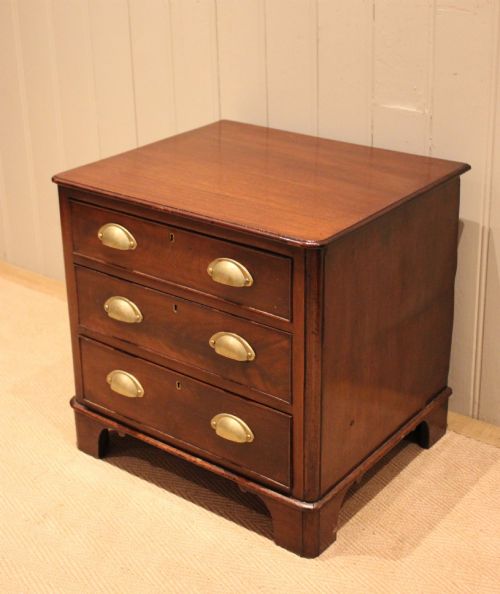
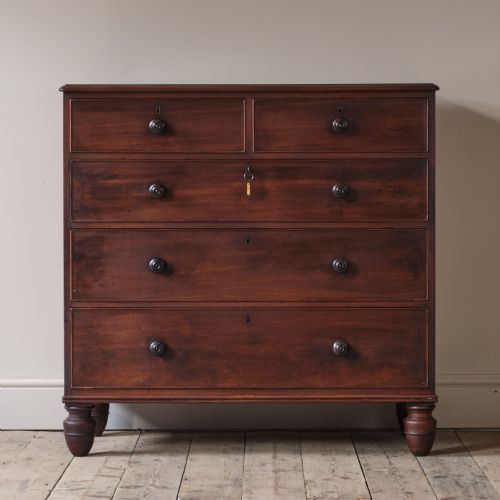
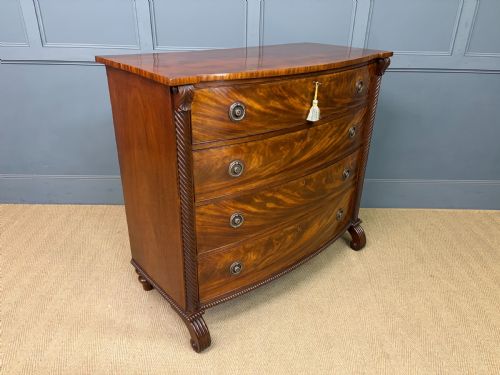
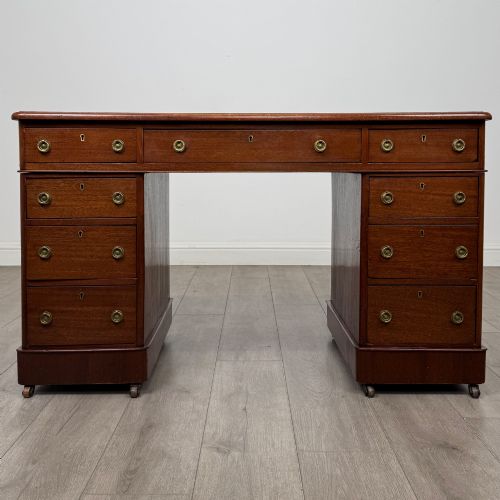
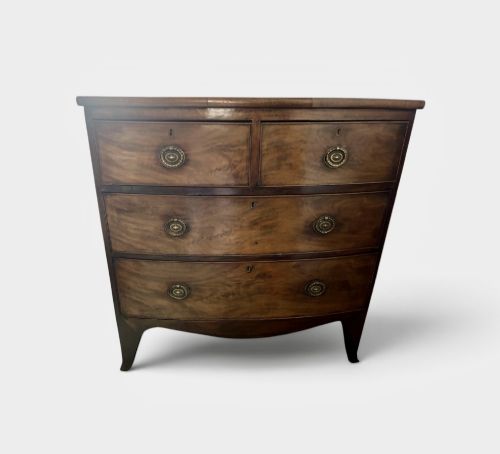
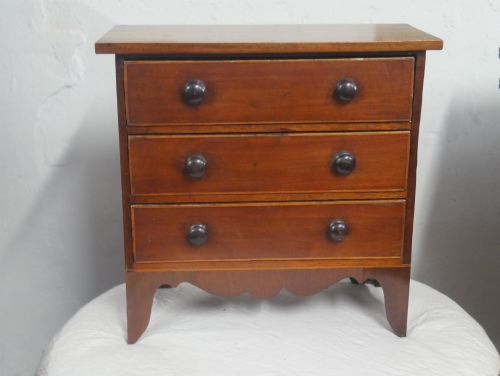
The most common examples on this page are Victorian chests, alongside pieces from the Regency and Georgian style periods. Formats range from standard low and wide chests to compact proportions, bow fronts, and specialised bank of drawers layouts.
Makers utilised native pine for internal framing and secondary carcases while reserving rich hardwoods for the primary visual surfaces. These items survive in various configurations, including five-height drawer arrangements and washstand combinations.
How they were made
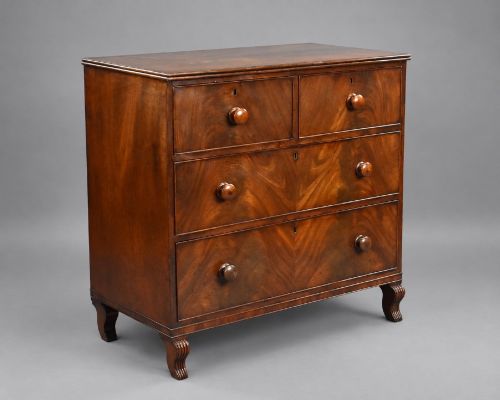
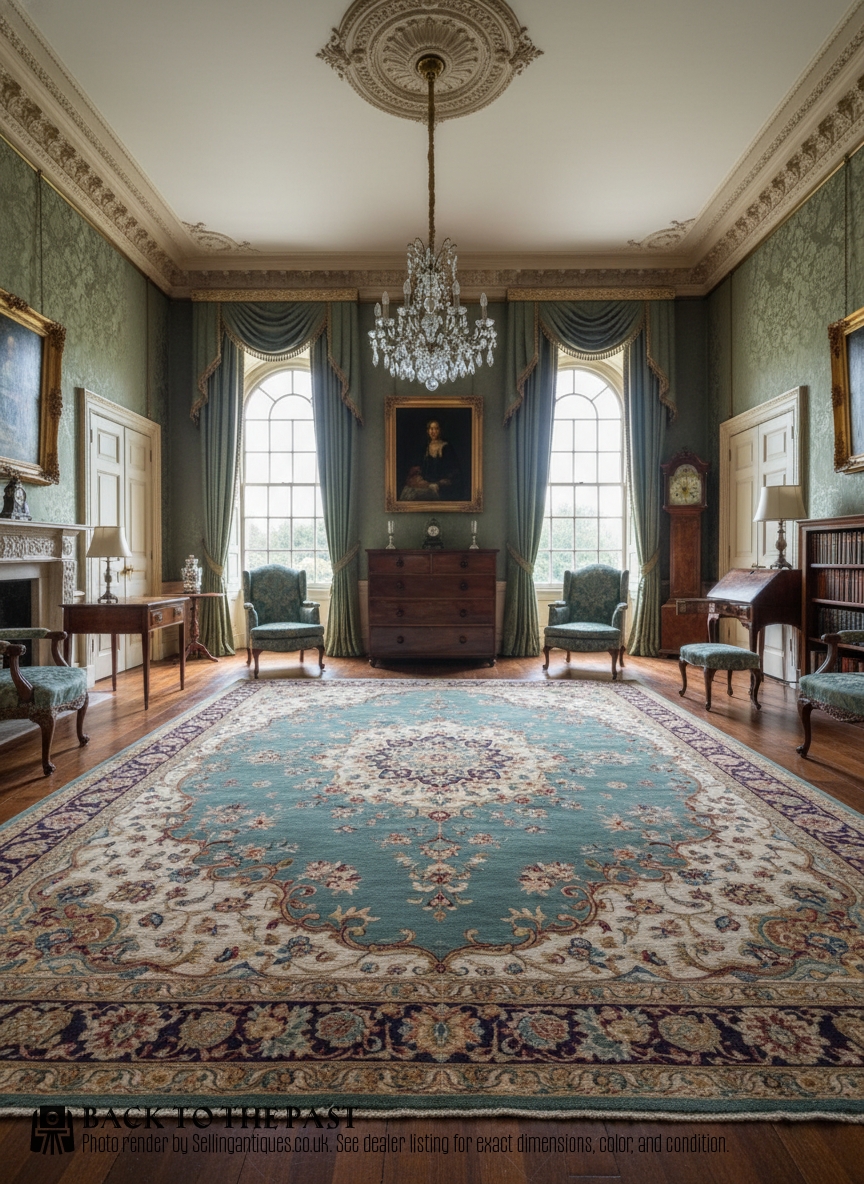
Cabinet-makers constructed the main carcase using solid mahogany or applied flame mahogany veneer over pine secondary woods. Drawers relied on tight dovetail joints to withstand daily pulling and pushing.
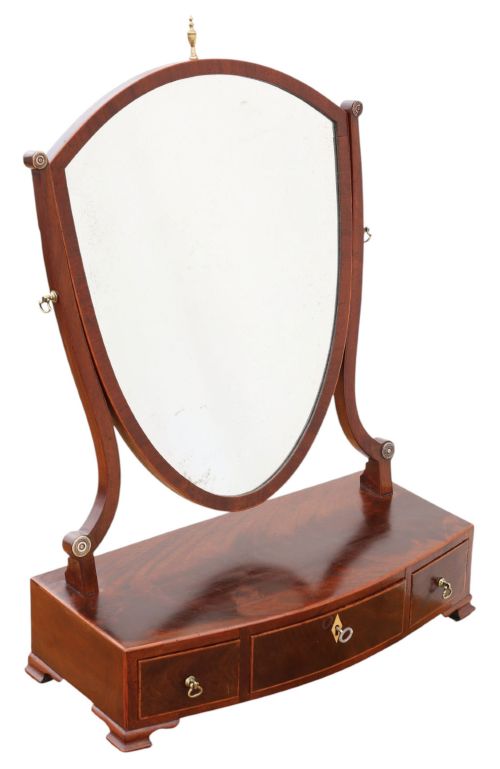
Surface ornamentation often included line inlay, cross-banding, and brass handles or pulls fixed to the drawer fronts. Selected examples incorporated marble tops or specialised secretaire compartments within the upper drawer.
Retail Price Guide 2026
Typical UK retail prices for 19th century mahogany drawers, calculated from the Sellingantiques database of over a million retail prices indexed since 2003. This retail price guide relies exclusively on Sellingantiques data; no external sources or auction records are used, so the figures do not describe the wider market.
Listings feature brass hardware, marble tops, flame mahogany veneer, and pine internal framing across various Victorian and Regency formats.
What varies in quality
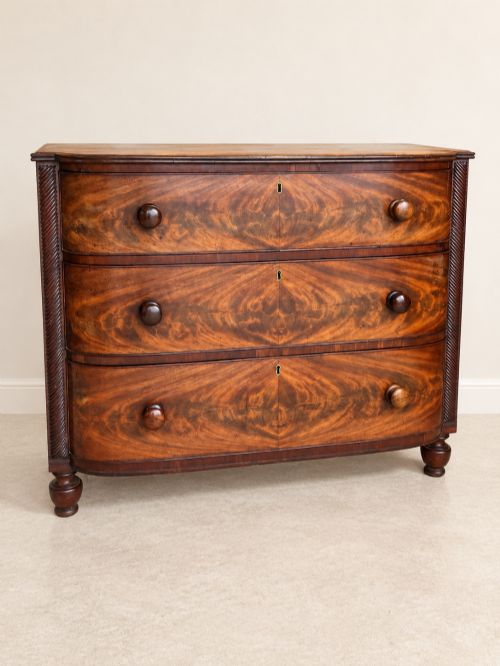
The visual hierarchy of these chests rests upon the choice of timber figure, such as curl mahogany or plum pudding grain, contrasted against simpler solid mahogany surfaces. Superior pieces exhibit meticulous book-matching on drawer fronts and refined proportions.
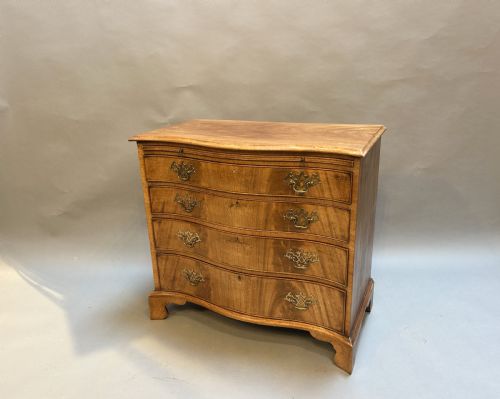
Construction integrity separates standard utility items from finer examples, visible in the precision of drawer dovetailing and the retention of original brass hardware. The presence of sophisticated details like serpentine shaping or cross-banding elevates a piece above standard domestic furniture.
The 19th Century Mahogany Drawers Glossary
- Bow front
- A cabinet front that curves outward in a convex shape. This convex profile gained popularity during the Regency and Victorian periods.
- Flame mahogany
- A wood veneer cut from timber fork sections where branches join the trunk. It creates a distinctive, flickering flame pattern across drawer fronts.
- Cross-banding
- A narrow strip of veneer laid border-wise around the main grain of a drawer front. The wood grain runs perpendicular to the surrounding panel.
- Secretaire
- A desk disguised as a chest of drawers, featuring a drop-front top drawer concealing small compartments. These dual-purpose units appeared in refined bedchambers.
- Serpentine front
- A cabinet front shaped with a central convex curve flanked by two concave curves. This undulating outline requires advanced woodworking skill.
Frequently Asked Questions
How do I date a mahogany chest?
Dating relies on architectural proportions, handle styles, and construction methods. Regency and Georgian examples often display sharper geometric lines, while Victorian pieces can be deeper.
Secondary woods like pine and the presence of hand-cut dovetails provide further clues to the exact decade of manufacture.
Where were these chests used?
These pieces served primarily in domestic bedchambers and dressing rooms for storing folded garments and linens. Washstand variations also functioned in washing areas.
Bank of drawers formats originated in commercial or factory settings before entering modern domestic spaces.
How do I care for mahogany?
Protect mahogany surfaces by keeping them away from direct sunlight and sudden radiator heat. Consistent indoor humidity prevents timber splitting and veneer lifting.
Apply natural beeswax periodically to nourish the grain and maintain a soft, traditional lustre.