
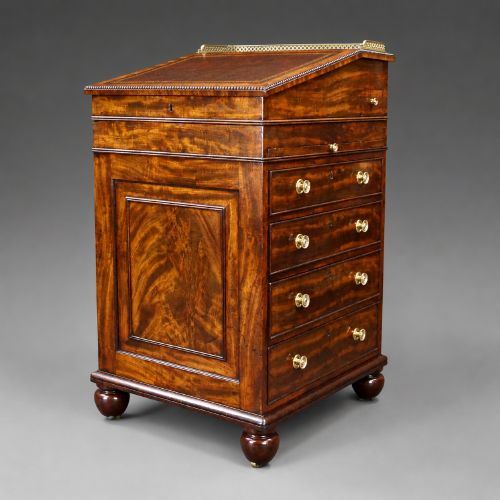

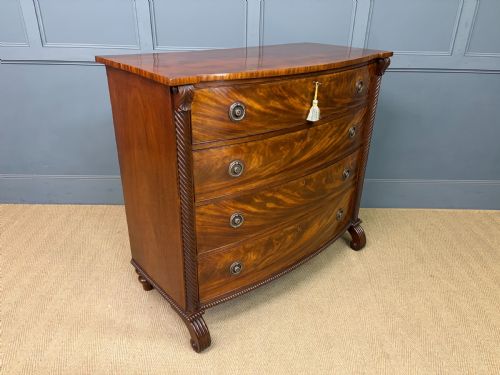
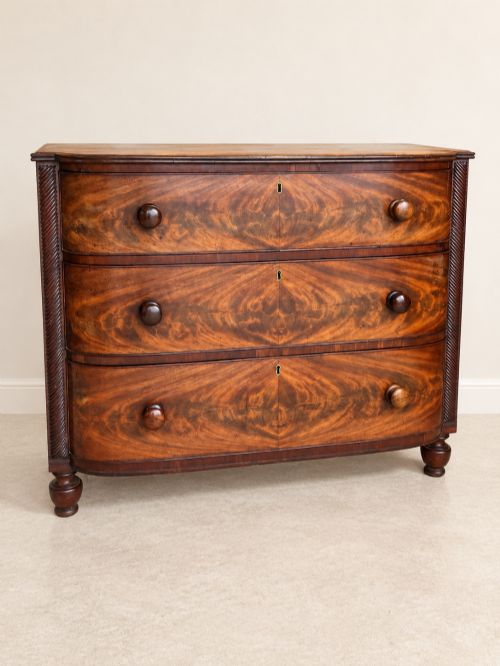
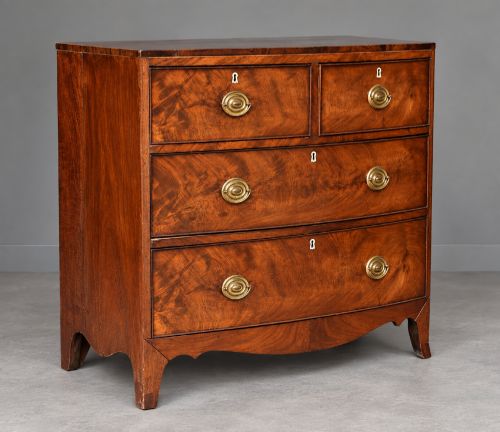
Regency Flame Mahogany Drawers
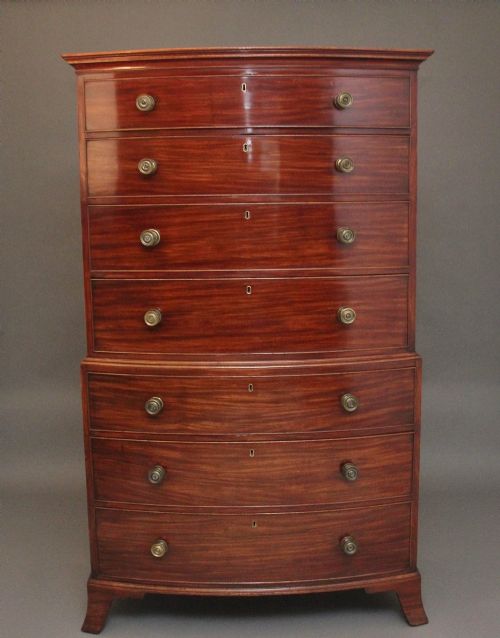
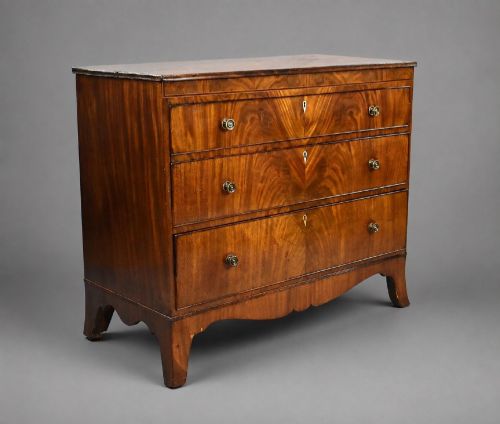
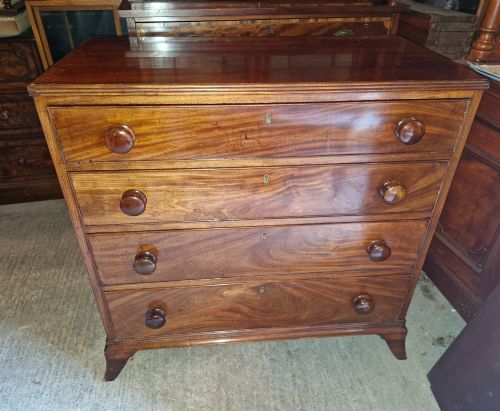
Regency flame mahogany drawers bring striking natural timber figures and architectural proportion into a room, uniting Georgian craftsmanship with dramatic nineteenth-century design.
Regency Flame Mahogany Drawers
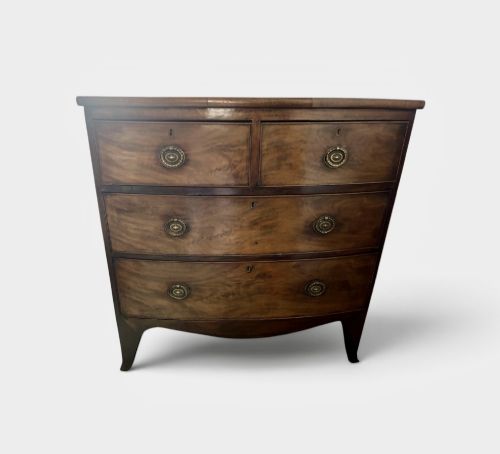
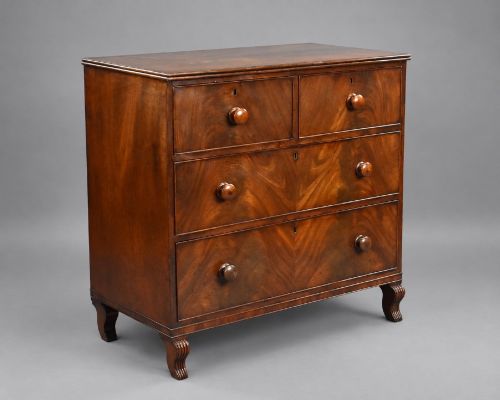
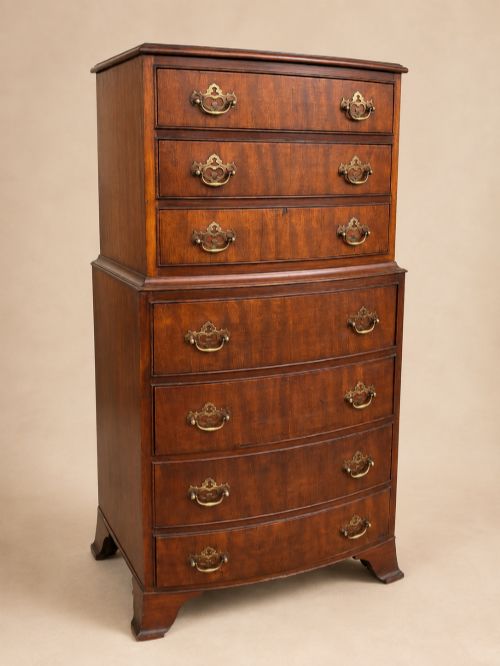
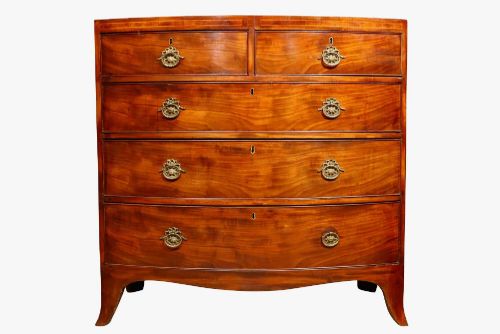
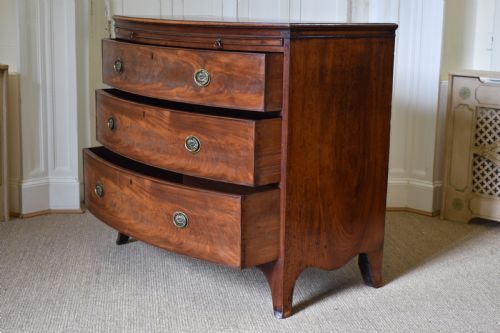
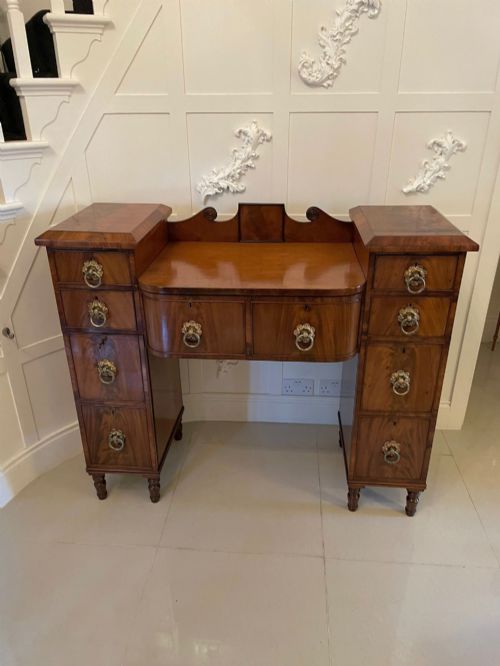
When searching for regency flame mahogany drawers, a buyer encounters pieces primarily dating from the Georgian and Regency periods, spanning the late eighteenth and early nineteenth centuries. The form most commonly met on this page is the bow front chest of drawers, alongside tallboys, secretaire chests, and dressing pieces.
These items originate predominantly from English and Scottish workshops, showing the distinctive regional variations of the era. Makers utilised native secondary timbers like oak alongside imported hardwoods to construct sturdy carcases designed for domestic utility.
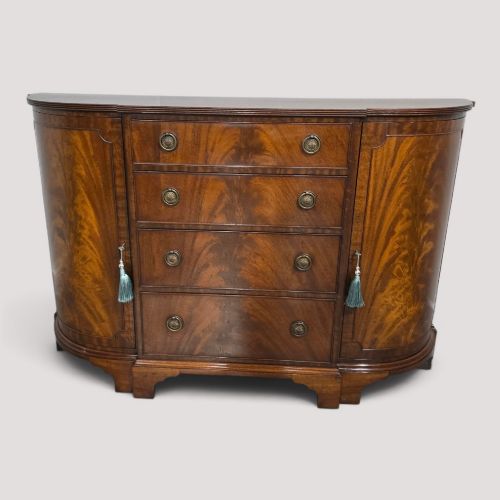
The aesthetic centres on the use of book-matched veneer on drawer fronts, creating symmetrical flame patterns. Such pieces range from compact proportions suited to smaller spaces to larger five-height configurations.
Materials and construction
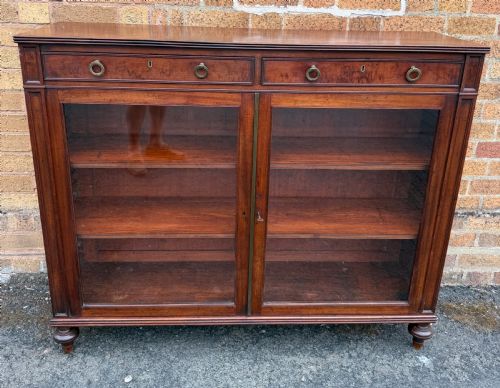
Cabinet makers applied thin slices of flame mahogany veneer over solid secondary woods such as oak and pine to achieve striking visual patterns without warping the structure. Boxwood inlay and brass fittings provided linear contrast and functional hardware across drawer fronts and sideboards.
Drawer construction relied on hand-cut dovetails and oak linings, ensuring durability across centuries of daily opening and closing. Secondary elements like glass, bone, and satinwood occasionally appeared in specialised compartments and secretaire fitments.
Listings feature nineteen-century periods including Regency, Georgian, and Victorian eras, alongside specialised forms like Davenport desks and linen presses.
Quality variations in the range
The standard of timber selection largely defines the visual appeal, with top-tier examples displaying deeply figured flame veneers matched symmetrically across every drawer front. Poorer versions rely on plain mahogany timber or show heavy patching and uneven fading across the surface.
Joinery precision and original hardware also dictate tier, as pieces retaining contemporary brass handles and smoothly running dovetailed drawers command greater appreciation. Lesser examples often suffer from replaced elements, warped carcases, or poorly executed later restorations.
Gillows of Lancaster
The Regency Flame Mahogany Drawers Glossary
- Flame mahogany veneer
- A decorative wood slicing taken from the fork of the mahogany tree where branches join the trunk. This cut produces a rippling, flame-like figure prized by Regency cabinet makers.
- Bow front
- A convex curved cabinet front popular during the Georgian and Regency eras. This shape softens the room's geometry while maximising internal storage capacity.
- Secretaire chest
- A multipurpose furniture form featuring a fitted top drawer that pulls down to reveal a writing desk surface and small pigeonholes. It combines the utility of a bureau with the profile of a standard chest of drawers.
- Dovetail
- A traditional interlocking woodworking joint used to secure drawer corners together. Hand-cut variations indicate the period of manufacture before machine production became common.
- Tallboy
- A tall vertical chest of drawers, often constructed in two stacked sections. This form provided substantial storage within a minimal footprint in period bedchambers.
Regency Flame Mahogany Drawers: Frequently Asked Questions
How do I identify a genuine Regency chest?
Authentic pieces generally display period construction methods such as hand-cut dovetailing on oak drawer linings and traditional timber shrinkage patterns. Examining the backboards and interior secondary woods helps confirm the nineteenth-century origin.
Stylistic cues like graduating drawer depths, cockbeading around drawer edges, and original brass pull handles further separate true Regency items from later nineteenth-century revival pieces or twentieth-century reproductions.
What is flame mahogany?
Flame mahogany is a specialised veneer sourced from the junction where branches meet the main trunk of the tree. The resulting grain creates a dramatic, feather-like pattern that reflects light differently from various angles.
Cabinet makers during the Regency period utilised this figured wood prominently on principal drawer fronts to create striking visual symmetry and decorative depth.
How should I care for antique mahogany furniture?
Keep wooden furniture away from direct heat sources and strong sunlight to prevent the timber from drying out and the veneer from lifting. Maintaining stable indoor humidity protects both the primary mahogany surfaces and internal oak framing.
Apply traditional wax polishes sparingly and buff with a soft cloth to maintain the natural lustre without building up heavy chemical layers over the antique finish.
What is the difference between Georgian and Regency styles?
Georgian furniture spans the reigns of the four King Georges, encompassing heavier proportions and classical architectural detailing influenced by Palladian design. The style often utilised substantial solid timbers and robust bracket feet.
Regency design represents the later phase of the Georgian era, shifting toward more refined, leaner proportions and archaeological influences from classical Greece and Rome. Flame mahogany veneer and brass inlay became defining decorative elements during this period.