




William IV Chest Drawers
A william iv chest drawers brings heavy timber and restrained classical lines into a room, offering sturdy storage with architectural presence.
William IV Chest Drawers
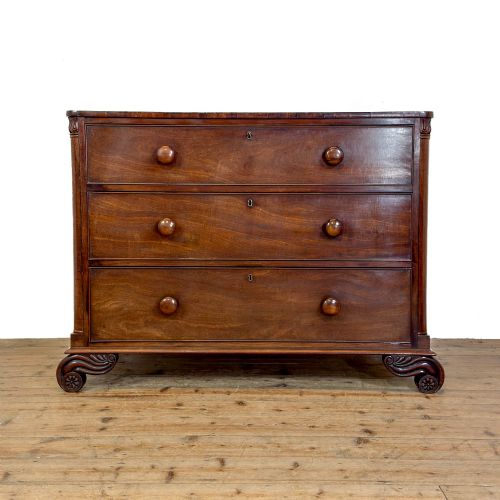
When someone searches for a william iv chest drawers, they are looking at heavy case furniture made primarily during the early nineteenth century. These pieces display the characteristic transition from Regency classical severity toward bolder Victorian proportions and weight.
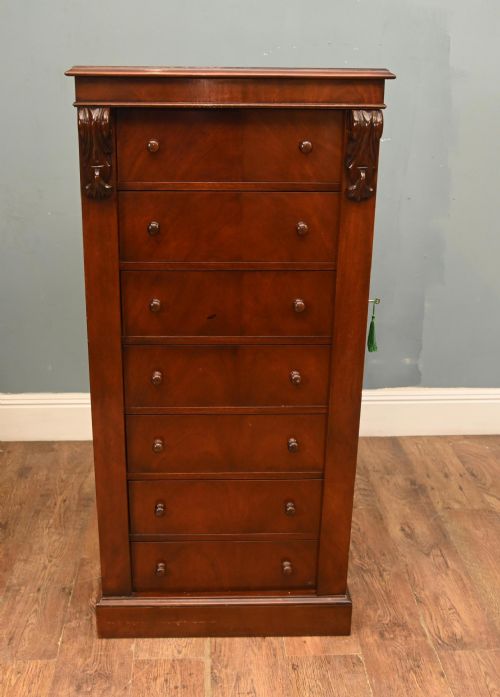
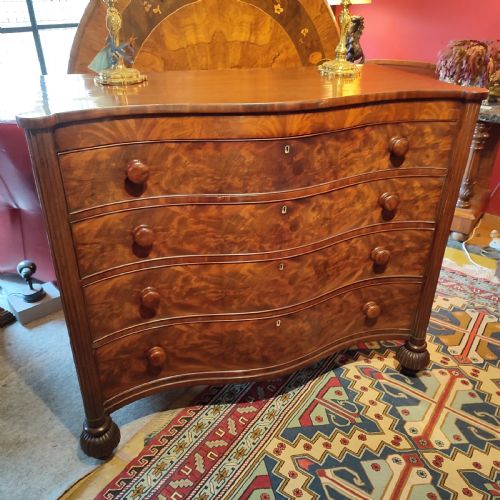
The version most commonly encountered on this page is constructed from mahogany, often featuring flame veneers or fiddle back figuring. Forms range from standard rectangular carcases to bow front, serpentine, and specialised Wellington or secretaire configurations.
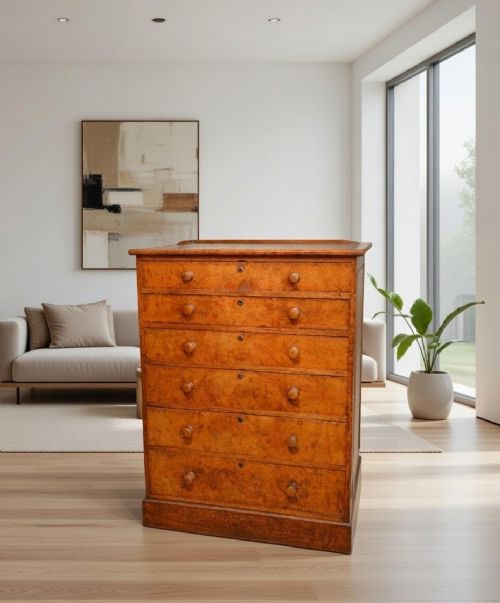
Makers and workshops of the period also produced related cabinet work such as collectors cabinets and cellarettes, reflecting the versatile joinery of the era. Pieces frequently date from the eighteen-thirties, aligning with the reign from which the style takes its name.
Construction and Materials
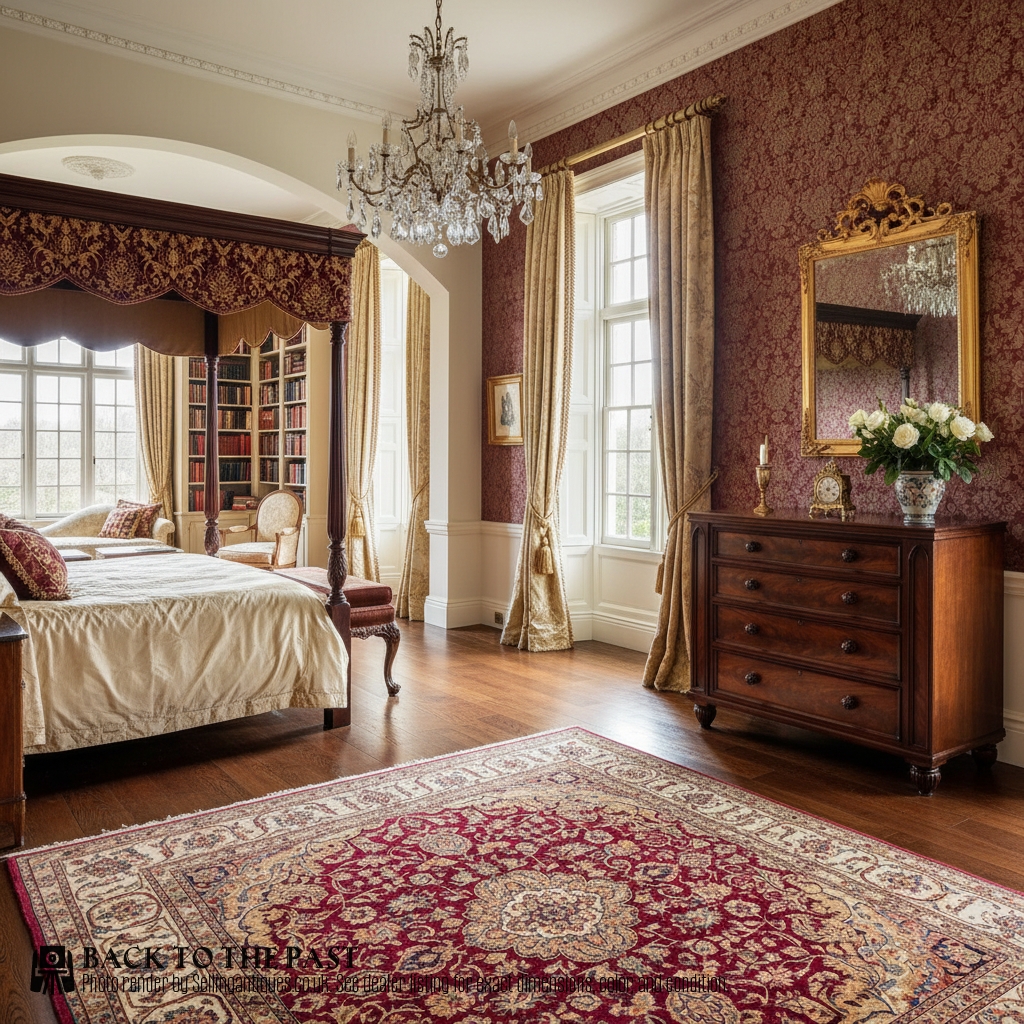
Cabinet makers built these carcases using solid wood frames lined with secondary timbers such as oak, applying choice mahogany veneers to the primary visible surfaces. Flame mahogany veneer and fiddle back grain provided decorative movement across large drawer fronts.
Detailed joinery included hand-cut dovetails for drawer construction and turned columns or pilasters applied to the front corners. Brass drawer pulls, handles, and escutcheons finished the pieces, alongside secondary woods like burr oak and pollard oak in select examples.
The archive records nineteenth-century dates alongside earlier Georgian and Regency stylistic influences.
Judging Quality
The grade of a william iv chest drawers depends heavily on the selection and matching of wood veneers across the drawer fronts. Uniformity in the flame figure and careful book-matching elevate a piece beyond standard utility furniture.
Subtleties of proportion, such as neat dimensions, serpentine curves, or integrated architectural columns, distinguish master cabinet work from simpler provincial production. Original brass hardware and well-executed drawer linings also indicate higher standards of manufacture.
C Hindley·Charles William Schofield
The William IV Chest Drawers Glossary
- Flame Mahogany
- A veneer cut from timber where the grain creates a flickering, flame-like pattern across the surface. This timber was prized for principal display faces.
- Wellington Chest
- A tall, narrow chest of drawers secured by a locking side flap that fastens over the drawer edges. It typically holds seven or eight small drawers.
- Secretaire Chest
- A chest featuring a fitted writing drawer that pulls down to reveal small compartments and a leather-lined writing surface. It conceals its desk function behind standard drawer lines.
- Fiddle Back
- A figured wood grain showing ripples resembling the back of a violin. It results from undulating growth rings in the timber.
- Bow Front
- A convex curved front facade popular in nineteenth-century case furniture. This shape softens the corners of the room and catches light across the grain.
William IV Chest Drawers: Frequently Asked Questions
What defines a William IV chest of drawers?
A William IV chest of drawers typically dates from the eighteen-thirties, displaying solid proportions, mahogany construction, and restrained classical detailing like turned columns or recessed pilasters.
These pieces bridge the gap between Regency elegance and early Victorian mass, often utilising striking flame mahogany veneers to create visual depth across the drawer fronts.
How do I spot a Wellington chest?
A Wellington chest stands taller and narrower than standard chests, featuring a vertical locking bar or hinged stile on one side that secures all the drawers at once.
This specific form originated to safely store small collections or personal documents in compact upright spaces.
Where were these chests used?
Original placement was primarily in domestic bedrooms, dressing rooms, and private studies of nineteenth-century townhouses and country estates.
Today, their substantial storage capacity and flat top surfaces make them practical for modern living rooms, hallways, and bedrooms.
How do I care for mahogany surfaces?
Maintain mahogany timber by keeping it away from direct heat sources and strong sunlight, which can dry out and fade the historic veneers over time.
Apply traditional beeswax occasionally and buff gently with a soft cloth to nourish the wood and preserve its natural sheen.