


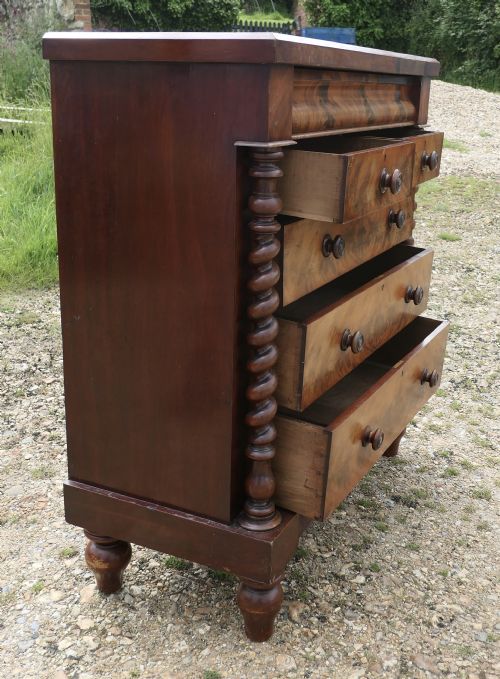


Large Mahogany Tallboy
A large mahogany tallboy provides commanding storage, pairing rich timber grain with substantial vertical presence for traditional bedrooms.
Large Mahogany Tallboy
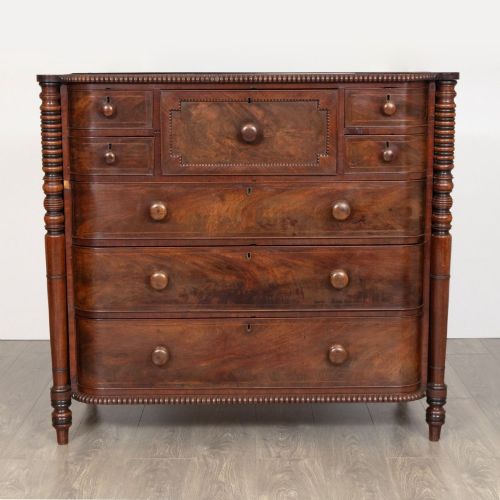
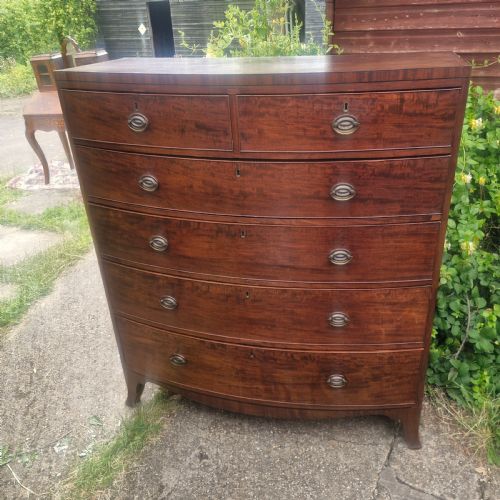
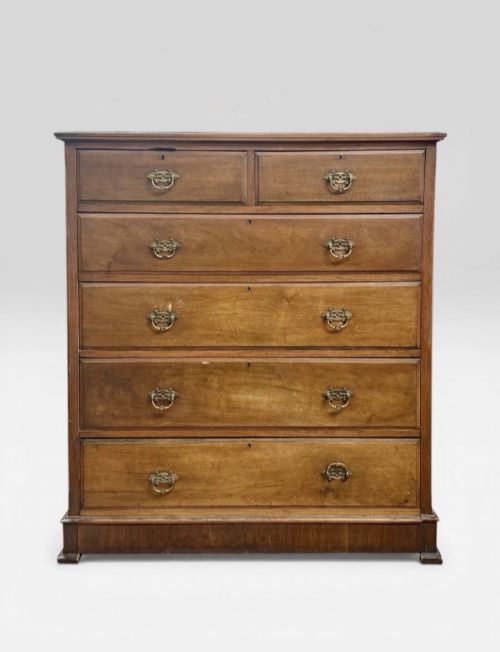
A large mahogany tallboy typically presents as a chest on chest or an imposing vertical storage unit designed to hold substantial linen and garments. These pieces emerge predominantly from the eighteenth century, the Georgian era, and the Victorian period.
Forms extend beyond standard chests to incorporate Wellington chests and compactum wardrobes, maintaining the characteristic tall proportions. Oak and pine often appear as secondary woods within the drawer linings and internal framing.
Distinctions in construction and finish
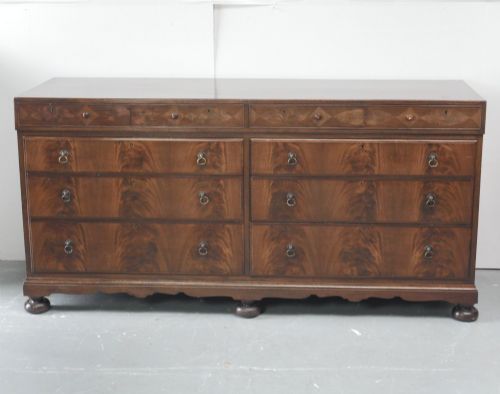
Superior examples demonstrate meticulous timber selection, particularly in matched flame veneers that create symmetrical patterns across multiple drawer fronts. The integration of secondary woods like oak inside drawer construction indicates higher workshop standards.
Proportion and architectural detail separate standard utility items from masterwork case pieces, especially where crisp cockbeading and original brass hardware remain intact. Structural integrity through centuries of use relies entirely on precise dovetail joinery.
Listings span the eighteenth century through the Edwardian period, featuring solid mahogany, flame mahogany veneer, oak, pine, and brass.
Whytock & Reid·Maples & Co
The Large Mahogany Tallboy Glossary
- Tallboy
- A tall chest of drawers, often constructed as one chest stacked upon another, historically used for storing clothing. This form maximises storage while occupying a minimal floor footprint.
- Flame mahogany
- A veneer cut from timber where the branch meets the trunk, producing a distinctive flickering flame pattern. Cabinet makers reserved this striking grain for primary display surfaces.
- Serpentine front
- A furniture front characterised by a curved outline that swells outward in the centre and recesses at the sides. This shape demands advanced woodworking skill to execute properly.
- Wellington chest
- A tall, slender chest featuring a hinged vertical locking stile secured by a side-mounted bar and key. Originating in the nineteenth century, it typically houses seven graduated drawers.
- Brushing slide
- A pull-out shelf integrated into the carcase above the drawers, traditionally used for folding clothes or inspecting garments. It adds functional versatility to tall storage furniture.
Large Mahogany Tallboy: Frequently Asked Questions
How do I fit a tallboy in a modern room?
A large tallboy requires adequate vertical clearance and careful anchoring to a wall to ensure stability. Measure your ceiling height and floor space before placement.
Position the piece away from direct heat sources to prevent the mahogany timber from drying out or splitting over time.
How do I care for mahogany surfaces?
Dust the wood regularly with a soft, dry cloth to prevent grit accumulation on the polished finish. Avoid using silicone sprays that can penetrate old timber pores.
Apply high-quality beeswax sparingly when the wood appears dry, buffing gently to maintain the natural warmth and depth of the grain.
How can I tell George III from Victorian pieces?
George III pieces generally exhibit lighter proportions, finer bracket feet, and restrained stringing inlay reflecting eighteenth-century taste. The timber selection often highlights natural grain without heavy dark staining.
Victorian tallboys tend to be heavier, incorporating deeper drawers, bolder turned feet, and highly figured flame veneers associated with mid-nineteenth-century manufacturing.