
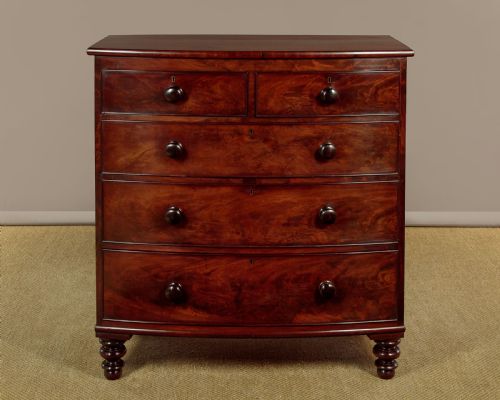

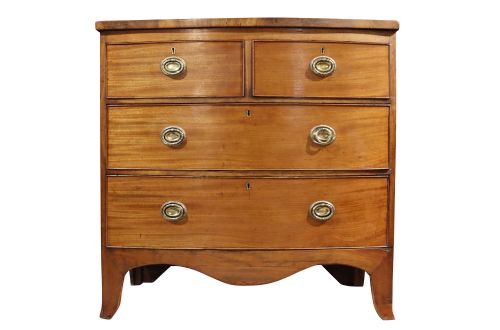


Victorian Bow Front Chest
A Victorian bow front chest brings immediate architectural movement and rich timber warmth to a room.
Victorian Bow Front Chest Forms and Origins
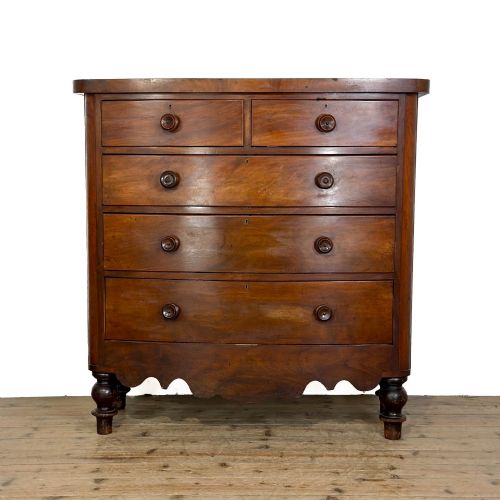
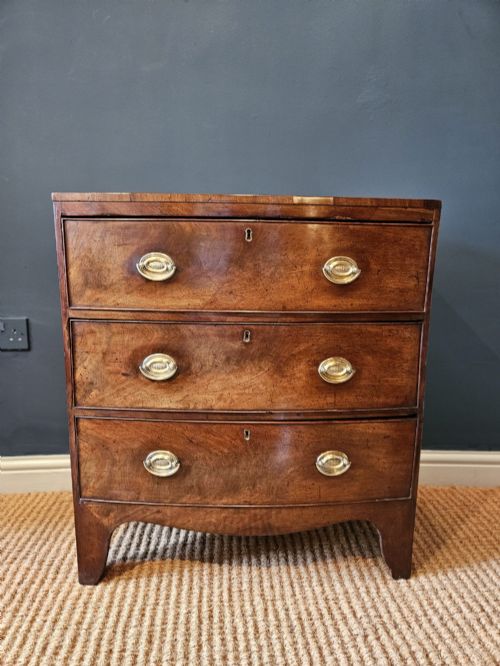
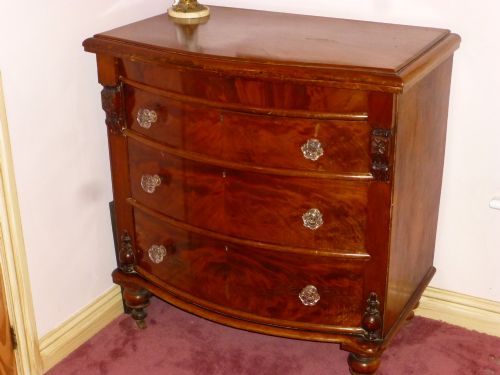
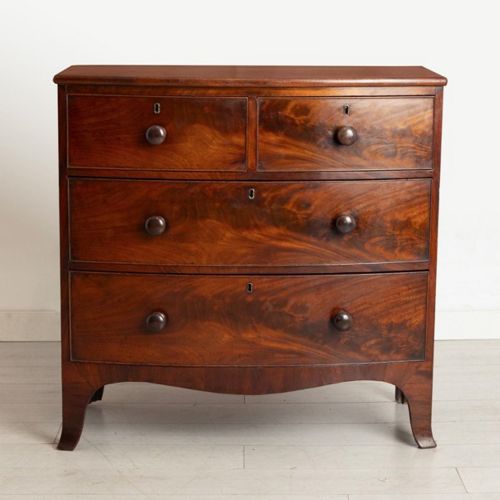
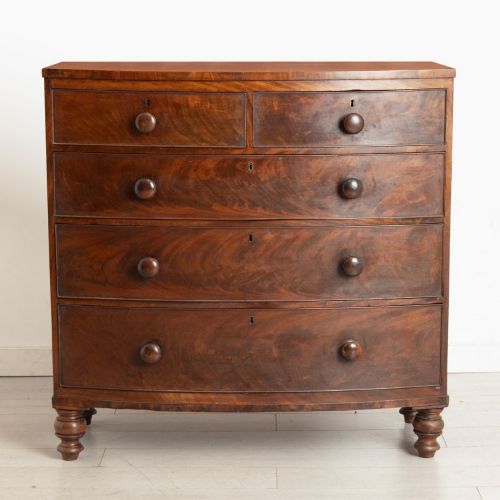
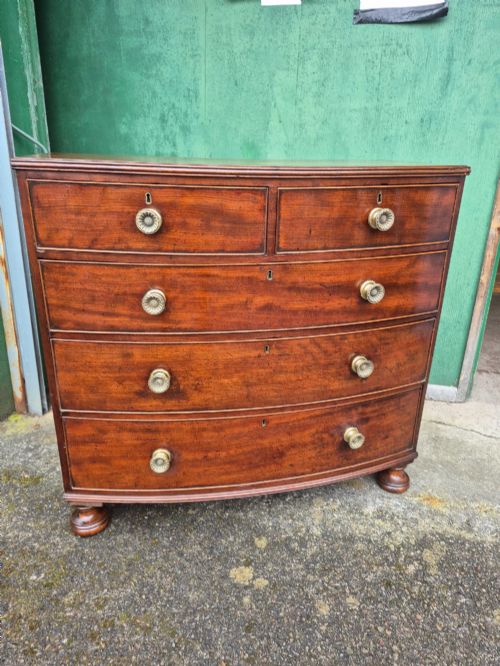
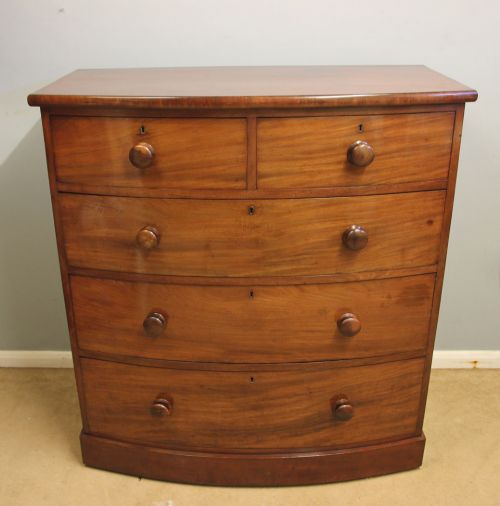
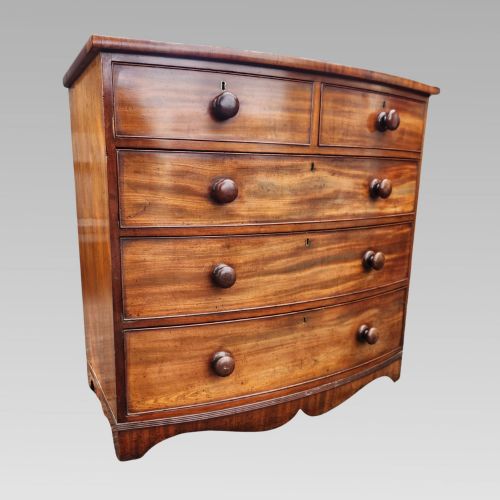
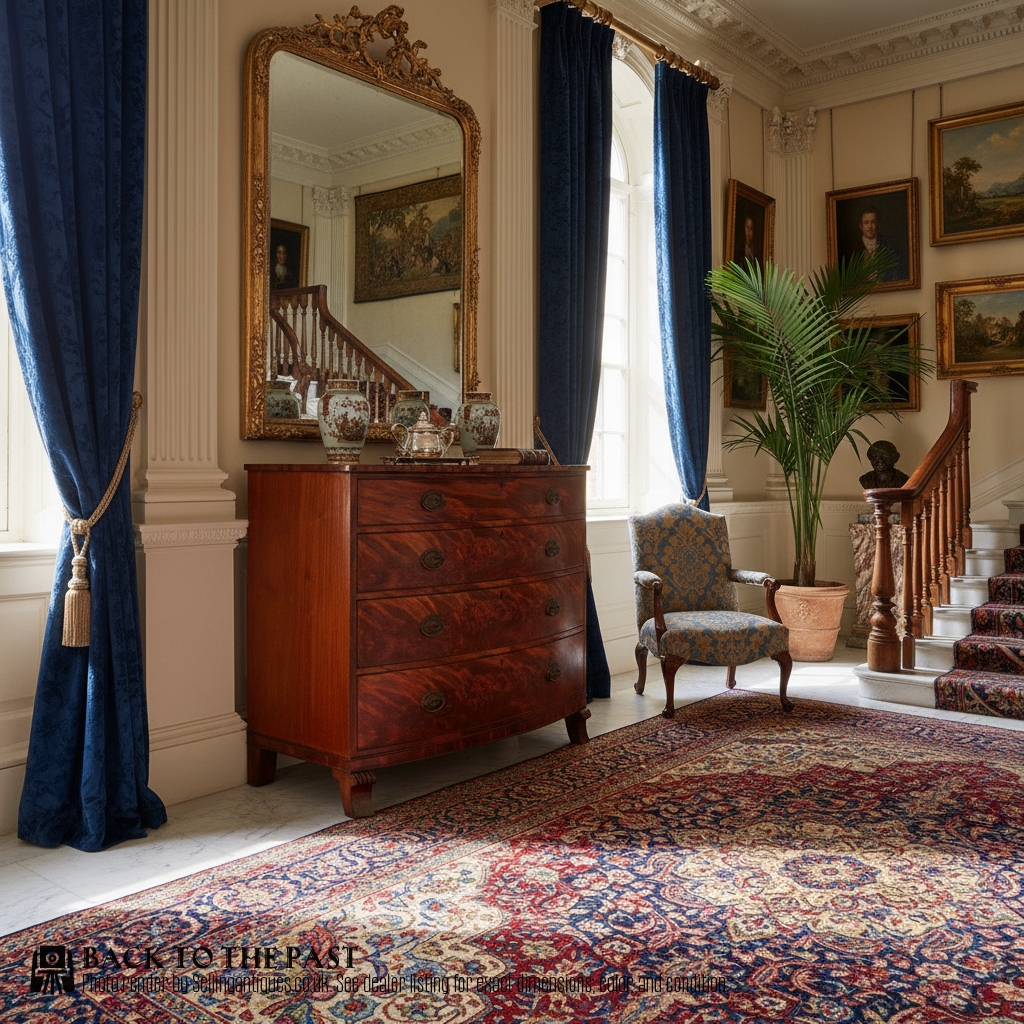
A Victorian bow front chest presents a gently curved convex facade that softens the rigid geometry typical of standard bedroom storage. These pieces appear most frequently in mahogany, constructed as tall case furniture with graduated drawer arrangements.
The archive records variations ranging from compact bedside formats to large bedroom chests standing on turned supports. Pieces emerge from both British workshops and American makers dating across the nineteenth century.
Buyers encounter standard configurations such as two short drawers over three long drawers, alongside occasional secretaire formats fitted with internal writing compartments.
Materials and Construction Techniques
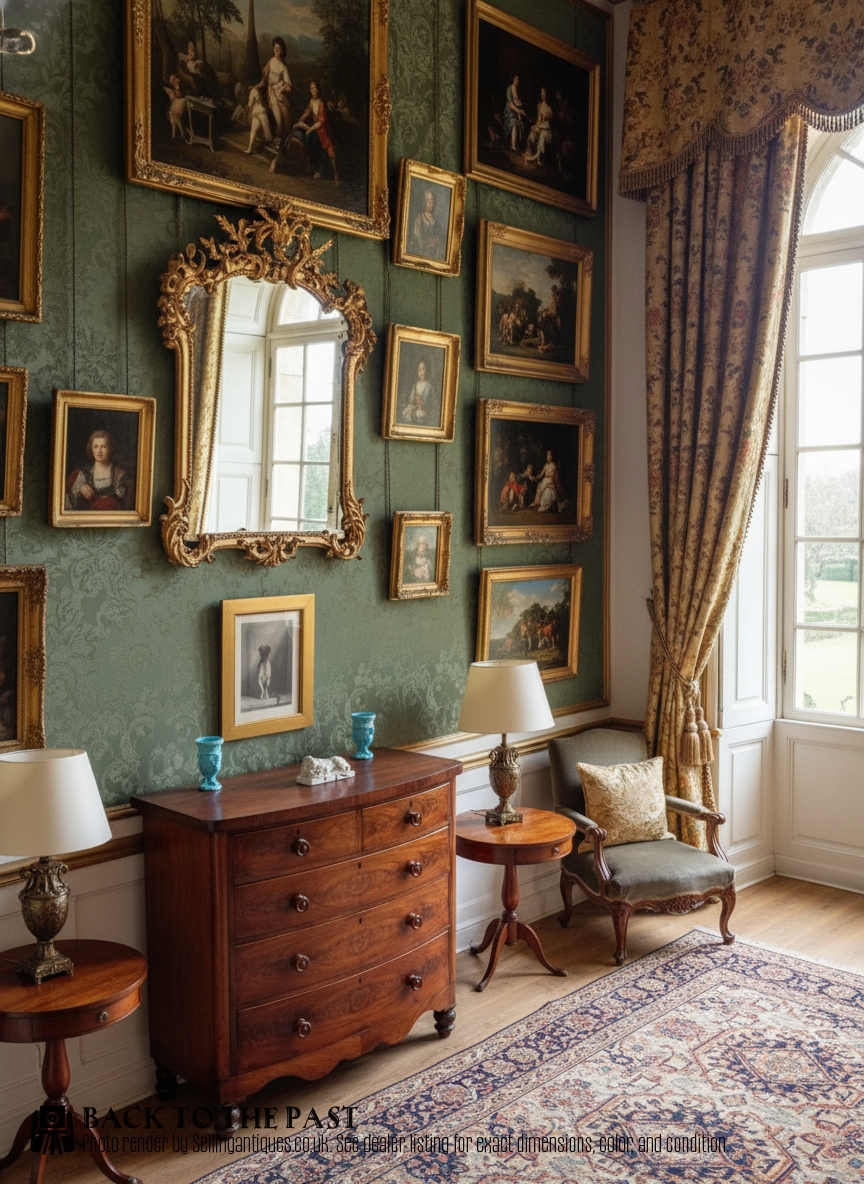
Cabinet makers built these carcasses primarily using solid pine or secondary timbers faced with figured mahogany and flame mahogany veneers. The curved drawer fronts required skilled manipulation of timber to follow the sweeping radius of the frame.
Surfaces receive decorative enrichment through contrasting details like ebony string inlay and brass hardware. Drawer pulls vary between turned wooden knobs, brass drop handles, and cast lion head motifs.
Retail Price Guide 2026
Typical UK retail prices for victorian bow front chest, calculated from the Sellingantiques database of over a million retail prices indexed since 2003. This retail price guide relies exclusively on Sellingantiques data; no external sources or auction records are used, so the figures do not describe the wider market.
Some chests feature fierce cast brass lion head handles that grip drop rings in their teeth.
Distinctions in Craftsmanship
Quality rests heavily on the choice of timber veneer, where highly figured flame mahogany displays rolling grain patterns across the curved drawer fronts. Finer examples exhibit tight botanical matching and precise edge banding.
Structural integrity reveals itself in the hand-cut dovetail joints securing the drawer construction and the seamless continuation of the curved moulding along the top edges.
The Victorian Bow Front Chest Glossary
- Bow front
- A convex curved cabinet facade that projects outward in a smooth arc. This curved profile requires specialised joinery to shape the drawers and frame.
- Flame mahogany
- A distinctive wood veneer cut from branches or fork joints of the mahogany tree. It produces a fiery, feather-like grain pattern prized by cabinet makers.
- Secretaire
- A cabinet incorporating a pull-out drawer fitted with a drop-front writing surface and internal pigeon holes. It conceals a compact desk space within standard drawer dimensions.
- Stringing
- Thin inlaid lines of contrasting timber used to outline panels and drawer edges. This decorative technique highlights the structural geometry of the furniture.
Frequently Asked Questions
How do I date a Victorian bow front chest?
Dating relies on examining construction methods, timber choice, and hardware styles across the piece. Earlier examples often feature finer proportions and specific handle designs compared to later production.
Secondary woods visible inside the drawers or backboards offer additional clues to the manufacturing decade.
Are these chests suitable for modern bedrooms?
These chests provide substantial storage capacity while occupying a relatively compact floor footprint. The projecting curve adds visual interest that complements contemporary interior schemes.
Careful measurement of clearance space ensures the curved drawers open smoothly against surrounding furniture.
How do I care for mahogany veneer surfaces?
Maintenance involves dusting with a soft cloth and avoiding exposure to direct sunlight and extreme humidity fluctuations. These precautions protect the delicate wood veneers from drying and lifting.
Applying occasional appropriate wax polish nourishes the timber and preserves the natural lustre of the grain.