
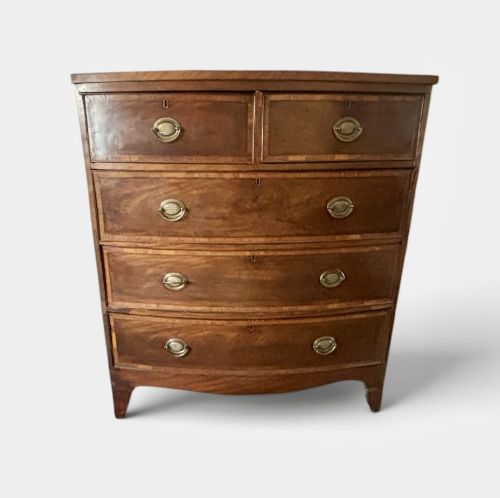
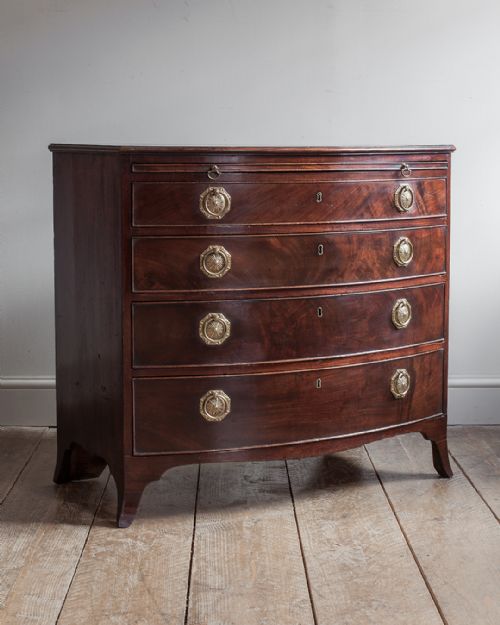
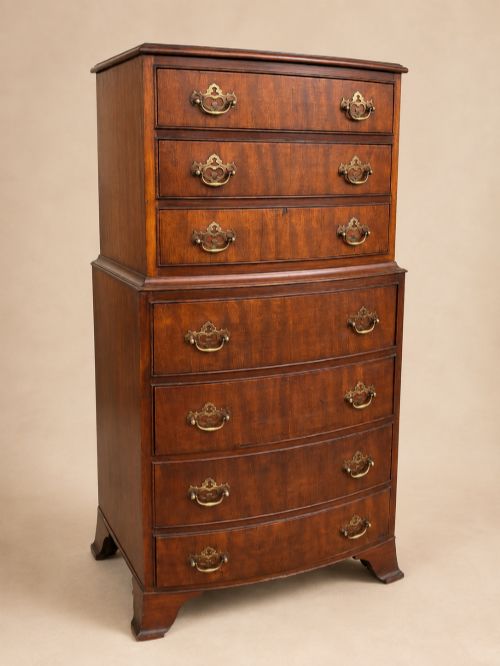
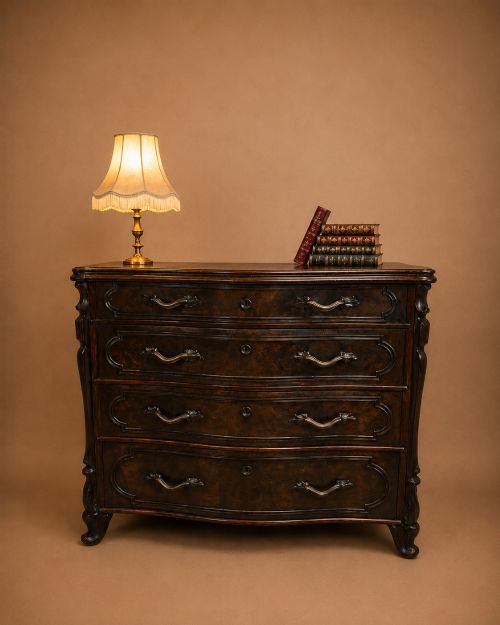
Curved Front Mahogany Drawers
Curved front mahogany drawers combine flowing lines with rich timber, offering storage shaped by cabinetmakers in Georgian, Regency and Victorian workshops.
Curved Front Mahogany Drawers
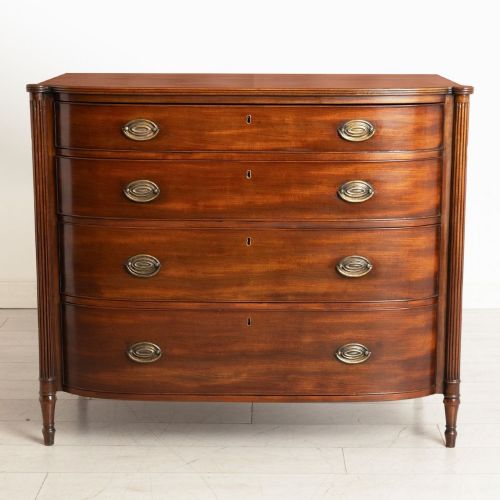
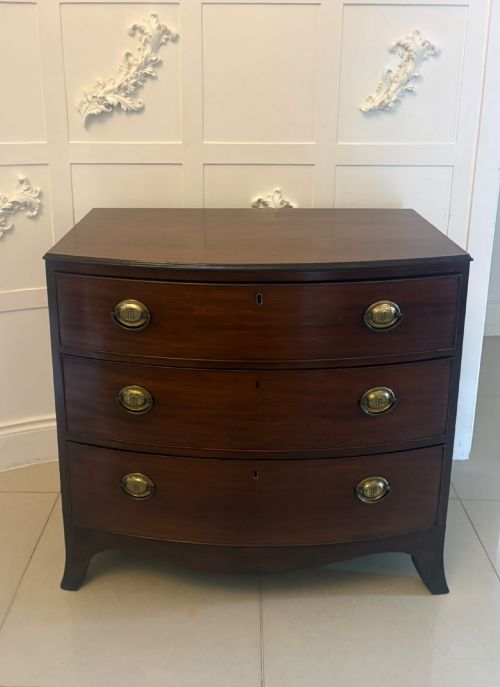
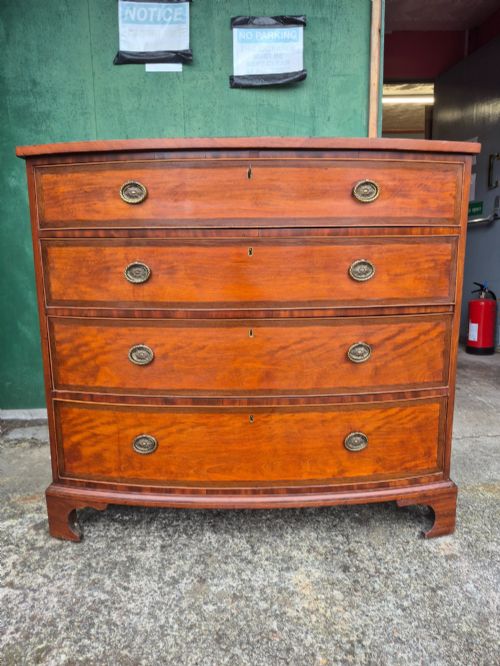
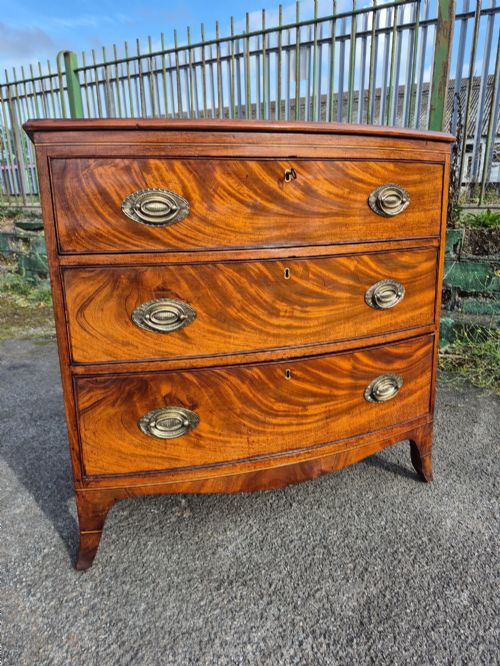
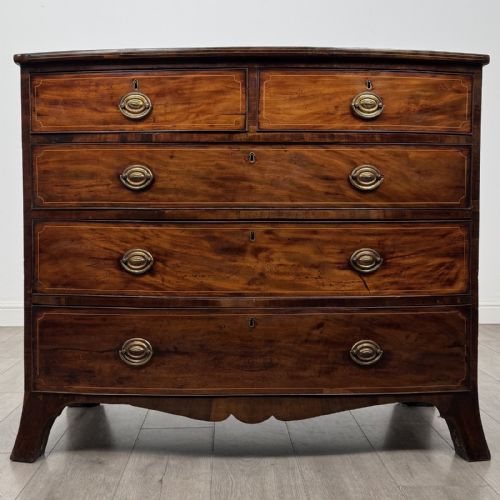
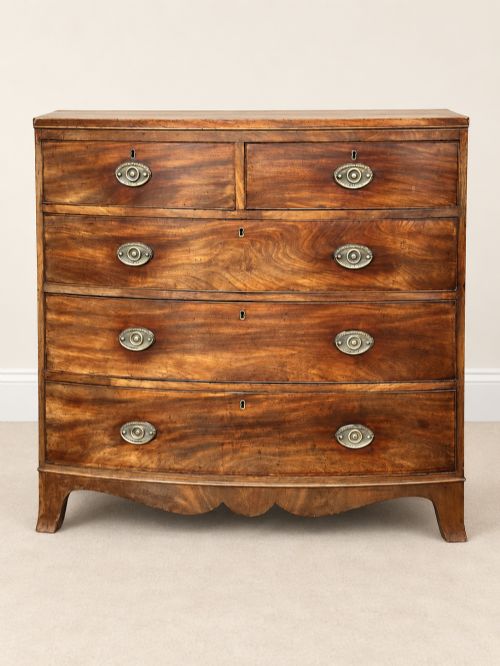
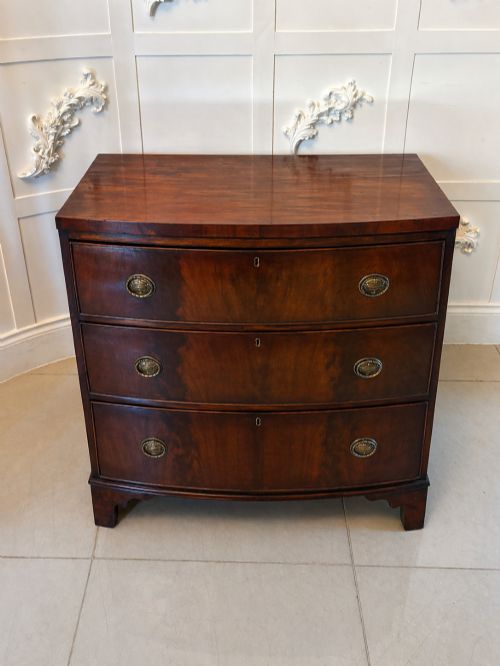
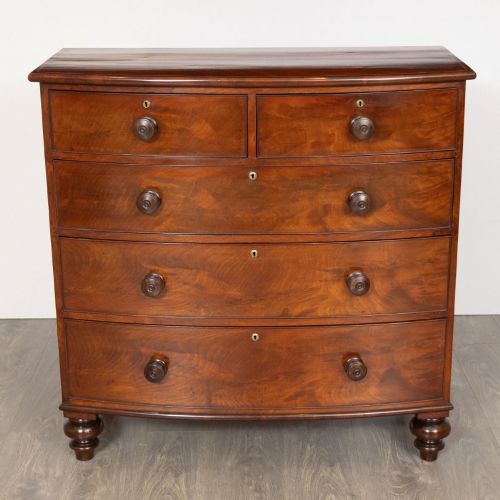
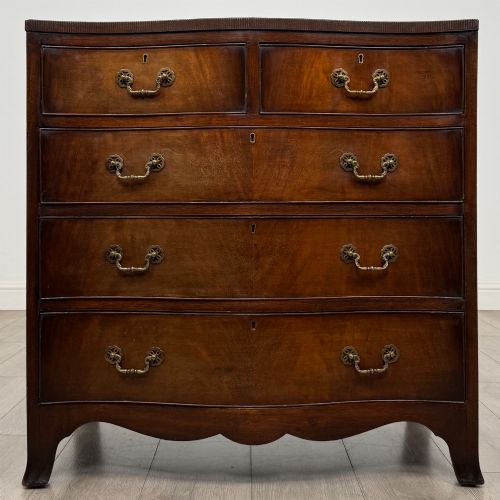
When searching for curved front mahogany drawers, you encounter chest of drawers and side pieces formed with a bowed or serpentine profile. These items emerge chiefly from Georgian, Regency and Victorian periods, alongside later revival pieces.
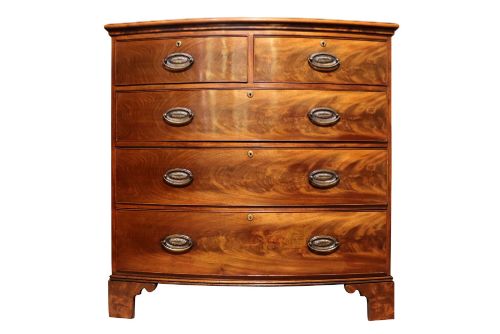
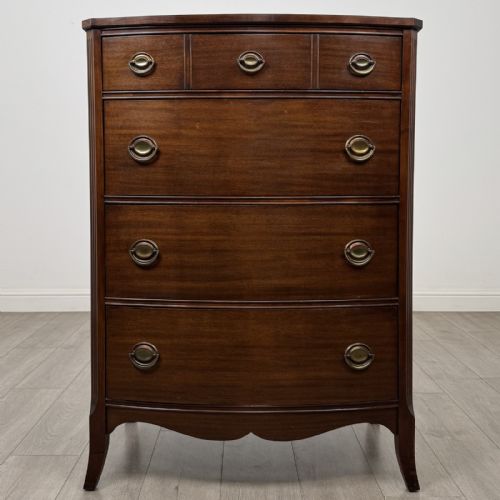
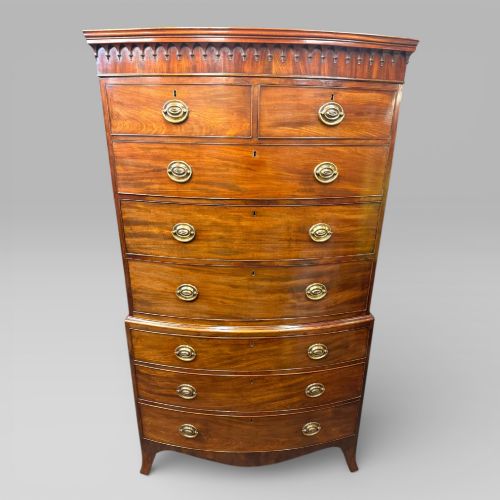
The most frequent form on this page is the bow front chest of drawers, ranging from small bedside versions to large tall chests and larger sideboards. Cabinetmakers built these storage pieces using solid timbers and carefully laid veneers to follow the sweeping facade.
How they were made
Cabinetmakers constructed these pieces primarily using mahogany and flame mahogany veneer, supported by secondary woods such as pine for internal framing and drawer linings. Boxwood inlay and satinwood banding often provide contrasting borders along the edges of the curved carcase.
Makers shaped the convex bow fronts and undulating serpentine facades through precise carpentry, integrating brass pull handles and occasionally secret drawers hidden within the upper rails.
Certain Welsh examples hide a secret drawer tucked cleverly beneath the top moulding.
What varies in quality
The distinction between tiers of quality rests on the selection of timber figures and the precision of the curved joinery. Pieces featuring matched flame mahogany veneers and crisp boxwood stringing demonstrate higher levels of workshop execution.
Structural harmony also dictates merit, seen in how smoothly the graduated drawers operate within their bowed openings and how cleanly the feet and top mouldings meet the main body of the chest.
The Curved Front Mahogany Drawers Glossary
- Bow front
- A convex curved cabinet front that swells outward in the centre. This shape softens the profile of a standard rectangular chest.
- Serpentine
- A furniture front curved with a convex centre flanked by concave ends, creating a wave-like profile. This demanding form requires skilled woodworking.
- Flame mahogany
- A veneer cut from the fork of the mahogany tree where branches join the trunk. It displays a distinctive fiery, rippled grain pattern.
- Satinwood
- A pale, hard timber utilised for contrasting stringing and banding on darker mahogany surfaces. It adds a bright linear border to drawer fronts.
- Chest on chest
- A tall storage unit formed of two stacked carcases, with a smaller upper chest resting upon a larger base. These pieces provide substantial vertical capacity.
Curved Front Mahogany Drawers: Frequently Asked Questions
What periods do these pieces come from?
These items date principally from the Georgian, Regency and Victorian eras, spanning the eighteenth and nineteenth centuries.
Later examples also appear from Edwardian and twentieth-century revival periods, maintaining the traditional curved forms.
How do bow front and serpentine chests differ?
A bow front projects outward in a single convex curve from side to side.
A serpentine front moves in three directions, featuring a convex centre and concave outer wings that require more complex carpentry.
Where were these storage pieces used?
Owners placed these chests primarily in bedrooms to hold garments, linens and personal items.
Smaller side tables and sideboards served in dining rooms and hallways for serving and general storage.
What woods appear alongside the main timber?
Mahogany forms the primary visible carcase and drawer fronts, frequently enhanced by flame mahogany veneers.
Boxwood and satinwood provide contrasting inlay lines, while secondary woods like pine appear inside drawer boxes.