
Nineteenth Century Wooden Drawers
Nineteenth century wooden drawers are practical storage pieces shaped by Georgian, Regency, and Victorian hands.
Nineteenth Century Wooden Drawers
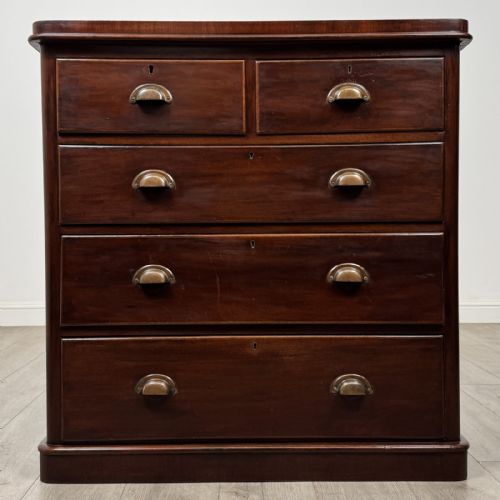
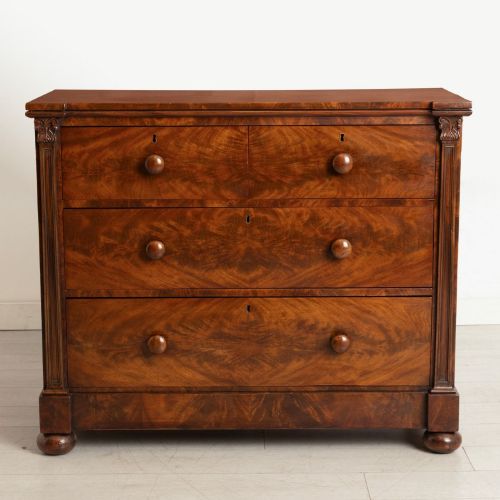
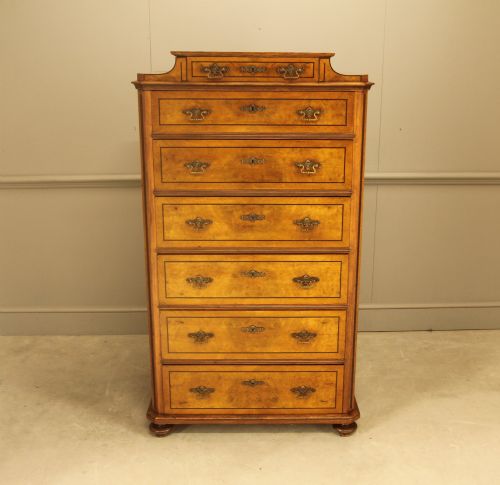
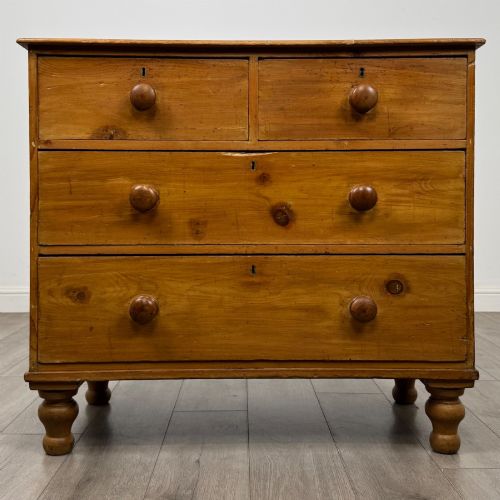
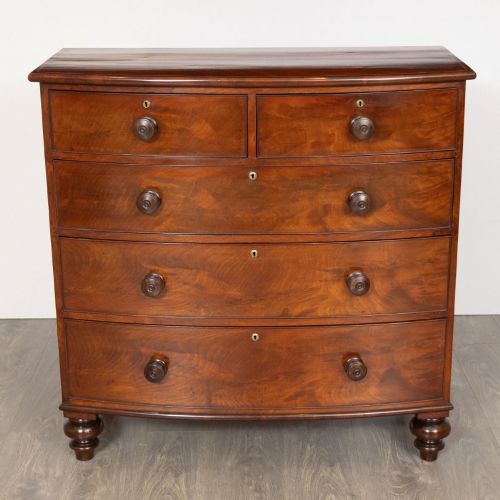
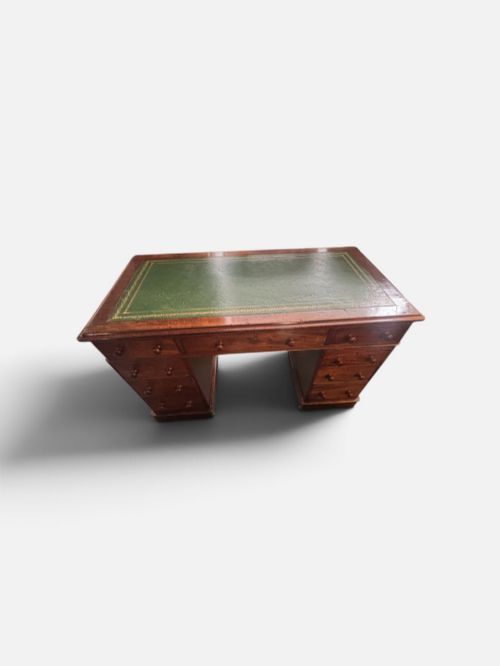
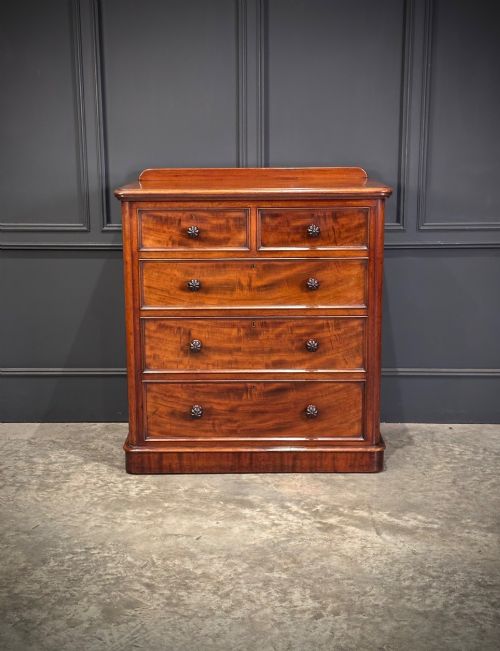
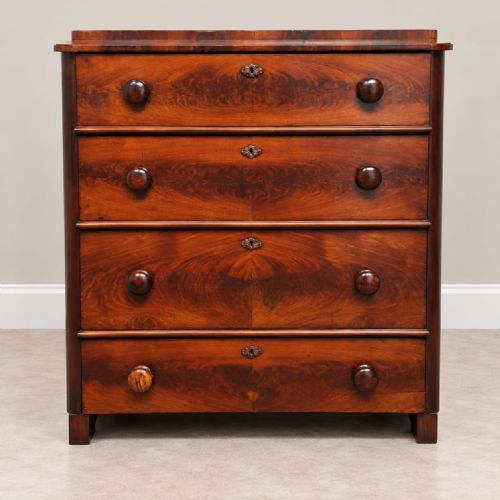
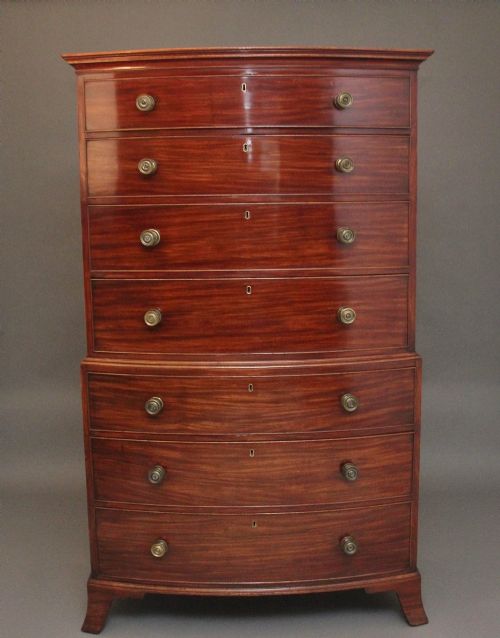
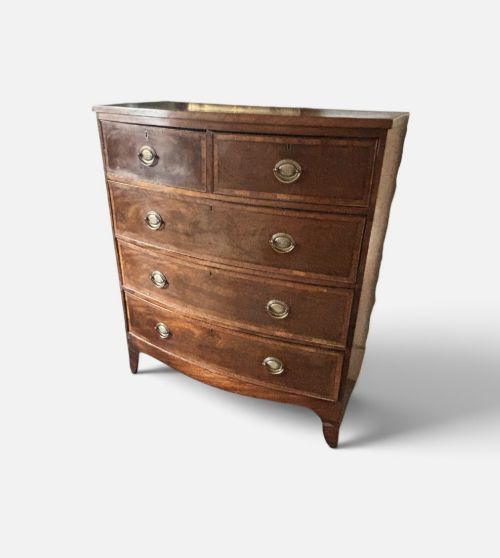
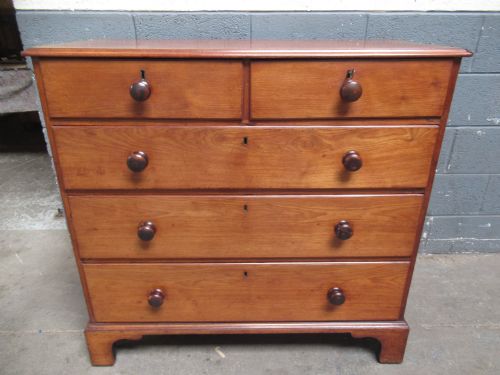
Nineteenth century wooden drawers encompass storage forms spanning the Georgian, Regency, and Victorian periods. The most common iteration met on this page is the mahogany chest of drawers, often found in straight front or bow front configurations.
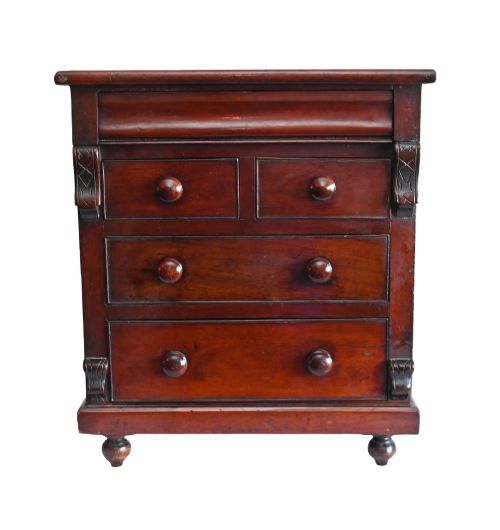
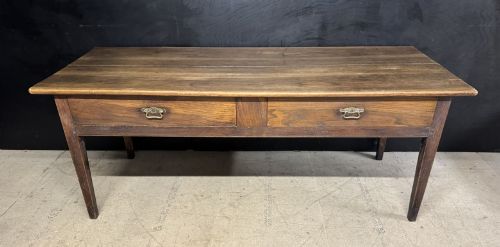
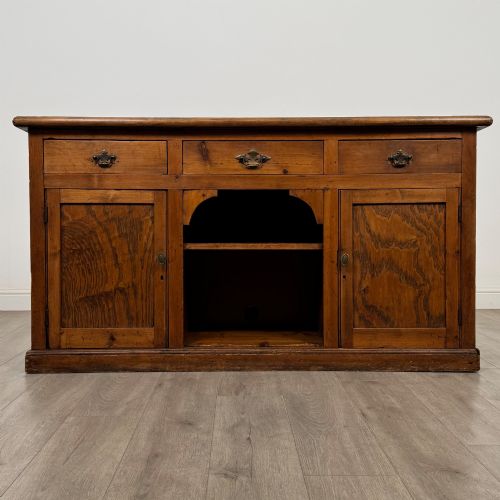
Beyond standard chests, the selection includes tallboys, mule chests, miniature apprentice pieces, and collectors cabinets. These pieces demonstrate diverse regional origins and stylistic influences such as French Provincial, Biedermeier, and Sheraton.
Materials and Construction
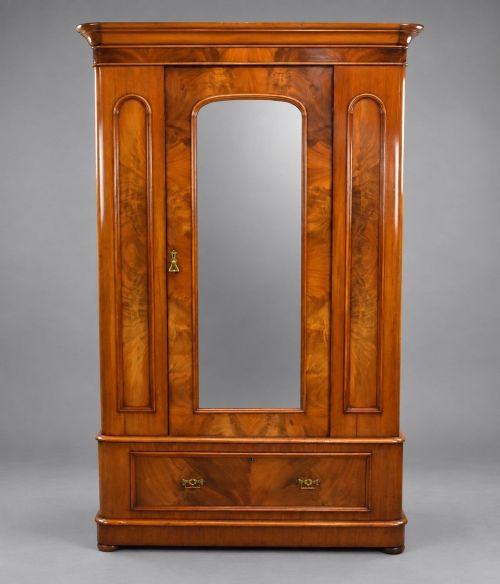
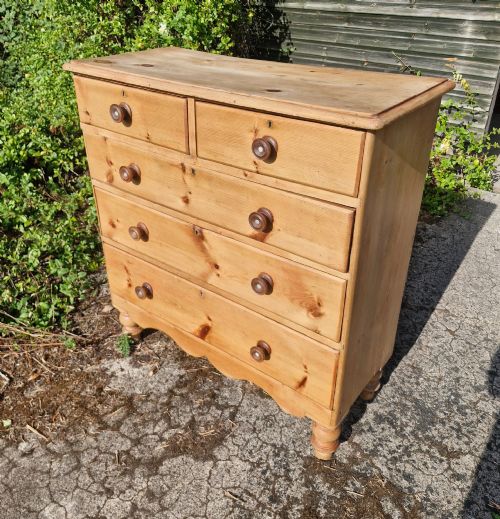
Makers relied heavily on solid mahogany, flame mahogany veneer, walnut, and pine, frequently pairing them with secondary woods like oak. Cabinetmakers employed techniques such as satinwood crossbanding to frame drawer fronts and enhance visual depth.
Hardware details typically involved brass pulls, escutcheons, and occasionally bone inlay. Construction methods prioritized sturdy dovetail joints for drawers and panelled carcases designed to withstand daily domestic use.
Listings feature woods including mahogany, flame mahogany veneer, walnut, pine, satinwood, rosewood, and cherrywood across the nineteenth century.
Assessing Quality and Execution
Quality rests in the selection of timber veneers and the precision of the cabinetwork. Pieces utilising well-matched flame mahogany veneer or crisp satinwood crossbanding demonstrate a higher level of workshop ambition.
Structural integrity and the retention of original brass hardware elevate an example. The crispness of carved details, proportional balance, and clean drawer linings separate standard utility items from finer domestic furnishings.
Hobbs & Co.·Howard and Sons
The Nineteenth Century Wooden Drawers Glossary
- Bow front
- A cabinet front that curves outward in a convex shape. This configuration became particularly popular during the Regency period.
- Crossbanding
- A decorative border of veneer laid perpendicular to the grain of the main surface. It frames panels on tabletops and drawer fronts.
- Tallboy
- A tall chest of drawers made by stacking one chest atop another. These pieces maximised vertical storage space in bedrooms.
- Apprentice piece
- A miniature furniture item created by a trainee to demonstrate skill. These smaller objects served practical tabletop or jewellery storage purposes.
- Wellington chest
- A tall, narrow chest of drawers secured by a hinged vertical locking bar on one side. This design kept sensitive correspondence secure.
Nineteenth Century Wooden Drawers: Frequently Asked Questions
How do I identify a Regency chest of drawers?
Regency chests often exhibit clean architectural lines, mahogany or rosewood veneers, and sometimes bow fronts or brass inlay.
They frequently date from the early nineteenth century and reflect classical influences distinct from later Victorian ornamentation.
Where were these drawers used in the home?
Nineteenth century chests and cabinets were primarily positioned in bedrooms, dressing rooms, and hallways for apparel and linen storage.
Smaller variants like jewellery chests or collector cabinets sat upon tables in studies and parlours.
How do I care for antique wood surfaces?
Protect antique wood surfaces by keeping them away from direct sunlight and maintaining stable indoor humidity levels.
Apply traditional wax sparingly and polish with a soft cloth to preserve the historical finish.