

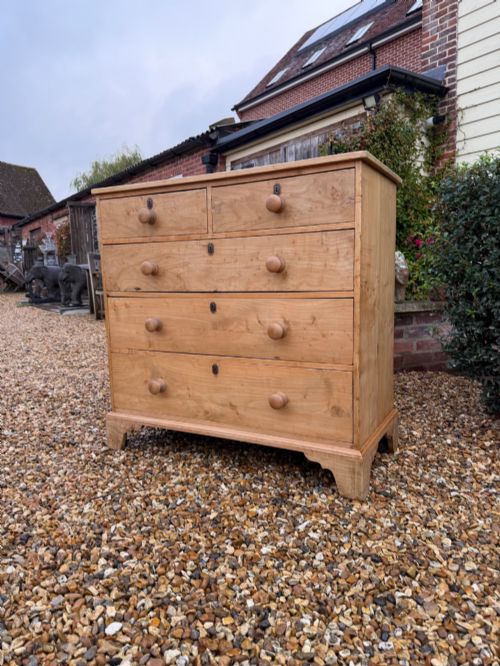
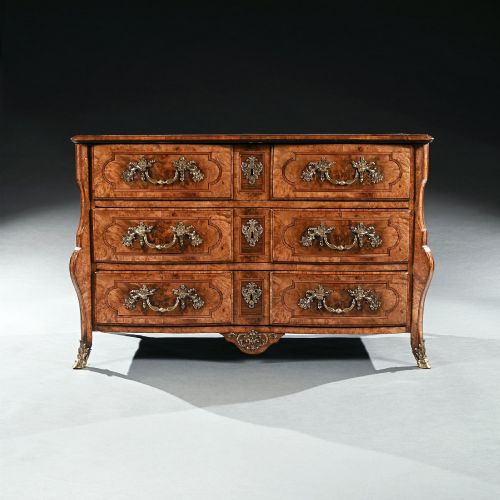
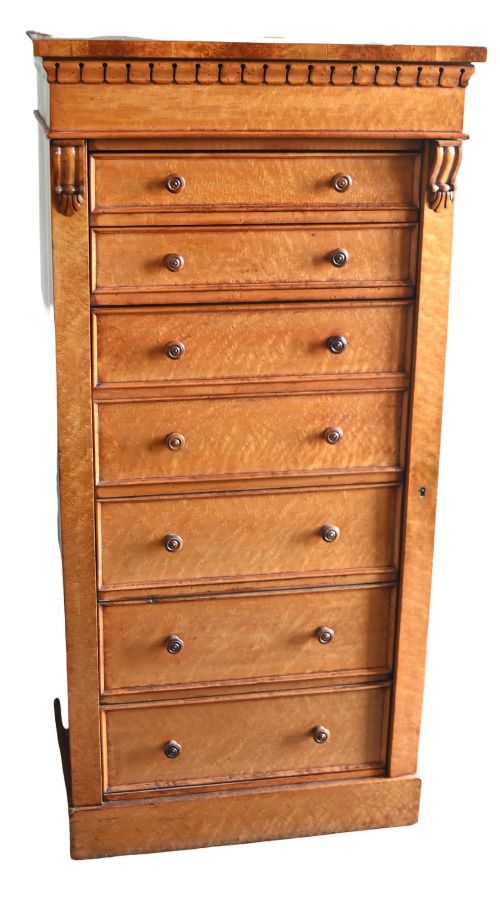
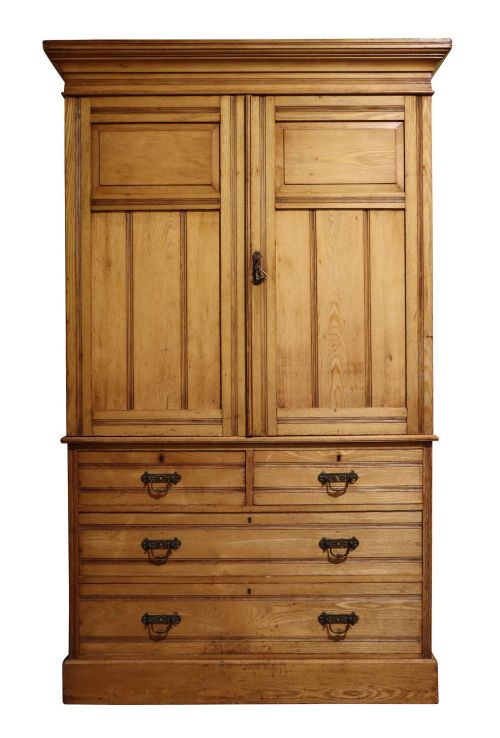


Maple Chest of Drawers
A maple chest of drawers brings distinctive pale timber figures and robust storage into a room, offering both quiet utility and decorative presence.
Maple Chest of Drawers
A maple chest of drawers represents a tradition of bedroom and parlour storage spanning multiple centuries, ranging from compact bedside pieces to towering tallboys and linen presses. The term encompasses standard drawer configurations alongside specialised forms such as gentlemans chests, Wellington chests, and commodes.
The pieces appearing on this page emerge from periods including the seventeenth, eighteenth, nineteenth, and early twentieth centuries, reflecting changing domestic needs. Makers and designers utilised plain timber, bird's-eye figure, and burr maple alongside contrasting woods like mahogany, oak, and walnut.
Buyers will encounter items shaped by distinct historical movements, from William and Mary and Regence designs to Victorian utility, Edwardian refinement, and Art Deco geometry. This variety ensures that a chosen maple chest of drawers aligns with both traditional interiors and cleaner, modern spaces.
What separates the grades
Quality in a maple chest of drawers rests on the selection and matching of the timber figure, particularly the consistency of bird's-eye or burr patterns across drawer fronts and top surfaces. Superior examples demonstrate careful grain alignment and restrained, precise inlay work that enhances rather than overpowers the natural wood.
The structural integrity of the internal framing and drawer movement dictates the functional tier of each piece, distinguishing workshop-built furniture from standard commercial output. Maker attribution, whether through stamps, paper labels, or documented provenance, further separates standard pieces from exceptional examples.
Maple Chest of Drawers Retail Price Guide 2026
Typical asking prices for maple chest of drawers among the pieces listed under this phrase on Sellingantiques today, from the lower quarter to the upper quarter. They describe what is for sale here now, not the wider market.
Listings feature maple alongside oak, mahogany, ash, and walnut across periods spanning the seventeenth century to Art Deco.
Maple & Co·Thomas Hache·Holland & Sons·Gillows·J.Maple
The Maple Chest of Drawers Glossary
- Bird's Eye Maple
- A figure in maple wood resembling tiny swirling eyes caused by local disruptions in the growth grain. It is prized for decorative veneer work on drawer fronts.
- Tallboy
- A tall chest of drawers, often constructed in two stacked sections to provide generous vertical storage. These pieces frequently combine drawers with upper cupboard spaces.
- Wellington Chest
- A tall, narrow chest of drawers secured by a hinged locking side pilaster bar that fastens all drawers simultaneously. The design originated in the nineteenth century.
- Commode
- A low chest of drawers or cabinet, often originating from continental traditions such as the French Regence period. These pieces frequently feature shaped fronts and decorative mounts.
- Gentleman's Chest
- A multi-compartment storage piece combining sliding trays or wardrobe space with lower drawers. They were designed for men's garments and tailored apparel.
Maple Chest of Drawers: Frequently Asked Questions
How do I care for antique maple furniture?
Keep the timber away from direct heat sources and sudden humidity shifts to prevent the wood or veneer from splitting.
Apply a traditional wax polish occasionally to nourish the surface and maintain the natural lustre of the grain.
What is bird's-eye maple?
Bird's-eye maple is a naturally occurring figure in the timber where small circular patterns resemble tiny eyes. Cabinet makers sliced this wood into veneers to highlight the decorative grain on prominent surfaces.
This distinct figuring appears frequently in nineteenth and twentieth-century pieces, particularly within high-quality bedroom suites and chests.
How are different periods identified?
Cabinet construction methods, handles, and timber choices help determine the age of a piece. Earlier seventeenth and eighteenth-century items often show hand-cut joinery and solid timber construction.
Later Victorian and Art Deco examples introduce machine-sawn elements, stamped maker marks, and distinctive geometric silhouettes.
Where were these chests used?
These pieces served primarily in bedrooms, dressing rooms, and grand hallways for storing linens, garments, and personal items. Taller variations maximised vertical storage in compact quarters.
Smaller commodes and bedside chests functioned beside sleeping quarters or within drawing rooms for secondary storage.