
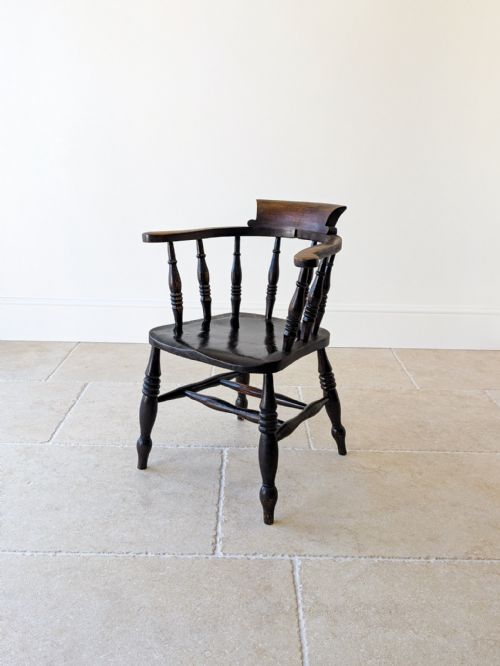
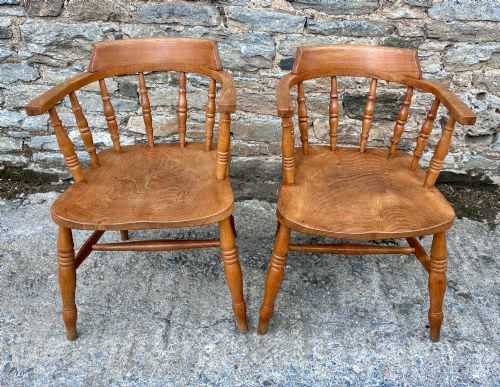
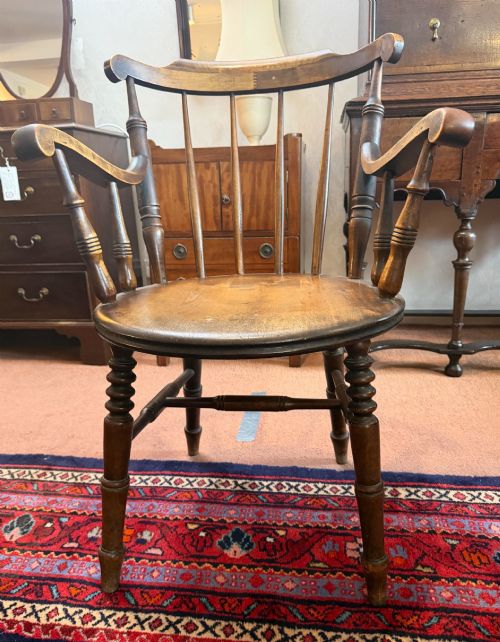
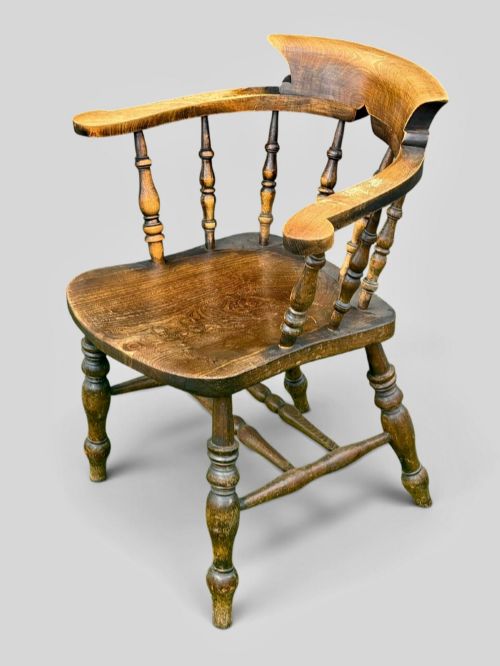
Wooden Captains Office Chair
A wooden captains office chair offers robust seating for a desk, combining solid timber frames and supportive curved armrests suited to long hours of work.

Wooden Captains Office Chair
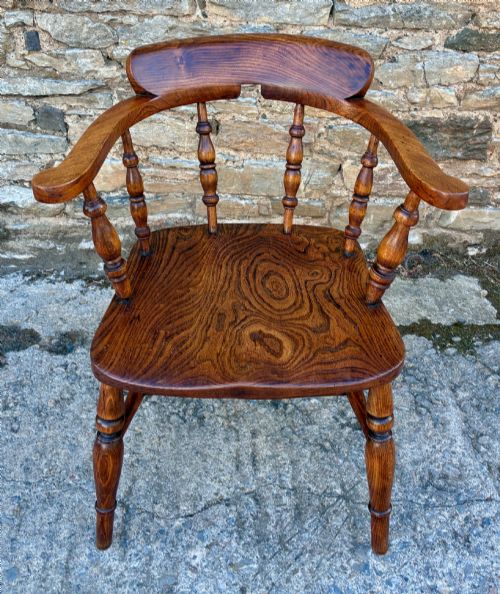
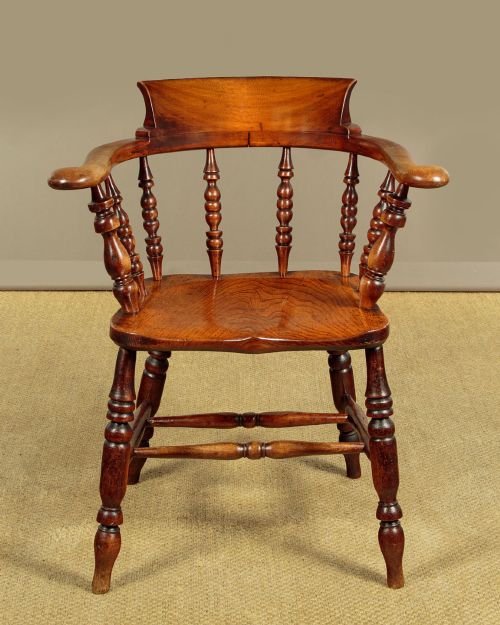
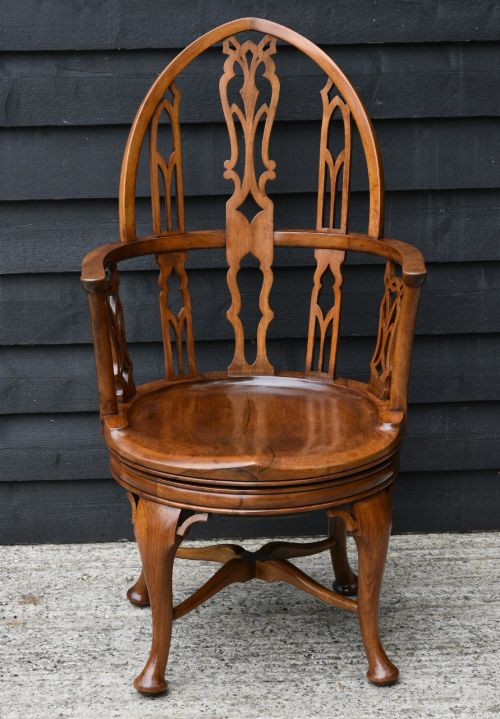
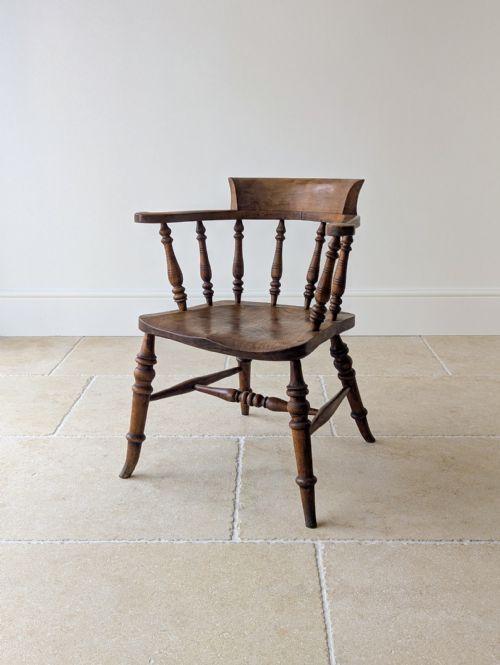
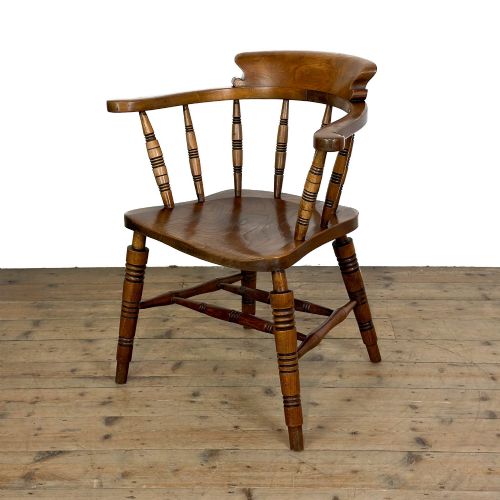
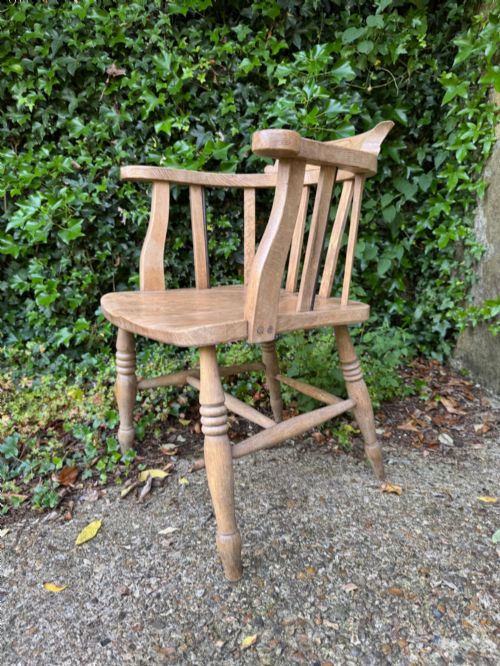
A wooden captains office chair is a sturdy desk seat built with a low, continuous backrest and arm rail that circles the sitter. These pieces emerge primarily from the Victorian and Edwardian periods, stretching from the mid nineteenth century into the early twentieth century.
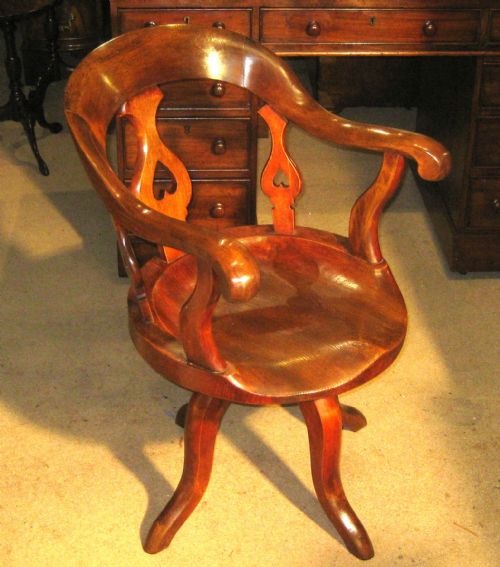
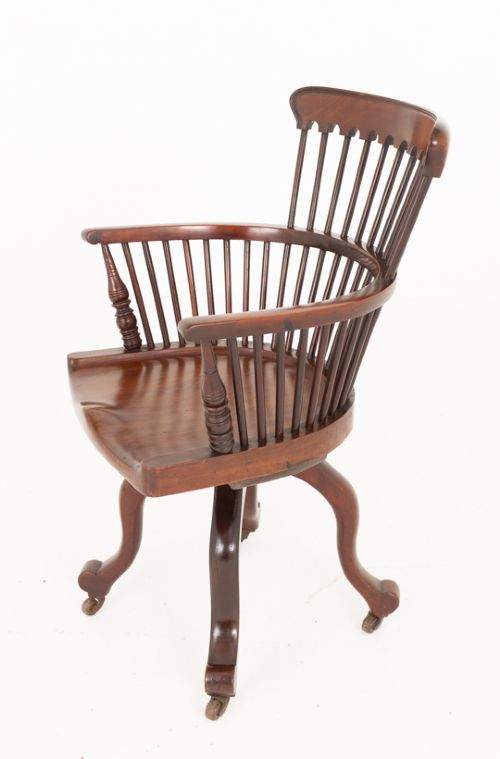
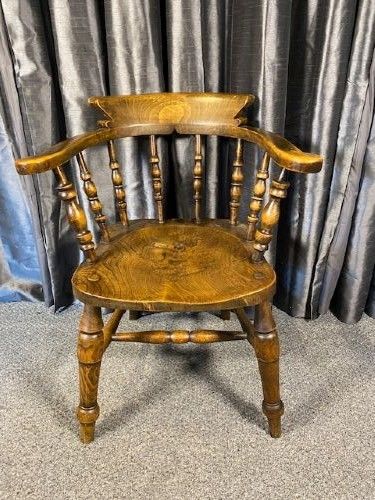
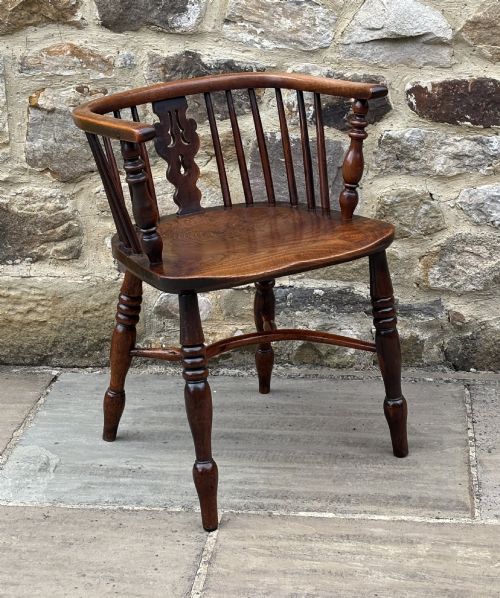
The most common examples met on this page are country provincial armchairs, often termed smoker's bows, alongside revolving or swivel variations designed specifically for office use. Workshops built these seats using domestic hardwoods such as elm, oak, beech and mahogany.
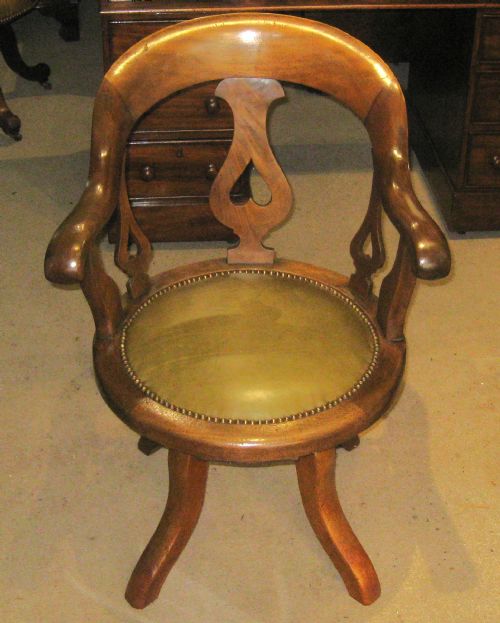
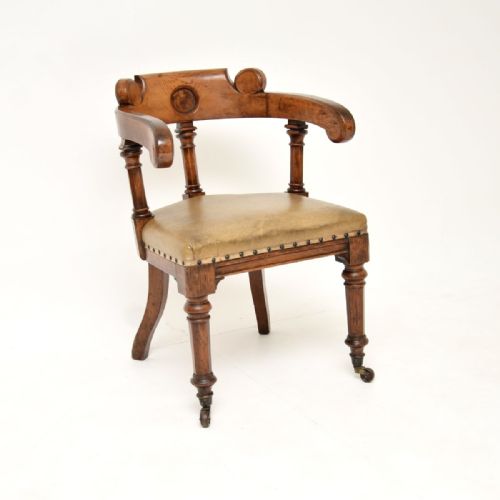
Buyers encounter regional English variations, including country house seating and provincial Windsor forms. The selection ranges from fixed four-legged models to mechanical swivelling office chairs fitted with timber or leather seats.
How they were made
Cabinet makers and turners utilised solid native timbers, frequently combining elm for contoured saddle seats with ash, beech or oak for spindles, bent rails and legs. Steam bending allowed makers to shape thick lengths of wood into the continuous, low curved armrests characteristic of these desk chairs.
Joinery relied on traditional methods including mortise and tenon joints, wedge-secured spindles and turned underframes. Swivel iterations incorporated early cast iron and brass revolving mechanisms beneath the timber seat bases to allow movement in office environments.
Listings span the nineteenth and early twentieth centuries, featuring woods such as elm, oak, walnut, beech, ash and mahogany alongside leather and brass.
What varies in quality
Quality rests upon the selection of timber and the complexity of the timber turning. Dense burr elm or heavily figured walnut denote superior material choices compared to plain utility timbers, while well-sculpted saddle seats show greater craftsmanship than flat plank alternatives.
The sophistication of the mechanical swivel and tilt apparatus distinguishes standard office seating from finer workshop productions. Original iron and brass revolving screws or spring mechanisms that retain smooth movement elevate a piece above later replacements.
The Wooden Captains Office Chair Glossary
- Smoker's bow
- A low-backed Windsor-style armchair featuring a turned spindle gallery and a continuous curved arm rail, commonly used in domestic and provincial settings.
- Saddle seat
- A thick timber seat base carved into a concave, ergonomic shape to mirror the contours of a saddle for sitter comfort.
- Swivel desk chair
- An office seat mounted on a central pivot mechanism, allowing the upper wooden structure to rotate fully.
- Windsor chair
- A chair constructed with timber components inserted directly into a thick wooden seat rather than a framed skeleton.
- Bentwood
- Wood that is shaped by steaming moisture into the timber fibres and bending it against a form until dry.
Wooden Captains Office Chair: Frequently Asked Questions
What is a wooden captains office chair?
A wooden captains office chair is a sturdy desk seat featuring a low, continuous arm rail supported by turned wooden spindles. These forms evolved from traditional country armchairs into functional office seating during the Victorian era.
They combine the ergonomic comfort of a scooped wooden seat with the practical mobility of a fixed or revolving timber base.
How do I date a wooden captains office chair?
Dating relies upon examining the timber species, construction methods, and hardware. Mid nineteenth century examples often display hand-turned components and simple fixed wooden frames, while late Victorian and Edwardian versions frequently introduce iron or brass swivel mechanisms.
Secondary woods, tool marks on the underside of the seat, and fastener types further help narrow down the period of production.
Are swivel desk chairs original?
Many Victorian and Edwardian desk chairs feature original cast iron and brass revolving screw mechanisms integrated directly into the wooden underframe. Makers adapted traditional country seating forms by mounting them onto mechanical iron pedestals to meet the demands of late nineteenth century offices.
Inspect the connection points beneath the seat to see how the timber base integrates with the mechanical turning apparatus.
How do I live with a wooden captains office chair?
These chairs fit neatly beneath standard writing desks and library tables while offering sturdy back support for daily seating. Their robust hardwood construction handles regular use well in both home studies and working office environments.
Maintain the timber by applying appropriate wax polish periodically, and avoid placing them near direct heat sources that might dry out the old wood.