


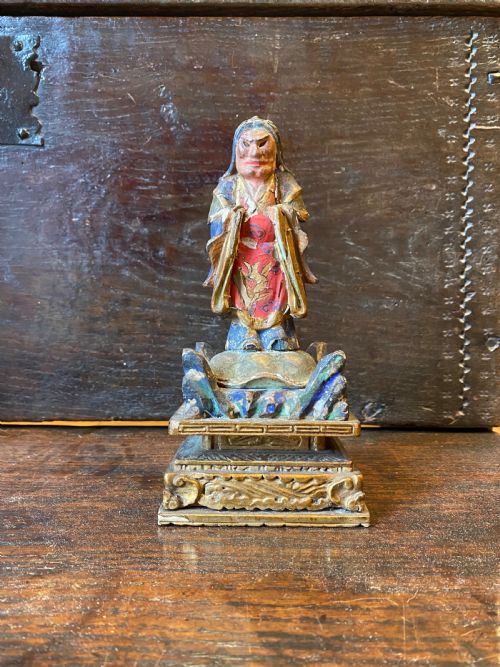

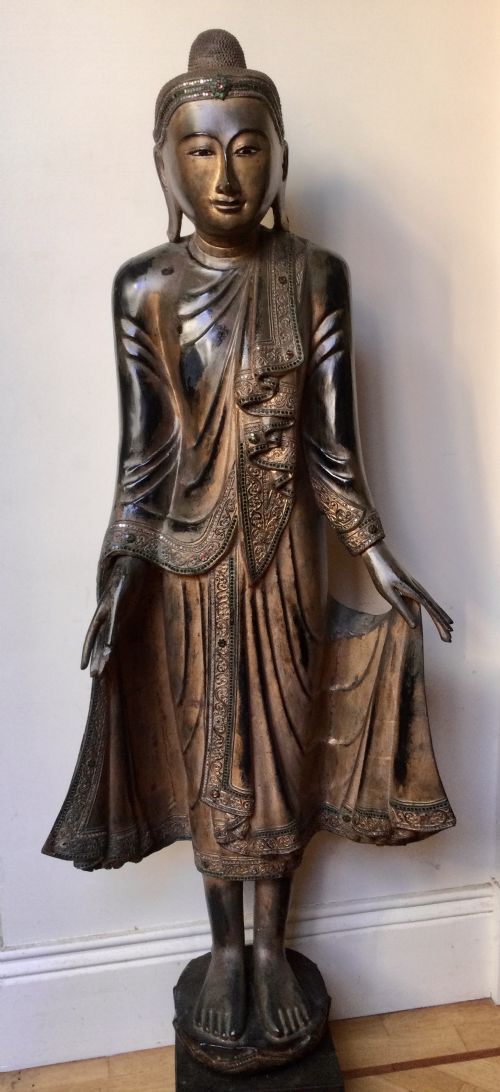
Wooden Buddha Statue
These wooden buddha statue pieces bring hand-carved ritual presence into a room, offering centuries of regional artistry.
Wooden Buddha Statue
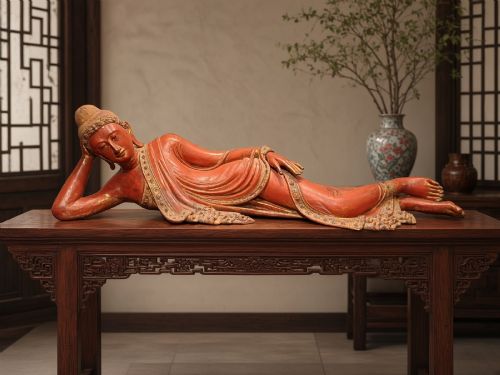
A wooden buddha statue represents a sculpted devotional or ritual figure originating from Chinese, Burmese, Tibetan, or Sri Lankan workshops. When you search for a wooden buddha statue, you encounter formats ranging from monumental temple guardians and reclining figures to seated deities and medicine statues.
The pieces listed on this page span the eighteenth and nineteenth centuries into the early twentieth century, encompassing styles from the Qing Dynasty and Burmese Mandalay traditions. Hardwood sculptures and painted deities dominate the selection, often rendered in substantial dimensions.
Buyers meet both gilded ritual objects and polychrome painted figures. These sculptures reflect the diverse stylistic vocabulary of Southeast Asian and Chinese antiquities.
How they were made
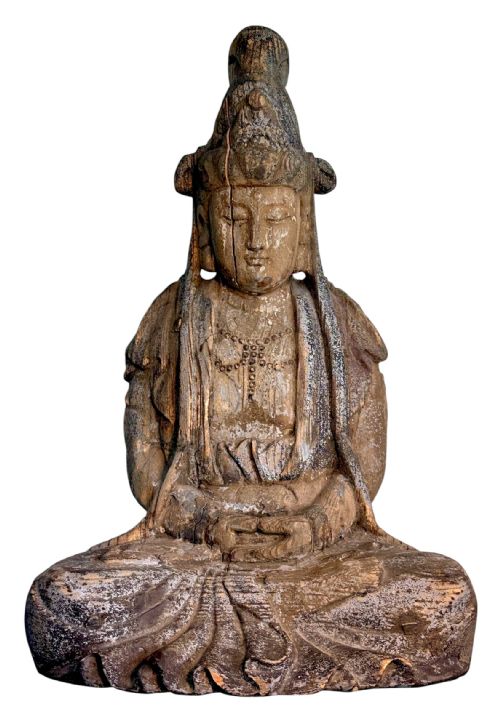
Artisans carved these figures from solid blocks of hardwood or softer timber, employing high relief carving to define drapery and anatomical details. The resulting wooden forms provided the structural foundation for subsequent surface decoration.
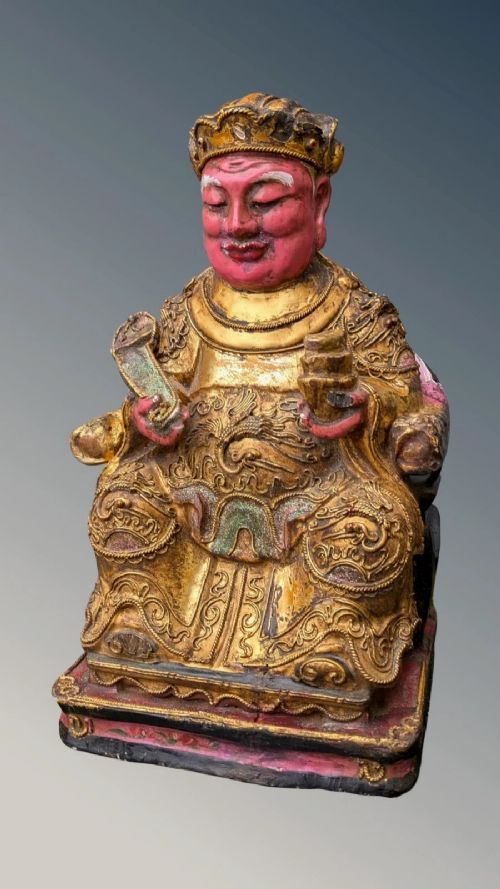
Surfaces were frequently finished with gesso layers before receiving applications of gold leaf or gilt wood treatments. Polychrome painted pigments and glass inlay details were then added to bring depth and colour to the ritual figures.
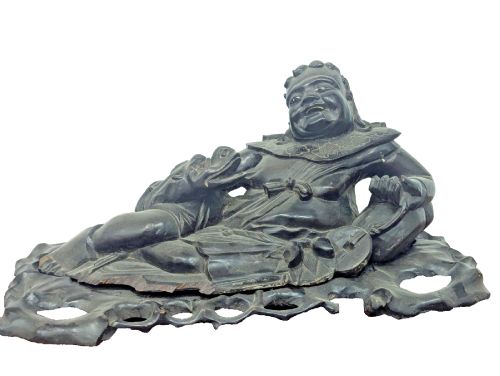
Among the deities rests an amusingly corpulent figure, proving that historic sculptors also enjoyed capturing a lighter, more relaxed side of divinity.
What varies in quality
Sculptural execution separates standard workshop production from finer temple-grade carving, visible in the precision of facial expressions and the fluid handling of robes. The depth of relief and the naturalistic articulation of hands and hair define the artistic ambition of the piece.
The preservation of original surface treatments plays a major role in quality, particularly the intact survival of early gold leaf, gesso, and polychrome pigments. Pieces retaining their primary layered finishes demonstrate greater historical integrity than those stripped or heavily refinished.
The Wooden Buddha Statue Glossary
- Polychrome
- Decorated in several colours. This term describes statues finished with multiple painted pigments rather than bare wood or monochrome gilding.
- Gesso
- A plaster mix applied as a surface preparation. It acts as a smooth base for subsequent gilding or painting on wooden sculptures.
- Gilt wood
- Wood decorated with gold leaf or gold paint. Artisans applied this finish to highlight sacred figures and important temple objects.
- Glass inlay
- Small pieces of glass set into the surface of an object. This technique adds reflective ornamentation to eyes, crowns, or decorative borders.
- Qing Dynasty
- The final imperial dynasty of China, lasting from sixteen forty-four to nineteen twelve. Pieces from this era often exhibit distinct regional iconography and detailed carving styles.
Wooden Buddha Statue: Frequently Asked Questions
How do I clean a wooden buddha statue?
Dust the surface gently with a soft, dry brush to prevent accumulation. Avoid using water, oils, or chemical cleaning agents on historic wood and gilt surfaces.
Moisture and harsh liquids can damage delicate gesso layers and lift fragile gold leaf. Maintain stable indoor humidity to protect the timber from cracking.
Where should I place my statue?
Position the sculpture away from direct sunlight, heating vents, and damp areas. Stable conditions preserve both the carved wood and the historic painted finishes.
Allow enough space around larger figures to appreciate the proportions and relief work. Placing the sculpture at eye level enhances the contemplative presence of the piece.
What is a temple guardian?
A temple guardian is a monumental sculptural figure placed within sacred spaces for protection. These figures often display powerful stances and intense facial expressions to ward off malevolent forces.
In the current selection, such pieces are rendered in polychrome and gilt wood. They reflect the grand scale of traditional Asian religious architecture.