
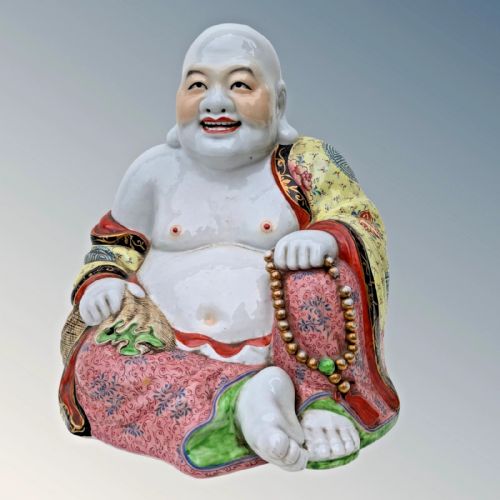


Laughing Buddha Figure
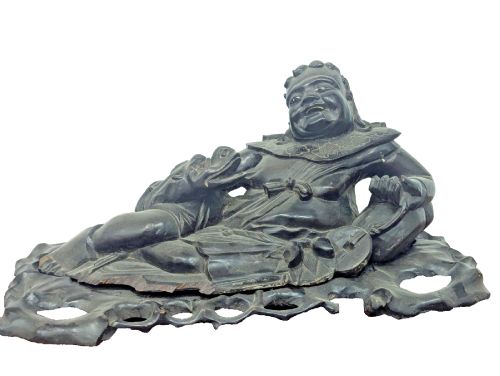
A laughing buddha figure brings a cheerful presence to a room, cast in bronze, carved in hardwood, or shaped from porcelain.
Laughing Buddha Figure
A laughing buddha figure represents the monk Budai or Hotei, known for his corpulent frame and joyful expression. These sculptures appear across various traditions including Chinese Qing Dynasty, Chinese Republic Period, and Japanese Meiji outputs.
Most examples found here date from the nineteenth century into the mid-twentieth century. Forms range from standalone sculptures and porcelain figurines to desk seals, figural groups, and vases.
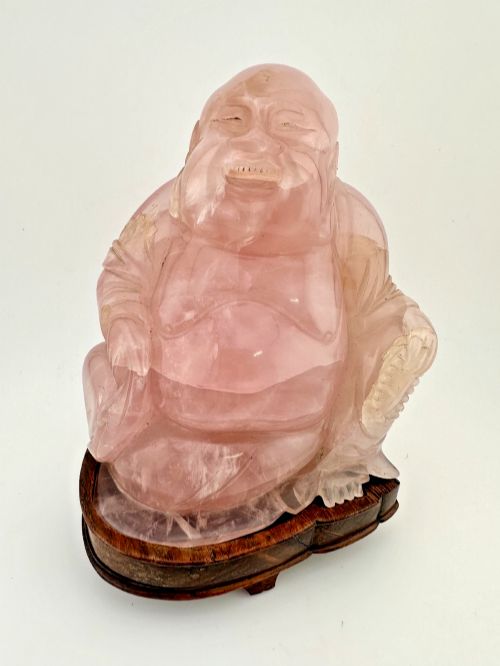
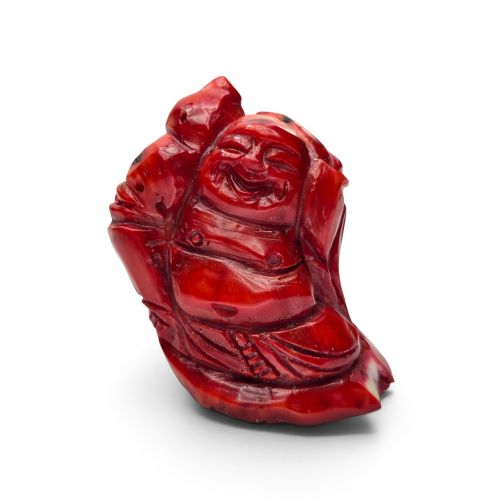
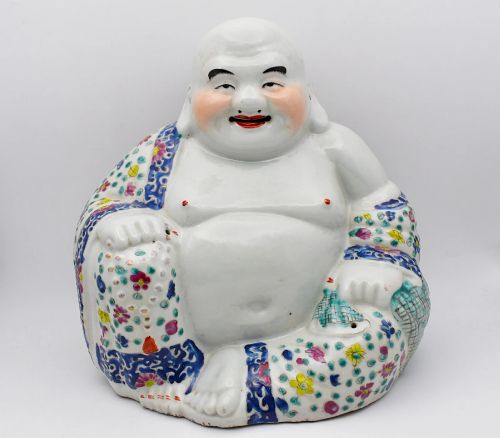
Makers utilised diverse materials to shape these figures, including carved hardwood, porcelain with famille rose enamel, solid silver, brass, bronze, soapstone, rose quartz, and red coral.
Factors that distinguish the work
The definition and depth of the carving determine the tactile quality of organic materials like hardwood and red coral, where finer hand work reveals distinct facial expressions and drapery folds. In ceramic and metal pieces, precision in the casting or glaze application separates standard production from superior artistry.
The choice of material alters the character of the object, moving from simpler cast metal or brass statues to intricate rose quartz carvings and signed porcelain works.
Several figures include playful attendants known as karako climbing over the laughing monk.
Zhu Mao Ji
The Laughing Buddha Figure Glossary
- Budai
- The eccentric Chinese monk who serves as the primary inspiration for the laughing buddha figure. He is traditionally depicted as a stout, smiling figure carrying a cloth sack.
- Hotei
- The Japanese counterpart to Budai, often appearing in Japanese Meiji period works alongside playful figures such as children or karako.
- Famille rose
- A palette of opaque enamel colours introduced in Chinese porcelain production during the Qing Dynasty. Pink enamel remains a defining characteristic of this decorative style.
- Meiji
- The period in Japanese history spanning from 1868 to 1912, noted for intricate decorative arts exported to Western markets.
- Soapstone
- A soft, talc-schist mineral easily carved into detailed desk seals, figures, and ornaments.
Laughing Buddha Figure: Frequently Asked Questions
How do I date a laughing buddha figure?
Dating relies on material characteristics, stylistic conventions, and production marks. Pieces from the nineteenth century often show the hand-tool marks of traditional carving or nineteenth-century casting techniques.
Later twentieth-century examples incorporate distinct enamel palettes and factory stamps, while Japanese Meiji items display the aesthetic traits of that specific era.
Where were these figures made?
The majority originate from China across the Qing Dynasty and Republic periods, encompassing regional production centres like Shiwan. Other examples hail from Japan during the Meiji period, reflecting export markets.
Materials and decorative styles usually align with the region of manufacture, such as famille rose enamels on Chinese porcelain or patinated bronze in metalwork.
How do I care for a carved hardwood figure?
Carved hardwood figures require stable environmental conditions away from direct sunlight and excessive heat sources. Keeping the room humidity consistent prevents the timber from splitting.
Dust the surface gently with a dry, soft cloth, avoiding commercial polishes or water that might damage the aged patina of the wood.