











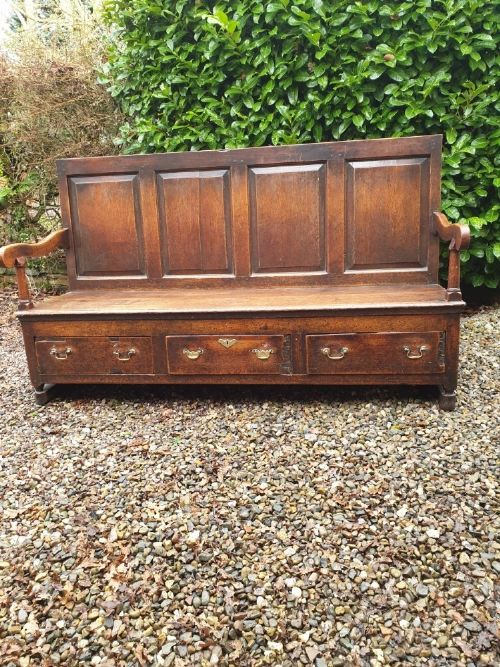
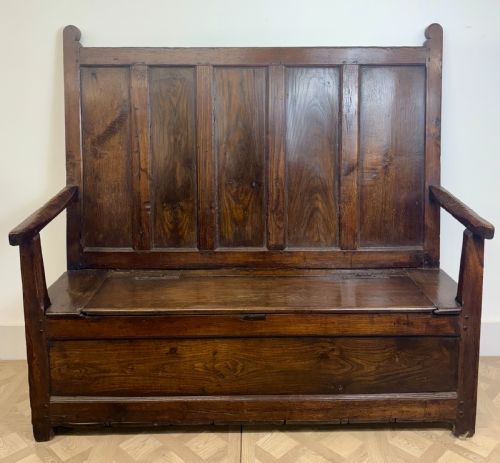
Wooden Box Seat
A wooden box seat provides a sturdy place to sit while concealing storage within its base.
Wooden Box Seat
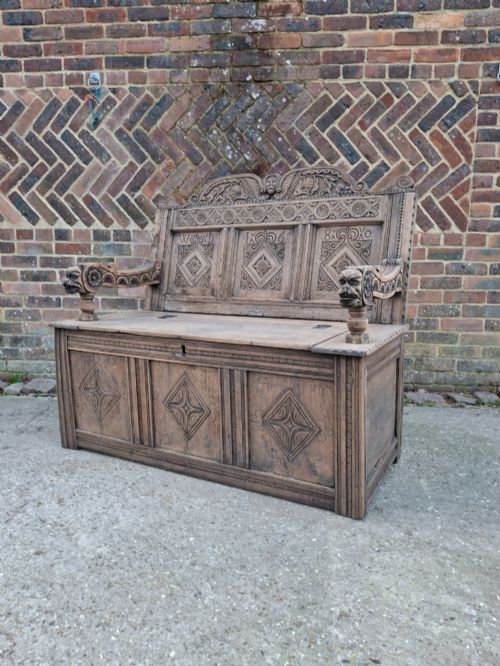
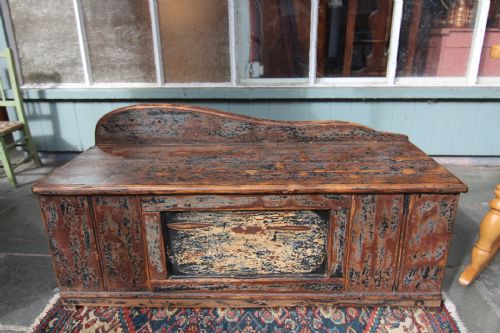
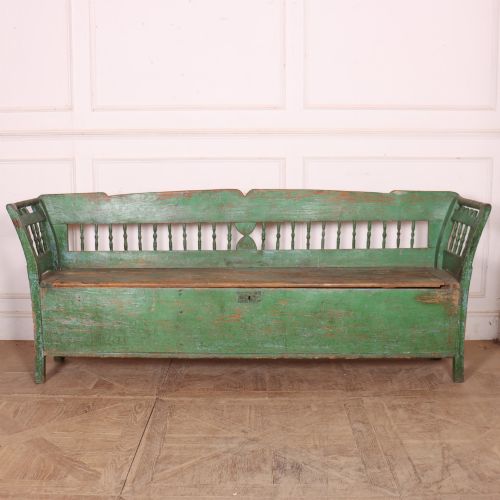
A wooden box seat combines a bench or chair with an enclosed compartment beneath the lid for storage. These pieces appear in forms such as settles, hall benches, armchairs, and stools across various periods.
The selections on this page span from the seventeenth century through to the early twentieth century, taking in English, Welsh, French, Austrian, Italian, and Hungarian origins. Oak and pine examples dominate, accompanied by elm, walnut, and fruitwood variants.
Materials and Construction
Cabinet makers utilised solid timbers such as oak, pine, elm, and mahogany, often joining panels with traditional pegged mortise and tenon joints to withstand daily domestic use.
Surfaces exhibit varying treatments from waxed and stripped finishes to original or later painted schemes in black, grey, cream, and green, alongside carved decorative details.
Wooden Box Seat Retail Price Guide 2026
Typical asking prices for wooden box seat among the pieces listed under this phrase on Sellingantiques today, from the lower quarter to the upper quarter. They describe what is for sale here now, not the wider market.
Listings feature items constructed from oak, pine, elm, mahogany, walnut, fruitwood, and ash across multiple centuries.
Distinguishing Characteristics
The distinction between standard and superior pieces rests in the integrity of the timber, the crispness of any hand-carved ornamentation, and the preservation of original hinges and lid fixings.
Examples retaining their early or original surface patination, such as untouched waxed oak or authentic regional paint, hold greater visual coherence than those with heavily altered or modernised surfaces.
James Shoolbred and Co
The Wooden Box Seat Glossary
- Settle
- A wooden bench with a high back, solid arms, and a box seat base designed to block draughts in older rooms.
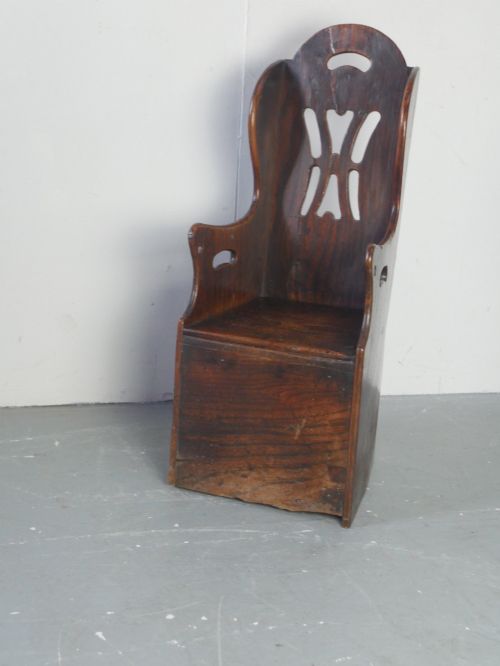
- Lambing chair
- An enclosed wooden armchair with wings and a low seat, historically used by shepherds during lambing season.
- Cassapanca
- An Italian wooden bench featuring a deep chest base and a panelled back, often found in walnut.
- Mortise and tenon
- A traditional woodworking joint where a projecting tongue fits snugly into a corresponding cavity to secure timbers together.
- Patina
- The surface sheen and colour developed on wood through age, handling, and regular polishing over decades.
Wooden Box Seat: Frequently Asked Questions
What is a wooden box seat?
A wooden box seat is a dual-purpose item of furniture combining a seat with a hollow storage base underneath.
These pieces typically take the form of settles, benches, or chairs where the hinged lid lifts to reveal a compartment.
Where were box settles placed?
Box settles were traditionally positioned near hearths in domestic interiors to protect occupants from cold draughts.
Later Victorian examples frequently appeared in hallways and entrance spaces for practical storage.
How do I date a wooden box seat?
Dating relies on examining the timber species, construction methods, hardware, and decorative styles characteristic of specific periods.
Earlier pieces from the seventeenth and eighteenth centuries often display hand- split panels and pegged joinery.
Are painted finishes original?
Some pieces retain authentic regional paint layers from their country of origin, whilst others received decoration at a later date.
Close inspection of wear patterns and pigment integration helps determine whether the paint surface belongs to the period of manufacture.